

 Ver en contexto
 Enviar
 Compartir
 Detalles

 Descargar
 Similares
 Radiografía
 Presentación de diapositivas
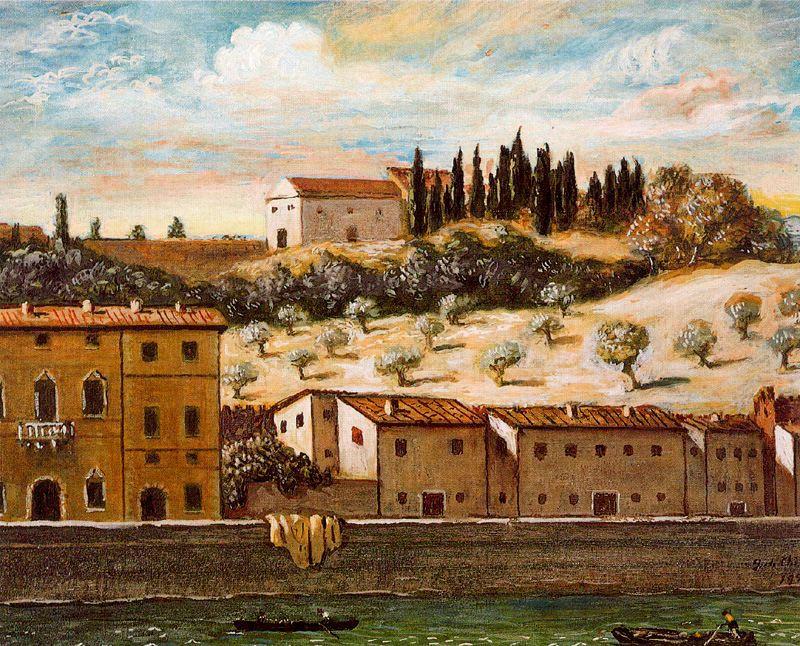
Florence, the banks of Arno


 Ver más
Adquiera una imagen digital de alta resolución y optimizada, muy superior a la vista previa en línea.
Cada archivo es preparado meticulosamente por nuestros especialistas internos mediante el uso de herramientas avanzadas y un experto retoque manual. Nos aseguramos de que cada imagen posea una claridad excepcional, una precisión cromática impecable y un detalle minucioso.
El archivo final se entrega por correo electrónico en un plazo de 72 horas, optimizado para su uso inmediato en entornos profesionales, editoriales y de impresión. Esta es la misma calidad en la que confían los estudios de diseño, las editoriales y las galerías de primer nivel.
Imagen Digital
Descarga un archivo de alta resolución para exhibición personal, impresión y proyectos creativos. ( Comprar impresión Comprar pintura hecha a mano)
Incluido en cada pedido de imágenes digitales
Entrega digital experta, garantizada.
Al elegir ArtsDot.com, no solo está adquiriendo una imagen; está recibiendo una obra de arte digital mejorada profesionalmente, elaborada con precisión y respaldada por una garantía de satisfacción. Esto es todo lo que incluye su pedido, automáticamente:

Entrega rápida por email
Recibirá su archivo de imagen digital en alta resolución por correo electrónico en un plazo de 72 horas tras realizar su pedido, listo para su uso inmediato.

Archivo digital optimizado por IA
Su obra de arte se optimiza profesionalmente mediante herramientas avanzadas de IA y edición manual, garantizando el máximo detalle, claridad y precisión cromática.

Reenvío gratuito de por vida
¿Has borrado o perdido tu archivo por error? No te preocupes: te lo volveremos a enviar en cualquier momento, sin coste adicional.

Sin gastos de importación, siempre
Disfrute de su obra de arte al instante sin aduanas, aranceles ni gastos de envío; las descargas digitales siempre están libres de impuestos.

Garantía de fidelidad de color
Garantizamos que su imagen digital refleje los colores originales con la mayor fidelidad posible, mediante el uso de herramientas profesionales y gestión del color.

Garantía de satisfacción de 60 días
Si no está satisfecho con su imagen digital, la revisaremos o le reembolsaremos el 100% en un plazo de 60 días, sin preguntas.

100% Garantía de devolución de dinero
¿No está satisfecho? Obtenga un reembolso completo dentro de los 60 días posteriores a la recepción de su archivo digital, sin necesidad de explicaciones.

Descuentos por pedidos grandes
Compra 3 imágenes, ahorra 10% - Compra 5, ahorra 15% - Compra 10+, ahorra 20%. Ideal para proyectos creativos, galerías y agencias.
A Dreamscape Suspended in Time
In the quietude of Giorgio de Chirico’s “Florence, the banks of Arno,” the viewer is invited into a world that exists precisely at the intersection of reality and reverie. Painted in 1920, this masterpiece serves as a profound window into the heart of Surrealism, capturing an Italian cityscape that feels both intimately familiar and hauntingly alien. The tranquil Arno River flows through the center of the composition, flanked by buildings rendered in a palette of muted ochres, deep browns, and earthy tones—colors that evoke the weathered majesty of classical frescoes. Yet, there is a palpable tension beneath this surface serenity; an unsettling stillness permeates the air, as if the entire city has been caught in a moment of eternal suspension. For the discerning collector or interior designer, this piece offers more than mere decoration; it provides a focal point of intellectual depth and atmospheric mystery.
The technical mastery of de Chirico is evident in his meticulous application of oil paint. By layering thin, translucent glazes, he achieves a remarkable luminosity that breathes life into the architectural forms, granting them a sculptural weight. He employs a pyramidal composition—a sophisticated technique borrowed from the Renaissance masters—to instill a sense of grandeur and structural stability. However, this classical order is brilliantly subverted by the artist's use of geometric disruptions and oddly positioned figures. These elements create a psychological friction, a hallmark of the Metaphysical style, where the familiar becomes strange. The way light interacts with the water and the shadows stretch across the banks creates a sense of depth that draws the eye inward, making it an ideal centerpiece for spaces designed to inspire contemplation and quiet awe.
The Echoes of Philosophy and Memory
Beyond its visual splendor, “Florence, and the banks of Arno” is a profound meditation on the human condition. De Chirico was deeply influenced by the existentialist philosophies of Friedrich Nietzsche and Arthur Schopenhauer, and these intellectual currents pulse through every brushstroke. The painting reflects the concept of the Eternal Return and the pervasive sense of pessimism that characterized much of early 20th-century thought. The solitary figures positioned along the riverbank do not interact with one another; instead, they gaze outward toward the water, embodying a profound sense of detachment and existential longing. Their presence serves as a symbolic bridge between the tangible world of the city and the intangible realm of the subconscious.
For those seeking to curate an environment of sophistication and emotional resonance, this artwork offers a unique narrative power. It explores the fluidity of memory and the subjectivity of perception, prompting viewers to question their own understanding of space and time. The subtle interplay between the solid, geometric architecture and the fluid, moving river creates a rhythmic balance that is both stimulating and soothing. Whether placed in a contemporary gallery setting or a classic study, this reproduction of de Chirico’s vision brings with it an aura of timelessness, making it a captivating choice for anyone looking to infuse their interior with the haunting beauty of a dream realized on canvas.
Obras relacionadas
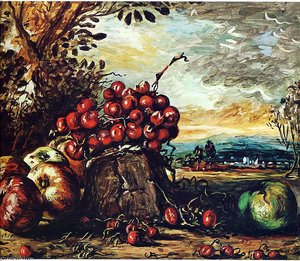
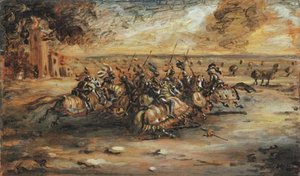
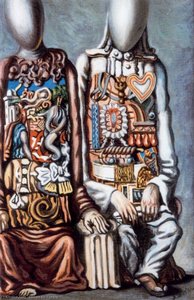
Biografía del artista
vida temprana e influencias
giorgio de chirico, un artista italiano reconocido, nació el 10 de julio de 1888 en Volos, Grecia, a una madre genovesa y un padre siciliano. Su vida temprana estuvo marcada por el estudio del arte en la Politécnica de Atenas bajo la guía de pintores griegos influyentes como Georgios Roulos y Georgios Jakobides. Esta base sentaría las bases para su estilo artístico único.el movimiento artístico metafísico
En 1910, de Chirico pionero el movimiento artístico metafísico, que influyó profundamente a los surrealistas. Sus obras de este período, caracterizadas por estados de ánimo inquietantes y escenarios oníricos, se ejemplifican en pinturas como las vexaciones del pensador (disponible en ArtsDot) y el enigma de la hora (visible en ArtsDot). Estas obras evocan una sensación de misterio, a menudo con contrastes agudos de luz y sombra.período post-metafísico
Después de 1919, el interés de de Chirico se desplazó hacia las técnicas pictóricas tradicionales, adoptando un estilo neoclásico o neo-barroco. Este cambio es evidente en sus obras posteriores, que, aunque no recibieron el mismo aplauso crítico que sus primeras piezas, demuestran una evolución madura en su enfoque artístico.legado e influencia
El impacto de de Chirico en el movimiento surrealista es innegable, con artistas como André Breton influenciados por sus pinturas metafísicas. Aunque su obra posterior no fue tan ampliamente aclamada, de Chirico sigue siendo una figura clave en la historia del arte moderno. Su legado continúa inspirando, con sus obras que forman parte de colecciones de todo el mundo, incluyendo el museo de giorgio de chirico, que ahora se encuentra cerca de las escaleras de la Plaza España en Roma.- explora más obras de giorgio de chirico en ArtsDot
- descubre el movimiento artístico metafísico y su influencia en el surrealismo a través de este artículo perspicaz en ArtsDot
- aprende más sobre la vida y obra de de Chirico en wikipedia
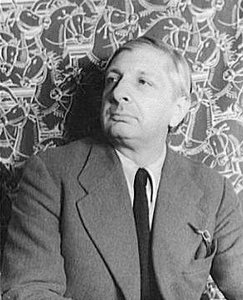
Giorgio de Chirico
1888 - 1978 , Grecia
Breves datos
- Artistas Influenciados:
- Surrealismo
- André Breton
- Artistas Que Influyeron:
- Arnold Böcklin
- Max Klinger
- Friedrich Nietzsche
- Fecha De Nacimiento: 10 de julio de 1888
- Lugar De Nacimiento: Volos, Grecia
- Movimiento Artístico: Arte metafísico
- Nacionalidad: Italiana
- Nombre Completo: Giorgio de Chirico
- Obras Notables:
- Las vexaciones del pensador
- El enigma de la hora
- La canción del amor

