 Enviar
 Compartir
 Detalles

 Descargar
 Similares
 Presentación de diapositivas
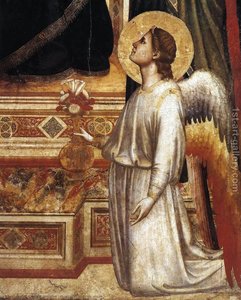
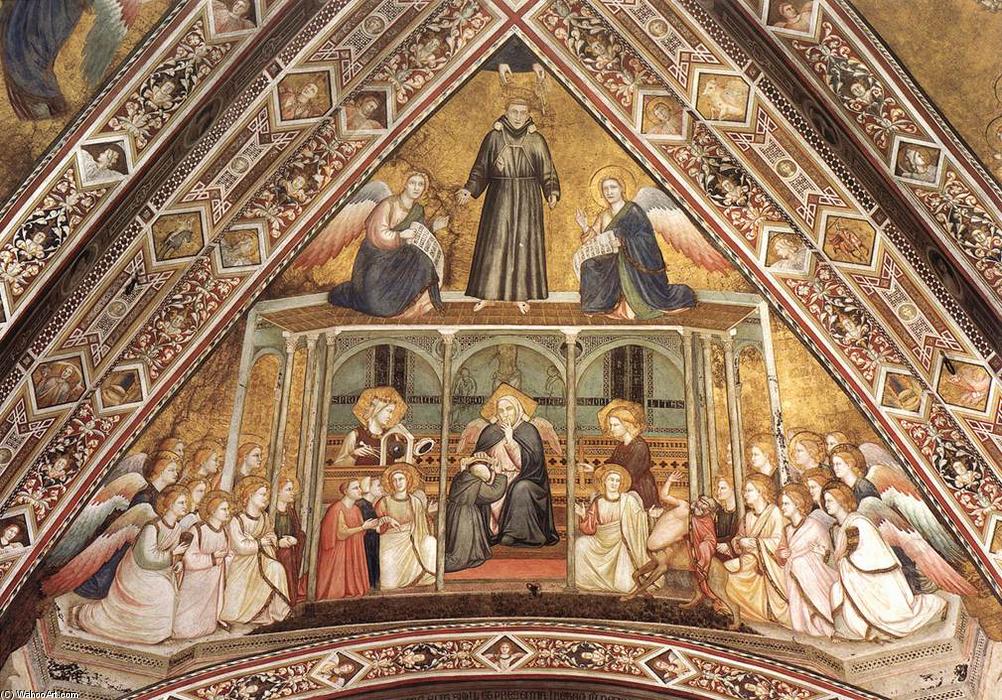
Franciscan Allegories: Allegory of Obedience


 Ver más
Reproducción al óleo hecha a mano
Óleo sobre lienzo pintado a mano en el tamaño y marco de su elección, realizado por encargo por nuestros artistas. ( Comprar impresión Comprar imagen)




































Elija entre nuestros tamaños predefinidos que respetan las proporciones originales de la obra.

Puede ingresar sus propias dimensiones para adaptarse a un marco o espacio específico. Si el tamaño seleccionado no coincide con las proporciones de la imagen original, recortaremos la obra o extenderemos la pintura con elementos adicionales pintados a mano. Se le enviará una maqueta digital para su aprobación antes de comenzar la producción.
Tenga en cuenta que la vista previa en pantalla no refleja el recorte o la extensión reales. Solo la maqueta mostrará con precisión la composición final.
Si bien existen tamaños personalizados, recomendamos seleccionar una dimensión de la lista predefinida para preservar las proporciones originales.
Tras realizar el pedido, el equipo de ArtsDot.com enviará un correo electrónico al cliente para solicitar instrucciones y proporcionarle una vista previa del boceto.
Envío a todo el mundo () en 3-4 semanas en lugar de las 5 semanas estándar. (4 septiembre). Sin comprometer la calidad.

Envío exprés gratuito a todo el mundo

Lienzo de lino de alta calidad

Seguro de envío total

Garantía de reembolso de impuestos aduaneros

Garantía de fidelidad cromática exacta

Política de devolución de 60 días (solo por defectos)

Garantía de devolución del 100% del dinero

Descuento por cantidad
 La opción de vidrio solo está disponible en tamaños inferiores a 110 cm.

Franciscan Allegories: Allegory of Obedience
Técnica de reproducción
Dimensiones de la reproducción
-


Precio total final
$ 263
The Heart of Obedience: Giotto's "Allegory of Obedience"
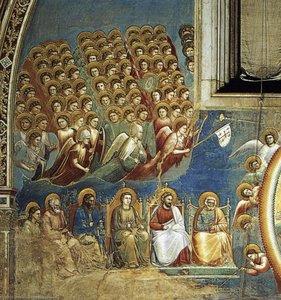
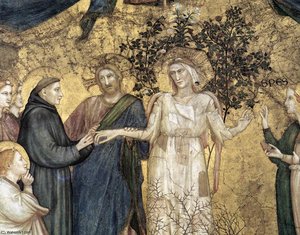
Giotto di Bondone’s “Franciscan Allegories: Allegory of Obedience,” painted in 1330, isn’t merely a fresco; it’s a profound meditation on faith rendered with an unprecedented sensitivity to human emotion and the natural world. Created for the Pieve di Santa Maria in Arezzo, Italy, this work represents a watershed moment in art history – a bridge between the stylized conventions of medieval Byzantine art and the burgeoning realism that would define the Renaissance. The scene unfolds with a quiet intensity: a central figure, draped in black, stands upon a simple platform, surrounded by a group engaged in conversation and contemplation. This isn’t a dramatic spectacle; it's an intimate tableau, inviting viewers to consider the very essence of obedience within a deeply spiritual context.
- The Artist: Giotto di Bondone (1267-1337) – A Revolutionary Visionary
- Date: 1330 – The Height of Early Renaissance Innovation
- Location: Pieve di Santa Maria, Arezzo, Italy – A Romanesque Sanctuary
The painting’s power resides not just in its subject matter but also in Giotto's masterful technique. As a pioneer of fresco painting, he employed the wet plaster method to apply pigments directly onto the wall, creating an enduring image that has survived for centuries. The colors are rich and luminous, achieved through careful layering and blending – a testament to his meticulous approach. Notice the subtle gradations in tone, particularly in the drapery, which adds a remarkable sense of volume and texture. Giotto’s use of perspective, though still nascent compared to later Renaissance masters, is remarkably sophisticated for its time, creating a believable spatial depth that draws the viewer into the scene.
Symbolism and Narrative
At the heart of the composition lies the central figure, often interpreted as representing Jesus Christ or another revered religious authority. His posture exudes quiet dignity and authority, while his gaze invites contemplation. The surrounding figures – men and women engaged in dialogue – embody different facets of obedience: some listening attentively, others offering advice, and still others seemingly absorbed in thought. A simple bench sits nearby, suggesting a space for reflection and deliberation. This isn’t a hierarchical depiction; it's a community united by a shared commitment to faith and the principles of obedience.
The allegorical nature of the work is crucial to its interpretation. Obedience, in this context, transcends mere adherence to rules; it represents a willingness to submit one’s will to a higher power – a cornerstone of Franciscan theology. The painting speaks to the importance of humility, trust, and service within the Christian faith.
Historical Context and Influence
"Allegory of Obedience" was created during a period of immense social and religious change in Italy. The rise of the Franciscan Order, with its emphasis on personal piety and direct engagement with the common people, profoundly influenced Giotto’s artistic vision. This fresco reflects the spirit of the time – a desire to reconnect faith with everyday life. Furthermore, it stands as a pivotal work within the broader narrative of Italian art, influencing generations of artists who followed in Giotto's footsteps.
Artists like Giovanni Battista Cima Da Conegliano and Annibale Carracci were deeply impacted by Giotto’s innovations, carrying forward his legacy through their own explorations of religious themes. The enduring appeal of “Allegory of Obedience” lies not only in its artistic merit but also in its profound spiritual message – a timeless reminder of the importance of faith, humility, and obedience.
Capturing the Essence: A Hand-Painted Reproduction
ArtsDot offers meticulously crafted hand-painted reproductions of Giotto’s “Allegory of Obedience,” allowing you to bring this masterpiece into your home or office. Our skilled artisans employ traditional fresco techniques, faithfully recreating Giotto's nuanced color palette and masterful brushwork. Each reproduction is a unique work of art, capturing the emotional depth and spiritual significance of the original. Whether you are an art collector, interior designer, or simply someone seeking to infuse their space with beauty and inspiration, a ArtsDot reproduction of “Allegory of Obedience” offers a timeless connection to one of history’s greatest artistic achievements.
Obras relacionadas

Biografía del artista
**una vida de innovación y revolución artística**
giotto di bondone, el renombrado pintor y arquitecto italiano, dejó una huella imborrable en el mundo del arte con sus contribuciones pioneras a los períodos proto-renacentista y gótico. Nacido en 1267 en Florencia, Italia, la vida de Giotto permanece algo envuelta en misterio, pero su legado artístico es innegable.**contribuciones e innovaciones artísticas**
La obra más celebrada de Giotto, la Capilla Scrovegni (o Capilla Arena) en Padua, terminada alrededor de 1305, es un testimonio de su espíritu innovador. Este ciclo de frescos, que representa la vida de la Virgen y la vida de Cristo, no solo demuestra su genio artístico sino que también muestra una capacidad narrativa que fue un cambio significativo con respecto al enfoque estilizado bizantino.- Revolucionando la pintura: La insistencia de Giotto en el naturalismo, la atención a las emociones humanas y la exploración de figuras espaciales y voluminosas en la pintura sentaron las bases para los desarrollos en el arte occidental que siguieron.
- Contribuciones arquitectónicas: Su encargo en 1334 por parte del gobierno comunal de Florencia para diseñar el nuevo campanile (campanario) de la catedral de Florencia afirma su doble talento como artista y arquitecto.
**obras notables y su significado**
- Anunciación: la Virgen recibiendo el mensaje (ver en ArtsDot.com): un ejemplo primordial del estilo proto-renacentista de Giotto, caracterizado por su uso del naturalismo y la atención al detalle.
- Nacimiento. Nacer de Jesús (ver en ArtsDot.com): demuestra la capacidad de Giotto para transmitir narrativas complejas a través de sus frescos, una característica del período proto-renacentista.
- Madona en Maest (Madonna de Ognissanti) (ver en ArtsDot.com): esta pieza altar, encargada por la iglesia de Ognissanti en Florencia, es un ejemplo significativo de la pintura al óleo de Giotto y su uso del temple.
**legado e influencia**
La influencia de Giotto en el arte occidental es profunda, sentando las bases para el movimiento artístico renacentista. Su énfasis en el naturalismo, las emociones humanas y la conciencia espacial en la pintura ha perdurado, asegurando su posición como una figura fundamental en la historia del arte europeo. explorar más obras e influencias de Giotto di bondone en ArtsDot.com.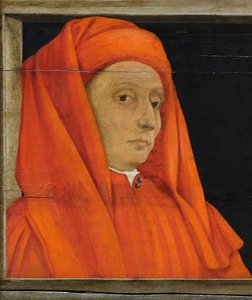
Giotto di Bondone
1267 - 1337 , Italia
Datos clave
- Artistas Influenciados:
- Masaccio
- Leonardo da Vinci
- Artistas Que Influyeron: ['Cimabue']
- Fecha De Muerte: 1337
- Fecha De Nacimiento: 1267
- Lugar De Nacimiento: Florencia, Italia
- Movimiento Artístico: Proto-Renacimiento
- Nacionalidad: Italiana
- Nombre Completo: Giotto di Bondone
- Obras Notables:
- Capilla Scrovegni
- Madonna de Ognissanti
- Frescos de Asís
Artículos relacionados

Giotto di Bondone: Las 25 Obras Maestras que Definieron el Renacimiento | ArtsDot
Descubre las 25 obras maestras de Giotto di Bondone, el pionero del Renacimiento. Explora la historia, técnica y simbolismo de sus frescos italianos más icónicos. Encuentra reproducciones de arte exclusivas para decorar tu hogar en ArtsDot.com.

Legado en las Paredes: Frescos Familiares que Trascienden el Tiempo
Descubre el arte del fresco muralístico para inmortalizar tu historia familiar. Expertos en frescos personalizados y técnicas ancestrales. Crea un legado visual único con .

The Enduring Legacy of Fresco Painting: Techniques, History & Contemporary Relevance
Explore the rich history & enduring artistry of fresco painting – from Giotto to Michelangelo! Discover techniques, conservation efforts, & modern applications. Learn how ArtsDot brings this timeless art form to your home.

The Enduring Legacy of Fresco: Technique, History & Artistic Expression Across Cultures
Explore the rich history & enduring legacy of fresco painting! Discover ancient techniques, Giotto's masterpieces, and modern applications. Expert insights for art lovers & professionals.
Proto-Renacimiento: 10 Obras Maestras que Cambiaron la Historia del Arte | ArtsDot
Descubre las 10 obras maestras del Proto Renacimiento que revolucionaron el arte italiano. Explora la historia de Giotto, Duccio y Cimabue. Reproducciones de arte en ArtsDot.com para decorar tu hogar con belleza atemporal.