

 Ver en contexto
 Enviar
 Compartir
 Detalles

 Descargar
 Similares
 Radiografía
 Presentación de diapositivas
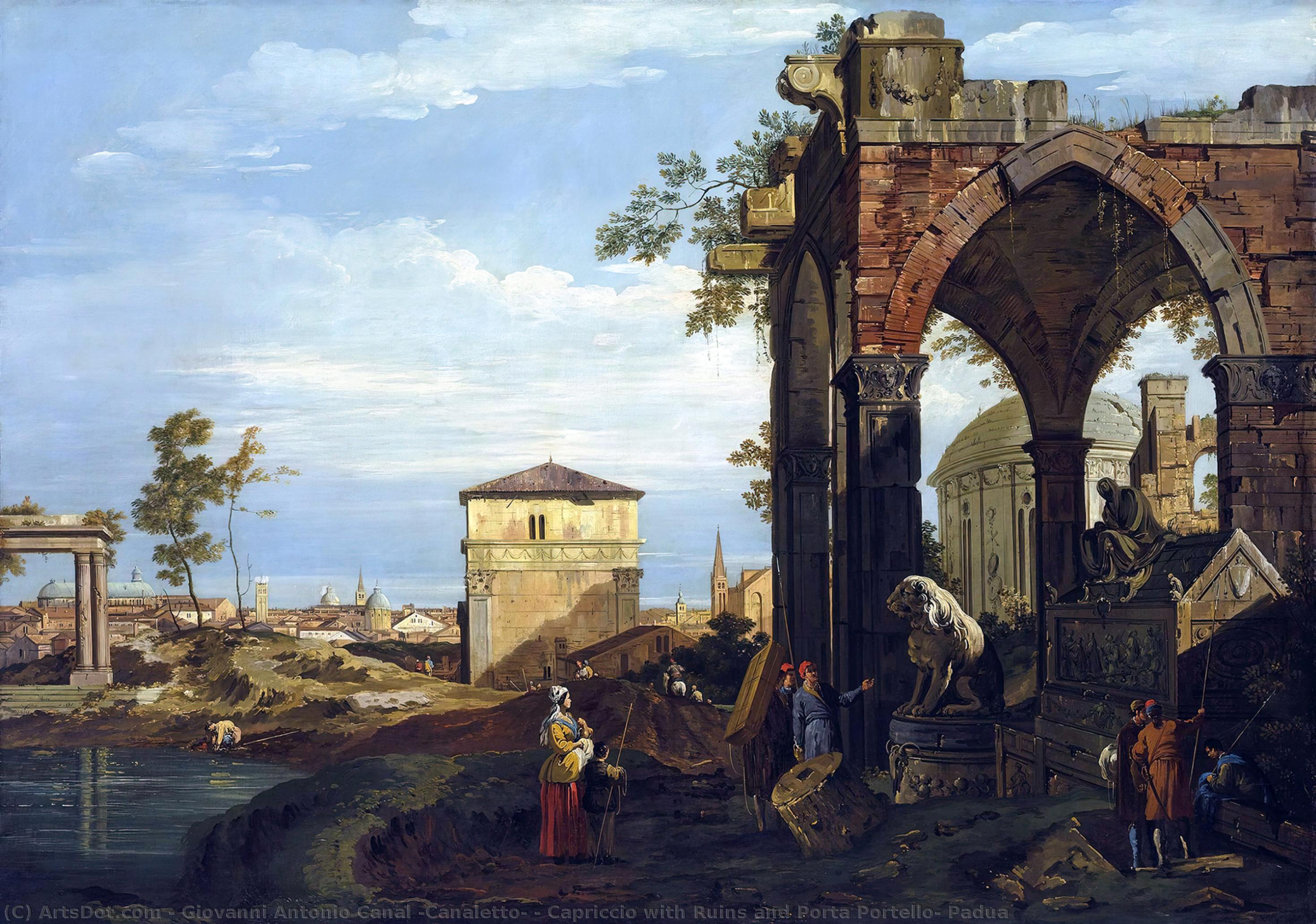
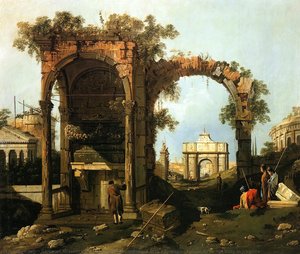
Capriccio with Ruins and Porta Portello, Padua
 Óleo sobre lienzo
- Arte de pared
- Neoclassicism
 1750
1750 61.0 x 76.0 cm
 Galería de la Academia
 Ver más
Adquiera una imagen digital de alta resolución y optimizada, muy superior a la vista previa en línea.
Cada archivo es preparado meticulosamente por nuestros especialistas internos mediante el uso de herramientas avanzadas y un experto retoque manual. Nos aseguramos de que cada imagen posea una claridad excepcional, una precisión cromática impecable y un detalle minucioso.
El archivo final se entrega por correo electrónico en un plazo de 72 horas, optimizado para su uso inmediato en entornos profesionales, editoriales y de impresión. Esta es la misma calidad en la que confían los estudios de diseño, las editoriales y las galerías de primer nivel.
Imagen Digital
Descarga un archivo de alta resolución para exhibición personal, impresión y proyectos creativos. ( Comprar impresión Comprar pintura hecha a mano)
Incluido en cada pedido de imágenes digitales
Entrega digital experta, garantizada.
Al elegir ArtsDot.com, no solo está adquiriendo una imagen; está recibiendo una obra de arte digital mejorada profesionalmente, elaborada con precisión y respaldada por una garantía de satisfacción. Esto es todo lo que incluye su pedido, automáticamente:

Entrega rápida por email
Recibirá su archivo de imagen digital en alta resolución por correo electrónico en un plazo de 72 horas tras realizar su pedido, listo para su uso inmediato.

Archivo digital optimizado por IA
Su obra de arte se optimiza profesionalmente mediante herramientas avanzadas de IA y edición manual, garantizando el máximo detalle, claridad y precisión cromática.

Reenvío gratuito de por vida
¿Has borrado o perdido tu archivo por error? No te preocupes: te lo volveremos a enviar en cualquier momento, sin coste adicional.

Sin gastos de importación, siempre
Disfrute de su obra de arte al instante sin aduanas, aranceles ni gastos de envío; las descargas digitales siempre están libres de impuestos.

Garantía de fidelidad de color
Garantizamos que su imagen digital refleje los colores originales con la mayor fidelidad posible, mediante el uso de herramientas profesionales y gestión del color.

Garantía de satisfacción de 60 días
Si no está satisfecho con su imagen digital, la revisaremos o le reembolsaremos el 100% en un plazo de 60 días, sin preguntas.

100% Garantía de devolución de dinero
¿No está satisfecho? Obtenga un reembolso completo dentro de los 60 días posteriores a la recepción de su archivo digital, sin necesidad de explicaciones.

Descuentos por pedidos grandes
Compra 3 imágenes, ahorra 10% - Compra 5, ahorra 15% - Compra 10+, ahorra 20%. Ideal para proyectos creativos, galerías y agencias.
A Venetian Reverie: Canaletto’s “Capriccio with Ruins and Porta Portello”
Giovanni Antonio Canal, universally known as Canaletto, possessed an extraordinary gift for capturing the essence of Venice – its light, its atmosphere, and its vibrant daily life. His “Capriccio with Ruins and Porta Portello,” painted in 1750, is a quintessential example of this mastery, offering not merely a depiction of a scene but a carefully constructed evocation of memory, history, and the enduring beauty of a fading grandeur. This painting isn’t simply a landscape; it's a meticulously orchestrated tableau, inviting the viewer to step into a world suspended between reality and dream.
The composition immediately draws the eye towards the central archway, framing a distant view of Padua – a city itself steeped in history. Ruins, rendered with a delicate balance of decay and grace, punctuate the foreground, hinting at lost empires and the relentless march of time. These aren’t dramatic, imposing ruins; rather, they are fragments, whispers of past glories, integrated seamlessly into the present landscape. The Porta Portello, a monumental gate that once marked the entrance to Padua, stands as a silent sentinel, its weathered stone echoing the stories of centuries.
The Art of Atmospheric Perspective and Detail
Canaletto’s technique is characterized by an astonishing level of detail combined with a masterful understanding of atmospheric perspective. He employed a method often attributed to his use of a camera obscura – a darkened room equipped with a lens that projected an image onto the wall, allowing him to trace the scene accurately before applying paint. This meticulous approach is evident in the precise rendering of each building, each column, and each figure. Yet, this precision isn’t cold or sterile; it's infused with warmth and life.
The artist skillfully manipulated color and light to create a sense of depth. Distant elements are rendered in paler hues, subtly blurring their outlines – a technique known as aerial perspective – while those closer to the viewer retain richer, more vibrant tones. The soft, diffused lighting, reminiscent of Venetian twilight, bathes the scene in a gentle glow, contributing significantly to its melancholic beauty. Notice how the shadows play across the stonework, revealing textures and adding volume to the architectural elements.
Symbolism and Emotional Resonance
Beyond its technical brilliance, “Capriccio with Ruins and Porta Portello” is rich in symbolic meaning. The ruins themselves represent the transience of human endeavor – a poignant reminder that even the most magnificent structures eventually succumb to time’s relentless passage. The distant city of Padua, bathed in hazy light, evokes a sense of nostalgia and longing for a bygone era. The small group of figures scattered throughout the scene adds a touch of humanity, suggesting the continuity of life amidst decay.
The painting's emotional impact is profoundly contemplative. It’s not a joyous celebration of beauty but rather a quiet meditation on loss, memory, and the enduring power of art to capture fleeting moments in time. The overall mood is one of serene melancholy – a feeling that resonates deeply with viewers who appreciate the subtle nuances of Canaletto’s artistry.
A Legacy of Venetian Vision
Canaletto's influence on the history of landscape painting is undeniable. His meticulous observation, his mastery of perspective, and his ability to capture the atmosphere of Venice paved the way for later artists such as J.M.W. Turner and Claude Monet. “Capriccio with Ruins and Porta Portello” stands as a testament to his genius – a timeless masterpiece that continues to captivate audiences centuries after its creation. Reproductions of this work offer a remarkable opportunity to bring a piece of Venetian history into your home, allowing you to experience the beauty and tranquility of Canaletto’s vision.
Obras relacionadas

Biografía del artista
Giovanni Antonio Canal
Giovanni Antonio Canal, commonly known as canaletto, was born in Venice on October 18, 1697, to Bernardo Canal, a painter of theatrical scene settings, and Artemisia Barbieri. He was the son of a noble family steeped in artistic tradition—Bernardo Canal had himself trained as an artist—and his early life foreshadowed his extraordinary future career. Canaletto’s formative years were marked by exposure to Venetian art and culture, shaping his aesthetic sensibilities from a young age.Early Life and Training
Canaletto began his artistic journey under the tutelage of his father, Bernardo Canal, who instilled in him the foundational principles of painting—observation, composition, and meticulous technique. Recognizing his son’s talent, Bernardo ensured he received a comprehensive education encompassing both artistic practice and humanist studies. Crucially, Canaletto's training extended beyond his father's guidance; he studied with Luca Carlevaris, a celebrated Venetian vedutista (landscape painter) who championed the use of precise perspective and detailed preparatory drawings—methods that would become hallmarks of Canaletto’s distinctive style. This mentorship solidified Canaletto’s understanding of how to capture the essence of urban spaces with remarkable accuracy and artistic merit.The Making of a Master
In 1718, Canaletto embarked on a transformative journey to Rome, where he immersed himself in the vibrant artistic milieu of the era. He worked alongside his father producing scenery for two operas by Alessandro Scarlatti—a formative experience that honed his skills in theatrical design and exposed him to the influential ideas circulating within Roman intellectual circles. This period fostered Canaletto’s burgeoning creativity and cemented his commitment to mastering the art of illusionistic painting, a technique central to Venetian Baroque aesthetics. Upon returning to Venice, Canaletto swiftly established himself as a prolific painter, specializing in vedute—detailed depictions of Venetian cityscape—that captured the grandeur and dynamism of the city during his time.Notable Works and Collaborations
Canaletto’s artistic output spanned decades, producing an impressive body of work that cemented his reputation as one of Venice's foremost artists. Among his most celebrated paintings are “The Stonemason’s Yard” (c. 1725), a masterful early depiction showcasing Canaletto’s burgeoning talent and demonstrating his ability to convey atmosphere and emotion with subtle brushstrokes; “Regatta on the Grand Canal” (c. 1730), which immortalizes a pivotal Venetian public ceremony—a testament to Canaletto's keen eye for capturing social life and architectural detail; and “Eton College” (1746-1756), where he skillfully rendered the collegiate campus in England, reflecting his growing influence as an artist abroad. Canaletto’s collaboration with his nephew Bernardo Bellotto—who became a respected painter in his own right—further enriched Venetian artistic culture, resulting in complementary views of Venice and other European cities.Artistic Style and Technique
Canaletto's distinctive style was characterized by unwavering attention to detail and the masterful application of technique. He famously employed a camera obscura—a darkened room equipped with a lens—to achieve unparalleled topographical accuracy, meticulously transferring observed scenes onto canvas with remarkable precision. However, Canaletto’s artistic vision extended beyond mere replication; he prioritized compositional design, ensuring his paintings were not merely accurate recordings but also aesthetically compelling experiences for the viewer. His brushwork was deliberate and controlled, favoring smooth gradations of color and subtle tonal variations—a technique that conveyed a palpable sense of atmosphere and luminosity. Canaletto's legacy resides in his ability to transform observation into art—to distill the essence of Venice onto canvas with breathtaking beauty and enduring significance.Legacy and Collections
Canaletto’s paintings are housed in prestigious museums worldwide, including The National Gallery in London, where “The Stonemason’s Yard” stands as a cornerstone of Venetian Baroque art; and the Museo Thyssen-Bornemisza in Madrid, which proudly displays “Regatta on the Grand Canal.” His influence extended far beyond his own lifetime, inspiring generations of artists who sought to emulate his meticulous style and evocative vision. Canaletto's contribution to European art history is undeniable—he remains a symbol of Venetian artistic excellence and a testament to the transformative power of observation and artistic skill.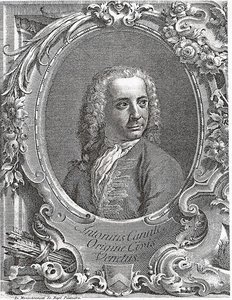
Giovanni Antonio Canal
1697 - 1768 , Italia
Breves datos
- Artistic Movement Or Style: Vedute Venice
- Artists Who Influenced This Artist:
- Luca Carlevaris
- Giovanni Paolo Pannini
- Date Of Birth: October 18, 1697
- Date Of Death: April 19, 1768
- Full Name: Giovanni Antonio Canal
- Nationality: Italian
- Notable Artworks:
- The Stonemason's Yard
- Regatta on the Grand Canal
- Eton College
- Place Of Birth: Venice, Italy

