 Ver en contexto
 Enviar
 Compartir
 Detalles

 Descargar
 Similares
 Radiografía
 Presentación de diapositivas
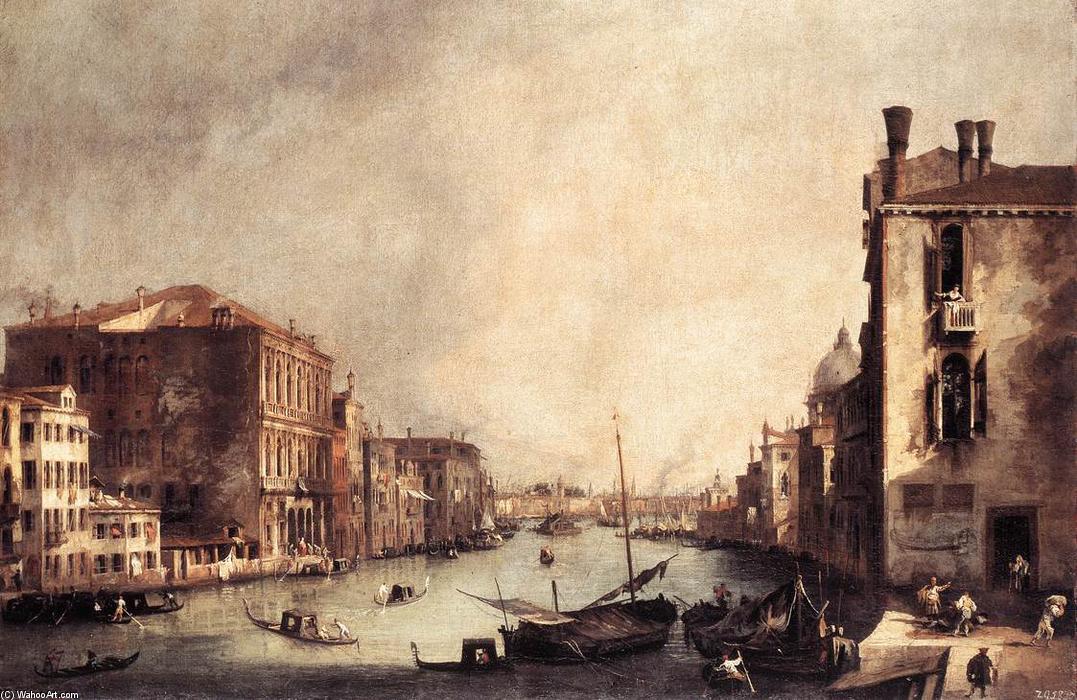
Rio dei Mendicanti: Looking South
 Oil On Canvas
- WallArt
- Baroque
 1725
1725- Early Modern
 69.0 x 97.0 cm
 Galería de Pinturas Antiguas
 Ver más
Reproducción al óleo hecha a mano
Óleo sobre lienzo pintado a mano en el tamaño y marco de su elección, realizado por encargo por nuestros artistas. ( Comprar impresión Comprar imagen)




P118B $10

P118H $10

P118W $10

P438Z $10

P508JH $12

P508YH $12

P805H $10

P805Z $10

P919BZ $10

P919G $10

P919XJ $10

P959ZH $10

P968JZ $12

W106C $8

W218G $10

W218JH $8

W218Y $10

W307PJ $10

W316G $10

W316PJ $8

W316Y $10

W398PJ $8

W4111J $10

W500HY $15

W500JH $15

W692G $12

W849H $8

W940BG $15

W953PJ $8




Elija entre nuestros tamaños predefinidos que respetan las proporciones originales de la obra.

Puede ingresar sus propias dimensiones para adaptarse a un marco o espacio específico. Si el tamaño seleccionado no coincide con las proporciones de la imagen original, recortaremos la obra o extenderemos la pintura con elementos adicionales pintados a mano. Se le enviará una maqueta digital para su aprobación antes de comenzar la producción.
Tenga en cuenta que la vista previa en pantalla no refleja el recorte o la extensión reales. Solo la maqueta mostrará con precisión la composición final.
Si bien existen tamaños personalizados, recomendamos seleccionar una dimensión de la lista predefinida para preservar las proporciones originales.
Tras realizar el pedido, el equipo de ArtsDot.com enviará un correo electrónico al cliente para solicitar instrucciones y proporcionarle una vista previa del boceto.
Envío a todo el mundo () en 3-4 semanas en lugar de las 5 semanas estándar. (24 agosto). Sin comprometer la calidad.

Envío exprés gratuito a todo el mundo

Lienzo de lino de alta calidad

Seguro de envío total

Garantía de reembolso de impuestos aduaneros

Garantía de fidelidad cromática exacta

Política de devolución de 60 días (solo por defectos)

Garantía de devolución del 100% del dinero

Descuento por cantidad
 La opción de vidrio solo está disponible en tamaños inferiores a 110 cm.

Rio dei Mendicanti: Looking South
Técnica de reproducción
Dimensiones de la reproducción
-


Precio total final
$ 263
Descripción de la obra
Rio dei Mendicanti: Looking South – A Venetian Masterpiece by Canaletto
The painting “Rio dei Mendicanti: Looking South,” created circa 1725 by Giovanni Antonio Canaletto, commonly known as Canaletto, stands as a quintessential example of Baroque veduta—a genre dedicated to capturing panoramic views of cities and landscapes with remarkable accuracy. Housed at the Gemäldegalerie Alte Meister in Dresden, Germany, this artwork transcends mere representation; it embodies Canaletto’s profound understanding of light, perspective, and the psychological impact of urban spaces on the human spirit. Measuring 69 x 97 cm and executed in oil on canvas, “Rio dei Mendicanti” offers a captivating glimpse into Venice during its golden age—a period marked by artistic flourishing and opulent patronage.A Window Into Venetian Life
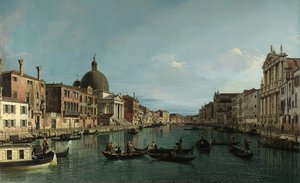
The scene depicts a bustling canal lined with brick buildings reflecting the diffused sunlight of midday. Boats of varying sizes navigate the waterway, their hulls painted in muted hues that harmonize seamlessly with the cityscape’s palette. Canaletto meticulously rendered details—chimneys punctuating rooftops, windows gleaming with light, and even subtle variations in brickwork—demonstrating his mastery of camera obscura techniques. These devices allowed artists like Canaletto to project images onto canvases from darkened rooms, ensuring unparalleled precision and capturing fleeting atmospheric effects. The artist’s goal wasn't simply to depict what he saw; it was to convey the vibrancy and dynamism of Venetian daily life.Baroque Precision and Emotional Resonance
Canaletto’s stylistic approach firmly anchors “Rio dei Mendicanti” within the Baroque tradition, characterized by dramatic contrasts of light and shadow—chiaroscuro—and an emphasis on grandeur and theatricality. However, unlike many Baroque paintings focused solely on spectacle, Canaletto imbues his work with a palpable sense of tranquility and observation. The artist’s gaze seems to invite the viewer into the scene, fostering a feeling of immersion and prompting contemplation about the beauty inherent in everyday existence. This subtle emotional resonance distinguishes Canaletto's oeuvre from more overtly emotive styles prevalent during the period.Historical Context: Venice at Its Zenith
Venice in 1725 was arguably Europe’s wealthiest and most influential city, a maritime superpower controlling trade routes across the Mediterranean and boasting an unrivaled artistic heritage. Canaletto benefited enormously from this cultural climate, attracting commissions from wealthy patrons eager to commemorate Venetian splendor. His paintings served not only as decorative objects but also as powerful instruments of propaganda—celebrating Venice's prestige and reinforcing its position on the European stage. “Rio dei Mendicanti” thus encapsulates a pivotal moment in Venetian history, capturing the spirit of an era defined by artistic innovation and imperial ambition.Legacy and Influence
Canaletto’s meticulous observation and masterful technique profoundly impacted subsequent generations of artists—particularly landscape painters—establishing him as one of the foremost practitioners of veduta painting. His influence can be seen in works by artists such as Claude Lorrain and Nicolas Pocock, who adopted Canaletto's approach to capturing atmospheric perspective and conveying a sense of grandeur. Today, “Rio dei Mendicanti: Looking South” continues to inspire admiration for its beauty and intellectual depth—a testament to Canaletto’s enduring legacy as a visionary artist who transformed the genre of landscape painting forever.Obras relacionadas
Biografía del artista
Giovanni Antonio Canal
Giovanni Antonio Canal, commonly known as canaletto, was born in Venice on October 18, 1697, to Bernardo Canal, a painter of theatrical scene settings, and Artemisia Barbieri. He was the son of a noble family steeped in artistic tradition—Bernardo Canal had himself trained as an artist—and his early life foreshadowed his extraordinary future career. Canaletto’s formative years were marked by exposure to Venetian art and culture, shaping his aesthetic sensibilities from a young age.Early Life and Training
Canaletto began his artistic journey under the tutelage of his father, Bernardo Canal, who instilled in him the foundational principles of painting—observation, composition, and meticulous technique. Recognizing his son’s talent, Bernardo ensured he received a comprehensive education encompassing both artistic practice and humanist studies. Crucially, Canaletto's training extended beyond his father's guidance; he studied with Luca Carlevaris, a celebrated Venetian vedutista (landscape painter) who championed the use of precise perspective and detailed preparatory drawings—methods that would become hallmarks of Canaletto’s distinctive style. This mentorship solidified Canaletto’s understanding of how to capture the essence of urban spaces with remarkable accuracy and artistic merit.The Making of a Master
In 1718, Canaletto embarked on a transformative journey to Rome, where he immersed himself in the vibrant artistic milieu of the era. He worked alongside his father producing scenery for two operas by Alessandro Scarlatti—a formative experience that honed his skills in theatrical design and exposed him to the influential ideas circulating within Roman intellectual circles. This period fostered Canaletto’s burgeoning creativity and cemented his commitment to mastering the art of illusionistic painting, a technique central to Venetian Baroque aesthetics. Upon returning to Venice, Canaletto swiftly established himself as a prolific painter, specializing in vedute—detailed depictions of Venetian cityscape—that captured the grandeur and dynamism of the city during his time.Notable Works and Collaborations
Canaletto’s artistic output spanned decades, producing an impressive body of work that cemented his reputation as one of Venice's foremost artists. Among his most celebrated paintings are “The Stonemason’s Yard” (c. 1725), a masterful early depiction showcasing Canaletto’s burgeoning talent and demonstrating his ability to convey atmosphere and emotion with subtle brushstrokes; “Regatta on the Grand Canal” (c. 1730), which immortalizes a pivotal Venetian public ceremony—a testament to Canaletto's keen eye for capturing social life and architectural detail; and “Eton College” (1746-1756), where he skillfully rendered the collegiate campus in England, reflecting his growing influence as an artist abroad. Canaletto’s collaboration with his nephew Bernardo Bellotto—who became a respected painter in his own right—further enriched Venetian artistic culture, resulting in complementary views of Venice and other European cities.Artistic Style and Technique
Canaletto's distinctive style was characterized by unwavering attention to detail and the masterful application of technique. He famously employed a camera obscura—a darkened room equipped with a lens—to achieve unparalleled topographical accuracy, meticulously transferring observed scenes onto canvas with remarkable precision. However, Canaletto’s artistic vision extended beyond mere replication; he prioritized compositional design, ensuring his paintings were not merely accurate recordings but also aesthetically compelling experiences for the viewer. His brushwork was deliberate and controlled, favoring smooth gradations of color and subtle tonal variations—a technique that conveyed a palpable sense of atmosphere and luminosity. Canaletto's legacy resides in his ability to transform observation into art—to distill the essence of Venice onto canvas with breathtaking beauty and enduring significance.Legacy and Collections
Canaletto’s paintings are housed in prestigious museums worldwide, including The National Gallery in London, where “The Stonemason’s Yard” stands as a cornerstone of Venetian Baroque art; and the Museo Thyssen-Bornemisza in Madrid, which proudly displays “Regatta on the Grand Canal.” His influence extended far beyond his own lifetime, inspiring generations of artists who sought to emulate his meticulous style and evocative vision. Canaletto's contribution to European art history is undeniable—he remains a symbol of Venetian artistic excellence and a testament to the transformative power of observation and artistic skill.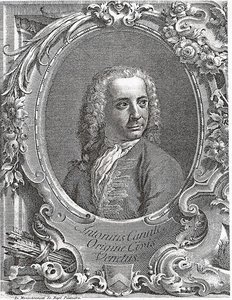
Giovanni Antonio Canal
1697 - 1768 , Italia
Datos clave
- Artistic Movement Or Style: Vedute Venice
- Artists Who Influenced This Artist:
- Luca Carlevaris
- Giovanni Paolo Pannini
- Date Of Birth: October 18, 1697
- Date Of Death: April 19, 1768
- Full Name: Giovanni Antonio Canal
- Nationality: Italian
- Notable Artworks:
- The Stonemason's Yard
- Regatta on the Grand Canal
- Eton College
- Place Of Birth: Venice, Italy
Artículos relacionados
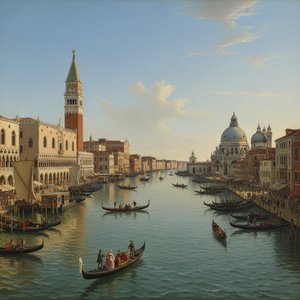
Giovanni Antonio Canal (Canaletto): A Venetian Master of Light, Space & Societal Observation
Explore the life & art of Giovanni Antonio Canal (Canaletto), a Venetian master renowned for his breathtaking cityscapes. Discover his techniques, legacy, and captivating depictions of 18th-century Venice & London.

Giclée Prints: Archival Quality & Aesthetic Nuances for the Discerning Collector
Explore the world of giclée prints with ArtsDot. Learn about archival quality, aesthetic nuances & investment potential. Expert guidance for discerning art collectors seeking museum-quality reproductions and lasting value.

The Enduring Legacy of Fine Art Prints: Technique, History & Aesthetic Impact
Explore the rich history & techniques of fine art prints. Discover investment potential, assess authenticity, and learn how to preserve your collection with expert guidance. Trusted insights for discerning collectors.

Drama Barroca: Llevando la Grandeza y la Emoción a los Interiores Contemporáneos
Descubre cómo el drama y la grandeza del arte barroco pueden transformar tus interiores. Guía experta, inspiración y reproducciones de alta calidad en .

Echoes of Time: Exploring the Enduring Appeal & Historical Context of Vintage Art Prints
Explore the captivating world of vintage art prints! Discover their history, collecting tips & enduring appeal. Expert insights on chromolithography and building a legacy collection with ArtsDot.