

 Ver en contexto
 Enviar
 Compartir
 Detalles

 Descargar
 Similares
 Radiografía
 Presentación de diapositivas
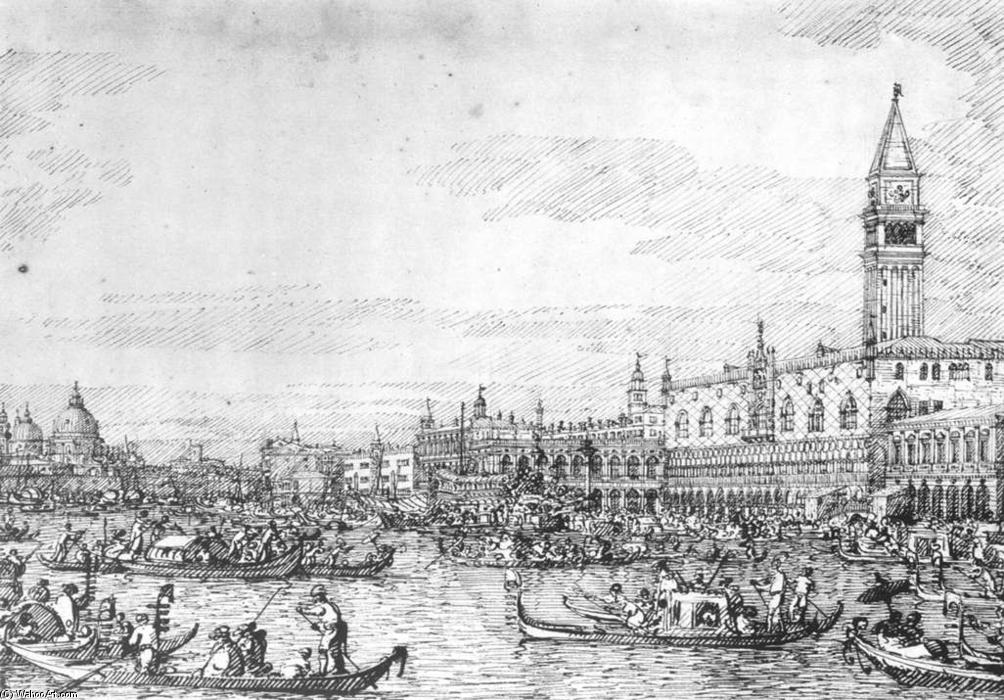
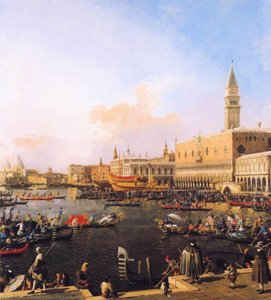
Venice: The Canale di San Marco with the Bucintoro at Anchor
 Venetian School
 1730
1730 268.0 x 376.0 cm
 Colección Real
 Ver más
Adquiera una imagen digital de alta resolución y optimizada, muy superior a la vista previa en línea.
Cada archivo es preparado meticulosamente por nuestros especialistas internos mediante el uso de herramientas avanzadas y un experto retoque manual. Nos aseguramos de que cada imagen posea una claridad excepcional, una precisión cromática impecable y un detalle minucioso.
El archivo final se entrega por correo electrónico en un plazo de 72 horas, optimizado para su uso inmediato en entornos profesionales, editoriales y de impresión. Esta es la misma calidad en la que confían los estudios de diseño, las editoriales y las galerías de primer nivel.
Imagen Digital
Descarga un archivo de alta resolución para exhibición personal, impresión y proyectos creativos. ( Comprar impresión Comprar pintura hecha a mano)
Incluido en cada pedido de imágenes digitales
Entrega digital experta, garantizada.
Al elegir ArtsDot.com, no solo está adquiriendo una imagen; está recibiendo una obra de arte digital mejorada profesionalmente, elaborada con precisión y respaldada por una garantía de satisfacción. Esto es todo lo que incluye su pedido, automáticamente:

Entrega rápida por email
Recibirá su archivo de imagen digital en alta resolución por correo electrónico en un plazo de 72 horas tras realizar su pedido, listo para su uso inmediato.

Archivo digital optimizado por IA
Su obra de arte se optimiza profesionalmente mediante herramientas avanzadas de IA y edición manual, garantizando el máximo detalle, claridad y precisión cromática.

Reenvío gratuito de por vida
¿Has borrado o perdido tu archivo por error? No te preocupes: te lo volveremos a enviar en cualquier momento, sin coste adicional.

Sin gastos de importación, siempre
Disfrute de su obra de arte al instante sin aduanas, aranceles ni gastos de envío; las descargas digitales siempre están libres de impuestos.

Garantía de fidelidad de color
Garantizamos que su imagen digital refleje los colores originales con la mayor fidelidad posible, mediante el uso de herramientas profesionales y gestión del color.

Garantía de satisfacción de 60 días
Si no está satisfecho con su imagen digital, la revisaremos o le reembolsaremos el 100% en un plazo de 60 días, sin preguntas.

100% Garantía de devolución de dinero
¿No está satisfecho? Obtenga un reembolso completo dentro de los 60 días posteriores a la recepción de su archivo digital, sin necesidad de explicaciones.

Descuentos por pedidos grandes
Compra 3 imágenes, ahorra 10% - Compra 5, ahorra 15% - Compra 10+, ahorra 20%. Ideal para proyectos creativos, galerías y agencias.
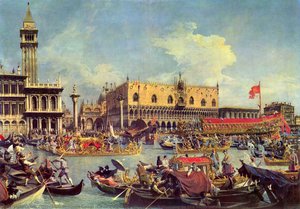
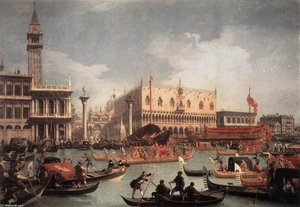
A Venetian Spectacle: Canaletto’s “Venice: The Bucintoro at the Molo on Ascension Day”
Giovanni Antonio Canal, universally known as Canaletto, possessed an extraordinary gift for capturing the vibrant pulse of 18th-century Venice. His “Venice: The Bucintoro at the Molo on Ascension Day,” painted around 1754, stands as a testament to this skill – a monumental canvas brimming with life, color, and meticulously rendered detail. More than just a depiction of a specific event, it’s an immersive experience, transporting the viewer directly into the heart of a bustling Venetian festival, steeped in history and tradition.
The painting immediately commands attention with its sheer scale – measuring over two by nearly four feet. This expansive format is crucial to Canaletto's ‘veduta,’ or cityscape, style, allowing him to encompass a vast panorama of the Grand Canal and its surrounding activity. The scene unfolds before us: the Molo, Venice’s main port, teeming with gondolas, barges, and smaller boats, all vying for space amidst a throng of spectators. Dominating the foreground is the Bucintoro, the Doge's ceremonial barge, adorned in opulent gold and red, its presence signifying the importance of this annual celebration.
A Symphony of Line and Color
Canaletto’s technique is characterized by an astonishing level of precision. He employed a masterful use of fine lines – meticulously drawn hatching and cross-hatching – to build up tonal values and create a remarkable sense of texture. The buildings lining the canal are rendered with painstaking detail, each window, doorway, and architectural element sharply defined. The water itself is depicted with subtle gradations of gray, conveying its reflective surface and movement. This careful attention to detail isn’t merely decorative; it's integral to Canaletto’s ability to create a convincing illusion of depth and space – a hallmark of his style.
The color palette is restrained yet remarkably effective. While the painting exists as a monochrome reproduction, Canaletto originally worked in pen and ink on paper, utilizing shades of gray to achieve a sophisticated range of tones. The use of light and shadow is particularly noteworthy, creating a dramatic effect that highlights key elements within the composition – the gleaming gold of the Bucintoro, the vibrant colors of the festival attire, and the subtle reflections on the water’s surface.
Historical Context and Symbolic Resonance
“Venice: The Bucintoro at the Molo on Ascension Day” offers a captivating glimpse into Venetian society during the mid-18th century. Ascension Day was a significant religious holiday, celebrated with elaborate processions and festivities. The event depicted here – the wedding of Venice to the sea – held deep symbolic meaning for the city’s inhabitants, representing prosperity, peace, and divine favor. Canaletto's decision to capture this particular scene speaks volumes about his understanding of Venetian culture and his desire to document its traditions.
The inclusion of the Campanile di San Marco in the background further anchors the painting within its historical context. This iconic bell tower served as a visual reference point, guiding viewers through the complex cityscape and providing a sense of orientation. It’s also a reminder of Venice's enduring legacy as a center of art, commerce, and culture.
A Window into Venetian Life
Beyond its historical significance, “Venice: The Bucintoro at the Molo on Ascension Day” possesses a powerful emotional impact. The painting captures not just a specific event but also the spirit of Venice – its vibrancy, its energy, and its enduring charm. It evokes a sense of wonder and delight, inviting viewers to step back in time and experience the city as it once was. Canaletto’s masterful composition and meticulous technique combine to create an unforgettable visual narrative, solidifying his place as one of the greatest landscape artists of his era.
Obras relacionadas
Biografía del artista
Giovanni Antonio Canal
Giovanni Antonio Canal, commonly known as canaletto, was born in Venice on October 18, 1697, to Bernardo Canal, a painter of theatrical scene settings, and Artemisia Barbieri. He was the son of a noble family steeped in artistic tradition—Bernardo Canal had himself trained as an artist—and his early life foreshadowed his extraordinary future career. Canaletto’s formative years were marked by exposure to Venetian art and culture, shaping his aesthetic sensibilities from a young age.Early Life and Training
Canaletto began his artistic journey under the tutelage of his father, Bernardo Canal, who instilled in him the foundational principles of painting—observation, composition, and meticulous technique. Recognizing his son’s talent, Bernardo ensured he received a comprehensive education encompassing both artistic practice and humanist studies. Crucially, Canaletto's training extended beyond his father's guidance; he studied with Luca Carlevaris, a celebrated Venetian vedutista (landscape painter) who championed the use of precise perspective and detailed preparatory drawings—methods that would become hallmarks of Canaletto’s distinctive style. This mentorship solidified Canaletto’s understanding of how to capture the essence of urban spaces with remarkable accuracy and artistic merit.The Making of a Master
In 1718, Canaletto embarked on a transformative journey to Rome, where he immersed himself in the vibrant artistic milieu of the era. He worked alongside his father producing scenery for two operas by Alessandro Scarlatti—a formative experience that honed his skills in theatrical design and exposed him to the influential ideas circulating within Roman intellectual circles. This period fostered Canaletto’s burgeoning creativity and cemented his commitment to mastering the art of illusionistic painting, a technique central to Venetian Baroque aesthetics. Upon returning to Venice, Canaletto swiftly established himself as a prolific painter, specializing in vedute—detailed depictions of Venetian cityscape—that captured the grandeur and dynamism of the city during his time.Notable Works and Collaborations
Canaletto’s artistic output spanned decades, producing an impressive body of work that cemented his reputation as one of Venice's foremost artists. Among his most celebrated paintings are “The Stonemason’s Yard” (c. 1725), a masterful early depiction showcasing Canaletto’s burgeoning talent and demonstrating his ability to convey atmosphere and emotion with subtle brushstrokes; “Regatta on the Grand Canal” (c. 1730), which immortalizes a pivotal Venetian public ceremony—a testament to Canaletto's keen eye for capturing social life and architectural detail; and “Eton College” (1746-1756), where he skillfully rendered the collegiate campus in England, reflecting his growing influence as an artist abroad. Canaletto’s collaboration with his nephew Bernardo Bellotto—who became a respected painter in his own right—further enriched Venetian artistic culture, resulting in complementary views of Venice and other European cities.Artistic Style and Technique
Canaletto's distinctive style was characterized by unwavering attention to detail and the masterful application of technique. He famously employed a camera obscura—a darkened room equipped with a lens—to achieve unparalleled topographical accuracy, meticulously transferring observed scenes onto canvas with remarkable precision. However, Canaletto’s artistic vision extended beyond mere replication; he prioritized compositional design, ensuring his paintings were not merely accurate recordings but also aesthetically compelling experiences for the viewer. His brushwork was deliberate and controlled, favoring smooth gradations of color and subtle tonal variations—a technique that conveyed a palpable sense of atmosphere and luminosity. Canaletto's legacy resides in his ability to transform observation into art—to distill the essence of Venice onto canvas with breathtaking beauty and enduring significance.Legacy and Collections
Canaletto’s paintings are housed in prestigious museums worldwide, including The National Gallery in London, where “The Stonemason’s Yard” stands as a cornerstone of Venetian Baroque art; and the Museo Thyssen-Bornemisza in Madrid, which proudly displays “Regatta on the Grand Canal.” His influence extended far beyond his own lifetime, inspiring generations of artists who sought to emulate his meticulous style and evocative vision. Canaletto's contribution to European art history is undeniable—he remains a symbol of Venetian artistic excellence and a testament to the transformative power of observation and artistic skill.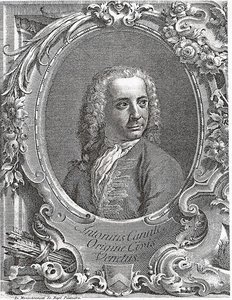
Giovanni Antonio Canal
1697 - 1768 , Italia
Breves datos
- Artistic Movement Or Style: Vedute Venice
- Artists Who Influenced This Artist:
- Luca Carlevaris
- Giovanni Paolo Pannini
- Date Of Birth: October 18, 1697
- Date Of Death: April 19, 1768
- Full Name: Giovanni Antonio Canal
- Nationality: Italian
- Notable Artworks:
- The Stonemason's Yard
- Regatta on the Grand Canal
- Eton College
- Place Of Birth: Venice, Italy

