

 Enviar
 Compartir
 Detalles

 Descargar
 Similares
 Presentación de diapositivas
Coronation of the Virgin Mary


 Ver más
Giclée / Impresión de arte
Impresiones giclée o en lienzo de calidad de museo con producción rápida y opciones de acabado flexibles. ( Comprar pintura hecha a mano Comprar imagen)




































Elija entre nuestros tamaños predefinidos que respetan las proporciones originales de la obra.

Puede introducir sus propias dimensiones para adaptarse a un marco o espacio específico. Si el tamaño seleccionado no coincide con las proporciones de la imagen original, recortaremos la obra de arte o extenderemos la imagen con un borde con efecto espejo o de color sólido. Se enviará una maqueta digital para su aprobación antes de que comience la producción.
Tenga en cuenta que la vista previa en pantalla no refleja el recorte o la extensión real. Solo la maqueta mostrará con precisión la composición final.
Aunque existen tamaños personalizados, recomendamos seleccionar una dimensión de la lista predefinida para preservar las proporciones originales.
Envío a todo el mundo () en 2 semanas en lugar de las 4/5 semanas estándar. (30 agosto)

Envío exprés gratuito a todo el mundo

Lienzo de lino de alta calidad

Seguro de envío total

Garantía de reembolso de impuestos aduaneros

Garantía de fidelidad cromática exacta

Política de devolución de 60 días (solo por defectos)

Garantía de devolución del 100% del dinero

Descuento por cantidad
 La opción de vidrio solo está disponible en tamaños inferiores a 110 cm.

Coronation of the Virgin Mary
Giclée / Impresión de arte
Dimensiones de la reproducción
-


Precio total final
$ 62
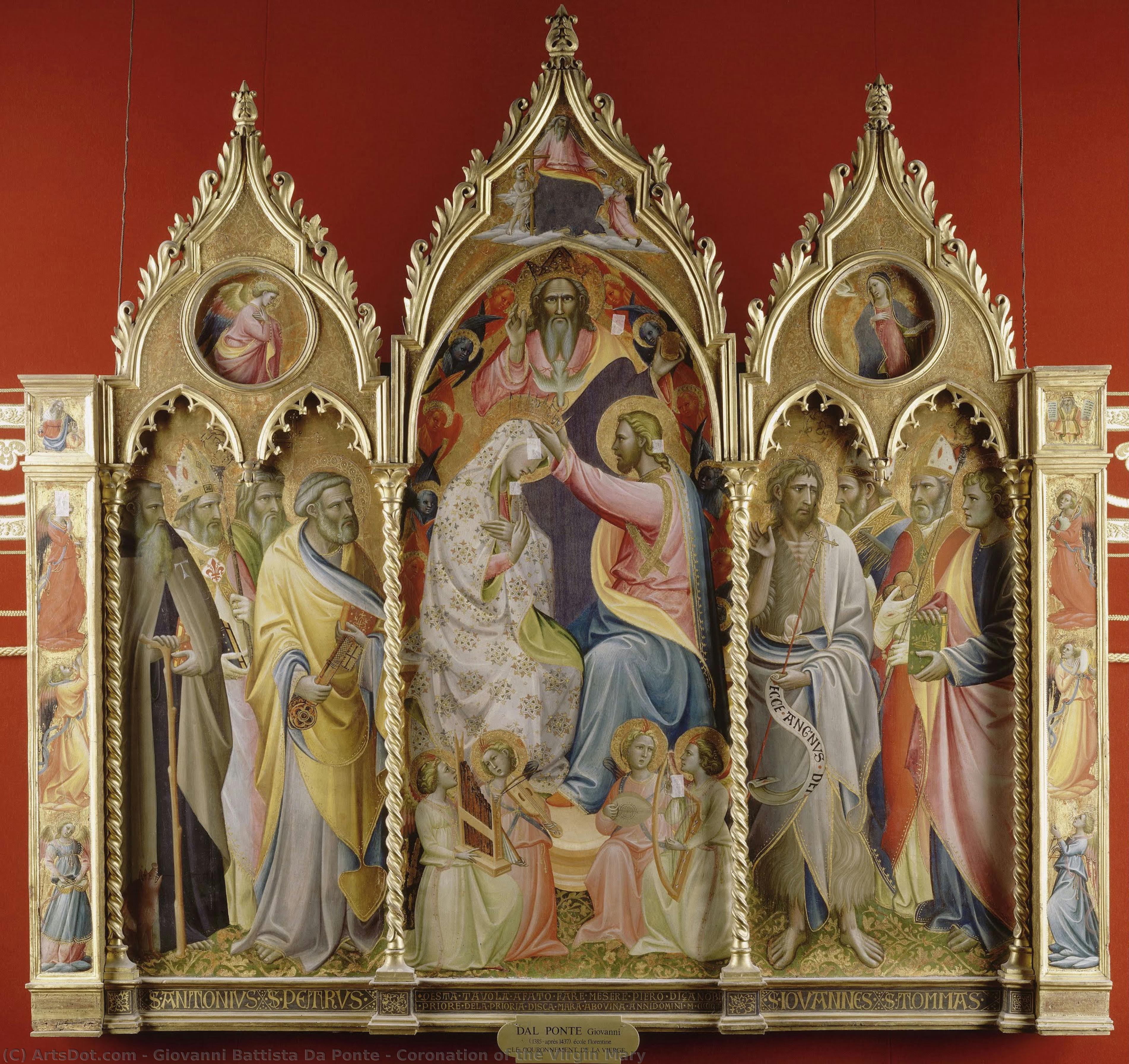
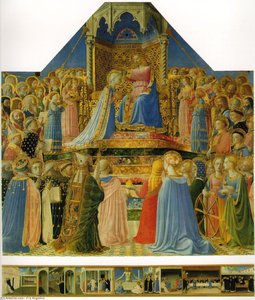
A Celestial Coronation: Exploring Giovanni Battista da Ponte's "Coronation of the Virgin Mary"
The fresco depicting the “Coronation of the Virgin Mary,” attributed to giovanni battista da ponte, stands as a testament to the fervent religious devotion and artistic flourishing of 15th-century Italy. Dating back to approximately 1425, this large-scale work offers a glimpse into the spiritual landscape of an era deeply rooted in faith, while simultaneously showcasing the evolving techniques and stylistic sensibilities of Renaissance painting. The scene itself is one steeped in symbolism – a visual representation of Mary’s ascension to divine queenship, a concept gaining increasing prominence within Catholic theology during this period. It's not merely a depiction of a heavenly event; it's an affirmation of Mary’s pivotal role as intercessor between humanity and the divine, a comforting image for worshippers seeking solace and guidance. The sheer scale of the fresco suggests its intended purpose: to inspire awe and reverence within a sacred space, drawing viewers into a contemplative experience of faith.The Artistic Landscape and Ponte's Place Within It
To fully appreciate this artwork, it’s crucial to understand the context in which it was created. The early 15th century witnessed a shift away from the stylized conventions of Gothic art towards a more naturalistic representation of the human form and the world around us – a hallmark of the burgeoning Renaissance. While giovanni battista da ponte worked within this evolving artistic climate, his style reflects a blend of late medieval traditions and emerging Renaissance ideals. He was the second son of Jacopo da Ponte, a renowned artist of the time, and much of his work is believed to have been influenced by, or even copied from, his father’s creations – a common practice in family workshops of the era. This connection highlights the importance of artistic lineage and apprenticeship within Renaissance society, where skills and techniques were passed down through generations. The fresco's composition, while grand, demonstrates a certain adherence to established iconographic conventions, yet it also hints at a growing interest in depicting figures with greater realism and emotional depth.Symbolism Woven into the Celestial Tapestry
Beyond its visual beauty, the "Coronation of the Virgin Mary" is rich in symbolic meaning. At the heart of the scene stands the Virgin Mary, resplendent in regal attire, receiving a crown from Jesus Christ – a clear declaration of her divine status and role as Queen of Heaven. The presence of other figures—angels, saints, and perhaps even representations of humanity—further enriches the narrative. Each element contributes to a complex tapestry of theological meaning. For instance, the book often depicted near Mary might symbolize her wisdom and knowledge, while the cup could allude to the Eucharist and her role in salvation. The musician angels, frequently featured in such depictions, are not merely decorative elements; they represent the heavenly choir celebrating this momentous occasion, their music a symbol of divine harmony and praise. These details invite viewers to engage with the artwork on multiple levels—appreciating its aesthetic qualities while simultaneously contemplating its profound spiritual message.A Legacy of Faith and Artistic Skill
The "Coronation of the Virgin Mary" by giovanni battista da ponte is more than just a beautiful painting; it’s a window into the religious beliefs, artistic practices, and cultural values of 15th-century Italy. While attribution and precise details about the fresco's original location remain somewhat elusive, its enduring power lies in its ability to evoke a sense of awe and reverence—a testament to the artist’s skill in capturing a pivotal moment in Christian iconography. The work serves as a reminder of the profound impact that art can have on shaping our understanding of faith, history, and the human experience, continuing to inspire contemplation and appreciation centuries after its creation. It stands as an excellent example of how Renaissance artists skillfully combined religious devotion with artistic innovation, creating works that resonate deeply with viewers across generations.Obras relacionadas
Biografía del artista
visión biográfica
giovanni battista da ponte, también conocido como giovanni battista bassano, fue un pintor italiano del periodo renacentista, nacido en 1553 en Bassano del Grappa, Italia. Fue el segundo hijo de jacopo da ponte, un artista de gran renombre en su época.estilo artístico y contribuciones
giovanni battista da ponte fue reconocido principalmente por su labor como copista de las obras de su padre, lo que ha provocado que muchas de sus producciones se atribuyan actualmente bajo el nombre de jacopo. Su actividad artística se desarrolló en Venecia y en su natal Bassano del Grappa, enriqueciendo el vibrante panorama cultural de la Italia renacentista.obras notables y museos
* la última cena en Emaús (alto renacimiento) - una pintura notable de jacopo bassano (jacopo da ponte), que exhibe su maestría en temas religiosos. [https://ArtsDot.com/@@/8lj54h-jacopo-bassano-(jacopo-da-ponte)-supper-at-emmaus](https://ArtsDot.com/@@/8lj54h-jacopo-bassano-(jacopo-da-ponte)-supper-at-emmaus) * el museo civico di bassano del grappa, situado en la región del Véneto, al norte de Italia, es uno de los museos más antiguos de la zona y alberga obras de giovanni battista da ponte. [https://ArtsDot.com/@@/a@d3atzm-museo-civico-di-bassano-del-grappa-italy](https://ArtsDot.com/@@/a@d3atzm-museo-civico-di-bassano-del-grappa-italy)legado e influencia
La obra de giovanni battista da ponte, aunque a menudo eclipsada por la de su padre, representa una contribución significativa al Renacimiento italiano. Su adhesión a las técnicas tradicionales, mientras exploraba nuevos temas, refleja el espíritu de transición propio de aquella era.- giovanni battista da ponte - wikipedia
- explore más obras de jacopo bassano (jacopo da ponte) en ArtsDot: [https://ArtsDot.com/@/jacopo-bassano-(jacopo-da-ponte)](https://ArtsDot.com/@/jacopo-bassno-(jacopo-da-ponte))
- descubra la colección del museo civico di bassano del grappa: [https://ArtsDot.com/@@/a@d3atzm-museo-civico-di-bassano-del-grappa-italy](https://ArtsDot.com/@@/a@d3atzm-museo-civico-di-bassano-del-grappa-italy)
Giovanni Battista Da Ponte
1553 - 1613 , Italia
Datos clave
- Artistic Movement Or Style: Renacimiento, Grabado
- Artists Or Movements Influenced By This Artist:
- Lucas Cranach el Joven
- Renacimiento Alemán
- Artists Who Influenced This Artist:
- Hans Maler
- Albrecht Dürer
- Date Of Birth: c. 1472
- Date Of Death: 16 de octubre de 1553
- Full Name: Lucas Cranach el Viejo
- Nationality: Alemán
- Notable Artworks:
- Venus y Adonis
- El descanso durante la huida a Egipto
- Retrato de un hombre
- Lutero como 'Junker Jorg'
- Place Of Birth: Kronach, Alemania
Artículos relacionados
Leonardo da Vinci: Las 25 Obras Maestras que Definieron un Genio | ArtsDot
Descubre las 25 obras maestras de Leonardo da Vinci, desde la Mona Lisa hasta La Última Cena. Explora su arte renacentista, técnicas innovadoras y el legado del genio italiano. Reproducciones de alta calidad para decorar tu hogar con belleza y historia en ArtsDot.com.
Leonardo da Vinci: Síntesis del Arte, la Ciencia y la Observación Humana en el Renacimiento – Una Reinterpretación para el Coleccionista
Descubra la síntesis del arte y la ciencia en Leonardo da Vinci. Análisis profundo de sus obras maestras, técnicas innovadoras y legado para coleccionistas exigentes. Una reinterpretación experta.
Los 25 Tesoros del Uffizi: Arte Renacentista para tu Hogar | ArtsDot
Descubre los 25 tesoros del Uffizi en Florencia: Botticelli, Leonardo da Vinci y más. Explora la historia, el arte renacentista y encuentra reproducciones de alta calidad para tu hogar. ¡Inspírate con ArtsDot.com!
Giovanni Giacometti: Sculpting Existentialism – A Study of Form, Space, and the Human Condition
Explore the profound artistic journey of Giovanni Giacometti, father to Alberto. Discover his unique transition from Surrealism to Existentialist sculpture and painting – a compelling study for elite collectors and art enthusiasts.
Giovanni Battista Piranesi: Visionary of Ruins & Architect of Imagination
Explore the life & work of Giovanni Battista Piranesi, master etcher of Roman views & creator of the haunting 'Carceri d'Invenzione'. Discover his architectural vision and lasting influence on art history.

