 Ver en contexto
 Enviar
 Compartir
 Detalles

 Descargar
 Similares
 Radiografía
 Presentación de diapositivas
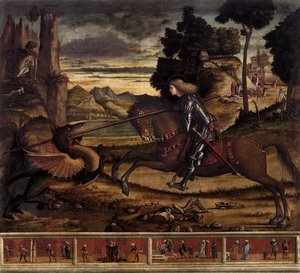
pesaro - Retablo de Pesaro (predela)2


 Ver más
Reproducción al óleo hecha a mano
Óleo sobre lienzo pintado a mano en el tamaño y marco de su elección, realizado por encargo por nuestros artistas. ( Comprar impresión Comprar imagen)




P118B $10

P118H $10

P118W $10

P438Z $10

P508JH $12

P508YH $12

P805H $10

P805Z $10

P919BZ $10

P919G $10

P919XJ $10

P959ZH $10

P968JZ $12

W106C $8

W218G $10

W218JH $8

W218Y $10

W307PJ $10

W316G $10

W316PJ $8

W316Y $10

W398PJ $8

W4111J $10

W500HY $15

W500JH $15

W692G $12

W849H $8

W940BG $15

W953PJ $8




Elija entre nuestros tamaños predefinidos que respetan las proporciones originales de la obra.

Puede ingresar sus propias dimensiones para adaptarse a un marco o espacio específico. Si el tamaño seleccionado no coincide con las proporciones de la imagen original, recortaremos la obra o extenderemos la pintura con elementos adicionales pintados a mano. Se le enviará una maqueta digital para su aprobación antes de comenzar la producción.
Tenga en cuenta que la vista previa en pantalla no refleja el recorte o la extensión reales. Solo la maqueta mostrará con precisión la composición final.
Si bien existen tamaños personalizados, recomendamos seleccionar una dimensión de la lista predefinida para preservar las proporciones originales.
Tras realizar el pedido, el equipo de ArtsDot.com enviará un correo electrónico al cliente para solicitar instrucciones y proporcionarle una vista previa del boceto.
Envío a todo el mundo () en 3-4 semanas en lugar de las 5 semanas estándar. (23 agosto). Sin comprometer la calidad.

Envío exprés gratuito a todo el mundo

Lienzo de lino de alta calidad

Seguro de envío total

Garantía de reembolso de impuestos aduaneros

Garantía de fidelidad cromática exacta

Política de devolución de 60 días (solo por defectos)

Garantía de devolución del 100% del dinero

Descuento por cantidad
 La opción de vidrio solo está disponible en tamaños inferiores a 110 cm.

pesaro - Retablo de Pesaro (predela)2
Técnica de reproducción
Dimensiones de la reproducción
-


Precio total final
$ 263
Descripción de la obra
The Luminous Journey of Bellini's Pesaro Altarpiece Predella
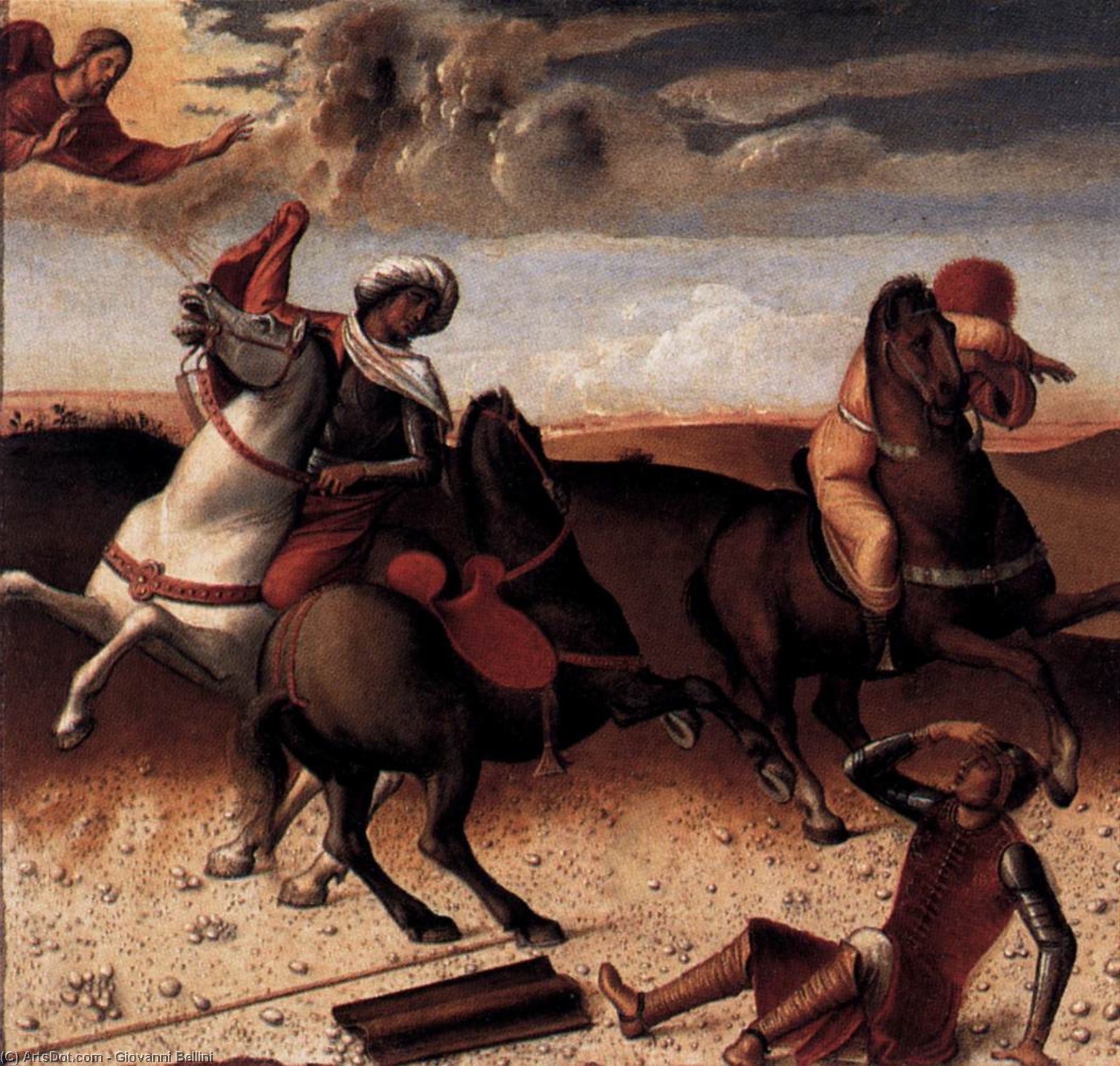
To gaze upon the predella section of Giovanni Bellini’s Pesaro Altarpiece is to step directly into the heart of the Italian Renaissance, a moment when art was shedding its rigid formality for a vibrant embrace of human experience. Painted in 1479, this work transcends mere decoration; it is a narrative tapestry woven from oil paint, light, and profound spiritual contemplation. Bellini, ever the master of Venetian color, guides the viewer's eye across a seemingly endless desert landscape, populated by figures whose very presence seems imbued with divine purpose.
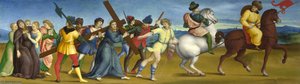
The composition itself arrests the breath. Three figures, mounted upon magnificent horses, traverse this arid expanse. On the left, a figure clad in striking red commands attention atop a brilliant white steed. In the center, another rider continues the procession, while to the right, a third individual anchors the scene with their horse positioned closer to our vantage point. This arrangement is not arbitrary; it suggests a journey—a pilgrimage both physical and spiritual.
Mastery of Color and Light in Venetian Technique
Bellini’s genius shines brightest in his handling of color. He was not merely a painter, but a chromatic visionary. The way the light seems to emanate from within the scene itself, catching the folds of drapery and illuminating the dust motes in the air, is breathtaking. His innovative use of oil paint allowed him to achieve subtle gradations of tone that mimic the soft glow of dawn or the intense clarity of an open sky. Observe the interplay between the rich reds, the earthy tones of the desert, and the stark whites of the horses—each hue sings against its neighbor, creating a visual harmony characteristic of the High Renaissance period in Venice.
The inclusion of the flying bird above the riders adds a delicate yet vital element of movement. It breaks the horizontal stillness of the procession, suggesting the breath of life and the omnipresent spirit watching over this sacred journey.
Symbolism of the Desert Passage
Art historically, desert landscapes in religious art are rarely just backdrops; they are potent symbols. This arid setting speaks to trials, purification, and the arduous path toward enlightenment or salvation. The riders, therefore, can be interpreted as souls undertaking a necessary passage—a journey through earthly tribulations guided by faith. The horses themselves, powerful yet controlled, symbolize the spirit harnessed by divine will. For the collector or admirer of art history, this piece offers an immediate connection to profound theological narratives rendered with unparalleled grace.
Bringing Renaissance Grandeur Home
For those seeking to integrate the majesty of Renaissance artistry into a modern interior space, reproductions of this predella offer an extraordinary opportunity. Owning a piece inspired by Bellini allows one to possess not just paint on canvas, but a tangible echo of Venetian genius. The depth, the luminosity, and the narrative weight contained within these works make them exceptional focal points for any room—a conversation starter that speaks volumes about an appreciation for enduring artistic mastery.
Obras relacionadas
Biografía del artista
Primeros años y carrera
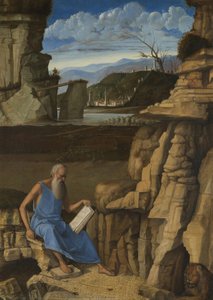
Giovanni Bellini, un destacado pintor del Renacimiento veneciano, nació alrededor de 1433 en Venecia. Fue criado en el hogar de Jacopo Bellini, que antes se creía su padre, pero ahora se considera su hermano mayor. Las primeras obras de Giovanni se caracterizan por una profunda religiosidad y un sentimiento humano, como se ve en su pintura *San Jerónimo en el desierto* (ahora en la Galería Nacional, Londres).Ascenso a la prominencia
El estilo artístico de Giovanni evolucionó con el tiempo, y finalmente se hizo conocido por sus colores suntuosos y paisajes atmosféricos fluidos. Su obra tuvo un impacto significativo en la escuela veneciana de pintura, particularmente en sus alumnos Giorgione y Tiziano. Giovanni recibió su primer nombramiento para trabajar junto a su hermano Gentile Bellini y otros artistas en la Scuola di San Marco en 1470.Obras notables y legado
- *La Transfiguración* (ahora en el Museo de Capodimonte de Nápoles) muestra el estilo maduro de Giovanni, con un espíritu sereno y poderes maduros.
- *La Coronación de la Virgen* (en Pesaro) demuestra su esfuerzo temprano en una forma de arte previamente dominada por la escuela rival de los Vivarini.
- Las funciones de Giovanni como conservador de las pinturas en el gran salón del Palacio Ducal (1479-1480) consolidaron aún más su reputación como maestro pintor.
Estilo artístico e influencia
El uso de Giovanni de pinturas al óleo claras y de secado lento creó tonos profundos y ricos y sombreados detallados, revolucionando la pintura veneciana. Su obra puede caracterizarse por:-
Estilo sensorial y colorista
- Colores suntuosos y paisajes atmosféricos fluidos
- Influencia en la escuela de pintura veneciana y sus alumnos Giorgione y Tiziano
Referencias

Giovanni Bellini
1433 - 1516 , Italia
Datos clave
- Artistas Influenciados:
- Giorgione
- Tiziano
- Artistas Que Influyeron:
- Jacopo Bellini
- Gentile Bellini
- Fecha De Nacimiento: c. 1433
- Lugar De Nacimiento: Venecia, Italia
- Movimiento Artístico: Renacimiento veneciano
- Nacionalidad: Italiana
- Nombre Completo: Giovanni Bellini
- Obras Notables:
- Transfiguración
- Coronación de la Virgen
- San Sebastián
- Madonna degli Alberetti
- Cristo Muerto Apoyado por Ángeles
Artículos relacionados

The Enduring Legacy of Oil on Canvas: Technique, History & Aesthetic Impact
Explore the rich history & techniques of oil painting – from Renaissance masters to Impressionism. Discover pigments, layering methods, and why this timeless medium endures. Expert insights for artists & art enthusiasts.

Jacopo Tintoretto: Las 25 Obras Maestras del Genio Veneciano | Arte y Decoración en ArtsDot
Descubre las 25 obras maestras de Jacopo Tintoretto, el genio veneciano del Renacimiento. Explora su arte dramático, composiciones innovadoras y paleta vibrante. Reproducciones de alta calidad en ArtsDot.com para transformar tu hogar.

The Enduring Power of Painting: A Historical & Contemporary Exploration of Form and Emotion
Explore the rich history & enduring techniques of oil painting with ArtsDot. Discover masterpieces, learn about art collecting, and find authentic handmade reproductions crafted by skilled artists.

El Óleo sobre Lienzo: Historia, Técnica y la Persistencia de un Medio Artístico Atemporal
Descubre la historia y técnica del óleo sobre lienzo. Explora reproducciones fieles hechas a mano, personalización artística y consejos de expertos con ArtsDot. ¡Colecciona arte con confianza!
La Luz Dorada de la Innovación: Explorando el Renacimiento Veneciano (1430–1580)
Descubra la riqueza y el esplendor del Renacimiento veneciano con ArtsDot. Explore las obras maestras de Tiziano, Giorgione y Tintoretto. Análisis experto, historia detallada e información para coleccionistas.