 Ver en contexto
 Enviar
 Compartir
 Detalles

 Descargar
 Similares
 Radiografía
 Presentación de diapositivas
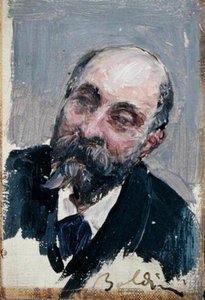
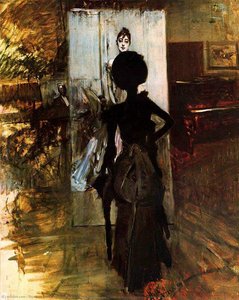
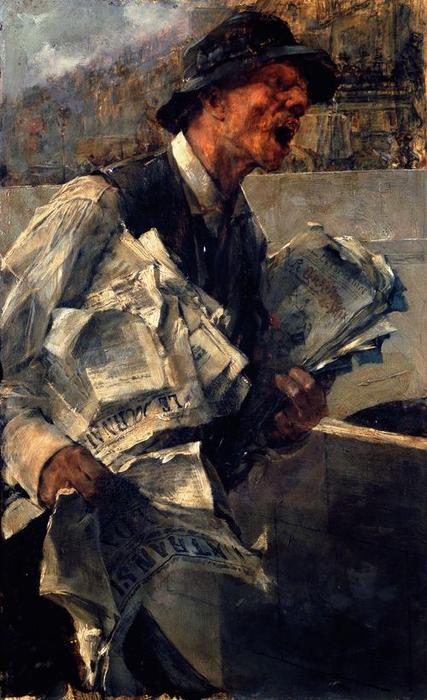
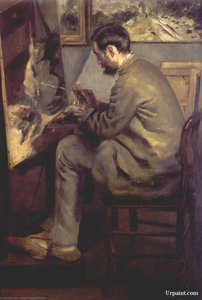
Newspaperman in Paris (also known as The newspaper)
 Acrylic On Canvas
- WallArt
- Impressionism
 1880
1880- 19th Century
 47.0 x 29.0 cm
 Museo di Capodimonte
 Ver más
Giclée / Impresión de arte
Impresiones giclée o en lienzo de calidad de museo con producción rápida y opciones de acabado flexibles. ( Comprar pintura hecha a mano Comprar imagen)




P118B $10

P118H $10

P118W $10

P438Z $10

P508JH $12

P508YH $12

P805H $10

P805Z $10

P919BZ $10

P919G $10

P919XJ $10

P959ZH $10

P968JZ $12

W106C $8

W218G $10

W218JH $8

W218Y $10

W307PJ $10

W316G $10

W316PJ $8

W316Y $10

W398PJ $8

W4111J $10

W500HY $15

W500JH $15

W692G $12

W849H $8

W940BG $15

W953PJ $8




Elija entre nuestros tamaños predefinidos que respetan las proporciones originales de la obra.

Puede introducir sus propias dimensiones para adaptarse a un marco o espacio específico. Si el tamaño seleccionado no coincide con las proporciones de la imagen original, recortaremos la obra de arte o extenderemos la imagen con un borde con efecto espejo o de color sólido. Se enviará una maqueta digital para su aprobación antes de que comience la producción.
Tenga en cuenta que la vista previa en pantalla no refleja el recorte o la extensión real. Solo la maqueta mostrará con precisión la composición final.
Aunque existen tamaños personalizados, recomendamos seleccionar una dimensión de la lista predefinida para preservar las proporciones originales.
Envío a todo el mundo () en 2 semanas en lugar de las 4/5 semanas estándar. (28 agosto)

Envío exprés gratuito a todo el mundo

Lienzo de lino de alta calidad

Seguro de envío total

Garantía de reembolso de impuestos aduaneros

Garantía de fidelidad cromática exacta

Política de devolución de 60 días (solo por defectos)

Garantía de devolución del 100% del dinero

Descuento por cantidad
 La opción de vidrio solo está disponible en tamaños inferiores a 110 cm.

Newspaperman in Paris (also known as The newspaper)
Giclée / Impresión de arte
Dimensiones de la reproducción
-


Precio total final
$ 62
Newspaperman in Paris (The newspaper): A Portrait of Urban Life and Artistic Impression
Giovanni Boldini’s “Newspaperman in Paris,” also known as “The newspaper,” transcends mere depiction; it embodies the spirit of Belle Époque Parisian society through a masterful blend of realism and artistic impressionism. Created in 1880, this oil on panel painting—measuring 47 x 29 cm—currently resides at the Museo di Capodimonte in Naples, Italy, offering visitors a glimpse into Boldini’s unparalleled ability to capture fleeting moments and convey profound emotion. ### Subject Matter and Composition The artwork centers around a solitary man absorbed in reading newspapers on a bustling city street. Boldini skillfully portrays him with meticulous detail—the hat perched atop his head, the mustache prominently displayed—establishing a recognizable figure against the backdrop of urban activity. However, Boldini doesn’t simply record what he sees; he transforms it into an evocative tableau. The artist deliberately positions the man slightly off-center, creating visual balance and drawing the viewer's eye towards the central subject while subtly hinting at the dynamism surrounding him. Furthermore, Boldini’s background figures—a multitude of pedestrians moving through the street—are rendered with looser brushstrokes, emphasizing the energy and movement of Parisian life without dominating the composition. ### Artistic Style: Impressionistic Realism Boldini's style is characterized by a harmonious fusion of impressionistic techniques and realistic observation. Unlike purely abstract artists who prioritize form over content, Boldini strives to convey not just what he sees but how it feels—the atmosphere of the street, the light filtering through the buildings, and the subtle nuances of human expression. The artist employs vibrant colors—particularly yellows and reds—to illuminate the scene, capturing the vibrancy of urban life. Delicate brushstrokes contribute to a sense of spontaneity and immediacy, mirroring the fleeting impressions experienced by an observer in a busy city environment. Boldini’s influence can be seen in the work of younger artists like John Singer Sargent, demonstrating his role as a pivotal figure in shaping the artistic landscape of his time. ### Technique and Material Considerations Boldini's masterful execution is evident in every aspect of this painting. The oil on panel medium allows for rich pigment saturation and textural depth—a hallmark of Boldini’s style. Careful layering of glazes creates luminosity and enhances color vibrancy, capturing the subtle interplay of light and shadow. The artist’s meticulous attention to detail—particularly in rendering facial features and clothing textures—underscores his commitment to realism while simultaneously elevating the artwork beyond a simple depiction of reality. The Museo di Capodimonte provides an ideal setting for appreciating Boldini's technique and artistry, allowing visitors to contemplate the painting's beauty and complexity firsthand. ### Symbolism and Emotional Impact Beyond its visual splendor, “Newspaperman in Paris” carries symbolic weight—reflecting the anxieties and aspirations of a society grappling with rapid industrialization and social change. The man reading newspapers represents intellectual engagement and awareness—a desire to understand the world around him amidst the pressures of urban life. Boldini’s portrayal captures not only the physical appearance but also the psychological state of his subject, conveying a sense of quiet contemplation within the bustling cityscape. Ultimately, this painting invites viewers to consider themes of identity, observation, and the human experience—leaving an indelible impression on anyone who encounters its captivating beauty.Obras relacionadas
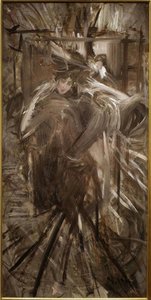
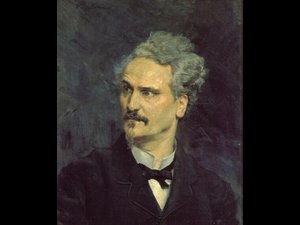
Biografía del artista
Primeros años y formación
Giovanni Boldini, pintor italiano de género y retratos, nació el 31 de diciembre de 1842 en Ferrara, Italia. Su padre, un pintor de temas religiosos, fomentó su temprano interés por el arte. En 1862, Boldini se trasladó a Florencia durante seis años para estudiar y dedicarse a la pintura, donde conoció a los macchiaioli, un grupo de pintores realistas italianos que fueron precursores del impresionismo.Carrera artística
El estilo artístico de Boldini se caracterizó por su respuesta fluida y espontánea a la naturaleza, como se ve en sus paisajes. Sin embargo, fueron sus retratos los que le valieron un amplio reconocimiento. Se hizo conocido como el "maestro del trazo", un título acuñado por Time Magazine en 1933.Obras notables y exposiciones
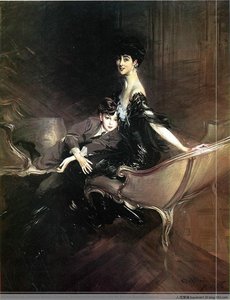
- El retrato de Giovanni Boldini de la condesa de Rasty recostada (impresionismo) es un ejemplo notable de su obra, que muestra su capacidad para capturar la esencia de sus sujetos.
- En 1897, tuvo una exposición individual en Nueva York, lo que consolidó aún más su reputación como retratista.
- Participó en la Bienal de Venecia en 1895, 1903, 1905 y 1912, demostrando su compromiso con el mundo del arte.
Influencias y desarrollo artístico
Boldini inicialmente se formó bajo la influencia de los macchiaioli, adoptando sus técnicas realistas y su enfoque en la observación directa de la naturaleza. Sin embargo, a medida que evolucionaba su carrera, desarrolló un estilo más libre y expresivo, influenciado por el impresionismo y el arte japonés. Su habilidad para capturar el movimiento y la luz se convirtió en una característica distintiva de sus retratos, especialmente aquellos realizados durante su período parisino.Legado e importancia histórica
Giovanni Boldini falleció el 11 de julio de 1931 en París, dejando atrás un legado como uno de los pintores de retratos más elegantes de su tiempo. Su obra continúa inspirando a artistas y entusiastas del arte por igual.- Explore más obras de Giovanni Boldini en [https://ArtsDot.com/@/giovanni-boldini].
- Descubra el Museo Giovanni Boldini (Italia) y su importancia en el arte italiano en [https://ArtsDot.com/@@/a@d3astr-museo-giovanni-boldini-(italy)-a-hidden-gem-of-italian-art].
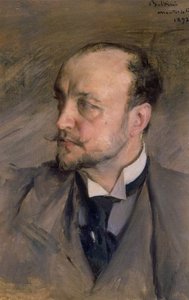
Giovanni Boldini
1842 - 1931 , Italia
Datos clave
- Artistas Influyentes: ['Macchiaioli']
- Estilo Artístico: Impresionismo, Realismo
- Fecha De Fallecimiento: 11 de julio de 1931
- Fecha De Nacimiento: 31 de diciembre de 1842
- Lugar De Nacimiento: Ferrara, Italia
- Nacionalidad: Italiana
- Nombre Completo: Giovanni Boldini
- Obras Notables: ['La condesa de Rasty reclinada']
Artículos relacionados
Giovanni Boldini: A Study in Belle Époque Portraiture & the Cult of Personality
Explore the captivating world of Giovanni Boldini, master of Belle Époque portraiture. Discover his signature style, iconic works like 'Miss Bell,' and lasting influence on art history. Expert analysis for collectors.
Echoes of 1882: Art, Culture & the Belle Époque's Lasting Impression
Explore the art & culture of the Belle Époque! Discover Impressionism, Realism, and iconic Parisian paintings from Degas, Béraud & more. High-quality reproductions at ArtsDot.
Jean-Georges Béraud: Capturing Parisian Life in the Belle Époque
Explore the captivating world of Jean-Georges Béraud, master painter of Belle Époque Paris. Discover his iconic scenes, artistic evolution, and social commentary. A deep dive into 19th-century French art.
Echoes of 1875: Art, Culture & the Belle Époque's Pivotal Moment
Explore the art & culture of 1875 Paris – a pivotal year for Impressionism & the Belle Époque. Discover Degas, Béraud, Stewart & more with ArtsDot's expert insights.
Alfred Stevens: Capturing Parisian Life with Intimate Realism & Symbolist Flair
Explore the captivating world of Alfred Stevens, a pioneer of intimate realism & Symbolist painting. Discover his elegant portraits of Parisian women and learn about his Dutch influences & lasting legacy. Art history insights at ArtsDot.