 Ver en contexto
 Enviar
 Compartir
 Detalles

 Descargar
 Similares
 Radiografía
 Presentación de diapositivas
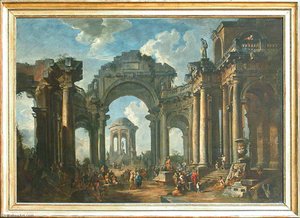
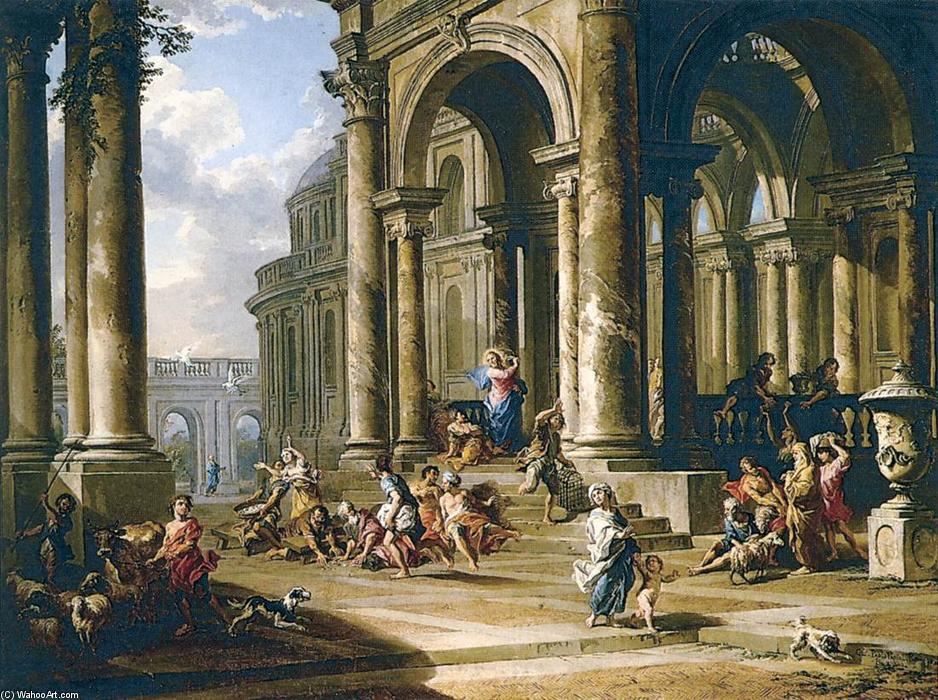
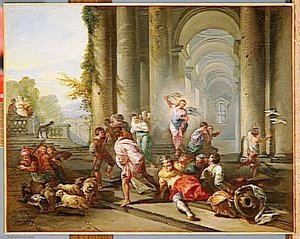
Expulsion of the Moneychangers from the Temple
 Oil On Canvas
- WallArt
- Baroque Painting
 1724
1724 74.0 x 99.0 cm
 Museo Nacional Thyssen-Bornemisza
 Ver más
Giclée / Impresión de arte
Impresiones giclée o en lienzo de calidad de museo con producción rápida y opciones de acabado flexibles. ( Comprar pintura hecha a mano Comprar imagen)




P118B $10

P118H $10

P118W $10

P438Z $10

P508JH $12

P508YH $12

P805H $10

P805Z $10

P919BZ $10

P919G $10

P919XJ $10

P959ZH $10

P968JZ $12

W106C $8

W218G $10

W218JH $8

W218Y $10

W307PJ $10

W316G $10

W316PJ $8

W316Y $10

W398PJ $8

W4111J $10

W500HY $15

W500JH $15

W692G $12

W849H $8

W940BG $15

W953PJ $8




Elija entre nuestros tamaños predefinidos que respetan las proporciones originales de la obra.

Puede introducir sus propias dimensiones para adaptarse a un marco o espacio específico. Si el tamaño seleccionado no coincide con las proporciones de la imagen original, recortaremos la obra de arte o extenderemos la imagen con un borde con efecto espejo o de color sólido. Se enviará una maqueta digital para su aprobación antes de que comience la producción.
Tenga en cuenta que la vista previa en pantalla no refleja el recorte o la extensión real. Solo la maqueta mostrará con precisión la composición final.
Aunque existen tamaños personalizados, recomendamos seleccionar una dimensión de la lista predefinida para preservar las proporciones originales.
Envío a todo el mundo () en 2 semanas en lugar de las 4/5 semanas estándar. (4 septiembre)

Envío exprés gratuito a todo el mundo

Lienzo de lino de alta calidad

Seguro de envío total

Garantía de reembolso de impuestos aduaneros

Garantía de fidelidad cromática exacta

Política de devolución de 60 días (solo por defectos)

Garantía de devolución del 100% del dinero

Descuento por cantidad
 La opción de vidrio solo está disponible en tamaños inferiores a 110 cm.

Expulsion of the Moneychangers from the Temple
Giclée / Impresión de arte
Dimensiones de la reproducción
-


Precio total final
$ 62
A Dramatic Scene of Justice and Order: Giovanni Paolo Panini’s “Expulsion of the Moneychangers”
Giovanni Paolo Panini's "Expulsion of the Moneychangers from the Temple" is more than just a depiction of a biblical event; it’s a meticulously crafted tableau vivant, a testament to 18th-century Roman artistic skill and a profound meditation on justice, order, and the corruption of power. Painted in 1724, this large oil on canvas transports us directly into the heart of the scene described by Matthew, Mark, and Luke – Jesus confronting the merchants and money changers within the Temple precincts. Panini, a master of *veduta* painting (views of cities), elevates a potentially simple narrative to an extraordinary level of theatricality and architectural precision.
The composition immediately commands attention. Christ, rendered in vibrant hues of blue and pink – colors often associated with divinity and righteousness – stands as the central figure, his posture radiating authority and righteous indignation. He’s not a serene prophet; he's an active participant, wielding a scourge of small cords, a symbol of forceful intervention against injustice. Below him, the scene unfolds with remarkable detail: a chaotic throng of money changers, their faces etched with panic and greed, frantically gathering their possessions as they are driven from the Temple by Christ’s command. The figures are not idealized; they possess a palpable sense of humanity, reflecting the very real anxieties surrounding commerce and spiritual corruption within ancient Jerusalem.
The Architect's Eye: Panini’s Technique and Roman Influence
Panini’s genius lies in his ability to seamlessly blend historical accuracy with an almost fantastical quality. He was deeply influenced by the architectural theories of Gian Paolo Lomazzo, a prominent 16th-century art theorist who emphasized perspective and spatial illusion. This influence is evident in the meticulously rendered Temple façade – a complex structure of columns, arches, and intricate details that feels both convincingly Roman and subtly heightened. Panini doesn’t simply paint what he *saw*; he reconstructs it with an almost obsessive attention to detail, creating a believable yet idealized representation of a historical space.
The use of light is particularly striking. A strong directional light source illuminates the central figures, casting dramatic shadows and highlighting the movement within the scene. This technique not only adds depth but also reinforces the narrative’s emotional intensity – the contrast between the bright glow of Christ's righteousness and the encroaching darkness of greed.
Symbolism and Context: A Reflection of 18th-Century Rome
The “Expulsion of the Moneychangers” resonates deeply within its historical context. In 18th-century Rome, the Church was grappling with issues of corruption and moral decay. Panini’s painting can be interpreted as a powerful allegory for this struggle – a visual representation of the need to cleanse institutions of greed and restore spiritual purity. The Temple itself represents the established order, while the money changers symbolize those who exploit faith for personal gain. The scene echoes themes found in earlier Christian art depicting similar confrontations between Christ and corrupt authorities.
Furthermore, Panini’s work reflects the broader artistic trends of his time – a fascination with classical antiquity, an interest in theatricality, and a desire to create works that were both visually stunning and intellectually stimulating. His meticulous attention to detail and his masterful use of perspective demonstrate a deep understanding of the principles of art and architecture.
A Timeless Masterpiece: Reproduction and Beyond
Reproductions of “Expulsion of the Moneychangers” offer a remarkable opportunity to experience Panini’s artistic vision firsthand. The painting's dramatic composition, vibrant colors, and intricate details are beautifully captured in high-quality prints, allowing viewers to appreciate the artist’s skill and insight. Whether displayed as a statement piece in a grand salon or incorporated into a more intimate setting, this iconic work continues to captivate audiences with its timeless themes of justice, faith, and the enduring struggle between good and evil.
Obras relacionadas
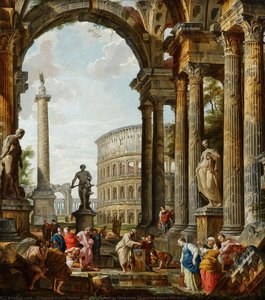
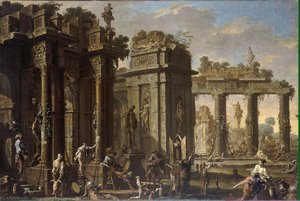
Biografía del artista
Giovanni Paolo Panini: Architect of Roman Dreams
Giovanni Paolo Panini (1691–1765) stands as one of the most distinctive figures in 18th-century Italian art, a painter whose singular vision—particularly his mastery of *vedutismo*—transformed the depiction of Rome into an immersive experience of architectural fantasy. Unlike many artists of his era who sought to faithfully reproduce the city’s grandeur, Panini embraced a daring approach that blended observation with imagination, creating panoramas imbued with a palpable sense of theatrical drama and timeless beauty. His legacy continues to inspire artists today, cementing his place as a pivotal innovator in landscape painting and architectural representation.Early Training and Influences: Shaping a Vision
Panini’s artistic education began in Piacenza, where he studied under Giuseppe Natali and Andrea Galluzzi—artists who instilled in him the foundational principles of Baroque composition and disegno (drawing). Crucially, his formative years coincided with an encounter with Francesco Galli-Bibiena, whose theatrical designs profoundly impacted Panini's aesthetic sensibilities. Galli-Bibiena’s mastery of perspective and illusionistic space served as a guiding force, shaping Panini’s technique and fostering his fascination with creating convincing representations of depth and atmosphere—a characteristic that would define his distinctive style. This early exposure to stagecraft foreshadowed Panini’s later preoccupation with architectural fantasies, demonstrating the interconnectedness of artistic influences across disciplines.The Rise of Vedutismo: Reimagining Rome's Ruins
Panini ascended to fame as a decorator of palaces—a profession that allowed him to hone his skills in fresco painting and develop an unparalleled understanding of architectural design. His commissions included opulent interiors for noble residences, showcasing his meticulous attention to detail and his ability to evoke grandeur through skillful use of color and texture. However, Panini’s artistic breakthrough arrived with his embrace of *vedutismo*, a genre that would propel him to international renown. Rejecting the conventions of topographical painting—which aimed for precise accuracy—Panini sought instead to capture the spirit of Rome by reconstructing its ruins in fantastical landscapes. He skillfully combined elements from different structures into single compositions, creating scenes that celebrated Rome’s architectural heritage while simultaneously acknowledging its inevitable decay. This innovative technique—often referred to as *capriccio*—became Panini's signature style and distinguishes him from his contemporaries.A Master of Perspective: The Panini Projection
Panini’s groundbreaking contribution to artistic technique was the development of what is now known as “the Panini projection.” Unlike earlier methods that relied on mathematical calculations, Panini devised a system for representing wide-angle views with remarkable accuracy—a feat achieved through careful observation and intuitive understanding. This projection allowed artists to convincingly depict panoramic landscapes, capturing the grandeur of Rome’s vistas with unprecedented realism. It became an indispensable tool for architectural renderings and landscape painting, influencing generations of artists who followed Panini's lead. His meticulous attention to perspective exemplifies his dedication to mastering the visual arts and underscores his role as a pioneer in artistic innovation.Legacy and Influence: An Enduring Vision
Panini’s influence extended far beyond his own lifetime—he taught at the Accademia di San Luca and the Académie de France in Rome, shaping the artistic sensibilities of aspiring painters and architects alike. His style resonated with artists like Hubert Robert and Antonio Joli, inspiring them to explore similar approaches to landscape painting and architectural representation. Today, Panini’s paintings continue to captivate audiences worldwide—particularly his monumental views of Rome, which offer a glimpse into the aesthetic ideals of the Enlightenment era. Examining his masterful use of perspective, his imaginative compositions, and his evocative depictions of ruins allows us to appreciate not only his technical skill but also his profound understanding of how art can convey emotion and capture the essence of place—a legacy that secures Panini’s enduring position as one of Italy's greatest artistic visionaries.
Giovanni Paolo Panini
1691 - 1765 , Italia
Datos clave
- Artistic Movement Or Style: Vedutismo Barroco
- Artists Or Movements Influenced By This Artist:
- Hubert Robert
- Antonio Joli
- Charles-Louis Clérisseau
- Artists Who Influenced This Artist:
- Giuseppe Natali
- Andrea Galluzzi
- Francesco Galli-Bibiena
- Date Of Birth: 1691
- Date Of Death: 1765
- Full Name: Giovanni Paolo Panini
- Nationality: Italiano
- Notable Artworks:
- El templo de Diana
- Interior de San Pedro, Roma
- Interior del Пантеон
- Place Of Birth: Piacenza, Italia
Artículos relacionados
Giovanni Paolo Panini: Capturing Roman Grandeur – A Vedute Master's Legacy
Explore the captivating world of Giovanni Paolo Panini, master of Roman vedute painting. Discover his technique, iconic works, influence on art history & collecting advice from experts at ArtsDot.
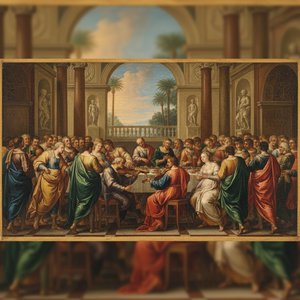
Paolo Veronese: A Renaissance Master of Color, Composition, and Venetian Splendor
Explore the vibrant world of Paolo Veronese, a Renaissance master renowned for his opulent compositions, masterful use of color, and dramatic Venetian scenes. Discover key artworks & legacy.
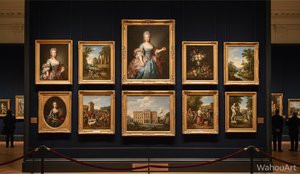
El Siglo XVIII en el Arte: 10 Obras Maestras para Decorar con Historia y Elegancia
Descubre 10 obras maestras del siglo XVIII: Goya, Fragonard y más. Explora la historia, el arte barroco, rococó y neoclasicismo que inspiran decoración elegante. Reproducciones de alta calidad en ArtsDot.com.
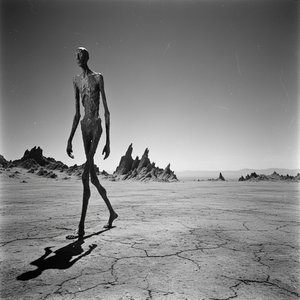
Giovanni Giacometti: Sculpting Existentialism – A Study of Form, Space, and the Human Condition
Explore the profound artistic journey of Giovanni Giacometti, father to Alberto. Discover his unique transition from Surrealism to Existentialist sculpture and painting – a compelling study for elite collectors and art enthusiasts.

Giovanni Battista Piranesi: Visionary of Ruins & Architect of Imagination
Explore the life & work of Giovanni Battista Piranesi, master etcher of Roman views & creator of the haunting 'Carceri d'Invenzione'. Discover his architectural vision and lasting influence on art history.