 Vista previa
 Compartir
 Compartir
 Ver detalles

 Descargar
 Ver similares
 Radiografía
 Presentación de diapositivas
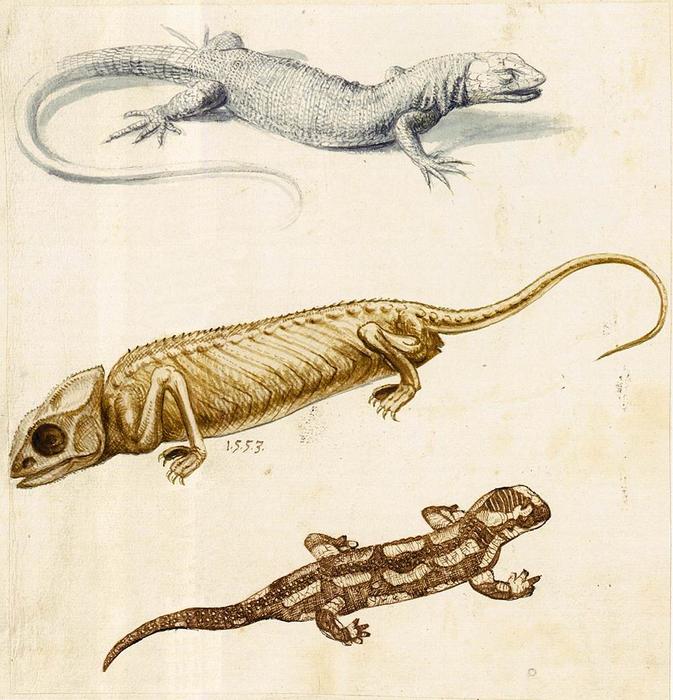
Study of a Lizard, a Chameleon and a Salamander


 Leer más
Reproducción al óleo hecha a mano
Óleo sobre lienzo pintado a mano en el tamaño y marco de su elección, realizado por encargo por nuestros artistas. ( Pedir impresión Comprar descarga)




P118B $10

P118H $10

P118W $10

P438Z $10

P508JH $12

P508YH $12

P805H $10

P805Z $10

P919BZ $10

P919G $10

P919XJ $10

P959ZH $10

P968JZ $12

W106C $8

W218G $10

W218JH $8

W218Y $10

W307PJ $10

W316G $10

W316PJ $8

W316Y $10

W398PJ $8

W4111J $10

W500HY $15

W500JH $15

W692G $12

W849H $8

W940BG $15

W953PJ $8




Elija entre nuestros tamaños predefinidos que respetan las proporciones originales de la obra.

Puede ingresar sus propias dimensiones para adaptarse a un marco o espacio específico. Si el tamaño seleccionado no coincide con las proporciones de la imagen original, recortaremos la obra o extenderemos la pintura con elementos adicionales pintados a mano. Se le enviará una maqueta digital para su aprobación antes de comenzar la producción.
Tenga en cuenta que la vista previa en pantalla no refleja el recorte o la extensión reales. Solo la maqueta mostrará con precisión la composición final.
Si bien existen tamaños personalizados, recomendamos seleccionar una dimensión de la lista predefinida para preservar las proporciones originales.
Tras realizar el pedido, el equipo de ArtsDot.com enviará un correo electrónico al cliente para solicitar instrucciones y proporcionarle una vista previa del boceto.
Envío a todo el mundo () en 3-4 semanas en lugar de las 5 semanas estándar. (22 agosto). Sin comprometer la calidad.

Envío exprés gratuito a todo el mundo

Lienzo de lino de alta calidad

Seguro de envío completo

Garantía de reembolso de aranceles aduaneros

Garantía de fidelidad cromática exacta

Política de devolución de 60 días (solo por defectos)

Garantía de devolución del 100% del dinero

Oferta por volumen
 La opción de vidrio solo está disponible en tamaños inferiores a 110 cm.

Study of a Lizard, a Chameleon and a Salamander
Técnica de reproducción
Tamaño de la reproducción
-


Precio total
$ 263
Descripción de la obra
A Window into the Mind of Arcimboldo: Anatomical Wonder and Symbolic Depth
Giuseppe Arcimboldo’s “Study of a Lizard, a Chameleon and a Salamander,” painted in 1553, isn't merely a scientific illustration; it’s a meticulously constructed visual allegory, a testament to the Renaissance fascination with nature, knowledge, and the power of representation. More than just a depiction of reptiles, this work is a carefully orchestrated assemblage—a vibrant, layered portrait of the natural world viewed through the lens of human intellect. The piece immediately commands attention not for its realism in the conventional sense, but for its audacious creativity and the sheer density of detail crammed into its composition. It’s an invitation to decipher a hidden language, a visual puzzle that rewards patient observation.
The painting's genesis lies within the intellectual climate of 16th-century Europe, a period marked by burgeoning scientific inquiry and a renewed interest in classical learning. Arcimboldo, serving as court painter for Holy Roman Emperors Maximilian II and Ferdinand I, skillfully blended artistic skill with allegorical thinking. He was commissioned to create portraits that were not simply likenesses but symbolic statements reflecting the sitter’s virtues or role. This particular work, likely intended for a scholarly patron, embodies this tradition perfectly – it's an exploration of natural history, elevated to the level of profound symbolism.
The Art of Assemblage: Technique and Materials
Arcimboldo’s technique is characterized by a remarkable precision and mastery of hatching and cross-hatching. The skeletal lizard, rendered in meticulous detail, showcases this skill most prominently; the delicate lines delineate every bone with astonishing accuracy, creating an illusion of three-dimensionality that belies the flat surface of the painting. The skin of the other lizards is depicted through a complex layering of textures – short, broken strokes suggesting scales and rough surfaces, contrasted with smoother areas representing muscle and flesh. The use of watercolor for shading adds depth and luminosity to the piece, subtly enhancing the sense of volume.
The palette is restrained—primarily earthy tones of beige, brown, and ochre—allowing the intricate details of the subjects to take center stage. The background’s neutrality serves as a crucial element, preventing distraction and directing the viewer's eye towards the meticulously rendered reptiles. The choice of materials – likely paper and ink, possibly with subtle watercolor washes – speaks to the artist’s commitment to both scientific accuracy and artistic elegance.
Symbolism and Interpretation: A World Reimagined
Beyond its technical brilliance, “Study of a Lizard, a Chameleon and a Salamander” is rich in symbolic meaning. Each reptile represents a facet of human understanding – the skeletal lizard embodies mortality and the cycle of life, the partially dissected specimen reflects the pursuit of knowledge through dissection and observation, while the fully illustrated lizard celebrates the beauty and complexity of nature. The arrangement itself can be interpreted as a metaphor for the interconnectedness of all things, mirroring the Renaissance belief in the harmony of the cosmos.
The inclusion of these specific reptiles—a lizard, a chameleon, and a salamander—holds particular significance within the context of 16th-century natural history. These creatures were often associated with alchemy, medicine, and astrology, reflecting the era’s fascination with transforming substances and harnessing their hidden powers. Arcimboldo's masterful manipulation of these symbols elevates the painting beyond a simple botanical study, transforming it into a complex visual meditation on human knowledge and the mysteries of the natural world.
Bringing Arcimboldo to Your Space: Reproduction Options
ArtsDot offers high-quality reproductions of “Study of a Lizard, a Chameleon and a Salamander,” meticulously crafted to capture the essence of Arcimboldo’s original masterpiece. Our hand-painted reproductions utilize archival-grade materials and techniques, ensuring that your artwork will endure for generations to come. Whether you're seeking an authentic representation for your collection or a striking addition to your interior design scheme, our reproductions provide a beautiful and accessible way to experience the genius of Giuseppe Arcimboldo.
Obras relacionadas
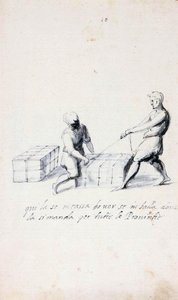
Biografía del artista
Primeros años y carrera
Giuseppe Arcimboldo, un renombrado pintor italiano, nació en 1527 en Milán, Italia. Su padre, Biagio Arcimboldo, también era artista, lo que probablemente influyó en el temprano interés de Giuseppe por el arte. A la edad de 21 años, Arcimboldo comenzó su carrera como diseñador para vidrieras y frescos en catedrales locales.Pintor de la corte para los Habsburgo
En 1562, Arcimboldo se convirtió en retratista de la corte de Fernando I en la corte habsburga de Viena, Austria. Posteriormente sirvió como pintor de Maximiliano II y su hijo Rodolfo II en la corte de Praga. Este período de su vida está marcado por su trabajo como decorador de la corte y diseñador de vestuario.La obra maestra manierista: retratos de objetos
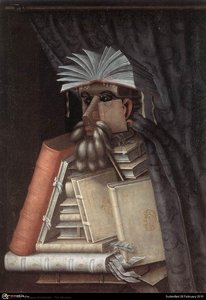
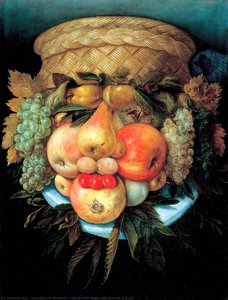
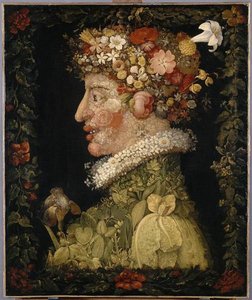
El trabajo convencional de Arcimboldo sobre temas religiosos tradicionales ha sido en gran medida olvidado, pero sus retratos hechos con objetos como frutas, verduras, flores, criaturas marinas y raíces de árboles continúan fascinando a los entusiastas del arte. Estas obras, caracterizadas por su uso de objetos cotidianos para crear formas anatómicas humanas, no eran meramente decorativas sino que también transmitían un significado más profundo.- "El Bibliotecario", un retrato hecho con objetos que significan la cultura del libro de la época, no era solo una creación caprichosa, sino también una crítica a los individuos ricos que coleccionaban libros sin leerlos.
- Estas obras no eran aleatorias; cada objeto se elegía cuidadosamente para relacionarse con la caracterización del sujeto.
Estilo artístico y legado
El estilo artístico de Arcimboldo, aunque a menudo debatido como caprichoso o producto de una mente perturbada, es visto en gran medida por los académicos como un catering al gusto renacentista por acertijos, rompecabezas y lo bizarro. Su uso de objetos para crear formas humanas era un aspecto único de su trabajo, que lo diferenciaba de otros artistas manieristas. Obras notables:- "Bodegón floral" (1590), una pintura que encarna el movimiento artístico del manierismo italiano, es un ejemplo icónico del estilo único de Arcimboldo.
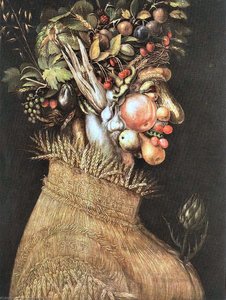
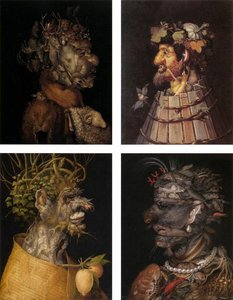
- "Los cuatro estaciones", un retrato compuesto de Rodolfo II, muestra la maestría de Arcimboldo en el arte manierista.
Museos y colecciones
Las obras de Arcimboldo se pueden encontrar en varios museos, incluido el Kunsthistorisches Museum en Viena y el Schloss Ambras Habsburgo en Innsbruck.
Giuseppe Arcimboldo
1527 - 1593 , Italia
Datos clave
- Estilo Artístico: Manierismo
- Fecha De Nacimiento: 1527
- Lugar De Nacimiento: Milán, Italia
- Nacionalidad: Italiana
- Nombre Completo: Giuseppe Arcimboldo
- Obras Notables:
- El Bibliotecario
- El Fuego
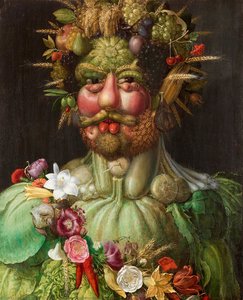
- Vertumnus (Vertumno)
- Primavera
- Vida Floral Silvestre
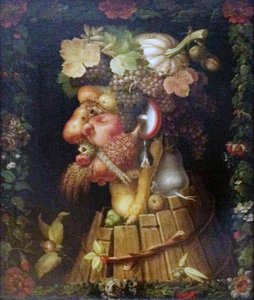
- Otoño
- Aire
Artículos relacionados
La Estética Refinada de la Ilustración Victoriana: Narrativa y Técnica en el Arte del Siglo XIX
Descubra la estética refinada de la ilustración victoriana y el impacto revolucionario de los Prerrafaelitas. Análisis profundo de técnicas, narrativa y simbolismo en el arte del siglo XIX.

Kay Rasmus Nielsen: A Golden Age Illustrator's Enchanting Legacy of Symbolism & Narrative
Explore the captivating world of Kay Rasmus Nielsen, a celebrated Golden Age illustrator renowned for his Art Nouveau fairy tale art & Disney contributions. Discover his unique style, enduring legacy, and how to collect his enchanting works.

Edmund Dulac: A Master of Golden Age Illustration – Exploring Myth, Symbolism & Art Nouveau Legacy
Explore the captivating world of Edmund Dulac, a master of Golden Age illustration! Discover his enchanting fairy tales, Art Nouveau style, and lasting influence on art & design. Learn about *The Rubaiyat* and more.

Angelo Chiacchio: A Mid-Century American Illustration Master & the Rise of Commercial Art
Explore the captivating world of Angelo Chiacchio, a master of mid-century American illustration. Discover his evolution, signature style, and lasting impact on commercial art & design. Learn about his legacy at the Museum of American Illustration.
The Flourishing Canvas: A Historical & Artistic Exploration of Botanical Illustration
Explore the rich history of botanical illustration! Discover key artists like Havell & Barraband, learn about scientific accuracy & aesthetic beauty. Shop museum-quality reproductions at ArtsDot.