

 Vista previa
 Compartir
 Compartir
 Ver detalles

 Descargar
 Ver similares
 Radiografía
 Presentación de diapositivas
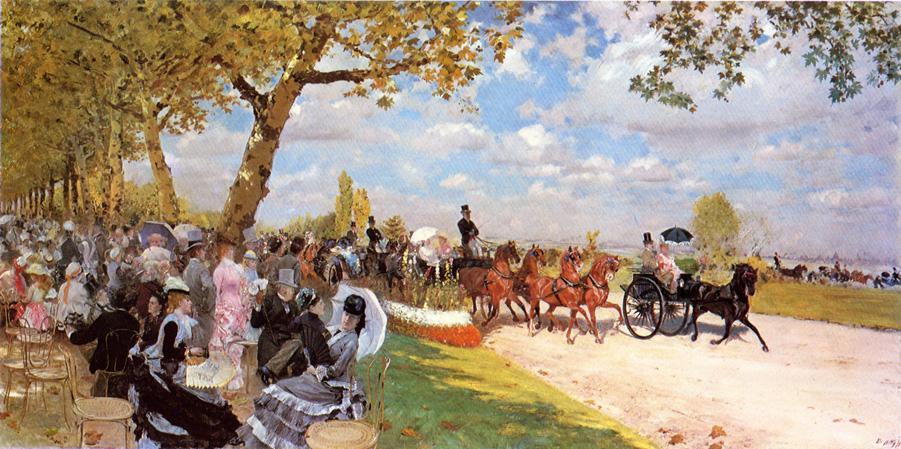
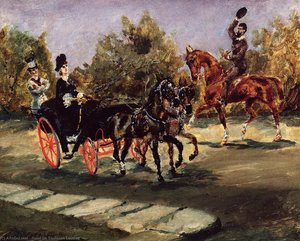
Return from the Races
 Oil On Canvas
- WallArt
- Impressionism
 1875
1875 55.0 x 114.0 cm
 Philadelphia Art Museum
 Leer más
Reproducción al óleo hecha a mano
Óleo sobre lienzo pintado a mano en el tamaño y marco de su elección, realizado por encargo por nuestros artistas. ( Pedir impresión Comprar descarga)




P118B $10

P118H $10

P118W $10

P438Z $10

P508JH $12

P508YH $12

P805H $10

P805Z $10

P919BZ $10

P919G $10

P919XJ $10

P959ZH $10

P968JZ $12

W106C $8

W218G $10

W218JH $8

W218Y $10

W307PJ $10

W316G $10

W316PJ $8

W316Y $10

W398PJ $8

W4111J $10

W500HY $15

W500JH $15

W692G $12

W849H $8

W940BG $15

W953PJ $8




Elija entre nuestros tamaños predefinidos que respetan las proporciones originales de la obra.

Puede ingresar sus propias dimensiones para adaptarse a un marco o espacio específico. Si el tamaño seleccionado no coincide con las proporciones de la imagen original, recortaremos la obra o extenderemos la pintura con elementos adicionales pintados a mano. Se le enviará una maqueta digital para su aprobación antes de comenzar la producción.
Tenga en cuenta que la vista previa en pantalla no refleja el recorte o la extensión reales. Solo la maqueta mostrará con precisión la composición final.
Si bien existen tamaños personalizados, recomendamos seleccionar una dimensión de la lista predefinida para preservar las proporciones originales.
Tras realizar el pedido, el equipo de ArtsDot.com enviará un correo electrónico al cliente para solicitar instrucciones y proporcionarle una vista previa del boceto.
Envío a todo el mundo () en 3-4 semanas en lugar de las 5 semanas estándar. (19 agosto). Sin comprometer la calidad.

Envío exprés gratuito a todo el mundo

Lienzo de lino de alta calidad

Seguro de envío completo

Garantía de reembolso de aranceles aduaneros

Garantía de fidelidad cromática exacta

Política de devolución de 60 días (solo por defectos)

Garantía de devolución del 100% del dinero

Oferta por volumen
 La opción de vidrio solo está disponible en tamaños inferiores a 110 cm.

Return from the Races
Técnica de reproducción
Tamaño de la reproducción
-


Precio total
$ 388
Descripción de la obra
A Glimpse of Leisure: De Nittis’ “Return from the Races”
Giuseppe De Nittis' "Return from the Races," painted in 1875, isn’t merely a depiction of a pleasant afternoon; it’s a vibrant snapshot of late 19th-century Italian society, imbued with the fleeting beauty and emotional resonance characteristic of Impressionism. This oil on canvas, measuring 55 x 114 cm and currently residing in the Philadelphia Museum of Art, captures a scene brimming with life – elegantly dressed figures returning from a horse race, their carriages mingling with pedestrians along a sun-drenched street. De Nittis masterfully eschews meticulous detail in favor of capturing the *impression* of the moment: the dappled light filtering through trees, the movement of horses and riders, the animated conversations amongst the onlookers. The painting’s power lies not in photographic realism but in its ability to evoke a specific feeling – a sense of joyful camaraderie and the transient pleasures of modern life.
The Artist and His Vision: Bridging Salon Art and Impressionism
Giuseppe De Nittis (1846-1884) stands as a pivotal figure in Italian art history, skillfully blending the formal conventions of academic salon painting with the revolutionary spirit of Impressionism. Born in Barletta, Italy, his early career was tragically disrupted by an expulsion from Naples’ Institute of Fine Arts – an event that fueled his determination to forge his own artistic path. De Nittis' work is deeply rooted in the Macchiaioli movement, a group of Italian artists who championed bold brushstrokes and a rejection of academic precision. This influence is immediately apparent in “Return from the Races,” where loose, expressive strokes create a sense of dynamism and immediacy. Unlike the polished surfaces favored by some Salon painters, De Nittis embraces visible brushwork, inviting the viewer to appreciate the act of painting itself – the layering of color, the manipulation of light and shadow.
A Symphony of Light and Color: Technique and Composition
The painting’s composition is carefully orchestrated to draw the eye through the scene. The foreground establishes a sense of depth with its grassy expanse leading towards the gravel path where carriages are parked. Central to the image, a group of horses and carriages dominates the midground, their movement suggested by De Nittis' skillful use of color and brushwork. The figures in the background – women in elaborate dresses, men in formal attire – are rendered with a lighter touch, emphasizing their presence without overwhelming the overall composition. Notice how De Nittis employs broken color—small dabs of paint rather than blended hues—to create an atmospheric effect, particularly evident in the hazy sky and dappled sunlight. This technique contributes to the painting’s sense of immediacy and captures the fleeting effects of light on the scene. The artist's use of warm yellows and oranges contrasts beautifully with cooler blues and greens, creating a vibrant and engaging visual experience.
Symbolism and Social Commentary
Beyond its aesthetic qualities, “Return from the Races” offers subtle insights into the social dynamics of 19th-century Italy. The scene depicts a leisure activity enjoyed by the upper classes – a time for socializing, entertainment, and demonstrating wealth. The horses and carriages represent status and privilege, while the figures themselves embody the elegance and refinement of the era. However, De Nittis doesn’t simply celebrate this social order; he captures the *feeling* of it—the joy, the conversation, the shared experience. The painting subtly hints at a world undergoing rapid change, where traditional values are being challenged by the rise of modern life. The overall mood is one of relaxed enjoyment and convivial spirit, inviting us to step back in time and witness a moment of fleeting beauty.
High-quality reproductions of “Return from the Races” are available on ArtsDot.com, allowing art lovers to bring this captivating Impressionist masterpiece into their homes. For more information about Giuseppe De Nittis and his artistic legacy, visit Wikipedia’s page on the artist. The Philadelphia Museum of Art also offers custom prints of this iconic painting.
Obras relacionadas
Biografía del artista
Giuseppe De Nittis: Bridging Salon Art and Impressionism
Giuseppe De Nittis (February 25, 1846 – August 21, 1884) was one of the most important Italian painters of the 19th century, whose work merges the styles of Salon art and Impressionism. Born in Barletta, Apulia, Italy, he initially studied under Giovanni Battista Calò before being expelled from the Instituto di Belle Arti in Naples for insubordination. This early rejection fueled his determination to forge a path independent of academic conventions—a stance that would define his artistic trajectory.- Early Life and Formation: De Nittis’s upbringing instilled in him a rebellious spirit, evident in his refusal to adhere to the rigid doctrines of the Academy. His father, Raffaele, was a vocal critic of the Bourbon monarchy, shaping Giuseppe's worldview and fostering a commitment to intellectual freedom.
- The Macchiaioli Influence: De Nittis’s encounter with Telemaco Signorini and other Macchiaioli artists proved pivotal. This movement championed direct observation of nature—a radical departure from academic painting—and profoundly impacted De Nittis's artistic approach, prioritizing tonal harmonies and capturing fleeting moments of light.
- Parisian Years: Moving to Paris in 1867 marked a crucial turning point. He established connections with fellow artists like Ernest Meissonier and Jean-Léon Gérôme, immersing himself in the vibrant Parisian art scene. His contract with Adolphe Goupil necessitated producing commercially viable genre paintings—a challenge he embraced while simultaneously exploring Impressionistic techniques.
- Notable Achievements: De Nittis achieved considerable acclaim during the Exposition Universelle of 1878, securing a gold medal and receiving the Légion d’honneur for his artistic contributions. His painting *Che freddo!* (It's So Cold!) captivated audiences at the Salon in 1874, cementing his reputation as an Impressionist innovator.
- Legacy: De Nittis’s influence extended beyond his own lifetime. His distinctive pastel style—characterized by luminous colors and delicate textures—inspired subsequent generations of artists. Furthermore, his unwavering dedication to capturing the essence of natural light and color continues to resonate within the broader artistic canon.
Artistic Style and Technique
De Nittis’s distinctive style was characterized by a masterful blend of Salon art traditions and Impressionist principles. He prioritized tonal harmonies—a technique championed by Signorini and other Macchiaioli—creating paintings that conveyed atmospheric depth and emotional resonance. However, unlike many of his contemporaries, De Nittis embraced plein air painting with fervor, meticulously observing the subtleties of light and color as they shifted across landscapes and portraits. His use of pastel was particularly noteworthy; he elevated this medium to new heights, achieving unparalleled luminosity and expressive power.Major Works
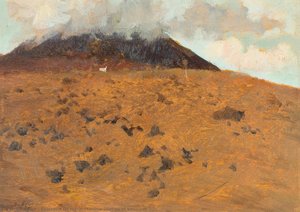
De Nittis produced a prolific oeuvre encompassing landscapes, genre scenes, and portraiture—each infused with his signature aesthetic vision. Among his most celebrated paintings are *Races at Auteuil* (1881), capturing the dynamism of equestrian sport; *Portrait of Madame de Florian* by Giovanni Boldini, showcasing De Nittis’s skill in portraying human emotion; *Paesaggio con bovi* (1855), a serene depiction of pastoral life; and *Vesuvius*, where he skillfully rendered the imposing volcano's majesty. His pastel portraits—including those of Edgar Degas and Gustave Moreau—demonstrate his mastery of tonal modulation and textural nuance.Influence and Recognition
Giuseppe De Nittis’s artistic legacy endured beyond his lifetime, influencing subsequent generations of painters who admired his innovative approach to Impressionism and Macchiaioli aesthetics. His unwavering commitment to capturing the beauty of nature—combined with his technical virtuosity—established him as a cornerstone of Italian art history. Today, his paintings reside in prominent museums worldwide—including the Musée d’Orsay in Paris, the British Museum in London, and the Metropolitan Museum of Art in New York—testament to the enduring power of his artistic vision.
Giuseppe De Nittis
1846 - 1884 , Italia
Datos clave
- Artistic Movement Or Style: Impresionismo y Macchiaioli
- Artists Or Movements Influenced By This Artist: ['Macchiaioli']
- Artists Who Influenced This Artist:
- Giovanni Battista Calò
- Telemaco Signorini
- Date Of Birth: 25 febrero 1846
- Date Of Death: 21 agosto 1884
- Full Name: Giuseppe De Nittis
- Nationality: Italian
- Notable Artworks:
- Races at Auteuil
- Che freddo!
- Paisaggio con bovi
- Place Of Birth: Barletta, Italia
Artículos relacionados

Solicitudes Comerciales
APS ofrece reproducciones de bellas artes y encargos personalizados desde 2004. Confían en nosotros corporaciones, hoteles y coleccionistas selectos para obras de arte de calidad museística, servicio discreto y soluciones artísticas completas. ¡Póngase en contacto con nosotros para obtener un presupuesto personalizado!

Goya: Las 25 Obras Maestras del Genio Español | Reproducciones de Arte en ArtsDot
Descubre las 25 obras maestras de Goya, el genio español. Explora retratos icónicos, 'Los Caprichos' y 'Las Pinturas Negras'. Reproducciones de arte en lienzo de alta calidad para decorar tu hogar con estilo. ¡Encuentra tu obra favorita en ArtsDot.com!

Acerca de nosotros
Descubre nuestra historia! Llevamos el arte de clase mundial a tu vida gracias a una selección experta, creaciones personalizadas y vistas previas gratuitas. Aprobado por particulares y empresas desde el año 2000.
Philip de László: A Portrait of Aristocratic Society & the Cosmopolitan Painter's Evolution
Explore the life & art of Philip de László, master portraitist of European aristocracy. Discover his stunning paintings, royal commissions, and enduring legacy. A guide for discerning collectors.
The Noble Steed on Canvas: A Historical & Artistic Exploration of Horse Painting Across Cultures
Explore the rich history of horse painting! Discover masterpieces from Stubbs to Munnings & learn about symbolism, techniques & artists. Find museum-quality reproductions at ArtsDot.

