

 Ver en contexto
 Enviar
 Compartir
 Detalles

 Descargar
 Similares
 Radiografía
 Presentación de diapositivas
 Estadísticas
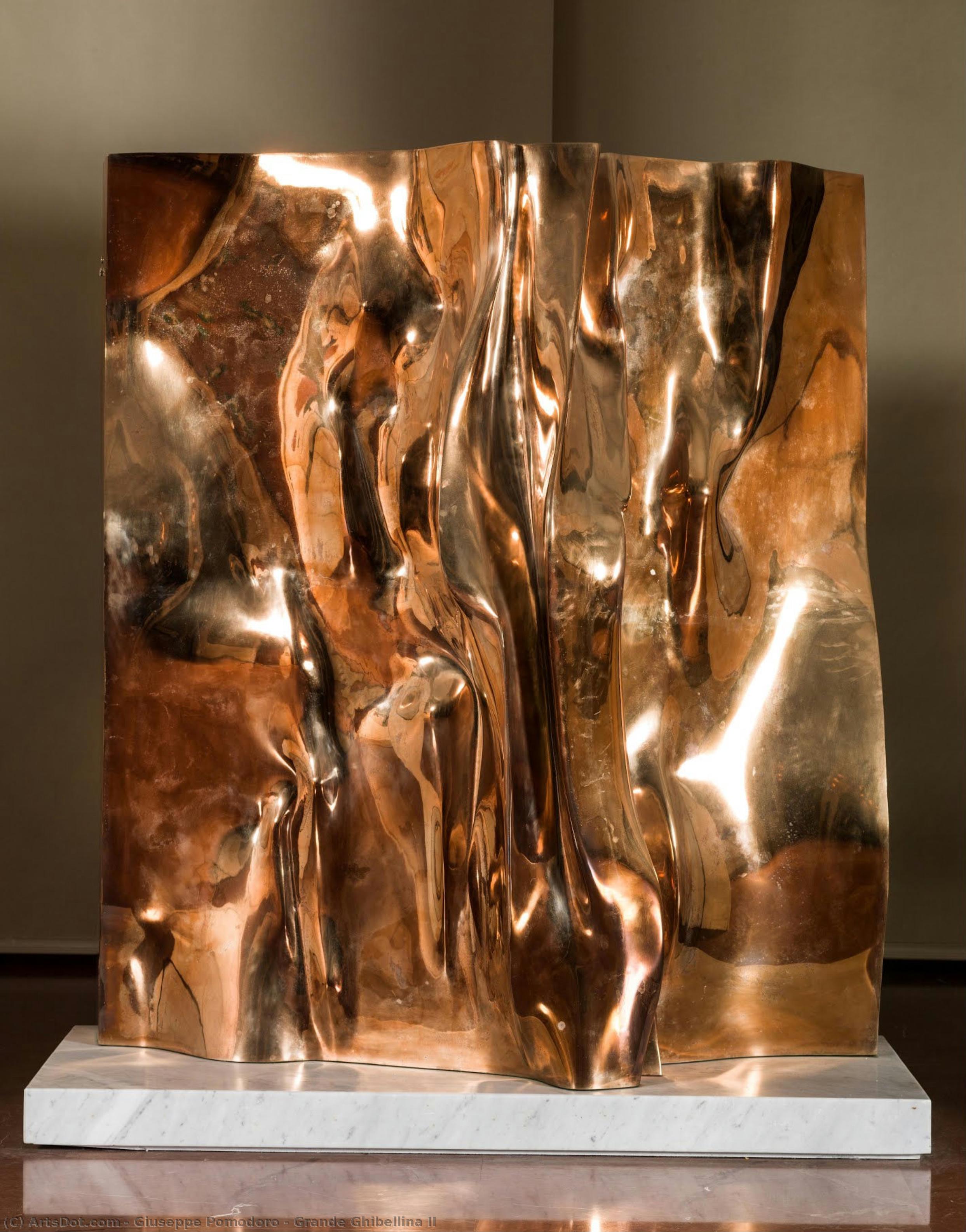
Grande Ghibellina II
 Art Informel
 215.0 x 200.0 cm
 Ministerio de Asuntos Exteriores y Cooperación Internacional. Colección Farnesina
 Ver más
Giclée / Impresión de arte
Impresiones giclée o en lienzo de calidad de museo con producción rápida y opciones de acabado flexibles. ( Comprar pintura hecha a mano Cambiar a imagen digital)




P118B $10

P118H $10

P118W $10

P438Z $10

P508JH $12

P508YH $12

P805H $10

P805Z $10

P919BZ $10

P919G $10

P919XJ $10

P959ZH $10

P968JZ $12

W106C $8

W218G $10

W218JH $8

W218Y $10

W307PJ $10

W316G $10

W316PJ $8

W316Y $10

W398PJ $8

W4111J $10

W500HY $15

W500JH $15

W692G $12

W849H $8

W940BG $15

W953PJ $8




Elija entre nuestros tamaños predefinidos que respetan las proporciones originales de la obra.

Puede introducir sus propias dimensiones para adaptarse a un marco o espacio específico. Si el tamaño seleccionado no coincide con las proporciones de la imagen original, recortaremos la obra de arte o extenderemos la imagen con un borde con efecto espejo o de color sólido. Se enviará una maqueta digital para su aprobación antes de que comience la producción.
Tenga en cuenta que la vista previa en pantalla no refleja el recorte o la extensión real. Solo la maqueta mostrará con precisión la composición final.
Aunque existen tamaños personalizados, recomendamos seleccionar una dimensión de la lista predefinida para preservar las proporciones originales.
Envío a todo el mundo () en 2 semanas en lugar de las 4/5 semanas estándar. (9 septiembre)

Envío exprés gratuito a todo el mundo

Lienzo de lino de alta calidad

Seguro de envío total

Garantía de reembolso de impuestos aduaneros

Garantía de fidelidad cromática exacta

Política de devolución de 100 días (solo por defectos)

Garantía de devolución del 100% del dinero

Descuento por cantidad
 La opción de vidrio solo está disponible en tamaños inferiores a 110 cm.

Grande Ghibellina II
Giclée / Impresión de arte
Dimensiones de la reproducción
-


Precio total final
$ 62
A Dance of Bronze: Exploring Giuseppe Pomodoro’s *Grande Ghibellina II*
Giuseppe Pomodoro's *Grande Ghibellina II* is a commanding abstract sculpture that embodies the dynamism and complexity of mid-century modern Italian art. This bronze work, measuring 215 x 200 cm, isn’t merely an object; it’s a physical manifestation of energy – a frozen wave captured in metal. As the second casting from the Rockefeller Collection, its provenance speaks to its significance within Pomodoro's oeuvre and the broader landscape of contemporary sculpture. The piece immediately draws the eye with its undulating surface, a tapestry of folds and curves that seem to both rise and fall simultaneously.Form & Technique: Sculpting Space and Light
Pomodoro masterfully manipulates form and space in *Grande Ghibellina II*. He doesn’t depict a recognizable subject but instead focuses on the interplay between solid mass and void, creating a sense of movement and rhythm. The sculpture's success lies in its ability to address both space *and* light. The highly polished bronze surface acts as a reflector, catching and playing with ambient illumination, resulting in shifting patterns of highlights and shadows that accentuate the sculptural form. This technique isn’t simply about aesthetics; it’s about integrating the sculpture into its environment, allowing it to interact dynamically with its surroundings. The casting process itself, followed by meticulous polishing, demonstrates Pomodoro's dedication to material quality and technical skill.Historical Context & Artistic Lineage
Giuseppe Pomodoro emerged during a period of significant artistic transition, influenced by the post-war climate and movements like Art Informel. However, he wasn’t simply mimicking existing styles. He sought to renew sculptural language from within, adding structural complexity and sophistication. While his brother, Arnaldo Pomodoro, is renowned for his spherical sculptures, Giuseppe carved out his own distinct path through these undulating forms. Grande Ghibellina II reflects this ambition – a departure from purely gestural abstraction towards a more considered exploration of form and spatial relationships. His work bridges the gap between the expressive freedom of Art Informel and the emerging minimalist tendencies of the time, creating something uniquely his own.Symbolism & Emotional Resonance
Though abstract, *Grande Ghibellina II* evokes powerful symbolic associations. The flowing lines suggest natural forces – waves crashing against a shore, geological formations sculpted by wind and water, or even the human body in motion. The sculpture’s verticality draws the eye upwards, creating a sense of aspiration and transcendence.- Its inherent dynamism can be interpreted as representing change, transformation, and the constant flux of life.
- The interplay of light and shadow adds an element of mystery and intrigue, inviting viewers to contemplate its depths.
- Ultimately, the emotional impact is one of awe and wonder – a testament to Pomodoro’s ability to imbue abstract form with profound meaning.
Obras relacionadas

Biografía del artista
Early Life and Artistic Beginnings
Giuseppe Pomodoro, known as Giò Pomodoro, was born on November 17, 1930, in Orciano di Pesaro, a small town nestled within the rolling hills of Italy’s Marche region. His early life, steeped in the traditions of his family and community, laid the groundwork for an artist deeply connected to both the tangible world and the realm of abstraction. Moving to Milan in 1954 marked a pivotal moment – he immersed himself in the vibrant avant-garde scene that pulsed through the city’s galleries and studios. This relocation wasn't merely a geographical shift; it was a deliberate embrace of innovation, forging connections with leading artists who challenged conventional artistic boundaries. Initially, Pomodoro’s creative explorations centered on jewelry making, a craft that honed his technical skills in metalworking and introduced him to the principles of form and texture – elements he would later masterfully integrate into his sculptural work. This early foray into design provided a crucial foundation for his subsequent development as a sculptor and printmaker.Artistic Style and Techniques: A Synthesis of Materials
Pomodoro’s artistic style is characterized by an extraordinary eclecticism, a willingness to experiment with a remarkably diverse range of materials. He wasn't confined to a single medium; instead, he embraced wood, textiles, plaster, metal, and even clay, transforming each into a vehicle for his unique vision. A defining characteristic of his work is the evolution from early explorations in reverse reliefs – intricate, sculpted surfaces created by carving away material – to the formation of assemblages: complex compositions built from disparate elements, often cast in metal. These assemblages weren’t simply collections; they were carefully orchestrated dialogues between form and texture, inviting viewers to contemplate their relationship. The smooth, undulating surfaces that frequently appear in his sculptures are a testament to his meticulous attention to detail and his desire to evoke a sense of movement and fluidity. He skillfully manipulated these materials, creating works that seemed to breathe with an internal energy.Notable Works and Public Commissions: A Legacy in Form
Pomodoro’s artistic output spanned over five decades, marked by a consistent pursuit of innovation and a willingness to push the boundaries of sculptural expression. A particularly striking example from his early career is *Summer Stroll* (1960s), a fresco that captures a fleeting moment of leisure and joy – a vibrant testament to his ability to translate complex emotions into visual form. In the 1970s, he produced a series of engravings titled *Danzatori dell’Opera*, showcasing his versatility in printmaking and demonstrating a keen eye for capturing movement and drama. Later in his career, Pomodoro created *Apollo and Diana* (1980s), a neoclassical fresco that skillfully blended classical references with his own distinctive style, revealing a mastery of diverse artistic traditions. Beyond these individual works, Pomodoro’s legacy is also reflected in numerous public commissions – monumental sculptures and architectural elements that transformed urban spaces and brought art to the people.Museum Collections and Historical Significance
Giuseppe Pomodoro's work has garnered significant recognition within the international art community, finding a permanent place in prominent museums worldwide. The Pinacoteca di Vicenza, Italy, houses an impressive collection of his artworks spanning various periods, offering visitors a comprehensive overview of his artistic journey. Similarly, the Musée France in France showcases a selection of his prints and sculptures, highlighting his contributions to contemporary printmaking. Pomodoro’s innovative approach to sculpture and printmaking has left an indelible mark on the Italian modern art scene, inspiring generations of artists with his fearless experimentation and his ability to transform ordinary materials into extraordinary works of art. His legacy continues to resonate today, solidifying his place as a pivotal figure in 20th-century art history. His work is not merely admired; it’s studied, analyzed, and celebrated for its profound exploration of form, space, and the human experience.
Giò Pomodoro
1930 - 2002 , Italia
Datos clave
- Artistic Movement Or Style: Eclectic escultura/impresión
- Artists Or Movements Influenced By This Artist:
- Pollock
- Ezra Pound
- Artists Who Influenced This Artist:
- Arnaldo Pomodoro
- Grupo Continuidad
- Date Of Birth: 17 de noviembre 1930
- Date Of Death: 2002
- Full Name: Giuseppe Pomodoro
- Nationality: Italian
- Notable Artworks:
- Verano paseante
- Danzadores ópera
- Apolo y Diana
- Place Of Birth: Orciano di Pesaro, Italia
Artículos relacionados

Esculturas de Bronce Legendarias: 10 Obras Maestras que Transformaron el Arte | ArtsDot
Descubre las 10 esculturas de bronce más legendarias que revolucionaron el arte. Explora la historia de Rodin, Degas y otros maestros del bronce. Encuentra reproducciones de alta calidad e inspiración para tu hogar en ArtsDot.com.

The Enduring Legacy of Bronze Sculpture: A Collector's Guide to Form & Cultural Significance
Explore the rich history & enduring appeal of bronze sculpture with expert insights for collectors at ArtsDot. Learn about casting techniques, iconic artists, and collecting tips to build a discerning art collection.

The Enduring Legacy of Bronze: A Historical & Artistic Exploration for the Collector
Explore the rich history & enduring appeal of bronze sculpture with expert insights for collectors at ArtsDot. Learn about casting techniques, iconic artists, collecting tips & contemporary interpretations.

Las 10 Obras Maestras de Bronce que Revolucionaron la Historia del Arte | ArtsDot
Descubre las 10 esculturas de bronce más influyentes de la historia del arte. Explora obras maestras de Rodin, Degas y otros genios. Encuentra reproducciones de arte de calidad museo en ArtsDot.com.

The Enduring Legacy of Bronze: History, Technique & Artistic Expression for the Collector
Explore the rich history & enduring appeal of bronze sculpture with expert insights for collectors at ArtsDot. Learn about casting techniques, iconic artists, and collecting tips.