

 Ver en contexto
 Enviar
 Compartir
 Detalles

 Descargar
 Similares
 Radiografía
 Presentación de diapositivas
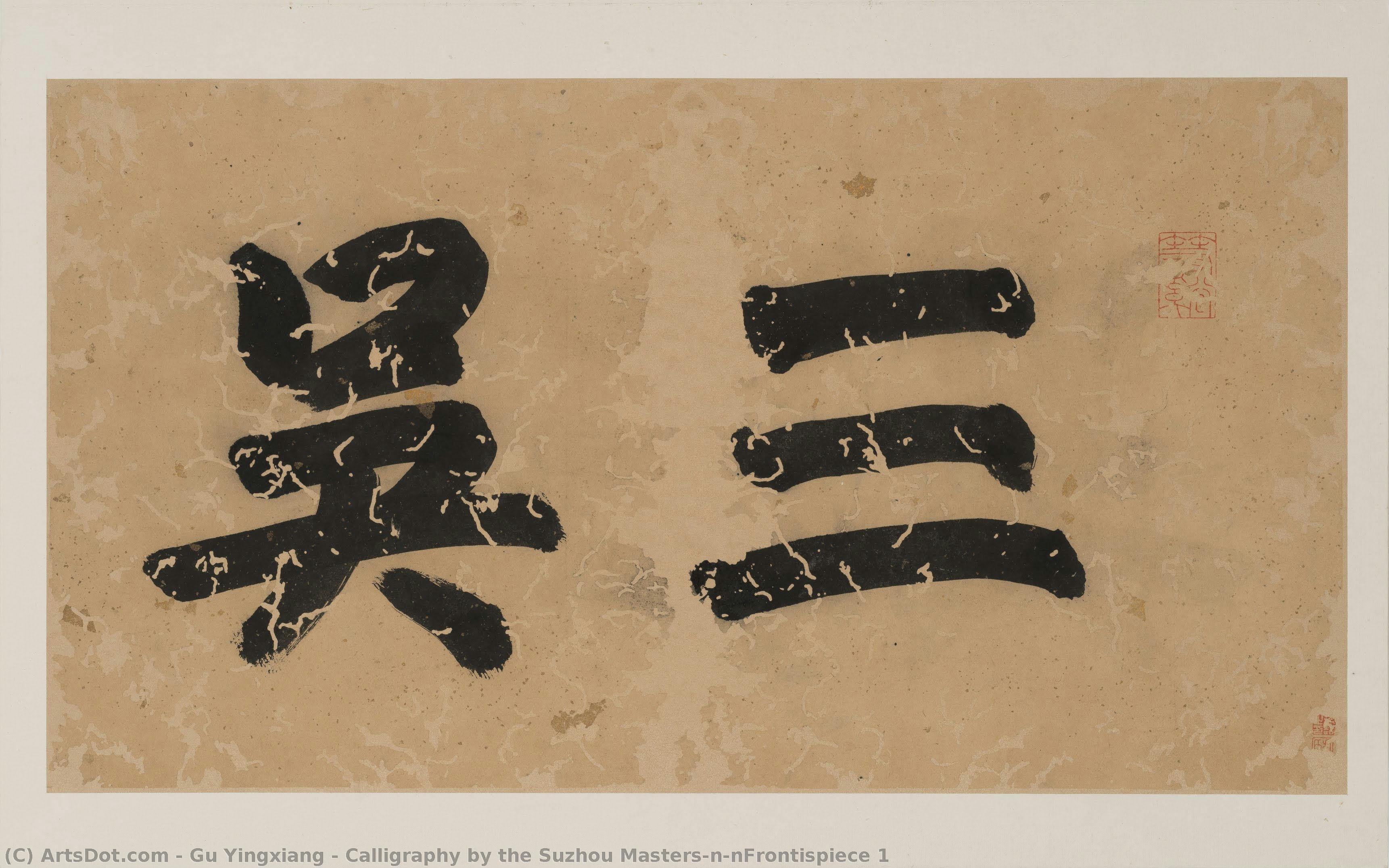
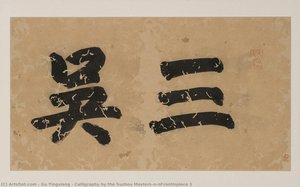
Calligraphy by the Suzhou Masters\n\nFrontispiece 1
 Traditional Chinese Art
 1400
1400 30.0 x 56.0 cm
 Ver más
Giclée / Impresión de arte
Impresiones giclée o en lienzo de calidad de museo con producción rápida y opciones de acabado flexibles. ( Comprar pintura hecha a mano Comprar imagen)




































Elija entre nuestros tamaños predefinidos que respetan las proporciones originales de la obra.

Puede introducir sus propias dimensiones para adaptarse a un marco o espacio específico. Si el tamaño seleccionado no coincide con las proporciones de la imagen original, recortaremos la obra de arte o extenderemos la imagen con un borde con efecto espejo o de color sólido. Se enviará una maqueta digital para su aprobación antes de que comience la producción.
Tenga en cuenta que la vista previa en pantalla no refleja el recorte o la extensión real. Solo la maqueta mostrará con precisión la composición final.
Aunque existen tamaños personalizados, recomendamos seleccionar una dimensión de la lista predefinida para preservar las proporciones originales.
Envío a todo el mundo () en 2 semanas en lugar de las 4/5 semanas estándar. (1 septiembre)

Envío exprés gratuito a todo el mundo

Lienzo de lino de alta calidad

Seguro de envío total

Garantía de reembolso de impuestos aduaneros

Garantía de fidelidad cromática exacta

Política de devolución de 60 días (solo por defectos)

Garantía de devolución del 100% del dinero

Descuento por cantidad
 La opción de vidrio solo está disponible en tamaños inferiores a 110 cm.

Calligraphy by the Suzhou Masters\n\nFrontispiece 1
Giclée / Impresión de arte
Dimensiones de la reproducción
-


Precio total final
$ 62
Obras relacionadas

Biografía del artista
The Silent Master of Suzhou: The Enigmatic Life of Gu Yingxiang
In the grand tapestry of the Ming Dynasty, where many artists sought the glittering light of imperial patronage and social prestige, Gu Yingxiang (1483–1565) chose a path of profound stillness. Born in Wuxing, in what is now Huzhou, Gu remains one of the most captivating enigmas of Chinese art history. His life, much like the misty landscapes he so masterfully rendered, is shrouded in a deliberate obscurity. There are few biographical records to guide us through his personal journey, yet this very lack of detail serves to amplify the power of his artistic voice. He was an artist who prioritized the sanctity of his craft over the clamor of fame, dedicating himself to an understated expression that favored the quiet resonance of ink and brush over the ostentatious displays of his contemporaries.
The foundations of Gu’s artistry were laid in the scholarly atmosphere of Suzhou, a region that served as the beating heart of Chinese cultural refinement. His early education was marked by rigorous training under the tutelage of Wang Yongqi, a distinguished scholar and calligrapher linked to the prestigious Minghui Academy. This period of formal instruction was transformative; it did more than teach him the mechanics of the brush—it instilled in him a deep-seated reverence for classical aesthetics. Through this lineage, Gu mastered the delicate balance between meticulous technical precision and the profound, meditative contemplation required to breathe life into a blank silk surface.
A Symphony of Ink and Atmosphere
Gu Yingxiang’s artistic legacy is most vibrantly felt in his landscape paintings, which stand as quintessential examples of the Suzhou aesthetic. His works are not merely depictions of terrain, but rather emotional evocations of nature's most serene moments. He possessed a singular ability to capture atmospheric perspective, using subtle tonal gradations and delicate ink washes to create luminous surfaces that seem to shimmer with light. To gaze upon his mountains is to witness the beauty of a world bathed in diffused mist, where the boundaries between earth and sky become beautifully blurred.
The fluidity of his brushwork owes much to his mastery of calligraphy, particularly the Suzhou cursive script. This connection between the written word and the painted image allowed him to imbue his landscapes with a sense of rhythmic grace and movement. His technique was characterized by:
- Fluidity and Grace: A brushstroke that mirrors the unrestrained energy of cursive calligraphy.
- Ink Wash Mastery: The use of layered, translucent washes to evoke depth and moisture.
- Quiet Grandeur: A compositional style that achieves a sense of monumental scale through subtle, rather than aggressive, details.
Historical Significance and the Legacy of Sanwu Mo Miao
The historical importance of Gu Yingxiang extends beyond his individual canvases to his role in the broader cultural exchange of the mid-Ming period. His work is inextricably linked to the celebrated collection known as “Sanwu Mo Miao” (Fine Ink of the Wu Region). This monumental collection, originally a two-volume handscroll, was documented by the prominent litterateur Wang Shizhen. The inclusion of Gu’s regular script within this prestigious assembly highlights his standing among the elite calligraphers of the Suzhou and Wuzhong areas. It serves as enduring evidence of Suzhou's status as a premier center for artistic innovation and scholarly exchange.
Though much of his life remains a mystery, the impact of Gu Yingxiang’s devotion to artistic integrity is undeniable. He left behind a body of work that does not shout for attention but instead invites the viewer into a state of peaceful reflection. In an era of great social change, Gu remained a steadfast guardian of the classical spirit, ensuring that the subtle beauty of the natural world would be preserved through the timeless medium of ink.
gu yingxiang
1483 - 1565 , China
Datos clave
- Artistic Movement Or Style: Landscape Painting
- Artists Or Movements Influenced By This Artist: ['Yang Hui']
- Artists Who Influenced This Artist: ['Wen Zhengming']
- Date Of Death: 1565
- Full Name: Gu Yingxiang
- Nationality: Chinese
- Notable Artworks: ['Sanwu Mo Miao']
- Place Of Birth: Wuxing (China)
Artículos relacionados
Xie Zhiliu: A Legacy of Ink Wash Painting & Modern Chinese Literati Tradition
Explore the legacy of Xie Zhiliu, a master of Chinese ink wash painting & prominent figure in modern art. Discover his techniques, influences, and contributions to literati tradition. A guide for discerning collectors.
Pu Xinyu's 'Puru': A Legacy of Literati Painting & Emotional Resonance
Explore the captivating world of Pu Xinyu (Puru), the last great literati painter. Discover his imperial heritage, masterful ink wash techniques & enduring legacy – a valuable addition to any discerning art collection.
Cy Twombly: Scribbles of Emotion – Deconstructing Post-War Expressionism Through Calligraphy & Abstraction
Explore the captivating world of Cy Twombly with ArtsDot. Discover the emotional depth & artistic significance behind his abstract calligraphy. Expert insights for collectors.
Ephemeral Expressions: Exploring the Nuances of Ink on Paper Through History & Contemporary Art
Explore the captivating world of ink wash painting – from its ancient origins to contemporary masters. Discover techniques, symbolism & conservation insights with ArtsDot.com.

