

 Ver en contexto
 Enviar
 Compartir
 Detalles

 Descargar
 Similares
 Radiografía
 Presentación de diapositivas
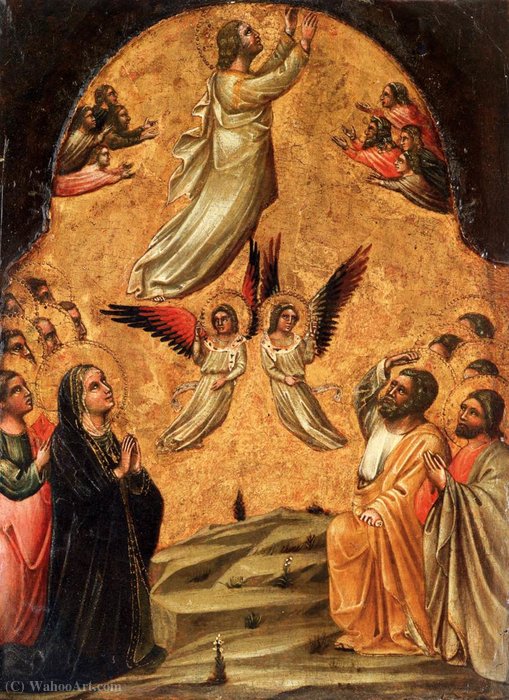
Ascension of Christ
 Ver más
Reproducción al óleo hecha a mano
Óleo sobre lienzo pintado a mano en el tamaño y marco de su elección, realizado por encargo por nuestros artistas. ( Comprar impresión Comprar imagen)




































Elija entre nuestros tamaños predefinidos que respetan las proporciones originales de la obra.

Puede ingresar sus propias dimensiones para adaptarse a un marco o espacio específico. Si el tamaño seleccionado no coincide con las proporciones de la imagen original, recortaremos la obra o extenderemos la pintura con elementos adicionales pintados a mano. Se le enviará una maqueta digital para su aprobación antes de comenzar la producción.
Tenga en cuenta que la vista previa en pantalla no refleja el recorte o la extensión reales. Solo la maqueta mostrará con precisión la composición final.
Si bien existen tamaños personalizados, recomendamos seleccionar una dimensión de la lista predefinida para preservar las proporciones originales.
Tras realizar el pedido, el equipo de ArtsDot.com enviará un correo electrónico al cliente para solicitar instrucciones y proporcionarle una vista previa del boceto.
Envío a todo el mundo () en 3-4 semanas en lugar de las 5 semanas estándar. (28 agosto). Sin comprometer la calidad.

Envío exprés gratuito a todo el mundo

Lienzo de lino de alta calidad

Seguro de envío total

Garantía de reembolso de impuestos aduaneros

Garantía de fidelidad cromática exacta

Política de devolución de 60 días (solo por defectos)

Garantía de devolución del 100% del dinero

Descuento por cantidad
 La opción de vidrio solo está disponible en tamaños inferiores a 110 cm.

Ascension of Christ
Técnica de reproducción
Dimensiones de la reproducción
-


Precio total final
$ 263
Obras relacionadas

![Scrovegni - [35] - La Crucifixión — Giotto Di Bondone, Gótico](/media/artworks/images-thumb/cf/93/cf934c5f25029370a72ef279c00495b1.jpg)

Biografía del artista
Guariento di Arpo: Bridging Florentine Realism and Venetian Gothic
Guariento di Arpo (c. 1310 – 1370) stands as a pivotal figure in fourteenth-century art, marking the transition between the stylistic dominance of Florence’s early Trecento and the increasingly ornate Venetian Gothic tradition. Born around 1310 in Padua—a city renowned for its burgeoning intellectual life and artistic patronage—Guariento's career unfolded amidst a dynamic cultural landscape shaped by humanist ideals and Byzantine influences. He is remembered primarily for his monumental frescoes adorning the Augustinian hermits’ church of San Bernardino, Padua, particularly the cycle depicting St Augustine’s Life – a commission that cemented his reputation as Padua’s foremost painter. His legacy extends beyond these iconic works, encompassing decorative panels commissioned by influential families like the Carrara and culminating in a fragmentarily preserved depiction of Paradise within the Palazzo Ducale.Early Life & Training: The Seeds of Innovation
Precise biographical details remain elusive, yet Guariento's formative years were spent in Padua’s vibrant artistic milieu. Evidence suggests he received instruction from Giovanni Pisano and Giotto di Bondone—artists whose groundbreaking innovations profoundly impacted Venetian painting. This exposure instilled in him a commitment to naturalistic representation combined with expressive dynamism, characteristics that would define his distinctive style. Pisano's mastery of sculptural realism served as an invaluable precedent for Guariento’s approach to depicting human figures, while Giotto’s pioneering use of spatial perspective—a revolutionary departure from Byzantine conventions—provided the foundational framework for Guariento’s Venetian frescoes. The influence of Giotto is undeniable; Guariento skillfully adopted Giotto's techniques but adapted them to the Venetian aesthetic, resulting in a synthesis that distinguishes him from his contemporaries.The Frescoes of San Bernardino: A Masterpiece of Psychological Depth
Guariento’s magnum opus resides in the choir frescoes of San Bernardino, Padua – a monumental undertaking undertaken in 1338. These paintings depict scenes from St Augustine's Life, meticulously crafted with meticulous attention to detail and imbued with psychological depth. The cycle showcases Guariento’s mastery of volumetric modeling and spatial perspective—techniques borrowed directly from Giotto but adapted to the Venetian aesthetic. Notably, the frescoes suffered severe damage during World War II bombing raids, resulting in significant loss of pigment and surface area. Despite this tragedy, surviving fragments offer invaluable insight into Guariento's artistic vision. The frescoes’ dramatic lighting and expressive gestures convey Augustine’s inner turmoil—a testament to Guariento’s ability to translate theological concepts into compelling visual narratives. Scholars have painstakingly reconstructed portions of the cycle based on surviving sketches and documented observations, furthering our understanding of Guariento’s creative process.Decorative Panels & Patronage: Venetian Splendor Reflected
Beyond San Bernardino, Guariento’s artistic output included decorative panels for the Palazzo Carrara—a commission that exemplifies his ability to synthesize Byzantine influences with Venetian Gothic ornamentation. These panels depict Madonna and Child figures alongside angels, demonstrating Guariento’s meticulous craftsmanship and stylistic sophistication. The Palazzo Carrara's reconstruction in 1779 facilitated the relocation of these panels to the Museo Civico di Padova, where they continue to captivate viewers today. The intricate gilded backgrounds and stylized draperies reflect the opulent tastes of Venetian aristocratic families—a reflection of Guariento’s engagement with the prevailing artistic trends of his time.Paradise Revisited: A Fragmentary Triumph
Guariento’s invitation to decorate the Palazzo Ducale with a fresco depicting Paradise represents one of his most ambitious projects—a commission that reflects Venetian artistic ambition and intellectual curiosity. Although only fragmentary remains exist due to subsequent renovations, scholars have reconstructed significant portions of the painting based on surviving sketches and documented observations. This artwork stands as testament to Guariento’s ability to synthesize Florentine realism with Byzantine grandeur, solidifying his position as a pioneer of Venetian Gothic style. The fresco's luminous colors and idealized figures embody the spiritual aspirations of Renaissance Venice—a final flourish in Guariento’s illustrious artistic career. Historical Significance: Guariento di Arpo is recognized as the first artist to successfully merge the volumetric and spatial developments of Florentine painting from the early Trecento with the more linear and abstract Late Gothic and Byzantine manner that had hitherto prevailed in Veneto. He represents a crucial juncture in artistic history, marking the definitive departure from stylistic conventions established by Giotto and Pisano while simultaneously embracing the expressive dynamism characteristic of Venetian art. His frescoes continue to inspire admiration for their psychological realism and masterful execution—a legacy that ensures Guariento di Arpo’s place among the most influential painters of his era remains secure.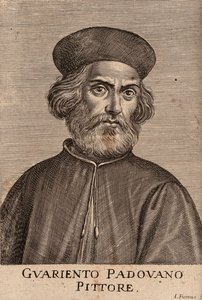
guariento d'arpo
1310 - 1370 , Italia
Datos clave
- Artistic Movement Or Style: Venetian painting; Gothic art
- Artists Or Movements Influenced By This Artist: ['Tintoretto']
- Artists Who Influenced This Artist: ['Giotto di Bondone']
- Date Of Death: 1370
- Full Name: Guariento di Arpo
- Nationality: Italian
- Notable Artworks:
- Coronation of the Virgin Altarpiece
- Madonna and Child
- Ascension of Christ
- Place Of Birth: Padua

