

 Ver en contexto
 Enviar
 Compartir
 Detalles

 Descargar
 Similares
 Radiografía
 Presentación de diapositivas
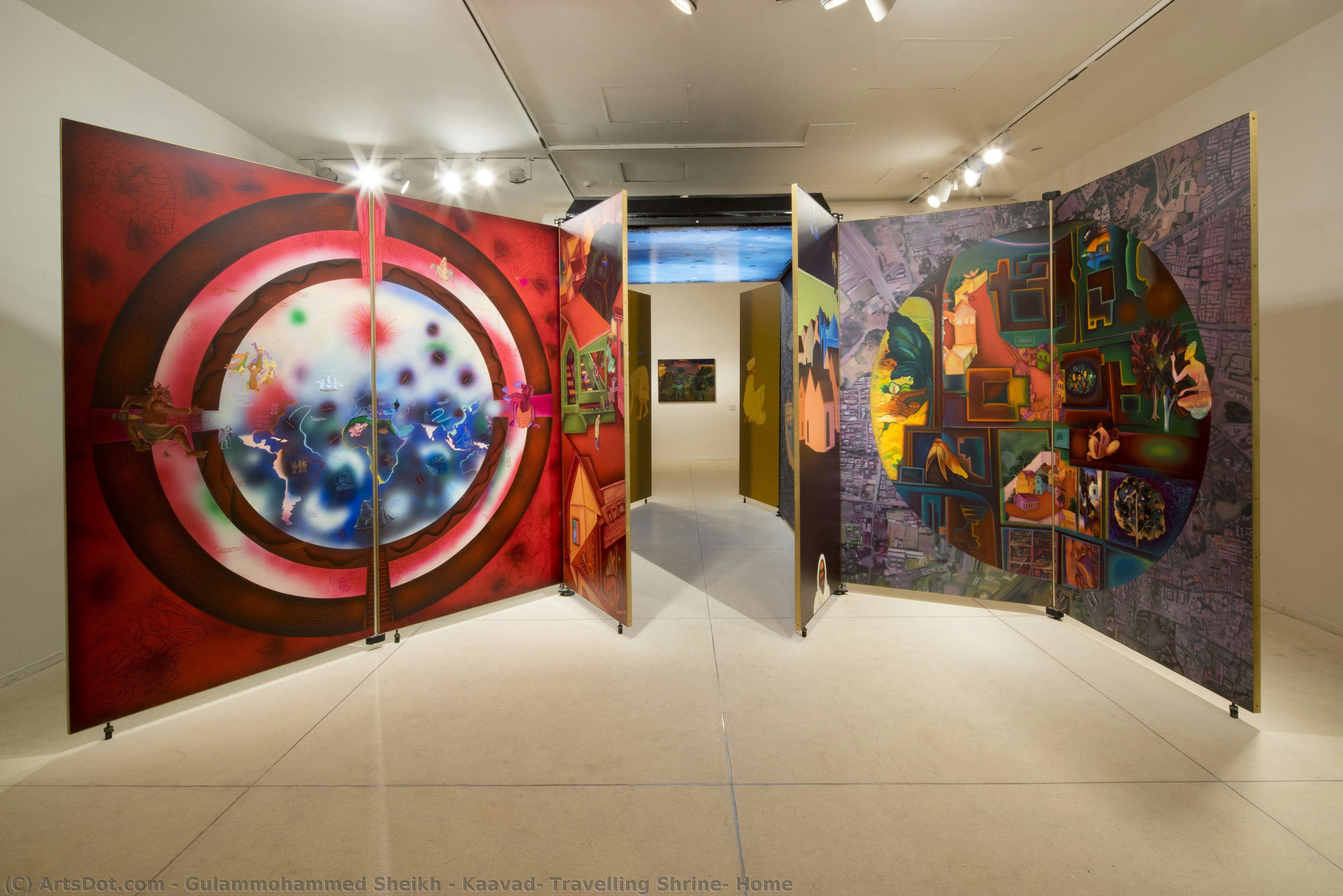
Kaavad: Travelling Shrine: Home
 244.0 x 782.0 cm
 Museo Kiran Nadar de Arte
 Ver más
Reproducción al óleo hecha a mano
Óleo sobre lienzo pintado a mano en el tamaño y marco de su elección, realizado por encargo por nuestros artistas. ( Comprar impresión Comprar imagen)




































Elija entre nuestros tamaños predefinidos que respetan las proporciones originales de la obra.

Puede ingresar sus propias dimensiones para adaptarse a un marco o espacio específico. Si el tamaño seleccionado no coincide con las proporciones de la imagen original, recortaremos la obra o extenderemos la pintura con elementos adicionales pintados a mano. Se le enviará una maqueta digital para su aprobación antes de comenzar la producción.
Tenga en cuenta que la vista previa en pantalla no refleja el recorte o la extensión reales. Solo la maqueta mostrará con precisión la composición final.
Si bien existen tamaños personalizados, recomendamos seleccionar una dimensión de la lista predefinida para preservar las proporciones originales.
Tras realizar el pedido, el equipo de ArtsDot.com enviará un correo electrónico al cliente para solicitar instrucciones y proporcionarle una vista previa del boceto.
Envío a todo el mundo () en 3-4 semanas en lugar de las 5 semanas estándar. (30 agosto). Sin comprometer la calidad.

Envío exprés gratuito a todo el mundo

Lienzo de lino de alta calidad

Seguro de envío total

Garantía de reembolso de impuestos aduaneros

Garantía de fidelidad cromática exacta

Política de devolución de 60 días (solo por defectos)

Garantía de devolución del 100% del dinero

Descuento por cantidad
 La opción de vidrio solo está disponible en tamaños inferiores a 110 cm.

Kaavad: Travelling Shrine: Home
Técnica de reproducción
Dimensiones de la reproducción
-


Precio total final
$ 263
Obras relacionadas









Biografía del artista
Ghulam Mohammed Sheikh: A Pioneer of Modern Indian Painting
Ghulam Mohammed Sheikh (born 16 February 1937) stands as a significant figure in the trajectory of contemporary art within India, particularly recognized for his involvement in the influential ‘1890’ collective. Born in Surendra Nagar, Rajasthan, Sheikh's artistic journey began amidst the burgeoning modernist movement of the 1960s—a period marked by fervent discussions about artistic expression and its role in shaping societal perceptions. This collective, comprised of visionary artists united by a shared commitment to challenging conventions, presented an audacious declaration against traditional artistic practices and championed innovative approaches.Early Life & Education
Sheikh’s formative years were steeped in the rich cultural heritage of Rajasthan, nurturing his innate fascination with visual storytelling. He pursued formal studies at Maharaja Sayajirao University of Baroda, earning a doctorate in painting—a testament to his dedication and intellectual curiosity. His academic pursuits honed his observational skills and instilled within him a profound understanding of artistic principles.The ‘1890’ Collective & Its Legacy
Sheikh's association with the ‘1890’ collective remains pivotal to understanding his artistic ethos. The group’s singular exhibition at Lalit Kala Akademi in New Delhi in 1963 served as a catalyst for dialogue and debate concerning the future of Indian art, establishing it as a beacon of modernist ideals. This daring undertaking signaled a rejection of established norms and embraced experimental techniques—a defining characteristic of Sheikh's artistic vision. The collective’s impact extended beyond its immediate presentation, sparking critical reflection on the role of art in shaping cultural identity.Sheikh's Artistic Style
Sheikh's artistic style is characterized by a distinctive blend of realism and symbolic representation. He skillfully employs meticulous observation to capture the essence of his subjects—often landscapes imbued with spiritual resonance—while simultaneously layering them with evocative imagery that transcends literal depiction. Recurring motifs, such as shrines (Kaavad) and depictions of Gandhi and Gama – figures embodying moral fortitude and social justice – underscore Sheikh’s preoccupation with themes of faith, ethics, and national identity. These images are not merely representations but conduits for conveying profound philosophical concepts. His technique demonstrates a masterful command of color and texture, creating artworks that resonate emotionally and intellectually.Notable Achievements & Recognition
Throughout his illustrious career, Ghulam Mohammed Sheikh has garnered considerable acclaim for his artistic contributions. He was awarded the Padma Shri in 1983 and Padma Bhushan in 2014 for his unwavering dedication to promoting Indian art internationally. His works are displayed in prestigious museums across continents—including the National Gallery of Modern Art in New Delhi, Victoria and Albert Museum in London, and Peabody Essex Museum in Salem, USA—testament to their enduring artistic merit. Furthermore, Sheikh’s teaching role at Maharaja Sayajirao University of Baroda has nurtured generations of aspiring artists, ensuring the continuation of a tradition rooted in both meticulous craftsmanship and intellectual engagement. He continues to inspire creativity and critical thought within the Indian art community.
gulammohammed sheikh
1937 - , India
Datos clave
- Artistic Movement Or Style: Arte moderno indio
- Artists Or Movements Influenced By This Artist: ["El colectivo ‘1890'"]
- Artists Who Influenced This Artist: ['Nilima Sheikh']
- Date Of Birth: 16 febrero 1937
- Full Name: Ghulam Mohammed Sheikh
- Nationality: Indio
- Notable Artworks:
- Gandhi y Gama
- Kaavad: Santuario viajero
- Place Of Birth: Surendranagar, India

