 Ver en contexto
 Enviar
 Compartir
 Detalles

 Descargar
 Similares
 Radiografía
 Presentación de diapositivas
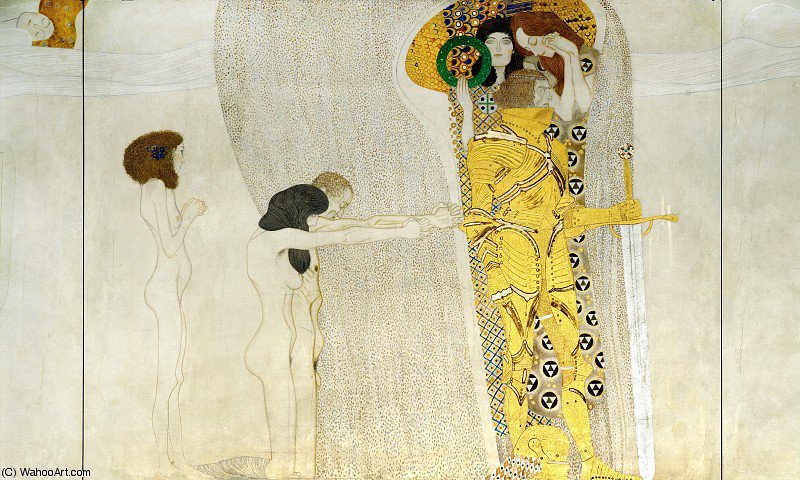
beethoven frieze, suffering humanity

 Ver más
Reproducción al óleo hecha a mano
Óleo sobre lienzo pintado a mano en el tamaño y marco de su elección, realizado por encargo por nuestros artistas. ( Comprar impresión Comprar imagen)




P118B $10

P118H $10

P118W $10

P438Z $10

P508JH $12

P508YH $12

P805H $10

P805Z $10

P919BZ $10

P919G $10

P919XJ $10

P959ZH $10

P968JZ $12

W106C $8

W218G $10

W218JH $8

W218Y $10

W307PJ $10

W316G $10

W316PJ $8

W316Y $10

W398PJ $8

W4111J $10

W500HY $15

W500JH $15

W692G $12

W849H $8

W940BG $15

W953PJ $8




Elija entre nuestros tamaños predefinidos que respetan las proporciones originales de la obra.

Puede ingresar sus propias dimensiones para adaptarse a un marco o espacio específico. Si el tamaño seleccionado no coincide con las proporciones de la imagen original, recortaremos la obra o extenderemos la pintura con elementos adicionales pintados a mano. Se le enviará una maqueta digital para su aprobación antes de comenzar la producción.
Tenga en cuenta que la vista previa en pantalla no refleja el recorte o la extensión reales. Solo la maqueta mostrará con precisión la composición final.
Si bien existen tamaños personalizados, recomendamos seleccionar una dimensión de la lista predefinida para preservar las proporciones originales.
Tras realizar el pedido, el equipo de ArtsDot.com enviará un correo electrónico al cliente para solicitar instrucciones y proporcionarle una vista previa del boceto.
Envío a todo el mundo () en 3-4 semanas en lugar de las 5 semanas estándar. (31 agosto). Sin comprometer la calidad.

Envío exprés gratuito a todo el mundo

Lienzo de lino de alta calidad

Seguro de envío total

Garantía de reembolso de impuestos aduaneros

Garantía de fidelidad cromática exacta

Política de devolución de 60 días (solo por defectos)

Garantía de devolución del 100% del dinero

Descuento por cantidad
 La opción de vidrio solo está disponible en tamaños inferiores a 110 cm.

beethoven frieze, suffering humanity
Técnica de reproducción
Dimensiones de la reproducción
-


Precio total final
$ 263
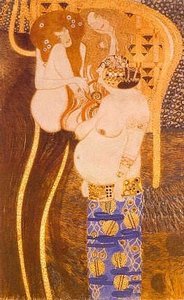
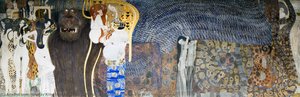
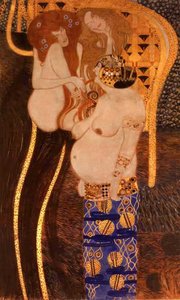
Beethoven Frieze: A Symphony of Suffering and Hope
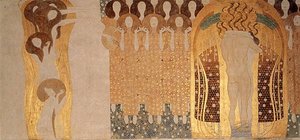
Gustav Klimt’s “Beethoven Frieze,” unveiled in 1902 as part of the Fourteenth Vienna Secession exhibition, isn't merely a painting; it’s an immersive experience. Commissioned to celebrate the 75th anniversary of Ludwig van Beethoven’s death, this monumental work transcends a simple portrait of the composer, instead offering a profound meditation on humanity’s eternal struggle with desire, fate, and ultimately, the pursuit of happiness. Measuring a staggering 34.14 meters in width and 2.15 meters in height, the frieze dominates its space, demanding attention and inviting contemplation – a testament to Klimt's ambition and artistic vision.
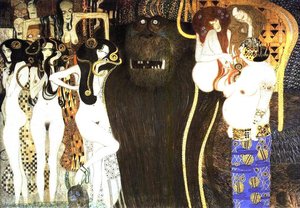
Klimt’s approach was deliberately eclectic, drawing inspiration from a diverse range of sources. He masterfully blended elements of Ancient Greek mythology, Byzantine iconography, early medieval art, and even Japanese aesthetics—a deliberate departure from the prevailing academic styles of his time. This fusion creates a visually arresting tapestry, rich in symbolism and layered with meaning. The frieze’s left side depicts a chaotic procession of figures representing various threats to human flourishing: lustful desires, destructive forces, and the specter of illness – all rendered in stark, unsettling detail. Notice the gorilla figure embodying Typhoeus, a monstrous embodiment of disease and plague that plagued European cities during Klimt's era, reflecting anxieties about public health and societal decay.
The Golden Core: Symbolism and Technique
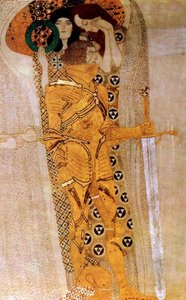
At the heart of the frieze lies a striking contrast. The central panel showcases a knight in shining armor, a figure embodying strength, virtue, and the unwavering pursuit of happiness. He is not passively receiving this joy; rather, he actively strives for it, driving forward those who are struggling to overcome their inner demons. This dynamic interplay between struggle and aspiration forms the core of the work’s narrative. Klimt's signature technique—the lavish application of gold leaf—is particularly evident here. The shimmering surface not only adds a sense of opulence but also symbolizes enlightenment, divinity, and the transformative power of art itself. The use of various materials – plaster, chalk, brass buttons, mirror fragments – further enhances the textural richness and visual complexity of the piece.
Beyond the knight, Klimt introduces two female figures: one representing ambition, holding aloft a wreath symbolizing victory, and another embodying sympathy, her head bowed in sorrow. These allegorical representations underscore the complexities of human relationships and the intertwined nature of desire and compassion. The vibrant colors—deep blues, greens, reds, and golds—are carefully orchestrated to evoke specific emotions and create a powerful visual rhythm. Klimt’s masterful use of color contributes significantly to the frieze's emotional impact, drawing the viewer into its world of struggle and aspiration.
Historical Context and Legacy
The “Beethoven Frieze” emerged during a period of significant social and artistic upheaval in Vienna. The Secession movement, which Klimt co-founded, challenged the conservative artistic establishment and championed innovation and experimentation. This work reflects the movement’s broader concerns with modernity, sexuality, and the role of art in shaping human experience. Following its initial exhibition, the frieze was acquired by Carl Reininghaus, who sought to prevent its destruction during the Nazi era. It eventually found a permanent home in the Österreichische Galerie Belvedere in Vienna, where it continues to captivate audiences today.
The story of the “Beethoven Frieze” is as compelling as the artwork itself. Its journey through history—from its initial conception to its wartime survival and eventual restoration—is a testament to the enduring power of art and the importance of preserving cultural heritage. Today, reproductions of this iconic masterpiece are available through ArtsDot.com, offering collectors and interior designers alike the opportunity to bring this profound work of art into their homes and spaces. The “Beethoven Frieze” remains a potent symbol of humanity’s eternal quest for meaning and happiness—a timeless reminder of our struggles, our aspirations, and the transformative power of art.
Obras relacionadas

Biografía del artista
Gustav Klimt: Vida, Arte y Legado
Primeros Años y Educación (1862-1883)
- Nacido el 14 de julio de 1862 en Baumgarten, cerca de Viena, Austria.
- Hijo de Ernst Klimt, grabador de oro, y Anna Finster. Su familia enfrentó dificultades financieras, lo que provocó mudanzas frecuentes dentro de Viena.
- Talento Temprano: Demostró habilidades de dibujo precoces fomentadas por la profesión de su padre y las inclinaciones artísticas familiares.
- Se matriculó en la Escuela de Artes Aplicadas de Viena (Kunstgewerbeschule) en 1876, estudiando pintura arquitectónica bajo Ferdinand Laufberger. Esto proporcionó una sólida formación técnica pero también le expuso a estilos académicos tradicionales.
- En 1877, formó la “Compañía de Artistas” con su hermano Ernst y Franz von Matsch, obteniendo encargos para murales y techos decorativos.
La Compañía de Artistas y Éxito Temprano (1883-1900)
- Continuó trabajando con la “Compañía de Artistas” después de dejar la Kunstgewerbeschule, ganando reconocimiento por proyectos decorativos como murales en el teatro municipal de Karlsbad y escaleras del Burgtheater de Viena.
- Contribuyó a las decoraciones del Museo Histórico de Viena, demostrando competencia técnica pero insinuando un deseo de romper con las limitaciones artísticas.
El Techo de la Universidad de Viena y Controversia (1900)
- Recibió una prestigiosa comisión alrededor de 1900 para pintar murales en el techo del Gran Salón de la Universidad de Viena, representando Filosofía, Derecho y Teología.
- Obras Controversiales: Los murales, particularmente *Filosofía*, fueron considerados provocativos e incluso pornográficos por los críticos, lo que provocó indignación pública.
- Klimt rechazó futuros encargos públicos tras la controversia, marcando un punto de inflexión en su carrera.
La “Fase Dorada” y Madurez Artística (1901-1918)
- Entró en su “fase dorada”, caracterizada por un uso lujoso del dorado inspirado en los mosaicos bizantinos y los manuscritos iluminados medievales.
- Obras Clave: *El Beso* (1907-1908) ejemplifica el estilo opulento y la riqueza simbólica de esta época.
- *Retratos:* Los retratos como *Retrato de Adele Bloch-Bauer I* (1907) se volvieron muy solicitados, mostrando su capacidad para captar tanto la semejanza física como la profundidad psicológica.
- Integraba cada vez más elementos decorativos en las composiciones, difuminando los límites entre pintura y ornamentación.
Influencias y Estilo Artístico
- Hans Makart: Admiración temprana por el pintor de historia líder de Viena influyó en su formación académica inicial.
- Arte Japonés (Japonismo): Profundamente influenciado por las estampas japonesas, particularmente su perspectiva aplastada, patrones decorativos y énfasis en la línea.
- Arte Bizantino: El uso del dorado y la ornamentación rica en los mosaicos bizantinos impactó profundamente en su “fase dorada.”
- Características del Estilo: Una mezcla única de Simbolismo, Art Nouveau y elementos decorativos; colores audaces, patrones intrincados y representaciones sensuales de la forma femenina.
Años Posteriores y Legado (1918)
- Continuó pintando prolíficamente hasta su muerte el 6 de febrero de 1918, debido a un derrame cerebral.
- Sus obras posteriores exploraron formas más abstractas y paisajes, demostrando una evolución artística continua.
- Significado Histórico: Reconocido como uno de los personajes más importantes de la historia del arte austriaca y un exponente líder del Secesionismo Vienés. Sus pinturas alcanzan precios altos en subastas, y su influencia se ve en el arte y el diseño contemporáneos.
- El Museo Histórico de Viena alberga una colección significativa de sus obras, asegurando que su legado continúe inspirando.
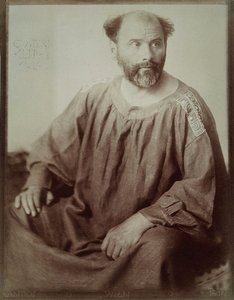
Gustav Klimt
1862 - 1918 , Austria
Datos clave
- Artistas Que Influyeron: ['Hans Makart']
- Fecha De Muerte: 6 de febrero de 1918
- Fecha De Nacimiento: 14 de julio de 1862
- Influenciado A: ['Egon Schiele']
- Lugar De Nacimiento: Baumgarten, Austria
- Movimiento Artístico: Simbolismo, Art Nouveau
- Nacionalidad: Austriaco
- Nombre Completo: Gustav Klimt
- Obras Notables:
- El Beso
- Adele Bloch-Bauer I
Artículos relacionados
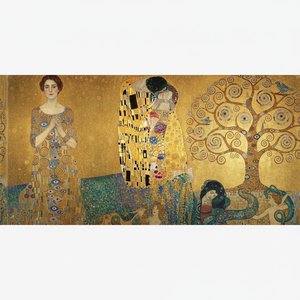
Gustav Klimt: Las 25 Obras Maestras que Definen un Ícono del Arte Moderno | ArtsDot
Descubre las 25 obras maestras de Gustav Klimt, ícono del simbolismo y Art Nouveau. Explora 'El Beso', 'Judith' y más. Reproducciones de arte en ArtsDot.com para decorar tu hogar con elegancia. ¡Inspírate!
Art Nouveau: 10 Obras Maestras que Definieron un Movimiento Revolucionario |
Descubre las 10 obras maestras del Art Nouveau que revolucionaron el arte. Explora la belleza de Mucha, Klimt y más. Reproducciones de museo en para un hogar con estilo. ¡Inspírate ahora!
La Secesión Vienesa: Un Legado de Innovación y Estilo Fin-de-Siècle
Descubre la Secesión Vienesa: su historia, artistas clave como Klimt y Schiele, e impacto en el arte moderno. Un análisis profundo de este movimiento innovador del Fin-de-Siècle.
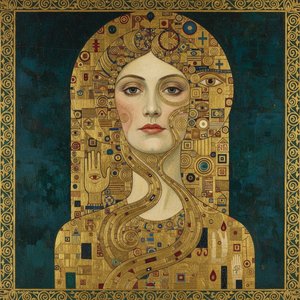
Gustav Klimt: A Golden Legacy of Sensuality & Symbolism in Viennese Art
Explore the captivating world of Gustav Klimt with ArtsDot. Discover his iconic paintings, the Vienna Secession movement, & enduring legacy. High-quality reproductions available.
Simbolismo en el Arte: 10 Obras Maestras que Marcaron una Época | ArtsDot
Descubre las 10 obras maestras del Simbolismo: Moreau, Redon y más. Explora la historia, el significado y la belleza de este movimiento artístico en ArtsDot.com. Reproducciones de arte de calidad museo para tu hogar.