

 Ver en contexto
 Enviar
 Compartir
 Detalles

 Descargar
 Similares
 Radiografía
 Presentación de diapositivas
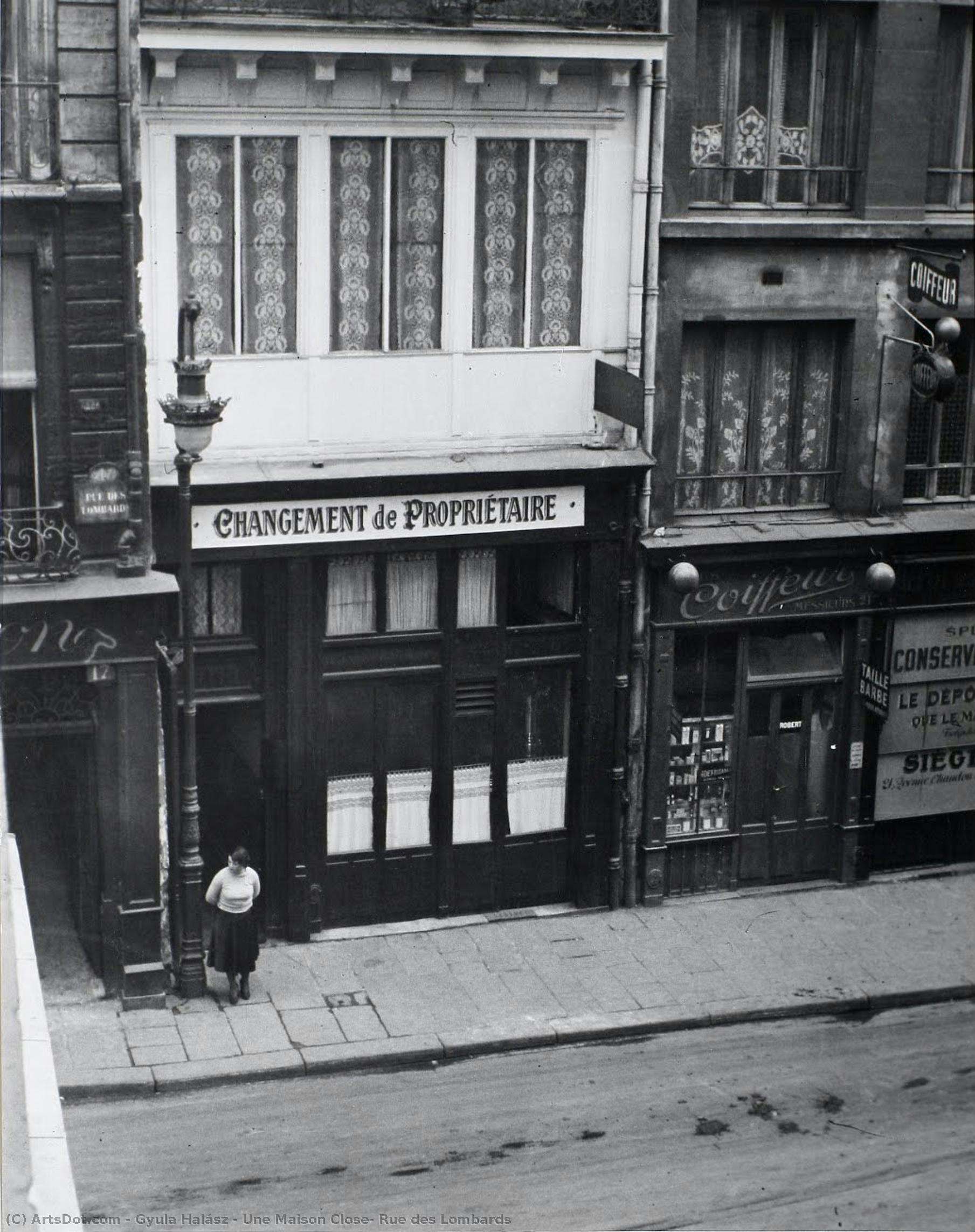
Une Maison Close, Rue des Lombards


 Ver más
Adquiera una imagen digital de alta resolución y optimizada, muy superior a la vista previa en línea.
Cada archivo es preparado meticulosamente por nuestros especialistas internos mediante el uso de herramientas avanzadas y un experto retoque manual. Nos aseguramos de que cada imagen posea una claridad excepcional, una precisión cromática impecable y un detalle minucioso.
El archivo final se entrega por correo electrónico en un plazo de 72 horas, optimizado para su uso inmediato en entornos profesionales, editoriales y de impresión. Esta es la misma calidad en la que confían los estudios de diseño, las editoriales y las galerías de primer nivel.
Imagen Digital
Descarga un archivo de alta resolución para exhibición personal, impresión y proyectos creativos. ( Comprar impresión Comprar pintura hecha a mano)
Incluido en cada pedido de imágenes digitales
Entrega digital experta, garantizada.
Al elegir ArtsDot.com, no solo está adquiriendo una imagen; está recibiendo una obra de arte digital mejorada profesionalmente, elaborada con precisión y respaldada por una garantía de satisfacción. Esto es todo lo que incluye su pedido, automáticamente:

Entrega rápida por email
Recibirá su archivo de imagen digital en alta resolución por correo electrónico en un plazo de 72 horas tras realizar su pedido, listo para su uso inmediato.

Archivo digital optimizado por IA
Su obra de arte se optimiza profesionalmente mediante herramientas avanzadas de IA y edición manual, garantizando el máximo detalle, claridad y precisión cromática.

Reenvío gratuito de por vida
¿Has borrado o perdido tu archivo por error? No te preocupes: te lo volveremos a enviar en cualquier momento, sin coste adicional.

Sin gastos de importación, siempre
Disfrute de su obra de arte al instante sin aduanas, aranceles ni gastos de envío; las descargas digitales siempre están libres de impuestos.

Garantía de fidelidad de color
Garantizamos que su imagen digital refleje los colores originales con la mayor fidelidad posible, mediante el uso de herramientas profesionales y gestión del color.

Garantía de satisfacción de 60 días
Si no está satisfecho con su imagen digital, la revisaremos o le reembolsaremos el 100% en un plazo de 60 días, sin preguntas.

100% Garantía de devolución de dinero
¿No está satisfecho? Obtenga un reembolso completo dentro de los 60 días posteriores a la recepción de su archivo digital, sin necesidad de explicaciones.

Descuentos por pedidos grandes
Compra 3 imágenes, ahorra 10% - Compra 5, ahorra 15% - Compra 10+, ahorra 20%. Ideal para proyectos creativos, galerías y agencias.
Obras relacionadas

Biografía del artista
Gyula Halász (Braszai): The Poet of Parisian Night
Gyula Halász, better known as Brassaï (pronounced Brah-sigh), was a Hungarian-born French photographer whose nocturnal vision of Paris transformed the city’s shadowed streets and bohemian nightlife into a modern myth. Born on September 9, 1899, in Brassó (now Brașov), Romania—a region then part of Austria-Hungary—he pursued artistic training initially in Budapest and Berlin before establishing himself as a journalist in Paris in 1924. It was this Parisian encounter that proved pivotal, sparking an enduring friendship with Eugène Atget, whose uncompromising portraits of the city profoundly impacted Brassaï’s aesthetic sensibilities. Furthermore, he collaborated closely with André Kertész, whose assignments he occasionally accompanied, cementing his position within the vibrant artistic community of Montparnasse. Braszai's early artistic inclinations leaned toward painting and sculpture; however, it was photography that irrevocably captivated him. Despite initial reservations about the medium’s perceived limitations—a common sentiment among artists of his time—he recognized its unparalleled ability to capture the essence of urban life with remarkable precision and beauty. This realization fueled a transformative project: *Paris de nuit* (1932), arguably his magnum opus. Armed with a Voigtländer camera—a deliberate choice reflecting his meticulous approach—Braszai embarked on a nocturnal odyssey through Montparnasse’s labyrinthine alleys, documenting the lives of its inhabitants with profound sensitivity and technical mastery. The resulting photographs, characterized by dramatic contrasts between light and shadow, geometric lines, and textured surfaces, decisively challenged prevailing photographic conventions and established Brassaï as a trailblazer in street photography—a genre that would forever alter perceptions of urban landscapes. The publication of *Paris de nuit* elicited considerable acclaim alongside spirited debate, encapsulating the fervor of the era’s artistic milieu while simultaneously confronting societal prejudices concerning marginalized figures like prostitutes and trampers. This courageous aesthetic stance solidified Brassaï's reputation as an artist who dared to depict reality without sentimentality—a conviction that resonated deeply with Surrealist thinkers such as André Breton and Pablo Picasso, who acknowledged his singular contribution to visual art. His subsequent collaborations with writers like Henry Miller enriched his artistic output, blending evocative visual storytelling with lyrical prose—a stylistic fusion that mirrored the spirit of his time. Throughout the 1930s and beyond, Brassaï continued to refine his craft, producing mesmerizing images of Parisian life—ranging from opulent social gatherings to intimate portraits of artists and intellectuals—that captured the zeitgeist of the period. His assignments for Harper’s Bazaar showcased his exceptional talent for elevating journalistic endeavors into artistic statements, demonstrating a masterful blend of observation and imagination. Following the passing of his influential patron Carmel Snow in 1962, Brassaï largely relinquished active photography but devoted himself to painstakingly printing his existing negatives and releasing new editions of his seminal works—a solemn dedication to preserving his legacy as one of the most distinctive voices in modern photographic history. Braszai’s enduring influence transcends mere stylistic innovation; it resides in his unwavering commitment to portraying urban life with honesty and empathy—a perspective that continues to inspire artists and photographers globally. His photographs remain indelible symbols of Paris at night, embodying a timeless fascination with darkness, solitude, and the human condition—images that continue to resonate powerfully with audiences today.
Gyula Halász
1899 - 1984 , Romania
Breves datos
- Artistic Movement Or Style: Fotografía
- Artists Who Influenced This Artist:
- Eugène Atget
- André Kertész
- Date Of Birth: 9 septiembre 1899
- Full Name: Gyula Halász
- Nationality: Húngaro-Francés
- Notable Artworks:
- Una Casa Cercana
- Bijoux de Montmartre
- Place Of Birth: Brassó, Rumania

