

 Vista previa
 Compartir
 Compartir
 Ver detalles

 Descargar
 Ver similares
 Radiografía
 Presentación de diapositivas
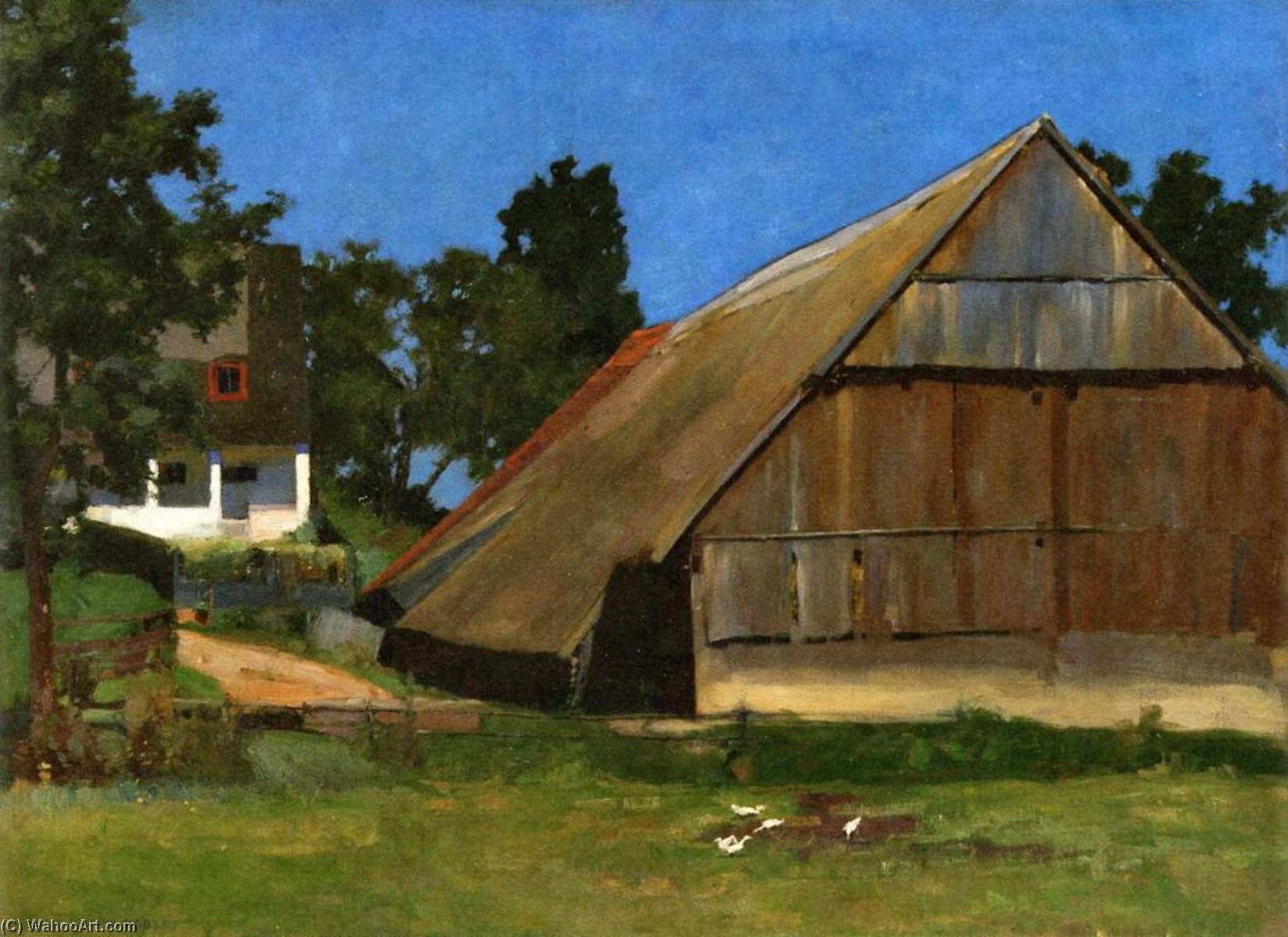
Landscape with Shed and Farmer's House
 1896
1896 61.0 x 81.0 cm
 Leer más
Reproducción al óleo hecha a mano
Óleo sobre lienzo pintado a mano en el tamaño y marco de su elección, realizado por encargo por nuestros artistas. ( Pedir impresión Comprar descarga)




































Elija entre nuestros tamaños predefinidos que respetan las proporciones originales de la obra.

Puede ingresar sus propias dimensiones para adaptarse a un marco o espacio específico. Si el tamaño seleccionado no coincide con las proporciones de la imagen original, recortaremos la obra o extenderemos la pintura con elementos adicionales pintados a mano. Se le enviará una maqueta digital para su aprobación antes de comenzar la producción.
Tenga en cuenta que la vista previa en pantalla no refleja el recorte o la extensión reales. Solo la maqueta mostrará con precisión la composición final.
Si bien existen tamaños personalizados, recomendamos seleccionar una dimensión de la lista predefinida para preservar las proporciones originales.
Tras realizar el pedido, el equipo de ArtsDot.com enviará un correo electrónico al cliente para solicitar instrucciones y proporcionarle una vista previa del boceto.
Envío a todo el mundo () en 3-4 semanas en lugar de las 5 semanas estándar. (22 agosto). Sin comprometer la calidad.

Envío exprés gratuito a todo el mundo

Lienzo de lino de alta calidad

Seguro de envío completo

Garantía de reembolso de aranceles aduaneros

Garantía de fidelidad cromática exacta

Política de devolución de 60 días (solo por defectos)

Garantía de devolución del 100% del dinero

Oferta por volumen
 La opción de vidrio solo está disponible en tamaños inferiores a 110 cm.

Landscape with Shed and Farmer's House
Técnica de reproducción
Tamaño de la reproducción
-


Precio total
$ 263
Descripción de la obra
Artist Background
Hans Emmenegger was a Swiss painter known for his landscapes and portraits. He was born in 1866 and died in 1940, leaving behind a legacy of beautiful artworks. His paintings are characterized by their attention to detail, use of color, and ability to capture the essence of the subject.Painting Style
The Landscape with Shed and Farmer's House is a great example of Hans Emmenegger's painting style. The use of oil on panel gives the painting a unique texture and depth, while the attention to detail in the brushstrokes creates a sense of realism. The colors used are muted, with earthy tones dominating the palette, which adds to the overall feeling of serenity.- The painting is available for purchase as a handmade oil painting reproduction on ArtsDot.com
- View more artworks by Hans Emmenegger on ArtsDot.com
- Learn more about the artist and his works on Wikipedia
The Landscape with Shed and Farmer's House is a beautiful example of Hans Emmenegger's work, and it would make a great addition to any art collection. Whether you are an avid art collector or just starting your collection, this painting is sure to impress. With its serene atmosphere and stunning attention to detail, it is a must-have for anyone who appreciates beautiful art.
Obras relacionadas





Biografía del artista
Hans Emmenegger: A Master of Alpine Light and Subtle Emotion
Hans Emmenegger (1866-1940) remains a quietly significant figure in the landscape of Swiss art, an artist whose evocative paintings capture not just the visual beauty of the Alps but also the subtle emotional currents that flow through them. Often overshadowed by the more flamboyant figures of his contemporaries, Emmenegger’s work reveals a profound sensitivity to light, color, and texture—a mastery honed through decades of dedicated observation and experimentation. His legacy lies in a body of paintings that offer intimate glimpses into the heart of the Swiss countryside, imbued with a quiet dignity and an understated power.
Born in 1866 in the village of Unterseen, near Interlaken, Emmenegger’s early life was deeply intertwined with the natural world. His father, a timber merchant, instilled in him a respect for craftsmanship and a keen awareness of the rhythms of rural life. This formative experience would profoundly shape his artistic vision, leading him to prioritize direct observation and a deep connection to the landscape. Initially trained as a watchmaker’s apprentice, Emmenegger's passion for art quickly superseded his technical skills, prompting him to pursue formal training at the Kunstakademie in Zurich. However, he soon abandoned the rigid academic approach, seeking instead to develop a more personal and expressive style.
Emmenegger’s artistic development can be traced through a remarkable series of notebooks—a meticulously documented record of his painting techniques, materials, and observations. This “Maltechnik-Notizbuch” (Painting Technique Notebook), created between 1901 and 1905, offers an unparalleled insight into the artist's creative process. Within its pages, Emmenegger detailed not only the physical aspects of painting—the mixing of pigments, the application of brushstrokes—but also his philosophical reflections on art, nature, and the human condition. The notebook reveals a methodical approach to experimentation, a willingness to embrace both successes and failures, and a constant striving for greater technical precision and emotional resonance. It’s a testament to his dedication that this resource is now available online through the collaborative efforts of the Swiss Institute for Art Research (SIK-ISEA) and arthistoricum.net.
The Language of Light and Shadow
Emmenegger's paintings are characterized by an extraordinary sensitivity to light—particularly the shifting qualities of Alpine light. He wasn’t interested in dramatic, theatrical effects; instead, he sought to capture the subtle nuances of illumination that define the Swiss landscape. His compositions often feature a limited palette of earthy tones—ochres, browns, greens, and blues—which he skillfully manipulated to create a sense of depth, atmosphere, and spatial ambiguity. The interplay of light and shadow is central to his work, lending an almost sculptural quality to his landscapes.
His use of chiaroscuro – the dramatic contrast between light and dark – isn’t employed for mere effect but serves to heighten the emotional impact of his scenes. He frequently depicts solitary figures—farmers tending their fields, shepherds watching over their flocks—set against vast, open vistas. These figures are rendered with a remarkable degree of psychological subtlety, conveying a sense of quiet contemplation and connection to the natural world. The paintings aren’t about grand narratives; they're about capturing fleeting moments of human experience within the context of the landscape.
Influences and Artistic Connections
While Emmenegger largely resisted direct influence from avant-garde movements, his work demonstrates a clear engagement with the artistic currents of his time. He shared a close relationship with other Swiss artists, including Giovanni Segantini and Ferdinand Walser, exchanging ideas and techniques through informal gatherings and exhibitions. His paintings also reflect the influence of Flemish masters such as Jan van Eyck and Hans Memling, particularly in their meticulous attention to detail and their use of layered glazing techniques. The subtle modeling of forms and the luminous quality of his surfaces owe a debt to these earlier painters.
Furthermore, Emmenegger’s work can be seen as part of a broader tradition of Swiss landscape painting—a movement that sought to celebrate the beauty and diversity of the Alpine region. However, unlike many of his contemporaries, he avoided romanticizing the landscape, instead presenting it with an honest and unvarnished realism.
Key Works and Lasting Significance
Among Emmenegger’s most celebrated paintings are “Spielhahn im Gleitflug” (Black Grouse in Flight), a dynamic depiction of birds soaring through the mountains, and numerous landscapes featuring farms, meadows, and forests. His work is now held by several important collections, including the Groeninge Museum in Bruges and the Kunsthaus Zürich. His paintings are characterized by their quiet dignity, their subtle emotional depth, and their remarkable technical skill.
Despite his relative obscurity during his lifetime, Hans Emmenegger’s legacy has been steadily growing in recent years. His “Maltechnik-Notizbuch” offers a unique window into the creative process of one of Switzerland's most perceptive artists, while his paintings continue to resonate with viewers who appreciate their understated beauty and profound connection to the natural world. He represents a vital voice within Swiss art history—a testament to the power of observation, dedication, and a deep love for the land.
hans emmenegger
1866 - 1940
Datos clave
- Artistic Movement Or Style: Flemish Painting
- Artists Or Movements Influenced By This Artist: ['Groeninge Museum']
- Artists Who Influenced This Artist: ['Memling Style']
- Date Of Birth: 1866
- Date Of Death: 1940
- Full Name: Hans Emmenegger
- Nationality: Swiss
- Notable Artworks:
- Forest Painting
- In the Forest
- Landscape with Shed
- Place Of Birth: Switzerland

