 Vista previa
 Compartir
 Compartir
 Ver detalles

 Descargar
 Ver similares
 Radiografía
 Presentación de diapositivas
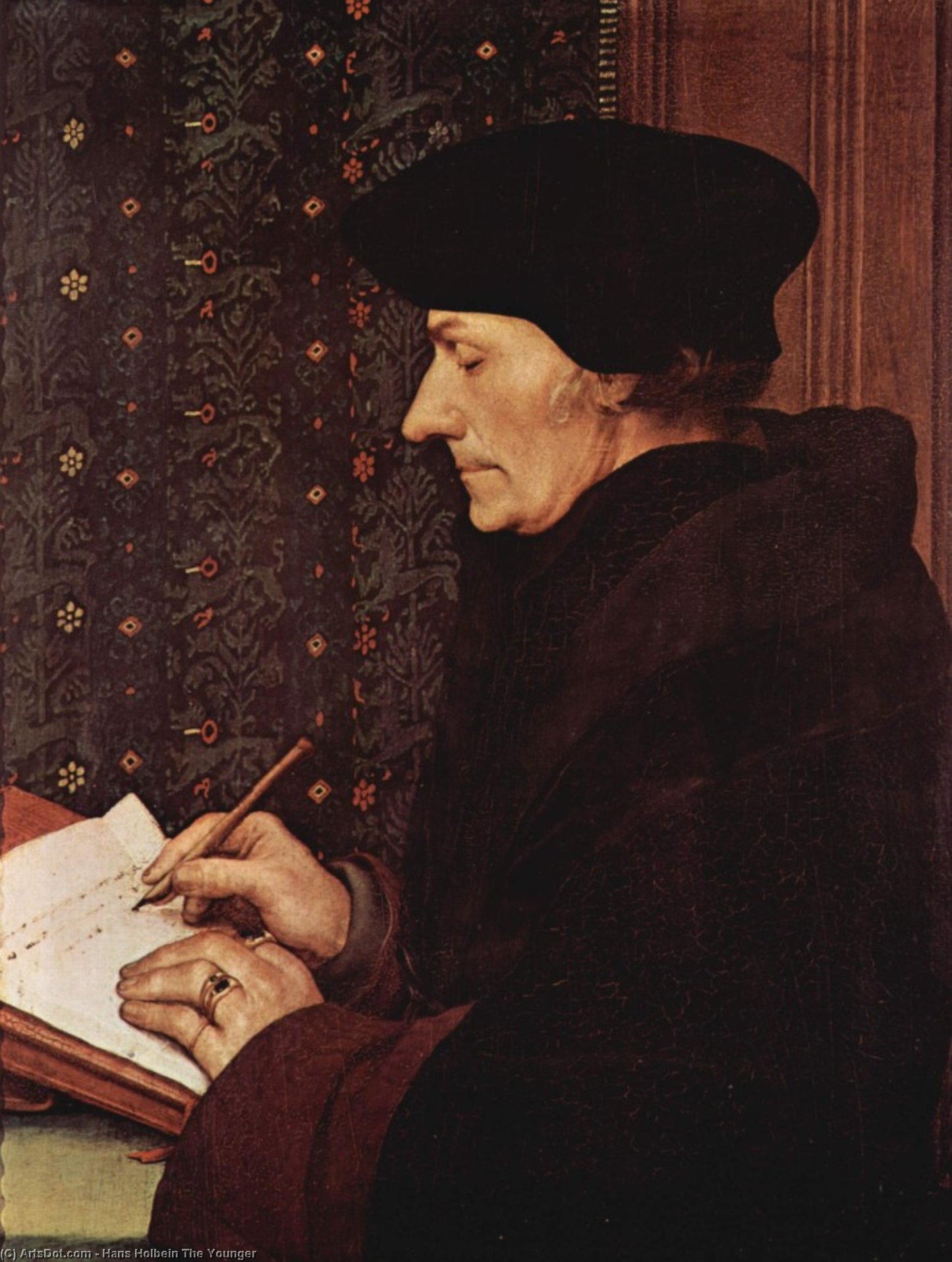
Portrait de Désirius Erasmo
 Acrílico sobre lienzo
- Arte de pared
- Renacimiento Norteño
 1523
1523- Renacimiento
 32.0 x 42.0 cm
 Leer más
Reproducción al óleo hecha a mano
Óleo sobre lienzo pintado a mano en el tamaño y marco de su elección, realizado por encargo por nuestros artistas. ( Pedir impresión Comprar descarga)




P118B $10

P118H $10

P118W $10

P438Z $10

P508JH $12

P508YH $12

P805H $10

P805Z $10

P919BZ $10

P919G $10

P919XJ $10

P959ZH $10

P968JZ $12

W106C $8

W218G $10

W218JH $8

W218Y $10

W307PJ $10

W316G $10

W316PJ $8

W316Y $10

W398PJ $8

W4111J $10

W500HY $15

W500JH $15

W692G $12

W849H $8

W940BG $15

W953PJ $8




Elija entre nuestros tamaños predefinidos que respetan las proporciones originales de la obra.

Puede ingresar sus propias dimensiones para adaptarse a un marco o espacio específico. Si el tamaño seleccionado no coincide con las proporciones de la imagen original, recortaremos la obra o extenderemos la pintura con elementos adicionales pintados a mano. Se le enviará una maqueta digital para su aprobación antes de comenzar la producción.
Tenga en cuenta que la vista previa en pantalla no refleja el recorte o la extensión reales. Solo la maqueta mostrará con precisión la composición final.
Si bien existen tamaños personalizados, recomendamos seleccionar una dimensión de la lista predefinida para preservar las proporciones originales.
Tras realizar el pedido, el equipo de ArtsDot.com enviará un correo electrónico al cliente para solicitar instrucciones y proporcionarle una vista previa del boceto.
Envío a todo el mundo () en 3-4 semanas en lugar de las 5 semanas estándar. (20 agosto). Sin comprometer la calidad.

Envío exprés gratuito a todo el mundo

Lienzo de lino de alta calidad

Seguro de envío completo

Garantía de reembolso de aranceles aduaneros

Garantía de fidelidad cromática exacta

Política de devolución de 60 días (solo por defectos)

Garantía de devolución del 100% del dinero

Oferta por volumen
 La opción de vidrio solo está disponible en tamaños inferiores a 110 cm.

Portrait de Désirius Erasmo
Técnica de reproducción
Tamaño de la reproducción
-


Precio total
$ 263
Descripción de la obra
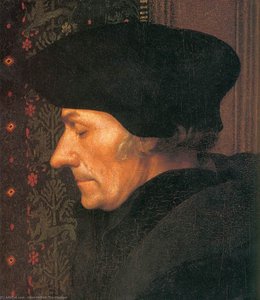
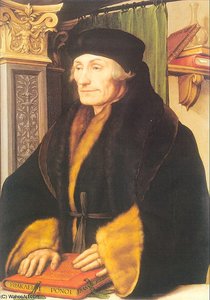
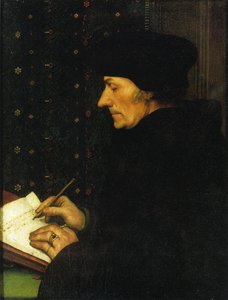
Portrait of Desiderius Erasmus
The Portrait of Desiderius Erasmus, painted by Hans Holbein the Younger in 1523, stands as a cornerstone of Renaissance humanism and Northern European artistic achievement. This oil on panel artwork measures 32 x 42 cm and embodies the meticulous observation and expressive power characteristic of Holbein’s oeuvre. It's more than just an image; it’s a window into the intellectual fervor of its time, capturing the essence of Erasmus himself—a man grappling with profound questions about faith and knowledge.The Subject: Desiderius Erasmus
Desiderius Erasmus (1466–1536) was arguably the most influential humanist scholar of his era. A Dutch priest and theologian, he challenged established dogma within the Catholic Church, advocating for reform through reasoned argument and erudition. Holbein’s depiction skillfully portrays Erasmus not merely as a figure but as a mind—a contemplative soul absorbed in thought, surrounded by symbols that speak to his intellectual pursuits. The artist sought to convey Erasmus's inner life as much as his outward appearance, reflecting the humanist ideal of cultivating virtue through learning and contemplation.Artistic Elements
The painting’s backdrop is dominated by a delicately patterned wallpaper—a subtle yet significant detail that adds depth and visual richness to the scene. This choice of decorative element wasn’t arbitrary; it mirrored the artistic sensibilities of the Renaissance, where elaborate ornamentation served as a vehicle for conveying status and intellectual refinement. Two books are prominently positioned: one resting on the lower left corner and another held in Erasmus's right hand. These books represent Erasmus’s unwavering dedication to scholarship—his tireless pursuit of knowledge through classical texts and humanist treatises. Holbein’s masterful use of chiaroscuro –the dramatic interplay of light and shadow– enhances the painting’s realism, sculpting Erasmus’s form with luminous highlights and deep recesses that draw the viewer's eye into the composition.Symbolism and Allusions
Holbein infused his artwork with layers of symbolism designed to resonate beyond a simple portrait likeness. The Latin couplet inscribed on the edge of the leaning book— “I am Johannes Holbein, whom it is easier to denigrate than to emulate”—is particularly noteworthy. This witty inscription encapsulates Erasmus’s conviction that true originality demanded resistance to convention and adherence to one's own convictions. It speaks to a broader humanist concern with intellectual integrity and the importance of challenging accepted norms. Furthermore, the inclusion of an empty wine flask symbolizes sobriety and contemplation—qualities Holbein wished to associate with his subject.Artistic Style
Holbein’s artistic style is characterized by unparalleled precision and realism. He achieved this remarkable feat through painstaking observation and meticulous technique—a hallmark of Northern Renaissance art. His portraits were renowned for their uncanny likenesses, capturing not only physical features but also psychological nuance. Holbein's approach to painting involved detailed preparatory sketches and careful layering of pigments to achieve a luminous surface finish that conveyed both texture and depth. This dedication to craftsmanship ensured that his works endured as timeless representations of human dignity and intellect.Legacy
The Portrait of Desiderius Erasmus remains a celebrated exemplar of Holbein’s artistic legacy—a testament to his mastery of portraiture and his ability to encapsulate the spirit of Renaissance humanism. Currently housed in the Mauritshuis in The Hague, Netherlands, this painting continues to inspire admiration for its beauty and intellectual depth. It stands as an enduring symbol of humanist ideals and a masterpiece of Northern Renaissance art. For those interested in exploring more of Holbein’s remarkable achievements, Hans Holbein The Younger: Portrait of Desiderius Erasmus and Hans Holbein The Younger: Portrait of Erasmus of Rotterdam are available on ArtsDot. To delve deeper into Hans Holbein the Younger’s artistic contributions, visit Hans Holbein the Younger on Wikipedia.Obras relacionadas
Biografía del artista
vida temprana y formación
Hans Holbein el Joven, una figura destacada en la renacimiento norteño, nació en 1497 en Augsburg, Alemania. Aunque a menudo se le confunde con su padre, Hans Holbein el Viejo, un artista y grabador renombrado, la obra del joven Holbein es distinta y notable por sí misma.carrera artística
La carrera artística de Holbein el Joven comenzó bajo la tutela de su padre. Posteriormente viajó a Inglaterra, donde se convirtió en pintor de corte para el rey Enrique VIII. Esta posición le permitió capturar la esencia de la familia real y la aristocracia inglesa emergente. Su obra se caracteriza por:- realismo excepcional: los retratos de Holbein son celebrados por su calidad realista, como se ve en Retrato de una dama desconocida (renacimiento norteño).
- composición innovadora: su uso de la composición es evidente en Sir William Butts (37 x 46 cm, renacimiento norteño, óleo sobre tabla).
- estudio para el retrato familiar de Tomás Moro (38 x 52 cm, renacimiento norteño) muestra su habilidad para capturar la esencia de una familia.
obras notables y legado
La obra de Holbein el Joven se encuentra en varios museos, incluido el Museos Estatales de Berlín (Alemania, donde su Señor desconocido con libros de música y laúd (óleo sobre tabla) está en exhibición. Su influencia en el renacimiento norteño es innegable, y su obra continúa inspirando a los artistas hasta el día de hoy. Holbein el Joven falleció en 1543, pero su legado perdura a través de sus cautivadores retratos y estudios detallados. ver más obras de Hans Holbein el Joven en ArtsDot.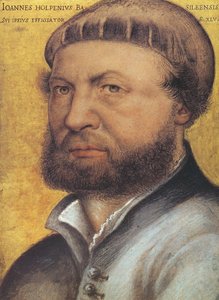
Hans Holbein el Joven
1497 - 1543 , Italia
Datos clave
- Artistas Que Influyeron:
- Hans Holbein el Viejo
- Albrecht Dürer
- Estilo Artístico: Renacimiento Nórdico
- Fecha De Muerte: 1543
- Fecha De Nacimiento: 1497
- Lugar De Nacimiento: Augsburgo, Italia
- Nacionalidad: Alemán
- Nombre Completo: Hans Holbein el Joven
- Obras Notables:
- Retrato de Enrique VIII
- El cuerpo del Cristo muerto
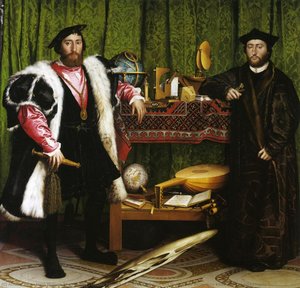
- Los embajadores
- Autorretrato
- Madonna del Burgomaestre Meyer
Artículos relacionados
Hans Holbein the Younger: A Renaissance Portraitist's Mastery of Realism & Psychological Insight
Explore the life & art of Hans Holbein the Younger, a Renaissance master renowned for his strikingly realistic portraits and psychological insight. Discover iconic works like 'The Ambassadors' and delve into his lasting legacy.
The Intimate Gaze: Study & Intellectual Pursuit in Western Art
Explore the fascinating history of study and intellectual pursuit in Western art! Discover Renaissance scholars, iconic portraits like Holbein's Erasmus, and Leonardo’s studies – a journey through humanist ideals & artistic mastery. Learn more at ArtsDot.
Renacimiento Nórdico: 10 Obras Maestras que Transformaron el Arte |
Descubre 10 obras maestras del Renacimiento Nórdico: Jan van Eyck, Durero y más. Explora la historia, el simbolismo y las técnicas de estos icónicos pintores. Encuentra reproducciones de arte exclusivas en .
Las 10 Pinturas Más Famosas Dominadas por Tonos Burdeos | Arte y Decoración
Descubre las 10 pinturas más famosas dominadas por tonos burdeos. Explora la historia, artistas y técnicas detrás de obras maestras del impresionismo, renacimiento y más. Encuentra reproducciones de arte exclusivas en .