 Ver en contexto
 Enviar
 Compartir
 Detalles

 Descargar
 Similares
 Radiografía
 Presentación de diapositivas
 Stats
Statsuntitled (791)


 Ver más
Giclée / Impresión de arte
Impresiones giclée o en lienzo de calidad de museo con producción rápida y opciones de acabado flexibles. ( Comprar pintura hecha a mano Switch to Digital Image)




P118B $10

P118H $10

P118W $10

P438Z $10

P508JH $12

P508YH $12

P805H $10

P805Z $10

P919BZ $10

P919G $10

P919XJ $10

P959ZH $10

P968JZ $12

W106C $8

W218G $10

W218JH $8

W218Y $10

W307PJ $10

W316G $10

W316PJ $8

W316Y $10

W398PJ $8

W4111J $10

W500HY $15

W500JH $15

W692G $12

W849H $8

W940BG $15

W953PJ $8




Elija entre nuestros tamaños predefinidos que respetan las proporciones originales de la obra.

Puede introducir sus propias dimensiones para adaptarse a un marco o espacio específico. Si el tamaño seleccionado no coincide con las proporciones de la imagen original, recortaremos la obra de arte o extenderemos la imagen con un borde con efecto espejo o de color sólido. Se enviará una maqueta digital para su aprobación antes de que comience la producción.
Tenga en cuenta que la vista previa en pantalla no refleja el recorte o la extensión real. Solo la maqueta mostrará con precisión la composición final.
Aunque existen tamaños personalizados, recomendamos seleccionar una dimensión de la lista predefinida para preservar las proporciones originales.
Envío a todo el mundo () en 2 semanas en lugar de las 4/5 semanas estándar. (8 septiembre)

Envío exprés gratuito a todo el mundo

Lienzo de lino de alta calidad

Seguro de envío total

Garantía de reembolso de impuestos aduaneros

Garantía de fidelidad cromática exacta

Política de devolución de 100 días (solo por defectos)

Garantía de devolución del 100% del dinero

Descuento por cantidad
 La opción de vidrio solo está disponible en tamaños inferiores a 110 cm.

untitled (791)
Giclée / Impresión de arte
Dimensiones de la reproducción
-


Precio total final
$ 62
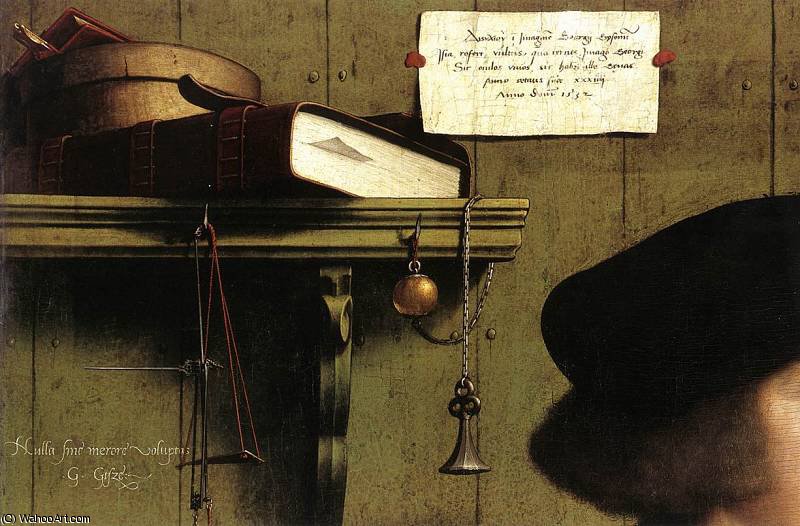
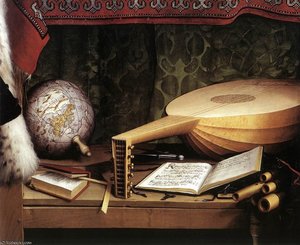
A Window Into Renaissance Thought: Examining Hans Holbein the Younger’s ‘untitled (791)’
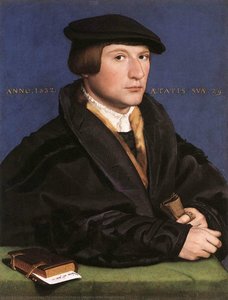
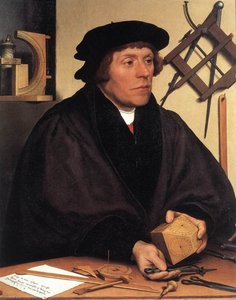
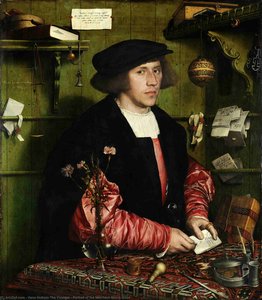
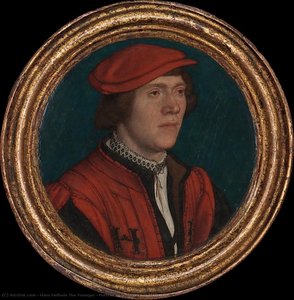
The artwork “untitled (791)” by Hans Holbein the Younger stands as a testament to the meticulous observation and psychological acuity that characterized the Northern Renaissance—a period marked by an unprecedented fascination with humanist ideals and scientific inquiry. More than just a depiction of objects, this painting delves into the intellectual landscape of its time, presenting a carefully constructed tableau designed to provoke contemplation and convey profound symbolic meaning.- Subject Matter & Composition: The scene unfolds within a richly ornamented interior—likely a scholar’s study—dominated by a wooden panel bearing the lower portion of a male figure's head and shoulders. Above this central element rests an arrangement of scholarly paraphernalia: books stacked on a shelf, a scroll unfurled, a bell suspended from its chain, and a small sphere. This layered composition isn’t accidental; Holbein deliberately employs perspective to draw the viewer’s eye inwards, mirroring the pursuit of knowledge and understanding that defines the artwork's core theme.
- Style & Technique: Holbein’s signature style—renowned for its unflinching realism—is evident in every detail. The artist utilizes oil paint on a wood panel, achieving remarkable textural depth through painstaking brushwork. Notice particularly the subtle variations in tone and color applied to the leather bindings of the books and the wooden surface itself – techniques that elevate the painting beyond mere representation, imbuing it with palpable materiality.
- Historical Context: Painted circa 1530-1532 during Holbein’s tenure at the English court under Henry VIII, ‘untitled (791)’ reflects the burgeoning humanist spirit of the era. The Renaissance preoccupation with classical ideals and human potential is palpable in the artwork's intellectual symbolism—a deliberate nod to the revival of Greco-Roman learning that was reshaping European thought.
- Symbolism & Interpretation: Each element within the painting carries significant symbolic weight. The books represent wisdom and erudition, embodying the humanist aspiration for intellectual enlightenment. The bell serves as a visual reminder of communication and proclamation—perhaps hinting at the dissemination of ideas. Similarly, the sphere symbolizes wholeness and universality, reflecting the Renaissance belief in the interconnectedness of all things.
- Emotional Impact: Despite its formal precision, ‘untitled (791)’ possesses an undeniable emotional resonance. The dramatic lighting casts deep shadows, creating a sense of solemn contemplation—inviting viewers to engage with the artwork’s intellectual and spiritual dimensions. Holbein's masterful rendering captures not only visual accuracy but also the psychological complexity inherent in human experience.
This remarkable piece exemplifies Holbein’s unparalleled ability to transform observation into art, cementing his place as one of the most influential portraitists of the Renaissance and ensuring that ‘untitled (791)’ continues to inspire admiration for centuries to come.
Obras relacionadas
Biografía del artista
vida temprana y formación
Hans Holbein el Joven, una figura destacada en la renacimiento norteño, nació en 1497 en Augsburg, Alemania. Aunque a menudo se le confunde con su padre, Hans Holbein el Viejo, un artista y grabador renombrado, la obra del joven Holbein es distinta y notable por sí misma.carrera artística
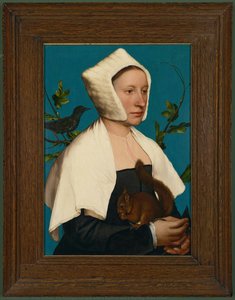
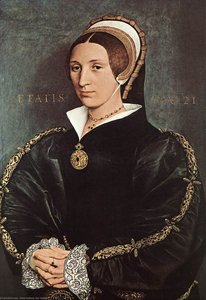
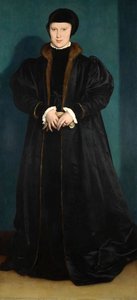
La carrera artística de Holbein el Joven comenzó bajo la tutela de su padre. Posteriormente viajó a Inglaterra, donde se convirtió en pintor de corte para el rey Enrique VIII. Esta posición le permitió capturar la esencia de la familia real y la aristocracia inglesa emergente. Su obra se caracteriza por:- realismo excepcional: los retratos de Holbein son celebrados por su calidad realista, como se ve en Retrato de una dama desconocida (renacimiento norteño).
- composición innovadora: su uso de la composición es evidente en Sir William Butts (37 x 46 cm, renacimiento norteño, óleo sobre tabla).
- estudio para el retrato familiar de Tomás Moro (38 x 52 cm, renacimiento norteño) muestra su habilidad para capturar la esencia de una familia.
obras notables y legado
La obra de Holbein el Joven se encuentra en varios museos, incluido el Museos Estatales de Berlín (Alemania, donde su Señor desconocido con libros de música y laúd (óleo sobre tabla) está en exhibición. Su influencia en el renacimiento norteño es innegable, y su obra continúa inspirando a los artistas hasta el día de hoy. Holbein el Joven falleció en 1543, pero su legado perdura a través de sus cautivadores retratos y estudios detallados. ver más obras de Hans Holbein el Joven en ArtsDot.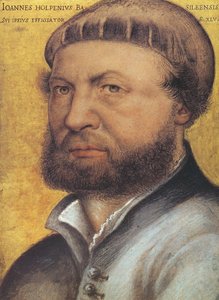
Hans Holbein el Joven
1497 - 1543 , Italia
Datos clave
- Artistas Que Influyeron:
- Hans Holbein el Viejo
- Albrecht Dürer
- Estilo Artístico: Renacimiento Nórdico
- Fecha De Muerte: 1543
- Fecha De Nacimiento: 1497
- Lugar De Nacimiento: Augsburgo, Italia
- Nacionalidad: Alemán
- Nombre Completo: Hans Holbein el Joven
- Obras Notables:
- Retrato de Enrique VIII
- El cuerpo del Cristo muerto
- Los embajadores
- Autorretrato
- Madonna del Burgomaestre Meyer
Artículos relacionados
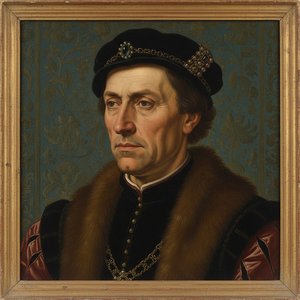
Hans Holbein the Younger: A Renaissance Portraitist's Mastery of Realism & Psychological Insight
Explore the life & art of Hans Holbein the Younger, a Renaissance master renowned for his strikingly realistic portraits and psychological insight. Discover iconic works like 'The Ambassadors' and delve into his lasting legacy.
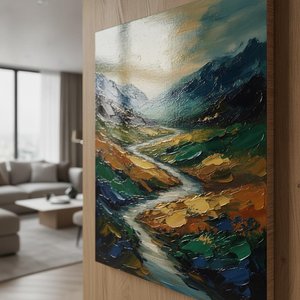
Oil on Board: A Historical Survey of Technique, Aesthetic Qualities & Enduring Appeal
Explore the rich history of oil on board painting! Discover techniques, aesthetic qualities & enduring appeal from early masters to modern practice. Expert insights for collectors and art enthusiasts.

El Óleo sobre Lienzo: Historia, Técnica y la Persistencia de un Medio Artístico Atemporal
Descubre la historia y técnica del óleo sobre lienzo. Explora reproducciones fieles hechas a mano, personalización artística y consejos de expertos con ArtsDot. ¡Colecciona arte con confianza!

The Enduring Legacy of Oil on Canvas: Technique, History & Aesthetic Impact
Explore the rich history & techniques of oil painting – from Renaissance masters to Impressionism. Discover pigments, layering methods, and why this timeless medium endures. Expert insights for artists & art enthusiasts.
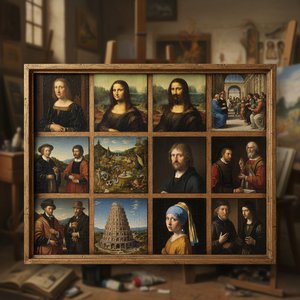
Las 10 Obras Maestras al Óleo sobre Panel que Transformaron la Historia del Arte |
Descubre las 10 obras maestras al óleo sobre panel que revolucionaron la historia del arte. Explora a Jan van Eyck, Botticelli y otros genios renacentistas. Reproducciones de arte exclusivas en para transformar tu hogar.
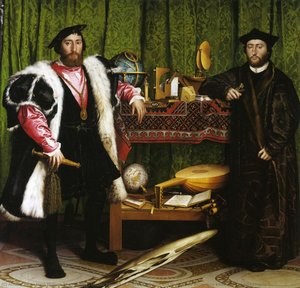

![Retrato Doble de Jean de Dinteville y Georges de Selve (también conocido como Los Embajadores) [detalle]](/media/artworks/images-thumb/bb/ab/bbab7ce77b7dd15d23d21114a63b51a4.jpg)