 Ver en contexto
 Enviar
 Compartir
 Detalles

 Descargar
 Similares
 Radiografía
 Presentación de diapositivas
Untitled (909)


 Ver más
Reproducción al óleo hecha a mano
Óleo sobre lienzo pintado a mano en el tamaño y marco de su elección, realizado por encargo por nuestros artistas. ( Comprar impresión Comprar imagen)




P118B $10

P118H $10

P118W $10

P438Z $10

P508JH $12

P508YH $12

P805H $10

P805Z $10

P919BZ $10

P919G $10

P919XJ $10

P959ZH $10

P968JZ $12

W106C $8

W218G $10

W218JH $8

W218Y $10

W307PJ $10

W316G $10

W316PJ $8

W316Y $10

W398PJ $8

W4111J $10

W500HY $15

W500JH $15

W692G $12

W849H $8

W940BG $15

W953PJ $8




Elija entre nuestros tamaños predefinidos que respetan las proporciones originales de la obra.

Puede ingresar sus propias dimensiones para adaptarse a un marco o espacio específico. Si el tamaño seleccionado no coincide con las proporciones de la imagen original, recortaremos la obra o extenderemos la pintura con elementos adicionales pintados a mano. Se le enviará una maqueta digital para su aprobación antes de comenzar la producción.
Tenga en cuenta que la vista previa en pantalla no refleja el recorte o la extensión reales. Solo la maqueta mostrará con precisión la composición final.
Si bien existen tamaños personalizados, recomendamos seleccionar una dimensión de la lista predefinida para preservar las proporciones originales.
Tras realizar el pedido, el equipo de ArtsDot.com enviará un correo electrónico al cliente para solicitar instrucciones y proporcionarle una vista previa del boceto.
Envío a todo el mundo () en 3-4 semanas en lugar de las 5 semanas estándar. (27 agosto). Sin comprometer la calidad.

Envío exprés gratuito a todo el mundo

Lienzo de lino de alta calidad

Seguro de envío total

Garantía de reembolso de impuestos aduaneros

Garantía de fidelidad cromática exacta

Política de devolución de 60 días (solo por defectos)

Garantía de devolución del 100% del dinero

Descuento por cantidad
 La opción de vidrio solo está disponible en tamaños inferiores a 110 cm.

Untitled (909)
Técnica de reproducción
Dimensiones de la reproducción
-


Precio total final
$ 263
A Window Into Northern Renaissance Soul
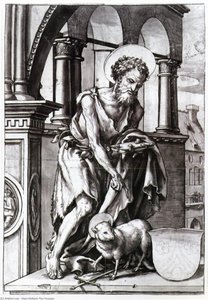
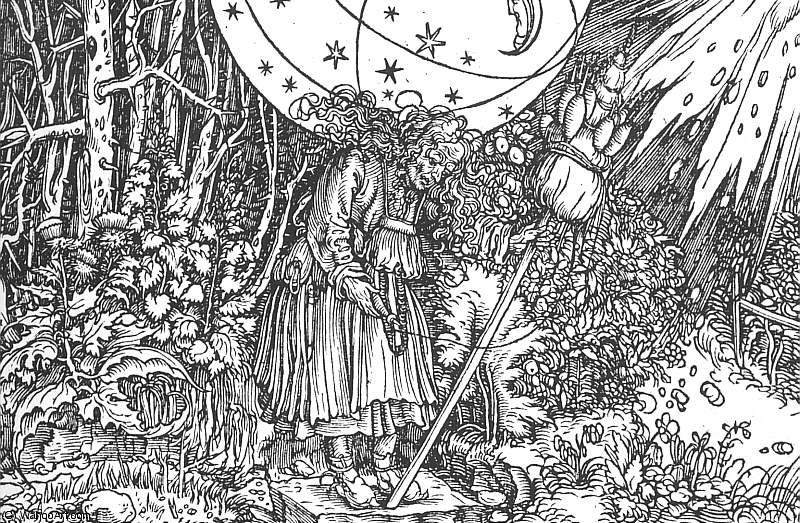
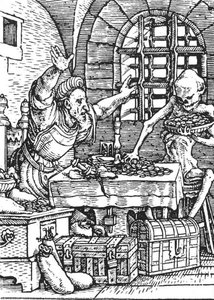
To encounter Hans Holbein the Younger’s Untitled (909) is to step through a threshold into a realm where the boundaries between the physical world and the human psyche begin to dissolve. This exquisite engraving, a masterwork of the Northern Renaissance, offers far more than a mere depiction of a landscape; it serves as an intimate invitation to a contemplative space. In this scene, nature does not merely surround the central figure but intertwines with their very essence, creating a moment frozen in time that remains vibrantly alive with unspoken emotion. The artwork captures a profound stillness, inviting the viewer to pause and engage in a silent dialogue with the shadows and light of a bygone era.
The technical execution of this piece is nothing short of breathtaking. Utilizing the meticulous copperplate etching technique, Holbein demonstrates why he was considered one of the greatest masters of his age. Every line is a testament to unparalleled precision, where fine, controlled strokes render textures with such astonishing accuracy that the viewer can almost feel the rough bark of the ancient trees and the heavy folds of the figure's clothing. Through the sophisticated use of hatching and cross-hatching, Holbein creates a sense of depth and volume that defies the two-dimensional nature of the medium. The monochromatic palette, stripped of color, focuses the eye entirely on the dramatic interplay of light and shadow, allowing the structural beauty of the composition to command absolute attention.
Symbolism and the Lunar Glow
Beyond its technical brilliance, the artwork is steeped in a rich tapestry of symbolism that speaks to the intellectual currents of the 16 and century. Dominating the upper reaches of the composition is a large, luminous crescent moon, a recurring motif in Renaissance art that often symbolizes femininity, intuition, and the cyclical nature of life and change. This celestial light bathes the scene in a ghostly, silver glow, casting long, dramatic shadows that emphasize the contours of the landscape and lend an air of solemn beauty to the environment. The moon acts as a focal point for introspection, its soft luminescence illuminating the face of the central figure and suggesting a moment of deep, perhaps even melancholic, thought.
The surrounding dense foliage and rugged terrain hint at the hidden mysteries of the natural world, perhaps serving as an allegory for the complexities of the subconscious mind. As the eye wanders from the detailed foreground to the distant, hazy mountains, one feels a sense of the vastness of both nature and the human experience. For the collector or interior designer, this piece offers a profound emotional resonance; it is an artwork that does not merely decorate a wall but transforms a room into a sanctuary for thought. Whether placed in a quiet study or a grand gallery, Untitled (909) brings with it an atmosphere of quiet dignity and timeless mystery, making it a superlative choice for those seeking to infuse their surroundings with the intellectual depth of the Northern Renaissance.
Obras relacionadas

Biografía del artista
vida temprana y formación
Hans Holbein el Joven, una figura destacada en la renacimiento norteño, nació en 1497 en Augsburg, Alemania. Aunque a menudo se le confunde con su padre, Hans Holbein el Viejo, un artista y grabador renombrado, la obra del joven Holbein es distinta y notable por sí misma.carrera artística
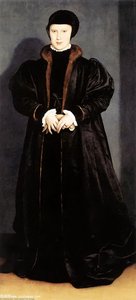
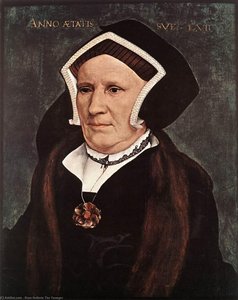
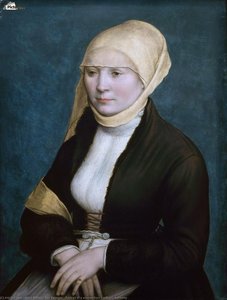
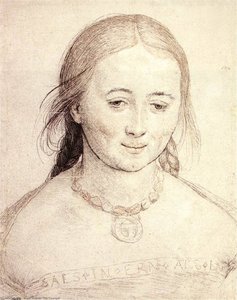
La carrera artística de Holbein el Joven comenzó bajo la tutela de su padre. Posteriormente viajó a Inglaterra, donde se convirtió en pintor de corte para el rey Enrique VIII. Esta posición le permitió capturar la esencia de la familia real y la aristocracia inglesa emergente. Su obra se caracteriza por:- realismo excepcional: los retratos de Holbein son celebrados por su calidad realista, como se ve en Retrato de una dama desconocida (renacimiento norteño).
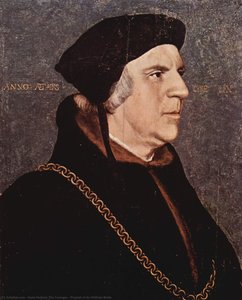
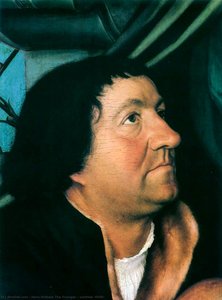
- composición innovadora: su uso de la composición es evidente en Sir William Butts (37 x 46 cm, renacimiento norteño, óleo sobre tabla).
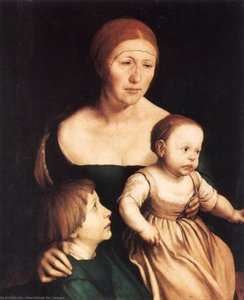
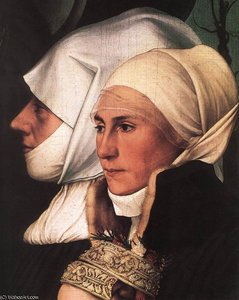
- estudio para el retrato familiar de Tomás Moro (38 x 52 cm, renacimiento norteño) muestra su habilidad para capturar la esencia de una familia.
obras notables y legado
La obra de Holbein el Joven se encuentra en varios museos, incluido el Museos Estatales de Berlín (Alemania, donde su Señor desconocido con libros de música y laúd (óleo sobre tabla) está en exhibición. Su influencia en el renacimiento norteño es innegable, y su obra continúa inspirando a los artistas hasta el día de hoy. Holbein el Joven falleció en 1543, pero su legado perdura a través de sus cautivadores retratos y estudios detallados. ver más obras de Hans Holbein el Joven en ArtsDot.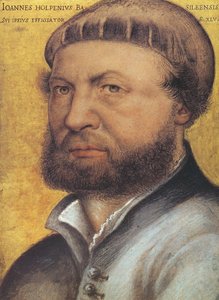
Hans Holbein el Joven
1497 - 1543 , Italia
Datos clave
- Artistas Que Influyeron:
- Hans Holbein el Viejo
- Albrecht Dürer
- Estilo Artístico: Renacimiento Nórdico
- Fecha De Muerte: 1543
- Fecha De Nacimiento: 1497
- Lugar De Nacimiento: Augsburgo, Italia
- Nacionalidad: Alemán
- Nombre Completo: Hans Holbein el Joven
- Obras Notables:
- Retrato de Enrique VIII
- El cuerpo del Cristo muerto
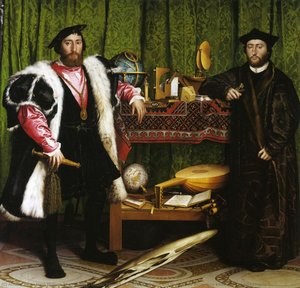
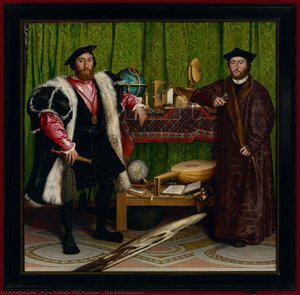
- Los embajadores
- Autorretrato
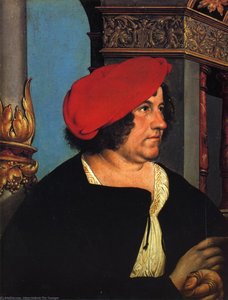
- Madonna del Burgomaestre Meyer
Artículos relacionados

Blanco Sublime: Los 10 Cuadros Más Famosos Dominados por la Luz y el Color
Descubre los 10 cuadros blancos más emblemáticos de la historia del arte. Explora Monet, Van Gogh y Klimt, y su magistral uso de la luz y el color. Encuentra reproducciones de alta calidad e inspírate para tu decoración en .
Los 10 Grabados Legendarios que Transformaron la Historia del Arte | ArtsDot
Descubre los 10 grabados legendarios de Dürer, Rembrandt y Goya que revolucionaron el arte. Explora la historia, técnicas y belleza atemporal de estas obras maestras. Reproducciones de alta calidad en ArtsDot.com para decorar tu hogar con arte clásico.
Engraving: A Historical Survey of Technique, Artistic Expression & Enduring Legacy
Explore the rich history of engraving with ArtsDot. Discover techniques, iconic artists like Dürer & Callot, collecting tips, and expert guidance for preserving your art investment. Learn about intaglio printing & more!

Giclée Prints: Archival Quality & Aesthetic Nuances for the Discerning Collector
Explore the world of giclée prints with ArtsDot. Learn about archival quality, aesthetic nuances & investment potential. Expert guidance for discerning art collectors seeking museum-quality reproductions and lasting value.
El Intricado Mundo del Grabado: Técnica, Expresión y Legado Histórico
Descubre la fascinante historia del grabado calcográfico: técnicas ancestrales, maestros como Goya y su impacto en el arte y la ciencia. Guía experta para coleccionistas y amantes del arte.
![Retrato Doble de Jean de Dinteville y Georges de Selve (también conocido como Los Embajadores) [detalle]](/media/artworks/images-thumb/bb/ab/bbab7ce77b7dd15d23d21114a63b51a4.jpg)