

 Ver en contexto
 Enviar
 Compartir
 Detalles

 Descargar
 Similares
 Radiografía
 Presentación de diapositivas
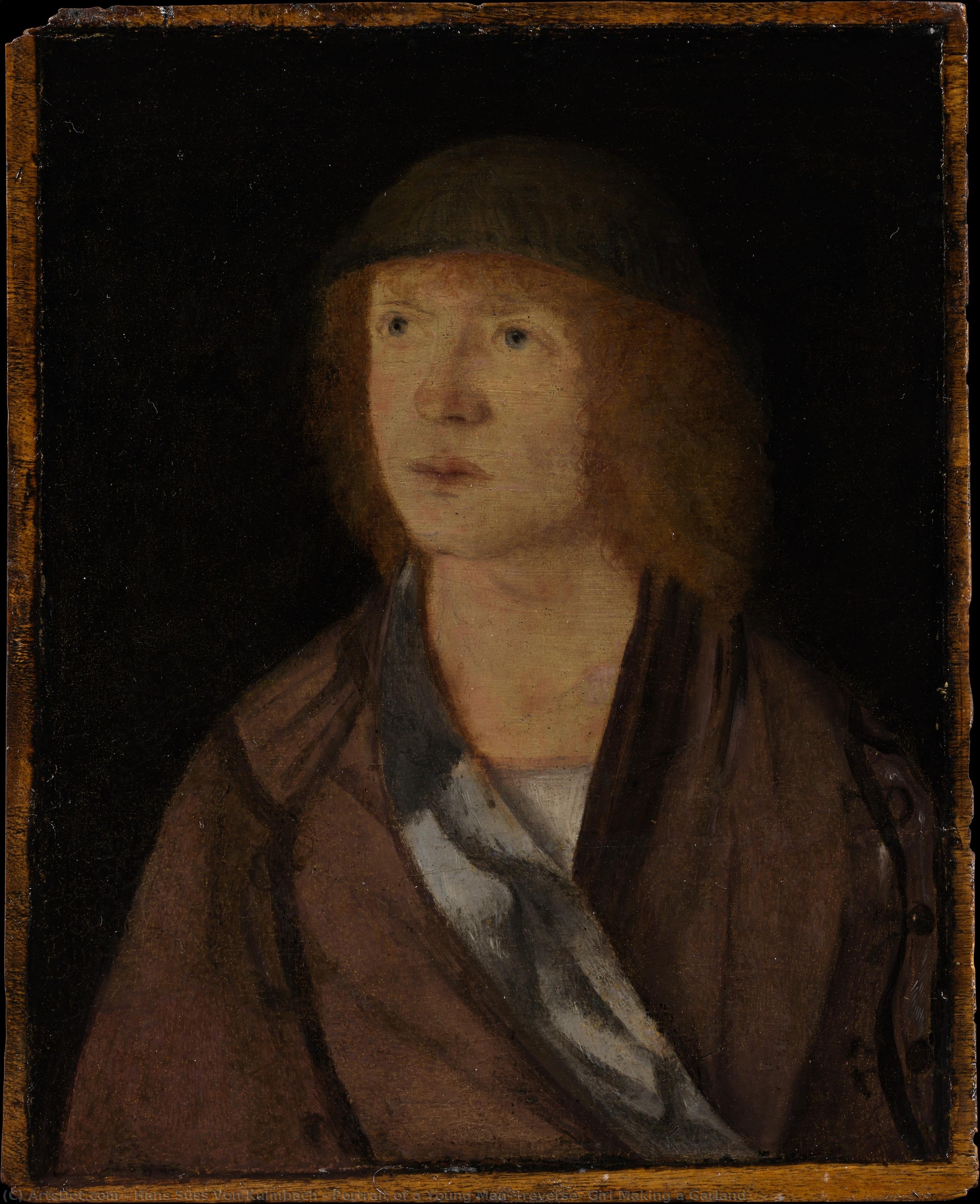
Portrait of a Young Man; (reverse) Girl Making a Garland


 Ver más
Reproducción al óleo hecha a mano
Óleo sobre lienzo pintado a mano en el tamaño y marco de su elección, realizado por encargo por nuestros artistas. ( Comprar impresión Comprar imagen)




P118B $10

P118H $10

P118W $10

P438Z $10

P508JH $12

P508YH $12

P805H $10

P805Z $10

P919BZ $10

P919G $10

P919XJ $10

P959ZH $10

P968JZ $12

W106C $8

W218G $10

W218JH $8

W218Y $10

W307PJ $10

W316G $10

W316PJ $8

W316Y $10

W398PJ $8

W4111J $10

W500HY $15

W500JH $15

W692G $12

W849H $8

W940BG $15

W953PJ $8




Elija entre nuestros tamaños predefinidos que respetan las proporciones originales de la obra.

Puede ingresar sus propias dimensiones para adaptarse a un marco o espacio específico. Si el tamaño seleccionado no coincide con las proporciones de la imagen original, recortaremos la obra o extenderemos la pintura con elementos adicionales pintados a mano. Se le enviará una maqueta digital para su aprobación antes de comenzar la producción.
Tenga en cuenta que la vista previa en pantalla no refleja el recorte o la extensión reales. Solo la maqueta mostrará con precisión la composición final.
Si bien existen tamaños personalizados, recomendamos seleccionar una dimensión de la lista predefinida para preservar las proporciones originales.
Tras realizar el pedido, el equipo de ArtsDot.com enviará un correo electrónico al cliente para solicitar instrucciones y proporcionarle una vista previa del boceto.
Envío a todo el mundo () en 3-4 semanas en lugar de las 5 semanas estándar. (31 agosto). Sin comprometer la calidad.

Envío exprés gratuito a todo el mundo

Lienzo de lino de alta calidad

Seguro de envío total

Garantía de reembolso de impuestos aduaneros

Garantía de fidelidad cromática exacta

Política de devolución de 60 días (solo por defectos)

Garantía de devolución del 100% del dinero

Descuento por cantidad
 La opción de vidrio solo está disponible en tamaños inferiores a 110 cm.

Portrait of a Young Man; (reverse) Girl Making a Garland
Técnica de reproducción
Dimensiones de la reproducción
-


Precio total final
$ 263
A Window Into Renaissance Thought: Hans Süss von Kulmbach’s “Portrait of a Young Man; (reverse) Girl Making a Garland”
The world of early sixteenth-century art was one of intricate symbolism and layered meaning, where even the most seemingly straightforward portrait could conceal profound narratives. Hans Süss von Kulmbach's "Portrait of a Young Man; (reverse) Girl Making a Garland," painted around 1508, exemplifies this approach with remarkable skill and evocative beauty. More than just a depiction of a young man – whose identity remains tantalizingly elusive – the painting unfolds as a carefully constructed allegory, inviting contemplation on themes of love, marriage, and the delicate balance between earthly pursuits and spiritual reflection.
The composition itself is immediately arresting. On one side, we encounter a portrait of a youthful gentleman, dressed in the fashionable attire of the era – a dark overcoat draped casually across his shoulder, a broad-brimmed hat shielding his face, and a gaze that suggests both intelligence and perhaps a touch of melancholy. He’s presented with a classical restraint, embodying the ideals of Renaissance masculinity: noble bearing, thoughtful demeanor, and an air of quiet dignity. However, it's the reverse side of the panel that truly captivates the viewer. Here, we find not another portrait, but a vibrant scene depicting a young girl engaged in the simple act of making a garland of flowers – a delicate arrangement of blossoms adorning a windowsill.
The Language of Symbolism
Von Kulmbach’s choice to pair these two distinct images is far from arbitrary. The reversed imagery operates as a sophisticated visual code, employing the established conventions of Renaissance portraiture and emblem design. The garland-making girl isn't merely a decorative element; she represents a potent symbol of marital potential – specifically, a bride or prospective wife. The flowers themselves carry specific meanings: forget-me-nots, for instance, are emblems of enduring love and remembrance, while the cat nestled amongst the blossoms symbolizes a respectable and faithful marriage partner. The curling banderole above the girl’s head, inscribed with “I bind with forget-me-nots,” reinforces this interpretation, solidifying the connection between the image and the concept of romantic union.
Furthermore, the inclusion of the young man's identity as a bridegroom is subtly revealed. The pairing of the portrait and the garland scene creates a cohesive narrative – a visual confirmation that the subject is destined for marriage. The artist masterfully utilizes this dual representation to transcend the limitations of a single image, offering a richer, more complex understanding of the individual’s life trajectory.
Technique and Artistic Style
Von Kulmbach's skill as a painter is evident in every detail of this work. Executed in oil on poplar wood, the painting boasts remarkable depth and luminosity. The artist demonstrates a keen eye for color and texture, capturing the sheen of the fabric, the delicate petals of the flowers, and the subtle nuances of light and shadow. His brushwork is precise yet fluid, creating a harmonious balance between realism and artistic expression. Influenced by his apprenticeship with Albrecht Dürer, Von Kulmbach’s style reflects a meticulous attention to detail and a mastery of perspective – hallmarks of the Northern Renaissance tradition.
The use of muted earth tones—primarily browns, ochres, and greens—contributes to the painting's overall atmosphere of quiet contemplation. The composition is carefully balanced, with the figures positioned within a shallow space that draws the viewer’s eye into the heart of the scene. The artist’s restraint in color and detail allows the symbolic elements to take center stage, enhancing the work’s profound emotional impact.
A Window on Renaissance Values
“Portrait of a Young Man; (reverse) Girl Making a Garland” offers a fascinating glimpse into the values and beliefs of the early sixteenth century. It reflects a society where marriage was not merely a personal union but a crucial social and economic institution, deeply intertwined with notions of honor, loyalty, and prosperity. The painting’s allegorical complexity speaks to a worldview that sought to imbue everyday life with meaning and purpose, transforming even the simplest acts—such as making a garland—into potent symbols of enduring love and spiritual fulfillment. Today, this artwork remains a testament to the artistry and intellectual depth of the Renaissance period, inviting us to contemplate its timeless themes and appreciate the beauty of its intricate symbolism.
Obras relacionadas

Biografía del artista
Hans von Kulmbach: A Master of Stained Glass and Altarpiece Decoration
Hans Süß o Süß, conocido como Hans von Kulmbach (¿Kulmbach?, c., 1485-Núremberg, 1522), fue un pintor, dibujante y grabador en madera alemán. Nacido probablemente en Kulmbach, de donde habría tomado el apellido, y en fecha desconocida en torno a 1585, falleció en Núremberg en los últimos meses de 1522. Según Johann Neudörfer (1497-1563), que escribió las biografías de los pintores de Núremberg, Hans von Kulmbach habría estudiado con Jacopo de Barbari, pintor veneciano establecido hacia 1500 en Alemania para trabajar al servicio de Federico de Weise, príncipe elector de Sajonia. En 1505 se documenta su presencia en el taller de Alberto Durero en Núremberg, ciudad en la que obtuvo la ciudadanía en 1511, donde podría llevar residiendo algunos años. De ese mismo año, fechada y firmada con el monograma HK, es también la primera de sus obras conocida de datación cierta: la Adoración de los Magos de la Gemäldegalerie de Berlín. La colaboración con Durero, de la que se ocupó Joachim von Sandrart, podría, sin embargo, haberse iniciado con anterioridad al encuentro con Barbari, y arrojado un primer fruto en las xilografías que ilustran la edición de 1501 de las comedias de la monja Hroswitha de Gandersheim. Kulmbach contribuyó también con sus grabados en madera a ilustrar, junto con Wolf Traut y otros artistas del círculo de Durero, los libros de Ulrich Pinder, Der beschlossen gart des Rosenkranz Mariae (La Procesión del Rosario de María), 1505, y Speculum passionis domini nostri Ihesu christi, 1507. Al frente de un próspero taller dedicado a la pintura de retablos, e influido por Durero, en 1513 abordó la más característica de sus obras: el gran epitafio de Lorenz-Tucher conservado en la iglesia de San Sebaldo de Núremberg. Su fama alcanzó a Cracovia para la que, por encargo de su alcalde, Jan Boner, pintó entre 1514 y 1516 dos altares dedicados a santa Catalina y a san Juan para la capilla del Espíritu Santo de la iglesia de Santa María, parcialmente conservados en el museo Narodowym y en la iglesia de San Florián. En las inscripciones en latín en las alas laterales del segundo de estos altares se identificaba como «Johannes Sues Norimbergensis civis».- Early Influences: Hans von Kulmbach's artistic vision was undeniably influenced by the prevailing aesthetic trends of the Renaissance, particularly those championed by artists like Filippo Brunelleschi and Piero della Francesca. These masters emphasized geometric precision and idealized proportions, concepts that resonated deeply within Kulmbach’s creative process.
- Training Under Dürer: The collaboration with Dürer proved invaluable, extending beyond mere instruction in painting techniques. Dürer imparted a profound understanding of artistic philosophy—a belief in the power of art to elevate the human spirit and convey moral truths—which would permeate Kulmbach’s subsequent works.
- The Nürnberg Workshop: Around 1505, Kulmbach established his workshop in Nuremberg, attracting talented assistants and fostering a vibrant artistic environment. This period witnessed a prolific output of commissions, cementing his reputation as one of the foremost artists of his generation.
Notable Achievements: Stained Glass Windows – A Legacy of Light and Color
Kulmbach’s fame rests largely upon his extraordinary stained glass windows—a testament to his unparalleled skill in manipulating color and light. He achieved particular renown for the Maximilian Stained Glass at St. Sebald Cathedral in Nuremberg, a monumental undertaking that showcased his mastery of compositional design and chromatic harmony. Similarly impressive were the Welser Stained Glass at St. Lorenz Church and the Nikolaus Altar at St. Lorenz Kirche—each window depicting biblical narratives with exquisite detail and vibrant hues. These windows weren’t merely decorative; they served as conduits for spiritual contemplation, transforming the interior spaces of churches into immersive experiences of divine beauty.- The Maximilian Stained Glass: This ambitious project involved painstaking planning and execution, reflecting Kulmbach's dedication to artistic excellence.
The Kraków Altarpiece – A Collaborative Triumph
Perhaps Kulmbach's most celebrated achievement was the Kraków Altarpiece, a collaborative effort undertaken alongside Johann Georg Andreas Stein—a pioneering piano maker who brought his expertise in craftsmanship to bear on the project. This monumental artwork, housed in St. Catherine’s Church in Kraków, represents a pinnacle of Renaissance art and embodies the spirit of humanist patronage. The altarpiece's intricate iconography—featuring depictions of Saint Catherine and Saint John—demonstrates Kulmbach’s meticulous attention to detail and his ability to convey profound theological themes. Stein’s contribution ensured that the altar was not only aesthetically stunning but also structurally sound, a remarkable feat considering the scale of the undertaking.Historical Significance
Hans von Kulmbach died prematurely in Nuremberg in 1522, leaving behind an enduring legacy as one of Germany’s most influential artists of the Renaissance. His stylistic innovations—particularly his masterful use of stained glass and altar painting—established him as a leader among his contemporaries and continue to inspire admiration today. More importantly, Kulmbach's work embodies the humanist ideals that characterized the era—a belief in human reason and artistic creativity as instruments for spiritual enrichment. He remains an exemplar of artistic excellence and a symbol of Nuremberg’s cultural heritage.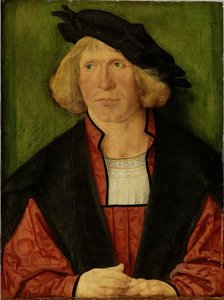
Hans von Kulmbach
1480 - 1522 , Alemania
Datos clave
- Artistic Movement Or Style: Renaissance Art
- Artists Who Influenced This Artist: ['Albrecht Dürer']
- Date Of Birth: Around 1480
- Full Name: Hans Süß von Kulmbach
- Nationality: German
- Notable Artworks:
- St John's Altar (Kraków)
- Maximilian Stained Glass
- Nikolaus Altar
- Place Of Birth: Kulmbach, Germany
Artículos relacionados
Las 10 Obras Maestras del Alto Medieval: Arte, Historia y Decoración Exclusiva
Descubre las 10 obras maestras del Alto Medieval. Explora la historia, el simbolismo y la belleza de la pintura románica y gótica. Reproducciones exclusivas en ArtsDot.com para decorar tu hogar con arte atemporal.
Hans von Aachen: Mannerism's Courtly Visionary & Imperial Portraiture
Explore the captivating world of Hans von Aachen, a leading Mannerist painter renowned for his exquisite imperial portraits & mythological scenes. Discover his legacy and influence on 16th-century European art.
10 Obras Maestras Medievales que Definen el Arte (y tu Hogar)
Descubre 10 obras maestras del arte medieval, desde Duccio a Van Eyck. Explora la historia, simbolismo y belleza de Giotto, Simone Martini y más. Encuentra reproducciones de alta calidad para decorar tu hogar en ArtsDot.com.
Hans Holbein the Younger: A Renaissance Portraitist's Mastery of Realism & Psychological Insight
Explore the life & art of Hans Holbein the Younger, a Renaissance master renowned for his strikingly realistic portraits and psychological insight. Discover iconic works like 'The Ambassadors' and delve into his lasting legacy.
10 Obras Maestras del Arte Medieval Temprano: Belleza e Historia para tu Hogar
Descubre 10 obras maestras del arte medieval temprano. Explora la historia, los artistas y el significado de iconos religiosos, mosaicos bizantinos y más. Reproducciones de alta calidad en ArtsDot.com.

