

 Ver en contexto
 Enviar
 Compartir
 Detalles

 Descargar
 Similares
 Radiografía
 Presentación de diapositivas
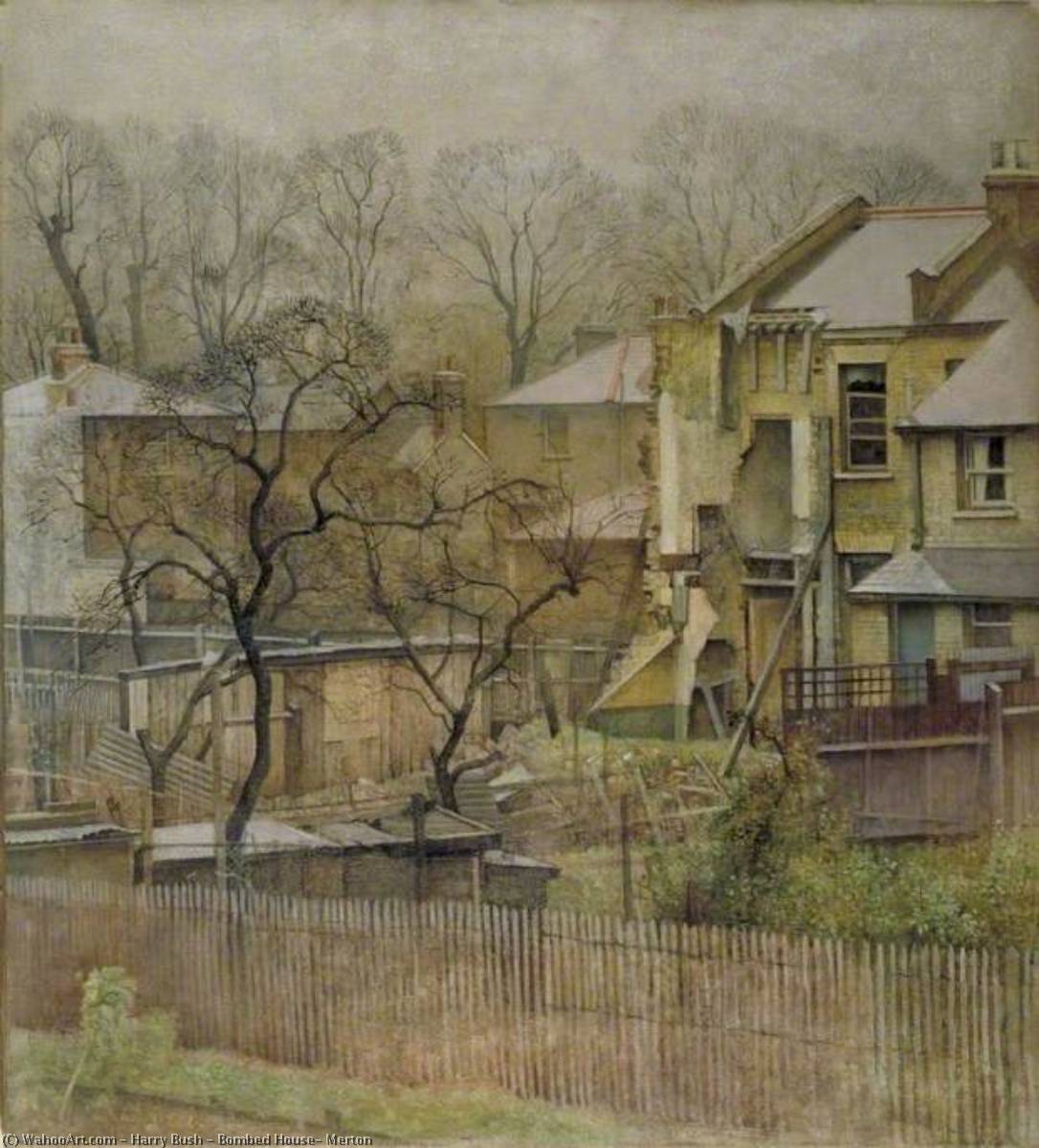
Bombed House, Merton
 1940
1940 51.0 x 46.0 cm
 Ver más
Reproducción al óleo hecha a mano
Óleo sobre lienzo pintado a mano en el tamaño y marco de su elección, realizado por encargo por nuestros artistas. ( Comprar impresión Comprar imagen)




































Elija entre nuestros tamaños predefinidos que respetan las proporciones originales de la obra.

Puede ingresar sus propias dimensiones para adaptarse a un marco o espacio específico. Si el tamaño seleccionado no coincide con las proporciones de la imagen original, recortaremos la obra o extenderemos la pintura con elementos adicionales pintados a mano. Se le enviará una maqueta digital para su aprobación antes de comenzar la producción.
Tenga en cuenta que la vista previa en pantalla no refleja el recorte o la extensión reales. Solo la maqueta mostrará con precisión la composición final.
Si bien existen tamaños personalizados, recomendamos seleccionar una dimensión de la lista predefinida para preservar las proporciones originales.
Tras realizar el pedido, el equipo de ArtsDot.com enviará un correo electrónico al cliente para solicitar instrucciones y proporcionarle una vista previa del boceto.
Envío a todo el mundo () en 3-4 semanas en lugar de las 5 semanas estándar. (7 septiembre). Sin comprometer la calidad.

Envío exprés gratuito a todo el mundo

Lienzo de lino de alta calidad

Seguro de envío total

Garantía de reembolso de impuestos aduaneros

Garantía de fidelidad cromática exacta

Política de devolución de 100 días (solo por defectos)

Garantía de devolución del 100% del dinero

Descuento por cantidad
 La opción de vidrio solo está disponible en tamaños inferiores a 110 cm.

Bombed House, Merton
Técnica de reproducción
Dimensiones de la reproducción
-


Precio total final
$ 263
Obras relacionadas










Biografía del artista
The Enigmatic Brush of Harry Bush
Harry Wayne Bush remains one of the most compelling yet elusive figures in the tapestry of mid-twentieth-century American visual art. Born on June 11, 1926, his life was a complex interplay of public service and private passion, marked by a profound tension between his visibility as an illustrator and his deep-seated need for seclusion. While much of his original body of work was tragically lost to the artist's own hand—destroyed by Bush himself due to fears of copyright infringement and a desire for privacy—the legacy he left behind continues to resonate within the niche histories of erotic illustration and gay visual culture. His journey from the conservative landscapes of Texas to the burgeoning underground art scenes of Los Angeles is a testament to the transformative power of self-discovery through art.
The foundations of Bush’s artistic identity were forged in the crucible of World War II. Serving in both the United States Navy and the United States Air Force, his deployment to the European theatre provided more than just military training; it offered a pivotal moment of personal awakening. It was during this period that Bush experienced his first homosexual encounter, an event that fundamentally reshaped his worldview and ignited a lifelong devotion to capturing the male form. Though he lacked formal academic training, having taken only a single community college drawing class, he possessed an innate, disciplined eye for anatomy. This self-taught mastery allowed him to develop a style that was both technically rigorous and emotionally evocative, blending the precision of classical study with a contemporary, accessible charm.
The Aesthetic of Idealized Masculinity
Bush’s rise to prominence is inextricably linked to the emergence of Physique Pictorial in 1966. Discovered by Bob Mizer, the visionary founder of the Athletic Model Guild, Bush’s talent was thrust into the spotlight of the "beefcake" magazine movement. He possessed a singular ability to distill masculinity into what became known as his "boy next door" style—a way of depicting men that felt both aspirately idealized and intimately relatable. Unlike the more overtly muscular or aggressive depictions found in some contemporary works, Bush’s subjects often carried an air of wholesome, approachable beauty, characterized by meticulous attention to skin texture, musculature, and a soft, luminous quality of light.
His technical prowess was evident in the way he navigated the complexities of the human physique. His illustrations were not merely anatomical studies but narratives of desire and identity. Through his work, which also appeared in influential periodicals such as Mr. Sun, In Touch, Stroke, and Drummer, Bush helped define a visual language for a generation of gay men navigating the shifting landscapes of sexual liberation. His art served as a vital mirror, reflecting an idealized version of manhood that was both a sanctuary and a source of inspiration during eras when such imagery was often relegated to the shadows of legality.
A Legacy of Shadows and Light
Despite his significant contributions to the visual culture of the 1970s and 1980s, Bush lived much of his life in a state of guarded isolation. He remained largely closeted for much of his career, driven by a persistent fear that being outed would jeopardize his veteran's pension. This internal conflict created a poignant irony: while he was a celebrated figure within the gay press, he remained a recluse in his personal life, often critical of the very community his art helped to sustain. This sense of detachment and his decision to destroy much of his oeuvre add a layer of tragic mystery to his biography, making him a phantom figure in art history.
The historical significance of Harry Bush lies in his role as one of the final prominent artists of the beefcake era. He bridged the gap between the early, more clandestine era of physique photography and the more openly expressive gay periodicals that followed the erosion of obscenity laws. His work stands as a vital record of a transformative period in American social history. To study Bush is to encounter the intersection of personal struggle and artistic triumph, a reminder of how even the most private lives can leave an indelible mark on the collective visual memory of a culture.
Datos clave
- Artistic Movement Or Style: Homoerotic Illustration
- Artists Or Movements Influenced By This Artist: ['Beefcake Magazines']
- Artists Who Influenced This Artist: ['George Quaintance']
- Date Of Birth: June 11, 1926
- Date Of Death: October 15, 1994
- Full Name: Harry Wayne Bush
- Nationality: American
- Notable Artworks: ['Boy Next Door']
- Place Of Birth: Houston, Texas