 Ver en contexto
 Enviar
 Compartir
 Detalles

 Descargar
 Similares
 Radiografía
 Presentación de diapositivas
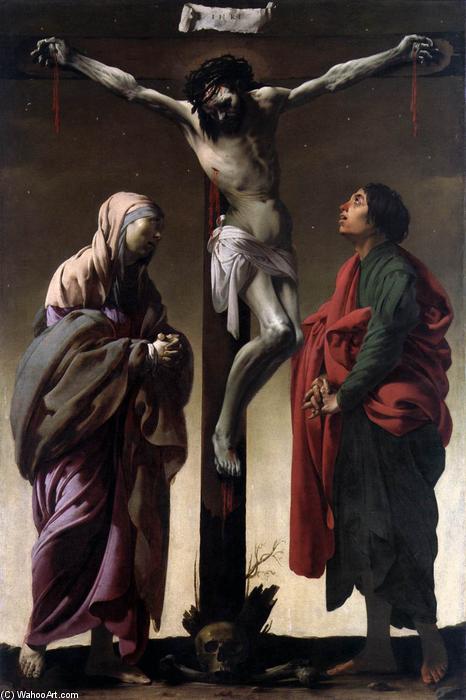
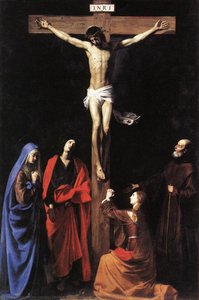
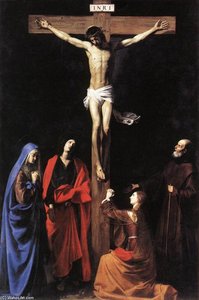
The Crucifixion with the Virgin and St John
 Oil On Canvas
- WallArt
- Utrecht Caravaggism
 1624
1624 155.0 x 102.0 cm
 Museo Metropolitano de Arte
 Ver más
Giclée / Impresión de arte
Impresiones giclée o en lienzo de calidad de museo con producción rápida y opciones de acabado flexibles. ( Comprar pintura hecha a mano Comprar imagen)




P118B $10

P118H $10

P118W $10

P438Z $10

P508JH $12

P508YH $12

P805H $10

P805Z $10

P919BZ $10

P919G $10

P919XJ $10

P959ZH $10

P968JZ $12

W106C $8

W218G $10

W218JH $8

W218Y $10

W307PJ $10

W316G $10

W316PJ $8

W316Y $10

W398PJ $8

W4111J $10

W500HY $15

W500JH $15

W692G $12

W849H $8

W940BG $15

W953PJ $8




Elija entre nuestros tamaños predefinidos que respetan las proporciones originales de la obra.

Puede introducir sus propias dimensiones para adaptarse a un marco o espacio específico. Si el tamaño seleccionado no coincide con las proporciones de la imagen original, recortaremos la obra de arte o extenderemos la imagen con un borde con efecto espejo o de color sólido. Se enviará una maqueta digital para su aprobación antes de que comience la producción.
Tenga en cuenta que la vista previa en pantalla no refleja el recorte o la extensión real. Solo la maqueta mostrará con precisión la composición final.
Aunque existen tamaños personalizados, recomendamos seleccionar una dimensión de la lista predefinida para preservar las proporciones originales.
Envío a todo el mundo () en 2 semanas en lugar de las 4/5 semanas estándar. (28 agosto)

Envío exprés gratuito a todo el mundo

Lienzo de lino de alta calidad

Seguro de envío total

Garantía de reembolso de impuestos aduaneros

Garantía de fidelidad cromática exacta

Política de devolución de 60 días (solo por defectos)

Garantía de devolución del 100% del dinero

Descuento por cantidad
 La opción de vidrio solo está disponible en tamaños inferiores a 110 cm.

The Crucifixion with the Virgin and St John
Giclée / Impresión de arte
Dimensiones de la reproducción
-


Precio total final
$ 62
A Glimpse into Utrecht Caravaggism: Hendrick Terbrugghen’s Dramatic Vision
Hendrick Jansz ter Brugghen, a figure often shrouded in the mists of early 17th-century Dutch art history, emerges from the shadows as a master of evocative religious painting. His “The Crucifixion with the Virgin and St John,” now residing within the Metropolitan Museum of Art in New York City, is not merely a depiction of Christ’s sacrifice; it's a profound exploration of grief, faith, and the interplay between past and present artistic traditions. Born in Utrecht around 1588, Ter Brugghen was deeply influenced by the burgeoning Caravaggist movement – a group of Dutch painters who sought to emulate the dramatic lighting, intense emotion, and dynamic compositions of the Italian master, Michelangelo Merisi da Caravaggio.
The painting’s immediate impact is one of stark realism and unsettling beauty. Ter Brugghen eschews the idealized forms often associated with earlier religious art, opting instead for a more grounded approach. Christ, nailed to the cross, is rendered with a palpable sense of suffering – his body contorted in agony, his face etched with pain. The artist’s masterful use of chiaroscuro—the dramatic contrast between light and dark—intensifies this effect, drawing the viewer's eye directly to the central figure while simultaneously enveloping the scene in an atmosphere of profound gloom. This technique, a hallmark of Caravaggio’s style, creates a powerful sense of immediacy and emotional resonance.
The Composition: A Dialogue Between Generations
What immediately sets this Crucifixion apart is its carefully constructed composition, which speaks volumes about Ter Brugghen's artistic intentions. The scene unfolds within a dimly lit landscape, reminiscent of the biblical account of Golgotha—the place of Christ’s crucifixion. The horizon line is low, emphasizing the vastness and desolation of the setting. Above, a star-studded sky hints at both the divine and the earthly realms, creating a visual metaphor for the intersection of faith and mortality. The figures surrounding the cross – Mary, St. John, and the skeletal figure representing Adam—are arranged in a triangular composition that directs the viewer’s gaze towards Christ’s suffering.
Notably, Ter Brugghen subtly incorporates elements from earlier artistic traditions. The archaic depiction of Christ's body echoes Late Gothic and Early Renaissance devotional paintings, suggesting a deliberate attempt to bridge the gap between these styles. The inclusion of Adam—a memento mori, or reminder of death—further reinforces this connection to the past, reminding viewers of humanity’s shared fate. The placement of the skeletal figure at the base of the cross is particularly striking, serving as a potent symbol of mortality and the consequences of sin.
Symbolism and Emotional Depth
Beyond its formal elements, “The Crucifixion” is rich in symbolic meaning. Mary’s sorrowful gaze and outstretched hand convey her profound grief at witnessing her son's suffering. St. John, depicted with a look of anguish and compassion, embodies the role of the faithful witness—a figure who observes and endures alongside Christ. The lamb grasped by Christ represents his sacrifice and foreshadows his resurrection. The overall mood is one of intense emotionality – a palpable sense of sorrow, despair, and ultimately, hope. Ter Brugghen masterfully captures the psychological complexity of faith, presenting not just a historical event but also a deeply personal experience.
A Legacy in Utrecht Caravaggism
Hendrick ter Brugghen’s “The Crucifixion with the Virgin and St John” stands as a pivotal work within the Utrecht Caravaggist movement. His ability to synthesize the dramatic intensity of Caravaggio with the stylistic conventions of Northern European art resulted in a uniquely powerful and emotionally resonant body of work. The painting's discovery in London in 1956, after decades of obscurity, cemented its place as a cornerstone of Dutch Baroque art. Today, it continues to captivate viewers with its dramatic lighting, evocative symbolism, and profound exploration of the human condition – a testament to Ter Brugghen’s enduring artistic vision.
Obras relacionadas
Biografía del artista
Hendrick Terbrugghen
Hendrick Jansz ter Brugghen, o Terbrugghen, (Deventer, h. 1588-Utrecht, 1 de noviembre de 1629) fue un pintor neerlandés, miembro destacado de los seguidores neerlandeses de Caravaggio — los llamados caravaggistas de Utrecht. Junto con Gerrit van Hondhorst y Dirck van Baburen, Ter Brugghen fue uno de los pintores holandeses más importantes que se vieron influidos por Caravaggio.- Early Life and Influences
- Artistic Career and Style
- Notable Works and Legacy
- Influence on Later Artists
- Museums and Collections Featuring Ter Brugghen’s Work
Early Life and Influences
Hendrick Jansz ter Brugghen was born probably in The Hague in 1588. His father, Jan Egbertsz ter Brugghen, originally from Overijssel, had moved to Utrecht, where he was appointed secretary to the Court of Utrecht by the Prince of Orange, William the Silent. This exposure likely influenced Hendrick's early interest in art. He studied under Abraham Bloemaert, a Mannerist painter, who instilled in him the foundational principles of artistic expression.Artistic Career and Style
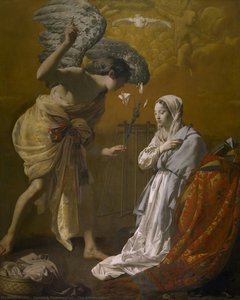
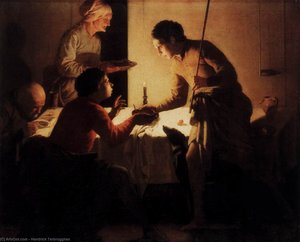
Ter Brugghen’s artistic journey began with his apprenticeship under Abraham Bloemaert, a Mannerist history painter. He later became one of the leading members of the Utrecht Caravaggisti, a group of dutch painters inspired by Caravaggio. His work is characterized by its dramatic use of light and shadow, as seen in his paintings like *The Annunciation* (alte pinakothek, munich, germany) and *The Reveler* (alte pinakothek, munich, germany). This technique—known as chiaroscuro—was adopted from Caravaggio’s masterful approach to illumination, creating a powerful visual impact.Notable Works and Legacy
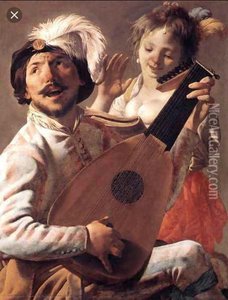
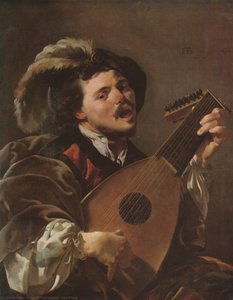
Ter Brugghen produced several remarkable paintings that exemplify his distinctive style. *The Singing Lute Player* (the kremer collection, amsterdam, netherlands), an autograph replica of a painting in the national gallery, london, showcases his rich coloration and meticulous attention to detail. *The Annunciation*, a masterpiece reflecting his mastery of Caravaggio's style, remains one of his most celebrated achievements. Furthermore, Ter Brugghen’s influence extended beyond his own artistic output; Rembrandt van Rijjn acknowledged him as a pivotal figure in shaping Baroque art.Influence on Later Artists
Rembrandt van Rijjn considered Terbrugghen to be a pivotal figure in shaping Baroque art. Elements of Ter Brugghen's style can also be found in the paintings of Frans Hals and Johannes Vermeer, demonstrating the enduring legacy of his artistic innovations. His contribution to Dutch painting solidified his place as one of the most important artists of the Golden Age.Museums and Collections Featuring Ter Brugghen’s Work
Ter Brugghen's works are housed in prominent museums across Europe, including Mauritshuis (the hague, netherlands), where *Nymph and Satyr* by Sir Peter Paul Rubens is displayed. The Kremer Collection (amsterdam, netherlands) houses *The Singing Lute Player*, a testament to Ter Brugghen’s artistic prowess. Explore more of Ter Brugghen's masterpieces on ArtsDot.com.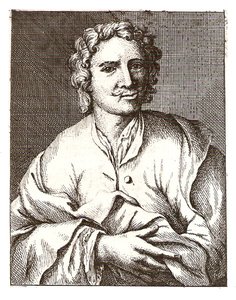
Hendrick Terbrugghen
1627 - 1629 , Países Bajos
Datos clave
- Artistic Movement Or Style: Caravaggisti Painting
- Artists Who Influenced This Artist:
- Abraham Bloemaert
- Rembrandt van Rijjn
- Date Of Birth: 1588
- Date Of Death: Nov 1629
- Full Name: Hendrick Jansz Terbrugghen
- Nationality: Dutch
- Notable Artworks:
- The Singing Lute Player
- Annunciation
- David Praised by the Israelite Women
- Place Of Birth: La Hague, Netherlands
Artículos relacionados

Los 10 Maestros del Siglo de Oro Holandés: Arte, Historia y Decoración Exclusiva
Descubre los 10 imprescindibles del Siglo de Oro Holandés: Rembrandt, Vermeer y más. Explora la historia, técnica y belleza de estos lienzos clásicos. Encuentra reproducciones de arte exclusivas para decorar tu hogar en .
Hendrick Terbrugghen: Caravaggism, Spirituality & the Dutch Golden Age Painter's Evolving Style
Explore the captivating world of Hendrick Terbrugghen, a leading Dutch Golden Age painter influenced by Caravaggio. Discover his dramatic use of light, spiritual depth & lasting legacy. Learn more at ArtsDot.

Reflejos de una Época Dorada: La Pintura Barroca Holandesa y la Innovación Cultural
Descubra la riqueza y el detalle de la pintura barroca holandesa del Siglo de Oro. Explore las obras maestras de Rembrandt, Vermeer y otros artistas clave. Análisis experto e historia cultural.

La Luz y la República: Innovación Artística en el Siglo de Oro Neerlandés
Descubra la innovación artística del Siglo de Oro Neerlandés. Explore las obras maestras de Rembrandt y Vermeer, técnicas revolucionarias y el legado perdurable de este florecimiento cultural. ¡Sumérjase en la luz y la belleza!
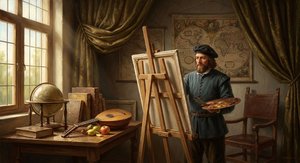
Illuminating Realism: Exploring the Dutch Golden Age of Painting (1600-1700)
Explore the Dutch Golden Age of painting (1600-1700) with ArtsDot. Discover Rembrandt, Vermeer & other masters. Learn about techniques, history & find museum-quality reproductions.