

 Ver en contexto
 Enviar
 Compartir
 Detalles

 Descargar
 Similares
 Radiografía
 Presentación de diapositivas
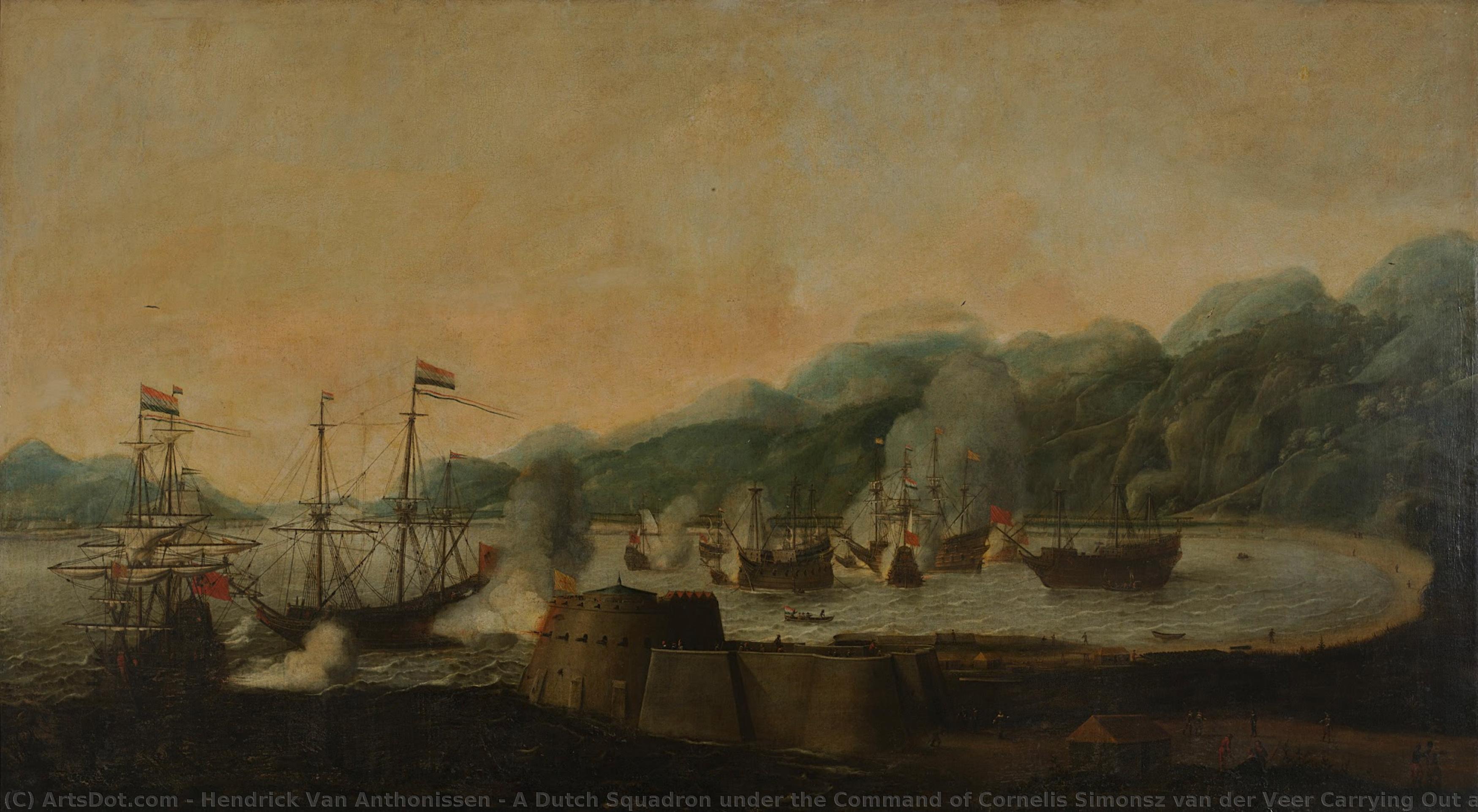
A Dutch Squadron under the Command of Cornelis Simonsz van der Veer Carrying Out a Surprise Attack on Three Portuguese Galleons in the Bay of Goa Velha, 30 September 1639, Hendrick van Anthonissen, 1653
 1653
1653 152.0 x 276.0 cm
 Ver más
Adquiera una imagen digital de alta resolución y optimizada, muy superior a la vista previa en línea.
Cada archivo es preparado meticulosamente por nuestros especialistas internos mediante el uso de herramientas avanzadas y un experto retoque manual. Nos aseguramos de que cada imagen posea una claridad excepcional, una precisión cromática impecable y un detalle minucioso.
El archivo final se entrega por correo electrónico en un plazo de 72 horas, optimizado para su uso inmediato en entornos profesionales, editoriales y de impresión. Esta es la misma calidad en la que confían los estudios de diseño, las editoriales y las galerías de primer nivel.
Imagen Digital
Descarga un archivo de alta resolución para exhibición personal, impresión y proyectos creativos. ( Comprar impresión Comprar pintura hecha a mano)
Incluido en cada pedido de imágenes digitales
Entrega digital experta, garantizada.
Al elegir ArtsDot.com, no solo está adquiriendo una imagen; está recibiendo una obra de arte digital mejorada profesionalmente, elaborada con precisión y respaldada por una garantía de satisfacción. Esto es todo lo que incluye su pedido, automáticamente:

Entrega rápida por email
Recibirá su archivo de imagen digital en alta resolución por correo electrónico en un plazo de 72 horas tras realizar su pedido, listo para su uso inmediato.

Archivo digital optimizado por IA
Su obra de arte se optimiza profesionalmente mediante herramientas avanzadas de IA y edición manual, garantizando el máximo detalle, claridad y precisión cromática.

Reenvío gratuito de por vida
¿Has borrado o perdido tu archivo por error? No te preocupes: te lo volveremos a enviar en cualquier momento, sin coste adicional.

Sin gastos de importación, siempre
Disfrute de su obra de arte al instante sin aduanas, aranceles ni gastos de envío; las descargas digitales siempre están libres de impuestos.

Garantía de fidelidad de color
Garantizamos que su imagen digital refleje los colores originales con la mayor fidelidad posible, mediante el uso de herramientas profesionales y gestión del color.

Garantía de satisfacción de 60 días
Si no está satisfecho con su imagen digital, la revisaremos o le reembolsaremos el 100% en un plazo de 60 días, sin preguntas.

100% Garantía de devolución de dinero
¿No está satisfecho? Obtenga un reembolso completo dentro de los 60 días posteriores a la recepción de su archivo digital, sin necesidad de explicaciones.

Descuentos por pedidos grandes
Compra 3 imágenes, ahorra 10% - Compra 5, ahorra 15% - Compra 10+, ahorra 20%. Ideal para proyectos creativos, galerías y agencias.
Obras relacionadas










Biografía del artista
primeros años y carrera
hendrick van anthonissen fue un pintor marino neerlandés, nacido el 29 de mayo de 1605 en ámsterdam. era hijo de aert anthonisz y desarrolló su arte siguiendo el estilo de su cuñado y maestro jan porcellis. aunque los primeros años y la trayectoria inicial de van anthonissen no están ampliamente documentados, se tiene constancia de que habitó en la haya, leidena y leiderdorp durante la década de 1630.estilo artístico y obras
van anthonissen es reconocido por sus evocadoras escenas costeras y paisajes marinos, frecuentemente ejecutados mediante la técnica de la grisalla, un estilo que se distingue por el uso magistral de tonalidades grises para esculpir una sensación de profundidad y atmósfera. sus lienzos evocan la esencia de las obras de jan porcellis, una figura prominente en la pintura marina de la época. la riqueza de las obras de van anthonissen puede admirarse en diversos museos de prestigio, entre ellos el hermitage en san Petersburgo y la galería de praga.influencias y legado
la impronta de su cuñado jan porcellis fue fundamental en la obra de van anthonissen, quien es célebre por su enfoque innovador en la pintura de marinas. a jan porcellis se le atribuye haber iniciado una "transición decisiva desde el realismo temprano hacia la fase tonal" en el género marino, un estilo que las obras de van anthonissen reflejan con gran maestría. para obtener más información sobre jan porcellis, visite https://en.wikipedia.org/wiki/jan_porcellis.obras notables y colecciones
algunas de las piezas más destacadas de van anthonissen se encuentran disponibles en ArtsDot.com, incluyendo sus memorables escenas de playa y paisajes marinos. sus pinturas forman parte también de la colección del rijksdienst beeldende kunst en la haya, Países Bajos. para más detalles sobre la colección del museo, visite https://ArtsDot.com/@@/a@d3blbp-the-museum-rijksdienst-beeldende-kunst-(the-hague-netherlands).- hendrick van anthonissen fue un pintor marino neerlandés que residió en ámsterdam.
- pintó siguiendo el estilo de su cuñado y maestro jan porcellis.
- las obras de van anthonissen se pueden hallar en diversos museos, incluyendo el hermitage y la galería de praga.
- su arte estuvo influenciado por jan porcellis, reconocido por su enfoque innovador en la pintura marina.
Hendrick Van Anthonissen
1605 - 1656 , Países Bajos
Breves datos
- Artistas O Movimientos Influenciados Por Este Artista: ['Accademia e Compagnia']
- Artistas Que Influyeron En Este Artista: ['Pieter Aertsen']
- Fecha De Muerte: 1605
- Fecha De Nacimiento: 1523
- Lugar De Nacimiento: Brujas, Flandes
- Movimiento O Estilo Artístico: Romanista
- Nacionalidad: Flamenco
- Nombre Completo: Johannes Stradanus
- Obras Notables:
- Retablos
- Diseños de tapices
- Grabados

