 Ver en contexto
 Enviar
 Compartir
 Detalles

 Descargar
 Similares
 Radiografía
 Presentación de diapositivas
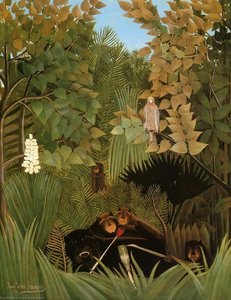
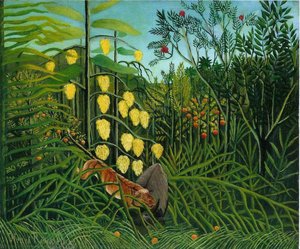
Tropical Forest: Battling Tiger and Buffalo
 Oil
Oil- WallArt
- Naïve Art
 1908
1908- 19th Century
 55.0 x 46.0 cm
 Ver más
Reproducción al óleo hecha a mano
Óleo sobre lienzo pintado a mano en el tamaño y marco de su elección, realizado por encargo por nuestros artistas. ( Comprar impresión Comprar imagen)




P118B $10

P118H $10

P118W $10

P438Z $10

P508JH $12

P508YH $12

P805H $10

P805Z $10

P919BZ $10

P919G $10

P919XJ $10

P959ZH $10

P968JZ $12

W106C $8

W218G $10

W218JH $8

W218Y $10

W307PJ $10

W316G $10

W316PJ $8

W316Y $10

W398PJ $8

W4111J $10

W500HY $15

W500JH $15

W692G $12

W849H $8

W940BG $15

W953PJ $8




Elija entre nuestros tamaños predefinidos que respetan las proporciones originales de la obra.

Puede ingresar sus propias dimensiones para adaptarse a un marco o espacio específico. Si el tamaño seleccionado no coincide con las proporciones de la imagen original, recortaremos la obra o extenderemos la pintura con elementos adicionales pintados a mano. Se le enviará una maqueta digital para su aprobación antes de comenzar la producción.
Tenga en cuenta que la vista previa en pantalla no refleja el recorte o la extensión reales. Solo la maqueta mostrará con precisión la composición final.
Si bien existen tamaños personalizados, recomendamos seleccionar una dimensión de la lista predefinida para preservar las proporciones originales.
Tras realizar el pedido, el equipo de ArtsDot.com enviará un correo electrónico al cliente para solicitar instrucciones y proporcionarle una vista previa del boceto.
Envío a todo el mundo () en 3-4 semanas en lugar de las 5 semanas estándar. (4 septiembre). Sin comprometer la calidad.

Envío exprés gratuito a todo el mundo

Lienzo de lino de alta calidad

Seguro de envío total

Garantía de reembolso de impuestos aduaneros

Garantía de fidelidad cromática exacta

Política de devolución de 60 días (solo por defectos)

Garantía de devolución del 100% del dinero

Descuento por cantidad
 La opción de vidrio solo está disponible en tamaños inferiores a 110 cm.

Tropical Forest: Battling Tiger and Buffalo
Técnica de reproducción
Dimensiones de la reproducción
-


Precio total final
$ 263
A Primal Encounter in the Heart of the Jungle
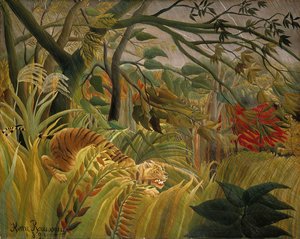
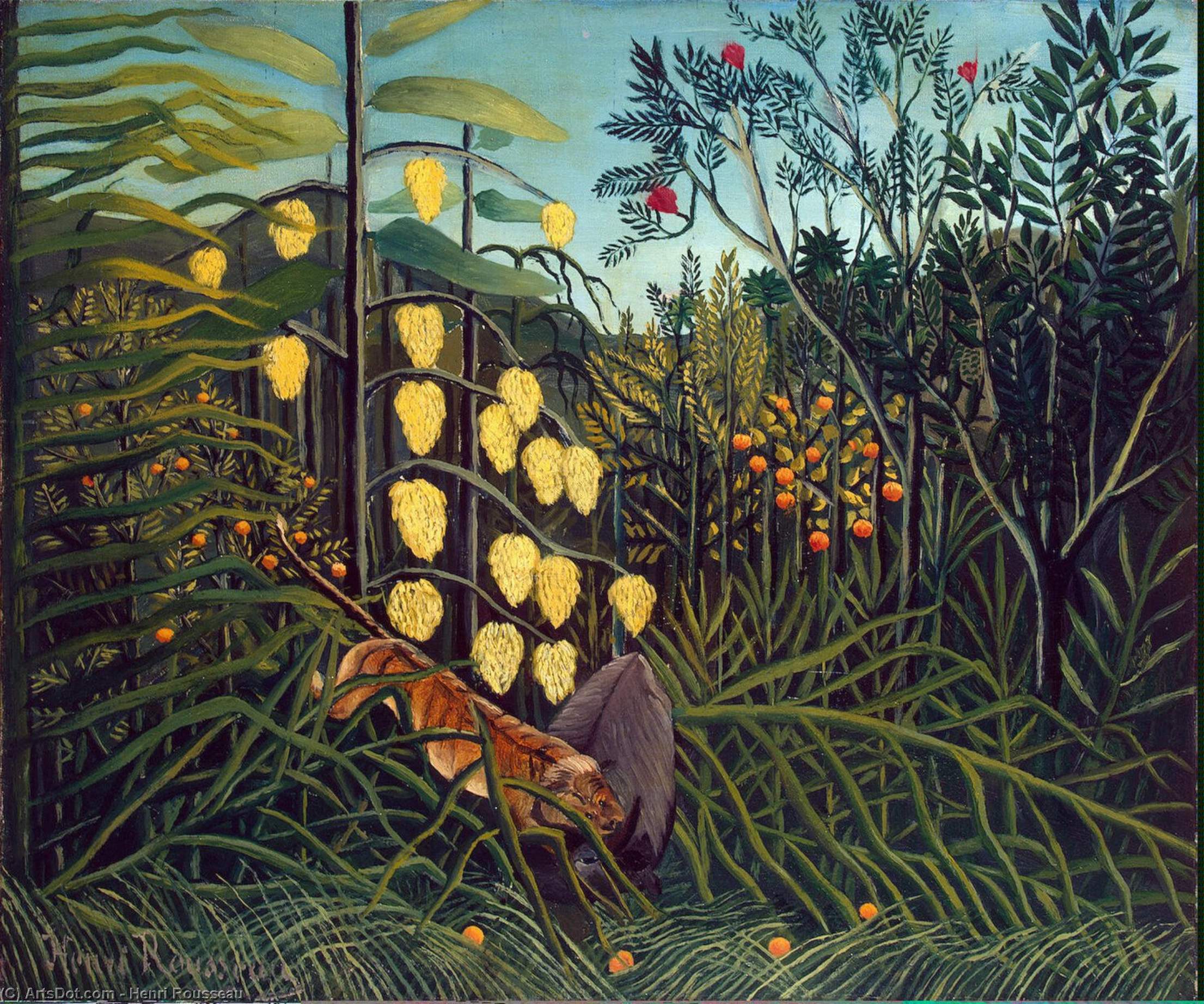
In the lush, emerald depths of Tropical Forest: Battling Tiger and Buffalo, we are transported into a dreamscape where the boundaries between reality and imagination dissolve. Painted in 1908 by the legendary French master Henri Julien Félix Rousseau, this masterpiece captures a moment of raw, untamed tension. At the center of this verdant stage, a fierce confrontation unfolds between a powerful tiger and a resilient buffalo. This is not merely a depiction of animal instinct; it is a theatrical performance of nature's most primal forces. The surrounding jungle, thick with oversized foliage and heavy with the scent of damp earth, serves as both a sanctuary and a battlefield, creating an immersive experience that pulls the viewer into the very heart of the wild.
The composition is a breathtaking tapestry of life and color. Beyond the central struggle, the forest teems with hidden wonders: vibrant birds flit through the canopy, while heavy clusters of bananas, apples, and oranges hang like jewels from the branches. This abundance suggests a sense of nature's infinite bounty, even amidst the violence of the hunt. For the collector or interior designer, this painting offers a profound sense of depth and vitality, making it an extraordinary focal point for any space that seeks to evoke wonder and a connection to the natural world.
The Enchanting Naïve Style of Le Douanier
To understand this work, one must understand the unique spirit of its creator, known affectionately as Le Douanier. Rousseau, a self-taught artist who worked as a customs officer, brought a singular, "naïve" perspective to the Parisian art scene. His technique eschews traditional academic realism in favor of flattened perspectives, bold outlines, and an almost hypnotic use of color. In this piece, the layers of vegetation are rendered with a rhythmic precision that feels both simplified and incredibly complex. Each leaf and vine is meticulously placed, creating a dense, textured environment that feels more like a beautifully crafted tapestry than a traditional landscape.
The artist's use of color is particularly striking; he employs vibrant, saturated hues that defy the shadows of the deep forest, bathing the scene in an otherworldly glow. This technique creates a dreamlike atmosphere where the light seems to emanate from within the plants themselves. For those looking to adorn a home with high-quality reproductions, the visual impact of Rousseau's palette is unmatched, offering a sophisticated yet playful energy that can transform a room into a portal to another dimension.
Symbolism and Emotional Resonance
Beyond its striking visual beauty, Tropical Forest: Battling Tiger and Buffalo carries deep symbolic weight. The struggle between the predator and the prey serves as a timeless metaphor for the eternal cycle of life, death, and rebirth. There is a profound tension held within the brushstrokes—a balance between the ferocity of the combat and the serene, almost surreal stillness of the surrounding flora. This duality invites the viewer to contemplate the delicate equilibrium of our ecosystem and the hidden dramas that unfold in the shadows of the wild.
Emotionally, the painting evokes a sense of awe and nostalgia. It captures a romanticized vision of the "exotic" that was so prevalent in the early 20th century, yet it remains strikingly modern in its psychological depth. Owning or displaying a reproduction of this work is an invitation to daily contemplation, offering a moment of escape into a world where nature is both beautiful and formidable. It is a piece that speaks to the soul, providing a sense of adventure and a deep appreciation for the magnificent, unscripted theater of life.
Obras relacionadas
Biografía del artista
Henri Julien Félix Rousseau: Una Vida en el Arte
Primeros Años y Orígenes
- Nacido el 21 de mayo de 1844, en Laval, Francia, Henri Julien Félix Rousseau llevó una vida poco convencional antes de convertirse en un reconocido artista.
- Sus primeros años estuvieron marcados por circunstancias modestas; su padre era sastre y Rousseau mismo trabajó varios trabajos durante su juventud.
- Recibió cierta educación formal, mostrando aptitud para dibujar, pero finalmente se dedicó a una carrera como recaudador de impuestos – ganándose el apodo “Le Douanier” (el oficial aduanero).
- Rousseau sirvió en el ejército durante cuatro años antes de asentarse en su puesto en el octroi de París, cobrando impuestos sobre los bienes que entraban en la ciudad.
Desarrollo Artístico y Estilo
- Rousseau fue mayormente auto-enseñado como artista, comenzando a pintar seriamente en sus primeros cuarenta años después de recibir ánimo de un amigo.
- Su estilo se caracteriza por su calidad naïve o primitiva, marcada por perspectivas planas, formas simplificadas y colores vibrantes, a menudo irrealistas.
- Se inspiró en jardines botánicos, revistas ilustradas y visitas al Jardin des Plantes de París, en lugar de la observación directa de la naturaleza.
- Los cuadros de Rousseau a menudo presentan escenas exuberantes de selva, animales exóticos, retratos y representaciones de la vida cotidiana, todo ello representado con un sentido único de asombro e imaginación.
Influencias y Contexto Artístico
- Si bien fue mayormente auto-enseñado, Rousseau estaba consciente de los movimientos artísticos de su tiempo – Impresionismo y Postimpresionismo – pero desarrolló un estilo personal distintivo que lo diferenciaba.
- Admiró a artistas como Eugène Delacroix y se inspiró en su uso del color y la temática exótica.
- El trabajo de Rousseau predice y anticipa aspectos del Surrealismo y otros movimientos vanguardistas de principios del siglo XX.
Obras Maestras y Logros
- Algunas de las pinturas más celebradas de Rousseau incluyen:
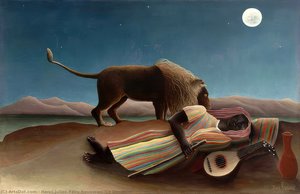
- La Gitana Dormida (1897) – una representación onírica de una mujer dormida en un entorno de selva.
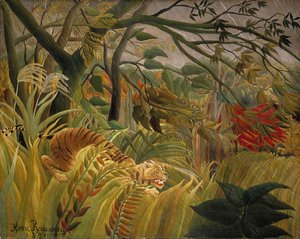
- Tigre en Tormenta Tropical (Sorprendido!) (1891) – que muestra su uso dramático del color y la composición.
- Autorretrato (1890) - Un retrato formal mostrando al artista con una paleta y pinceles.
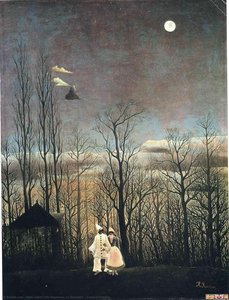
- La Noche del Carnaval (1886) – capturando una escena festiva con detalles intrincados.
- Exhibió regularmente en el Salon des Indépendants, ganando reconocimiento entre otros artistas y atrayendo gradualmente la atención crítica.
Significado Histórico y Legado
- Inicialmente ridiculizado por muchos críticos por su estilo poco convencional, el trabajo de Rousseau finalmente ganó apreciación como una expresión única de visión artística.
- Se convirtió en inspiración para varios artistas destacados, incluido Pablo Picasso y otros miembros del movimiento vanguardista.
- En 1908, Picasso organizó “Le Banquet Rousseau”, un evento conmemorativo honrando al artista y reconociendo su influencia.
- Las pinturas de Rousseau siguen cautivando a los públicos hoy en día con su calidad onírica, colores vibrantes y temática imaginativa.
- Su obra es un testimonio del poder de la autoexpresión y el atractivo perdurable del arte naïf.
Muerte y Reconocimiento Póstumo
- Henri Rousseau murió el 2 de septiembre de 1910, en París.
- Su legado continuó creciendo después de su muerte, consolidando su lugar como una figura significativa en la historia del arte moderno.
- Hoy en día, sus obras se exhiben en importantes museos de todo el mundo y continúan inspirando a artistas y amantes del arte por igual.
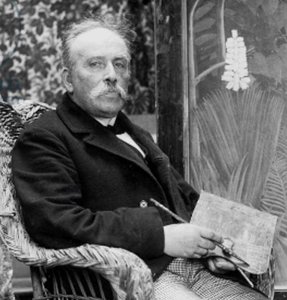
Henri Julien Félix Rousseau (Le Douanier)
1844 - 1910 , Francia
Datos clave
- Artistic Movement Or Style: Postimpresionismo, Naïve
- Artists Or Movements Influenced By This Artist: ['Surrealismo']
- Artists Who Influenced This Artist: ['Delacroix']
- Date Of Birth: 21 de mayo de 1844
- Date Of Death: 2 de septiembre de 1910
- Full Name: Henri Julien Félix Rousseau
- Nationality: Francés
- Notable Artworks:
- Dormir en el Desierto
- El Sueño
- Noche de Carnaval
- Place Of Birth: Laval, Francia
Artículos relacionados
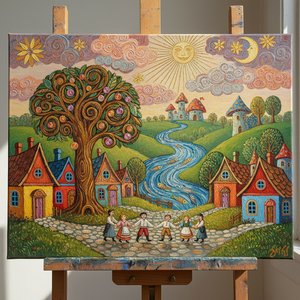
La Visión Inconvencional: Explorando el Arte Naïf y su Legado Duradero
Descubre el fascinante mundo del arte naïf: orígenes, artistas clave y su impacto en la historia del arte. Guía experta para coleccionistas y amantes del arte ingenuo.
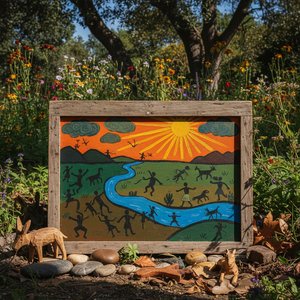
La Visión Indómita: Explorando el Arte Naïf y el Primitivismo como Rechazo a la Convención
Descubre el fascinante mundo del arte naïf y primitivismo. Explora su historia, artistas clave como Rousseau y Chagall, y su rebelde espíritu contra las convenciones artísticas. Análisis experto en ArtsDot.
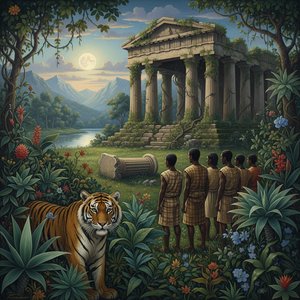
Henri Rousseau: Primitivism, Paradox & Subversion of Academic Tradition
Explore the captivating world of Henri Rousseau, the celebrated Naïve artist who challenged academic traditions with his unique jungle scenes & dreamlike symbolism. Discover his lasting influence on modern art and collecting today.
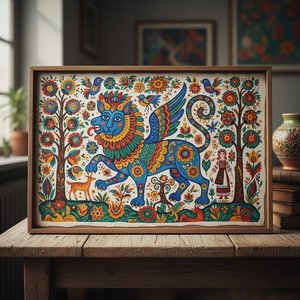
Maria Primachenko: A Legacy of Ukrainian Folk Art & Naive Expression
Discover the captivating world of Maria Primachenko, Ukraine's celebrated naive artist. Explore her vibrant paintings, unique style, and enduring legacy with ArtsDot – your source for authentic art insights & reproductions.
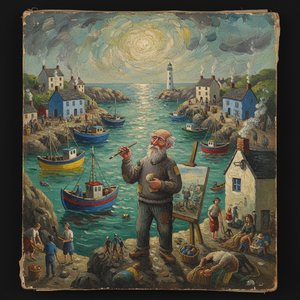
Alfred Wallis: Rediscovering the Naïve Visionary of Cornish Life
Discover the captivating world of Alfred Wallis, the self-taught Cornish painter championed by modernists. Explore his unique naive style, maritime scenes & lasting legacy with ArtsDot.