

 Ver en contexto
 Enviar
 Compartir
 Detalles

 Descargar
 Similares
 Radiografía
 Presentación de diapositivas
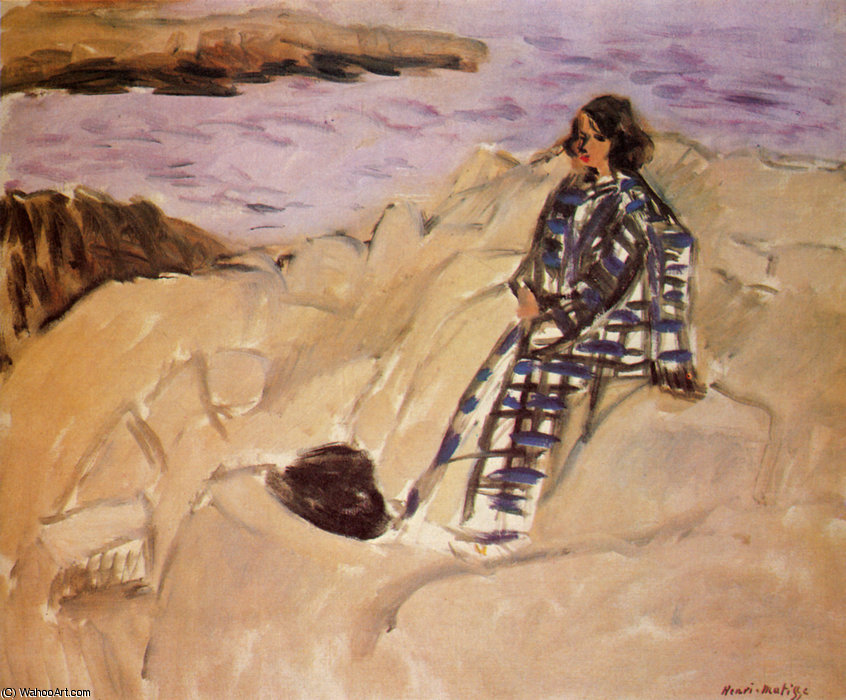
Marguerite sur les roches, Etretat Huile sur Toile Collection Particulière
 Óleo sobre lienzo
- Arte de pared
- Fauvist Expressionism
 Moderno
 38.0 x 46.0 cm
 Ver más
Adquiera una imagen digital de alta resolución y optimizada, muy superior a la vista previa en línea.
Cada archivo es preparado meticulosamente por nuestros especialistas internos mediante el uso de herramientas avanzadas y un experto retoque manual. Nos aseguramos de que cada imagen posea una claridad excepcional, una precisión cromática impecable y un detalle minucioso.
El archivo final se entrega por correo electrónico en un plazo de 72 horas, optimizado para su uso inmediato en entornos profesionales, editoriales y de impresión. Esta es la misma calidad en la que confían los estudios de diseño, las editoriales y las galerías de primer nivel.
Imagen Digital
Descarga un archivo de alta resolución para exhibición personal, impresión y proyectos creativos. ( Comprar impresión Comprar pintura hecha a mano)
Incluido en cada pedido de imágenes digitales
Entrega digital experta, garantizada.
Al elegir ArtsDot.com, no solo está adquiriendo una imagen; está recibiendo una obra de arte digital mejorada profesionalmente, elaborada con precisión y respaldada por una garantía de satisfacción. Esto es todo lo que incluye su pedido, automáticamente:

Entrega rápida por email
Recibirá su archivo de imagen digital en alta resolución por correo electrónico en un plazo de 72 horas tras realizar su pedido, listo para su uso inmediato.

Archivo digital optimizado por IA
Su obra de arte se optimiza profesionalmente mediante herramientas avanzadas de IA y edición manual, garantizando el máximo detalle, claridad y precisión cromática.

Reenvío gratuito de por vida
¿Has borrado o perdido tu archivo por error? No te preocupes: te lo volveremos a enviar en cualquier momento, sin coste adicional.

Sin gastos de importación, siempre
Disfrute de su obra de arte al instante sin aduanas, aranceles ni gastos de envío; las descargas digitales siempre están libres de impuestos.

Garantía de fidelidad de color
Garantizamos que su imagen digital refleje los colores originales con la mayor fidelidad posible, mediante el uso de herramientas profesionales y gestión del color.

Garantía de satisfacción de 60 días
Si no está satisfecho con su imagen digital, la revisaremos o le reembolsaremos el 100% en un plazo de 60 días, sin preguntas.

100% Garantía de devolución de dinero
¿No está satisfecho? Obtenga un reembolso completo dentro de los 60 días posteriores a la recepción de su archivo digital, sin necesidad de explicaciones.

Descuentos por pedidos grandes
Compra 3 imágenes, ahorra 10% - Compra 5, ahorra 15% - Compra 10+, ahorra 20%. Ideal para proyectos creativos, galerías y agencias.
A Moment of Serenity by the Sea: Exploring Matisse’s “Marguerite sur les roches”
Henri Matisse's "Marguerite sur les roches, Etretat Huile sur Toile Collection Particulière" isn’t merely a depiction of a woman contemplating the sea; it’s an immersion into a carefully constructed world of light, color, and quiet contemplation. Painted in 1909 during his pivotal period in Étretat, Normandy – a location that profoundly influenced his artistic vision – this work exemplifies Matisse’s masterful synthesis of Fauvist boldness with his own distinctive approach to form and composition. The painting captures a fleeting moment, imbued with an almost palpable sense of tranquility, inviting the viewer into a space where the natural world and human experience converge in perfect harmony. The scene unfolds on rugged rocks overlooking the English Channel, a dramatic backdrop for Marguerite’s solitary presence. She sits relaxed, a cigarette held delicately between her fingers, seemingly lost in thought as she observes the vast expanse of water before her. The composition is deliberately simple yet remarkably effective; Matisse eschews detailed realism in favor of capturing the *essence* of the scene – its mood and atmosphere.Artistic Style and Technique: A Dance of Color and Form
Matisse’s genius lies not just in his use of color, but in how he manipulates it to evoke emotion. “Marguerite sur les roches” is a prime example of this approach. He employs a vibrant palette – deep blues and greens for the sea, punctuated by warm ochres and yellows for the rocks and the setting sun – creating a luminous effect that seems to radiate from the canvas. This isn’t a realistic rendering of light; it’s an *interpretation* of it, filtered through Matisse’s intensely personal vision. The brushstrokes are loose and expressive, contributing to the painting’s sense of movement and immediacy. Notice how he uses short, broken strokes to define the textures of the rocks and the billowing clouds in the sky, while maintaining a fluidity that softens the overall image. The simplification of forms – Marguerite's figure is rendered with minimal detail, almost as an outline – further emphasizes this focus on color and atmosphere. This deliberate reduction allows Matisse to convey more through suggestion than representation.Historical Context: The Birth of Fauvist Expression
“Marguerite sur les roches” emerged during Matisse’s formative years within the Fauvist movement—a revolutionary artistic rebellion against Impressionism that shook the art world in 1905-1906. Led by André Derain and Maurice Denis, Fauvists rejected traditional academic conventions, prioritizing color above all else. They believed that color should be used instinctively and emotionally, rather than descriptively, liberating it from the constraints of naturalistic representation. Matisse’s embrace of this bold aesthetic was profoundly influenced by his time in Etretat, Normandy—a coastal town known for its dramatic cliffs and breathtaking sunsets—where he sought inspiration from the raw beauty of the landscape. The painting reflects the Fauvist preoccupation with capturing subjective experience and conveying emotion through vibrant hues, mirroring the movement’s broader ambition to redefine artistic expression.Symbolism: Tranquility and Contemplation
Beyond its visual splendor, “Marguerite sur les roches” resonates with symbolic significance. The woman herself embodies stillness and introspection—a deliberate contrast to the turbulent sea surrounding her. Her posture exudes serenity, suggesting a moment of profound contemplation amidst the grandeur of nature. The rocks serve as anchors for this contemplative gaze, grounding Marguerite in the physical world while simultaneously elevating her spirit toward an idealized realm of beauty and peace. Matisse’s masterful use of color—particularly the warm yellows and oranges of the setting sun—further reinforces this symbolic message, representing warmth, optimism, and the promise of renewal. The painting invites viewers to pause and consider the quiet joys of solitude and the transformative power of observing the natural world with mindful awareness.Legacy: Matisse’s Enduring Influence
Henri Matisse remains one of the most celebrated artists of the 20th century—a figure whose groundbreaking innovations continue to inspire generations of painters and designers. “Marguerite sur les roches” stands as a cornerstone of his artistic legacy, demonstrating his unwavering commitment to expressive color and simplified form—principles that profoundly shaped the trajectory of modern art. Its enduring appeal lies in its ability to capture a timeless moment of beauty and tranquility—a testament to Matisse’s genius as an artist and his profound understanding of human emotion. Reproductions of this painting are available through ArtsDot.com and similar platforms, allowing art enthusiasts to experience the serenity of Matisse’s vision firsthand.For those seeking further exploration into Matisse's world, we recommend visiting Henri Matisse at ArtsDot.com and more platforms that offers hand-painted reproductions of famous artworks.
Photo Description: The painting is a beautiful representation of a woman sitting on rocks near the water. She appears to be enjoying her time by herself, possibly smoking a cigarette. The scene takes place at sunset, as indicated by the warm colors in the sky. In addition to the main subject, there are several other elements present in the painting. A boat can be seen floating on the water, and another person is visible further back in the scene. There are also two birds flying above Marguerite, adding a sense of movement and life to the image. The combination of these elements creates a serene and picturesque atmosphere. Size: 38 x 46 cm Date: UnknownObras relacionadas
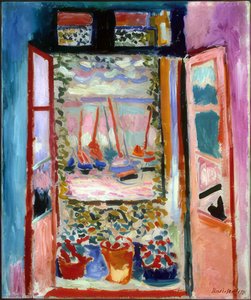
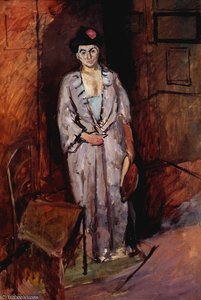
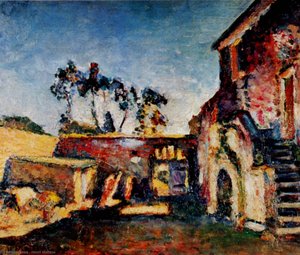
Biografía del artista
Primeros Años y Educación
Henri Émile Benoît Matisse nació el 31 de diciembre de 1869, en Le Cateau-Cambrésis, Norte de Francia, hijo de una familia de comerciantes de grano. Pasó sus años formativos en Bohain-en-Vermandois, Picardía. Inicialmente, estudió derecho en París después del secundario, pero su vida tomó un giro inesperado en 1889 tras un ataque de apendicitis. Durante su recuperación, comenzó a experimentar con materiales artísticos proporcionados por su madre y descubrió una profunda pasión que definiría el resto de su vida.
Primeros Desarrollos Artísticos e Influencias
Las primeras incursiones artísticas de Matisse estuvieron arraigadas en técnicas tradicionales. Estudió en la Academia Julian bajo William-Adolphe Bouguereau y posteriormente en la École Nationale des Beaux-Arts con Gustave Moreau. Sus obras iniciales reflejaban un estilo clásico, influenciado por maestros como Jean-Baptiste-Siméon Chardin, Nicolas Poussin y Antoine Watteau. Estas primeras influencias le inculcaron una sólida base en el dibujo y la composición.
Un momento decisivo llegó en 1896 durante una visita a Belle Île con el pintor australiano John Russell. Russell introdujo a Matisse al Impresionismo y a las obras de Vincent van Gogh, alterando fundamentalmente su trayectoria artística. Este encuentro condujo a un cambio dramático hacia el uso vibrante y expresivo del color, alejándose de los tonos terrosos – una característica distintiva de su estilo posterior.
El Período Fauvista y Color Audaz
Matisse se convirtió en una figura destacada del movimiento Fauvista (que significa "bestias salvajes" en francés), que surgió alrededor de 1905. Este período se caracterizó por su radical ruptura con la representación tradicional, priorizando el color intenso y las formas simplificadas sobre la representación realista. Pinturas como Los Calabazas ejemplifican este estilo: se utilizan colores no naturalistas audaces para transmitir emociones y crear una experiencia visual dinámica.
- Características Clave del Fauvismo en el Trabajo de Matisse: Paletas de colores intensas, formas simplificadas, pinceladas expresivas, rechazo de la perspectiva tradicional.
Estilo Maduro y Exploración Decorativa
Tras el fervor inicial del Fauvismo, el estilo de Matisse evolucionó hacia una estética más refinada y decorativa. Si bien mantuvo su uso característico del color, comenzó a enfatizar las formas achatadas y los patrones intrincados. Este período vio que explorara temas de ocio, domesticidad y la figura humana en entornos tranquilos.
Su traslado a Niza en la Costa Azul francesa en 1917 marcó otro cambio. La atmósfera relajada influyó en un estilo más sereno y clásico, obteniendo el aplauso crítico por mantener los valores tradicionales dentro del arte moderno.
Años Posteriores y Colages de Papel Cortado
En sus años posteriores, la mala salud limitó la capacidad de Matisse para pintar convencionalmente. Sin embargo, este desafío impulsó una creatividad notable. Pionero en el medio de los colages de papel cortado – creando composiciones vibrantes al cortar y organizar formas de papel de colores. Estas obras demuestran una exploración continua del color, la forma y la composición, mostrando su visión artística perdurable.
Logros Importantes y Obras Notables
La carrera de Matisse abarcó más de medio siglo, dejando atrás un extenso cuerpo de trabajo que consolidó su lugar como una de las figuras más importantes del arte moderno. Algunas de sus obras más celebradas incluyen:
- Los Calabazas (1905) – Un ejemplo fundamental del Fauvismo
- Laurette con Turbante Blanco (1906) - Demostrando una habilidad de dibujo innovadora
- Numerosos colages de papel cortado creados durante sus años posteriores.
Significado Histórico y Legado
El impacto de Henri Matisse en el mundo del arte es innegable. Desafió las nociones convencionales de la representación, defendió el poder expresivo del color y exploró nuevos medios artísticos. Su obra influyó a generaciones de artistas e inspira a los creadores contemporáneos. Se le considera junto a Pablo Picasso como una de las figuras más influyentes del arte del siglo XX, dando forma al curso del modernismo y allanando el camino para la innovación artística futura.
El legado de Matisse se extiende más allá de sus pinturas y colages; abarca una filosofía del arte que celebra la alegría, la belleza y el poder transformador del color. Su obra es un testimonio del deseo humano perdurable de crear y expresarse a través de los medios visuales.
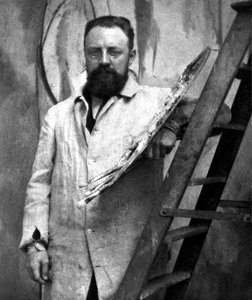
Henri Matisse
1869 - 1954 , Francia
Breves datos
- Artistic Movement Or Style: Fauvismo
- Artists Or Movements Influenced By This Artist:
- Modernismo
- Expresionismo
- Artists Who Influenced This Artist:
- Van Gogh
- Chardin
- Date Of Birth: 31 de diciembre de 1869
- Date Of Death: 3 de noviembre de 1954
- Full Name: Henri Émile Benoît Matisse
- Nationality: Francés
- Notable Artworks:
- Las Calabazas
- Laurette
- Place Of Birth: Le Cateau-Cambrésis, Francia

