

 Ver en contexto
 Enviar
 Compartir
 Detalles

 Descargar
 Similares
 Radiografía
 Presentación de diapositivas
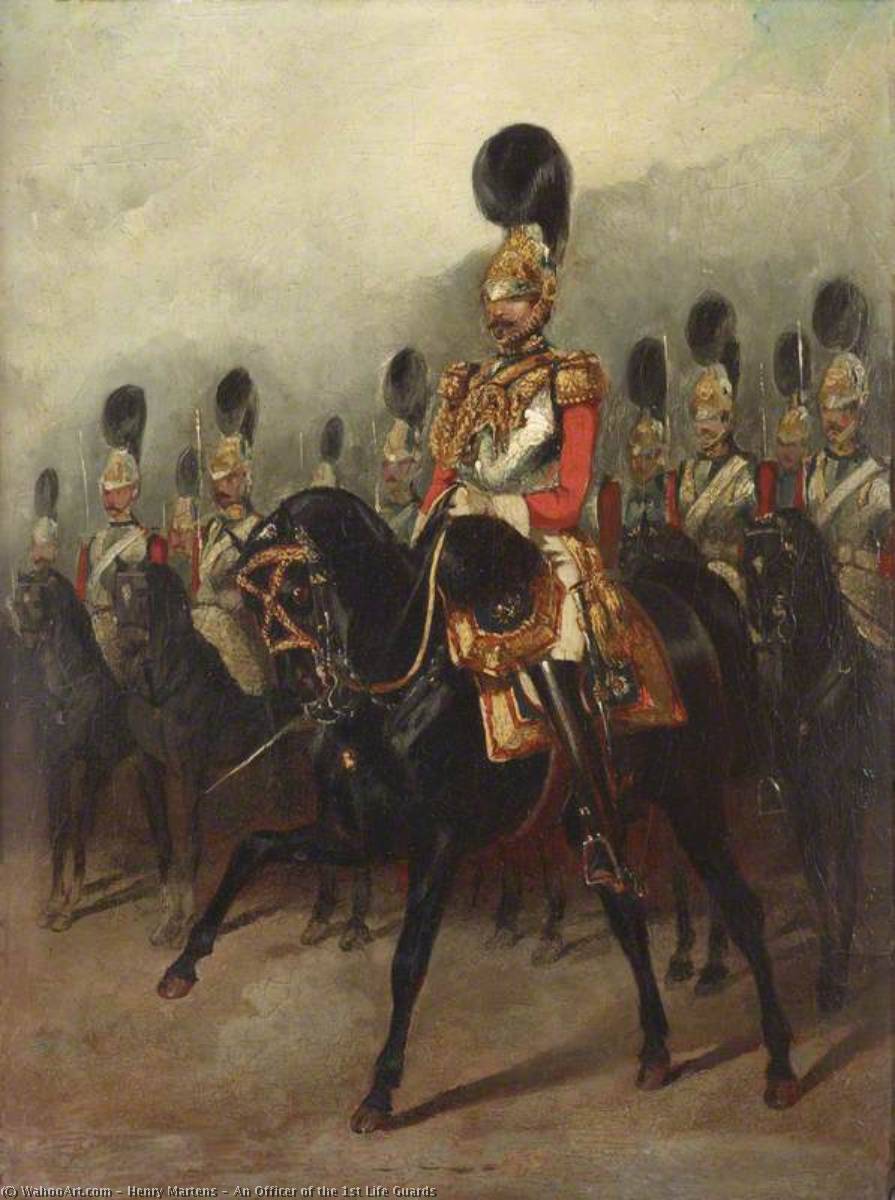
An Officer of the 1st Life Guards
 30.0 x 23.0 cm
 National Trust
 Ver más
Adquiera una imagen digital de alta resolución y optimizada, muy superior a la vista previa en línea.
Cada archivo es preparado meticulosamente por nuestros especialistas internos mediante el uso de herramientas avanzadas y un experto retoque manual. Nos aseguramos de que cada imagen posea una claridad excepcional, una precisión cromática impecable y un detalle minucioso.
El archivo final se entrega por correo electrónico en un plazo de 72 horas, optimizado para su uso inmediato en entornos profesionales, editoriales y de impresión. Esta es la misma calidad en la que confían los estudios de diseño, las editoriales y las galerías de primer nivel.
Imagen Digital
Descarga un archivo de alta resolución para exhibición personal, impresión y proyectos creativos. ( Comprar impresión Comprar pintura hecha a mano)
Incluido en cada pedido de imágenes digitales
Entrega digital experta, garantizada.
Al elegir ArtsDot.com, no solo está adquiriendo una imagen; está recibiendo una obra de arte digital mejorada profesionalmente, elaborada con precisión y respaldada por una garantía de satisfacción. Esto es todo lo que incluye su pedido, automáticamente:

Entrega rápida por email
Recibirá su archivo de imagen digital en alta resolución por correo electrónico en un plazo de 72 horas tras realizar su pedido, listo para su uso inmediato.

Archivo digital optimizado por IA
Su obra de arte se optimiza profesionalmente mediante herramientas avanzadas de IA y edición manual, garantizando el máximo detalle, claridad y precisión cromática.

Reenvío gratuito de por vida
¿Has borrado o perdido tu archivo por error? No te preocupes: te lo volveremos a enviar en cualquier momento, sin coste adicional.

Sin gastos de importación, siempre
Disfrute de su obra de arte al instante sin aduanas, aranceles ni gastos de envío; las descargas digitales siempre están libres de impuestos.

Garantía de fidelidad de color
Garantizamos que su imagen digital refleje los colores originales con la mayor fidelidad posible, mediante el uso de herramientas profesionales y gestión del color.

Garantía de satisfacción de 60 días
Si no está satisfecho con su imagen digital, la revisaremos o le reembolsaremos el 100% en un plazo de 60 días, sin preguntas.

100% Garantía de devolución de dinero
¿No está satisfecho? Obtenga un reembolso completo dentro de los 60 días posteriores a la recepción de su archivo digital, sin necesidad de explicaciones.

Descuentos por pedidos grandes
Compra 3 imágenes, ahorra 10% - Compra 5, ahorra 15% - Compra 10+, ahorra 20%. Ideal para proyectos creativos, galerías y agencias.
Obras relacionadas










Biografía del artista
Henry Martens: A Military Visionary of the Early 19th Century
Henry Martens, a name perhaps less familiar than his contemporaries Millet or David, nevertheless stands as a pivotal figure in 19th-century British art. Born in London around 1790 and passing away in 1868, Martens wasn’t simply a painter; he was an illustrator deeply embedded within the military establishment, meticulously documenting battles, uniforms, and the realities of warfare with a remarkable level of detail and realism. His work offers a unique window into a period of significant social and political change – the Napoleonic Wars’ aftermath, the expansion of the British Empire, and the evolving role of the army in shaping national identity.
Martens' early life remains somewhat shrouded in mystery, though it is known he was part of a family with connections to the legal profession. He initially trained as an engraver before gravitating towards painting, finding his true calling in capturing the dynamism and drama of military scenes. Unlike many artists who idealized warfare, Martens presented a brutally honest depiction of conflict – the mud, the blood, the exhaustion, and the intricate details of soldier’s equipment. This commitment to accuracy, combined with an almost photographic eye for detail, quickly established him as a sought-after illustrator for publications like Ackermann's Repository, a hugely popular illustrated magazine that catered to a broad audience.
The Rise of Military Illustration and Martens’ Role
The mid-19th century witnessed a surge in military illustration, fueled by the ongoing expansion of the British Empire and the need for detailed records of campaigns. Martens was perfectly positioned to capitalize on this demand. His work wasn't merely decorative; it served a practical purpose – providing visual documentation for officers, soldiers, and the public alike. He collaborated extensively with Captain George Rodney Mundy, supplying sketches that were then meticulously rendered in aquatint prints by John Harris for Ackermann’s. This partnership produced a vast body of work depicting conflicts such as the Sikh Wars and the Kaffir War, offering unprecedented glimpses into these far-flung colonial engagements.
Martens' style was characterized by an almost obsessive attention to detail. He meticulously researched uniforms, weaponry, and battlefield layouts, striving for unparalleled accuracy. His use of aquatint – a printing technique that produced tonal shades through the application of gum arabic – allowed him to create incredibly nuanced representations of textures, light, and shadow. His compositions were often dynamic, capturing the moment of action with a sense of immediacy and energy. He wasn’t interested in grand narratives or heroic portrayals; instead, he focused on the individual soldier, his actions, and the immediate circumstances of battle.
Key Works and Artistic Techniques
Several works stand out as particularly significant examples of Martens' artistic skill and historical importance. “The Siege of Multan, 1849” is a prime example, showcasing his ability to convey chaos and intensity on the battlefield. The painting’s composition—a swirling mass of soldiers, artillery, and smoke—is both dramatic and meticulously rendered. “An Officer of the 2nd Royal North British Dragoons,” another notable piece, exemplifies his mastery of portraiture within a military context, capturing the officer's posture, uniform, and expression with remarkable precision.
Martens’ work extended beyond battlefield scenes to include detailed illustrations of military uniforms. His “Costumes of the British Army” series, published between 1849 and 1853, was a monumental undertaking – a comprehensive visual record of the army's attire at the time. These plates were incredibly popular, serving as invaluable references for officers and soldiers alike. His depictions of Sikh and Kaffir uniforms are particularly noteworthy, offering insights into the diverse cultures and military traditions encountered during the British Empire’s expansion.
Legacy and Historical Significance
Henry Martens' legacy is often overlooked, yet his contributions to art history are substantial. He wasn’t a painter of grand historical scenes in the style of David or Ingres; instead, he offered a uniquely realistic and detailed portrayal of military life during a pivotal era. His work provides invaluable insights into the social, political, and military dynamics of 19th-century Britain and its empire.
Today, Martens’ paintings are housed primarily at the Musée Thomas-Henry in Évreux, France, where they continue to fascinate viewers with their remarkable detail and historical significance. His legacy endures not only through his artwork but also through his pioneering role as a military illustrator – an artist who captured the realities of war with unflinching honesty and technical brilliance.
henry martens
1790 - 1868
Breves datos
- Artistic Movement Or Style: Military illustration
- Artists Or Movements Influenced By This Artist: ["Ackermann's lithographs"]
- Artists Who Influenced This Artist: ['Jean-François Millet']
- Date Of Birth: 1790
- Date Of Death: 1868
- Full Name: Henry Martens
- Nationality: English
- Notable Artworks:
- Siege of Multan
- Officer of Dragoons
- Charles I at Naseby
- Place Of Birth: London, England

