

 Ver en contexto
 Enviar
 Compartir
 Detalles

 Descargar
 Similares
 Radiografía
 Presentación de diapositivas
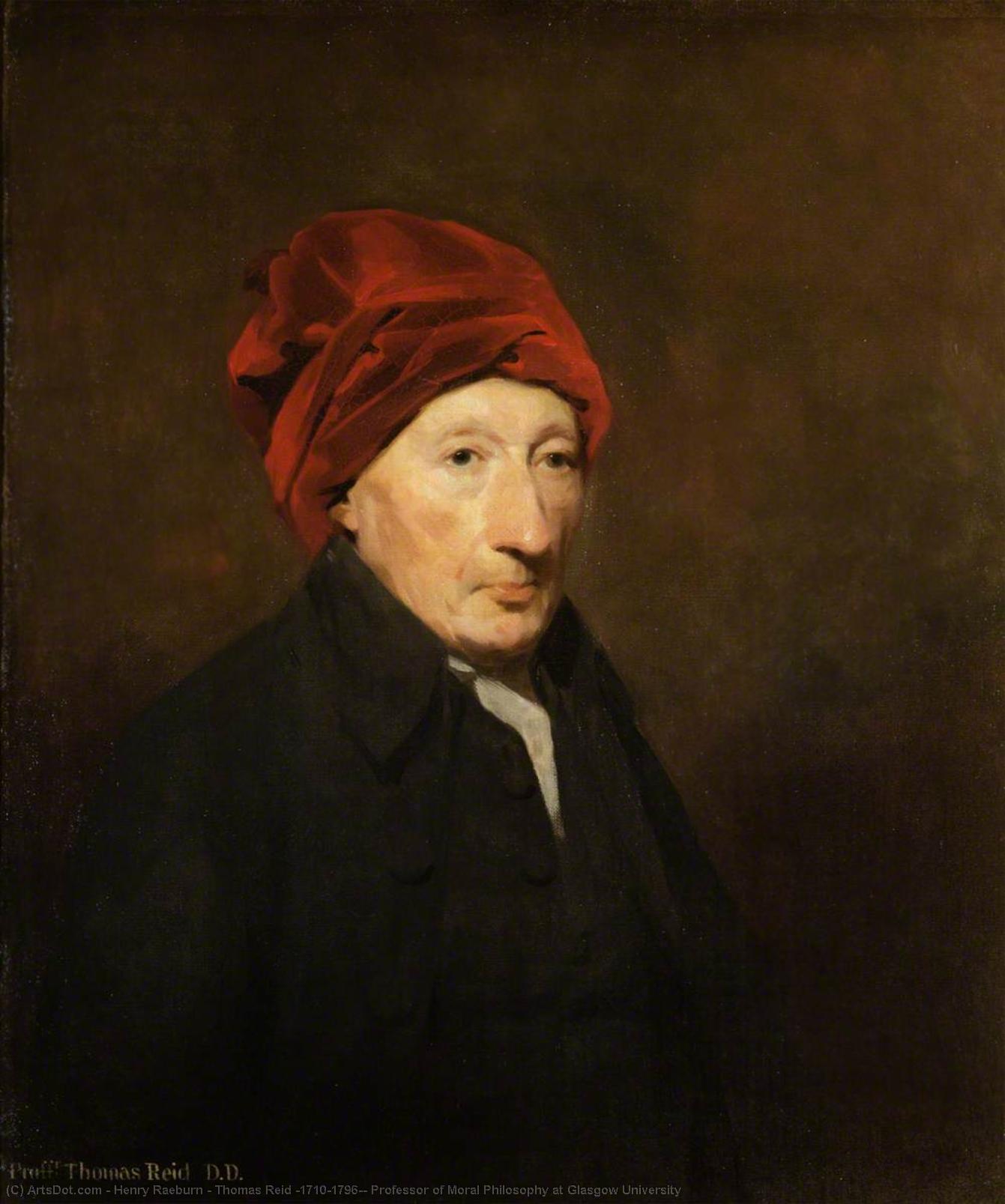
Thomas Reid (1710–1796), Professor of Moral Philosophy at Glasgow University
 Acrylic On Canvas
- WallArt
- Scottish Realism
 1796
1796 73.0 x 62.0 cm
 The National Trust For Scotland
 Ver más
Adquiera una imagen digital de alta resolución y optimizada, muy superior a la vista previa en línea.
Cada archivo es preparado meticulosamente por nuestros especialistas internos mediante el uso de herramientas avanzadas y un experto retoque manual. Nos aseguramos de que cada imagen posea una claridad excepcional, una precisión cromática impecable y un detalle minucioso.
El archivo final se entrega por correo electrónico en un plazo de 72 horas, optimizado para su uso inmediato en entornos profesionales, editoriales y de impresión. Esta es la misma calidad en la que confían los estudios de diseño, las editoriales y las galerías de primer nivel.
Imagen Digital
Descarga un archivo de alta resolución para exhibición personal, impresión y proyectos creativos. ( Comprar impresión Comprar pintura hecha a mano)
Incluido en cada pedido de imágenes digitales
Entrega digital experta, garantizada.
Al elegir ArtsDot.com, no solo está adquiriendo una imagen; está recibiendo una obra de arte digital mejorada profesionalmente, elaborada con precisión y respaldada por una garantía de satisfacción. Esto es todo lo que incluye su pedido, automáticamente:

Entrega rápida por email
Recibirá su archivo de imagen digital en alta resolución por correo electrónico en un plazo de 72 horas tras realizar su pedido, listo para su uso inmediato.

Archivo digital optimizado por IA
Su obra de arte se optimiza profesionalmente mediante herramientas avanzadas de IA y edición manual, garantizando el máximo detalle, claridad y precisión cromática.

Reenvío gratuito de por vida
¿Has borrado o perdido tu archivo por error? No te preocupes: te lo volveremos a enviar en cualquier momento, sin coste adicional.

Sin gastos de importación, siempre
Disfrute de su obra de arte al instante sin aduanas, aranceles ni gastos de envío; las descargas digitales siempre están libres de impuestos.

Garantía de fidelidad de color
Garantizamos que su imagen digital refleje los colores originales con la mayor fidelidad posible, mediante el uso de herramientas profesionales y gestión del color.

Garantía de satisfacción de 60 días
Si no está satisfecho con su imagen digital, la revisaremos o le reembolsaremos el 100% en un plazo de 60 días, sin preguntas.

100% Garantía de devolución de dinero
¿No está satisfecho? Obtenga un reembolso completo dentro de los 60 días posteriores a la recepción de su archivo digital, sin necesidad de explicaciones.

Descuentos por pedidos grandes
Compra 3 imágenes, ahorra 10% - Compra 5, ahorra 15% - Compra 10+, ahorra 20%. Ideal para proyectos creativos, galerías y agencias.
A Portrait of Philosophical Depth: Henry Raeburn’s Thomas Reid
Henry Raeburn's “Thomas Reid (1710–1796), Professor of Moral Philosophy at Glasgow University” is more than a simple likeness; it’s a carefully constructed tableau of intellect, virtue, and the quiet dignity of scholarly life. Painted in 1796, this remarkable portrait offers a glimpse into the mind of a pivotal figure in Scottish Enlightenment thought – Thomas Reid, a man whose profound contributions to moral philosophy continue to resonate today. Raeburn, already establishing himself as a leading portraitist, masterfully captures not just Reid’s physical appearance but also an aura of contemplative seriousness that speaks volumes about his character and intellectual pursuits.
The painting immediately draws the eye to Reid's face – a study in controlled expression. His gaze is direct, unwavering, yet imbued with a subtle hint of introspection. The lighting, expertly rendered by Raeburn, highlights the planes of his face, emphasizing his strong features and suggesting an inner strength. Notice the slight furrowing of his brow, a visual cue to the rigorous mental activity he undoubtedly engaged in daily. The red velvet waistcoat, a fashionable detail for the time, adds a touch of understated elegance, while the dark coat hints at a life dedicated to intellectual pursuits rather than worldly concerns.
A Masterclass in Realism and Psychological Insight
Raeburn’s skill lies not merely in his technical proficiency but in his ability to convey personality through subtle details. He doesn't rely on dramatic poses or extravagant gestures; instead, he employs a restrained realism that allows Reid’s character to emerge organically. The background, though relatively simple – a glimpse of a room and two figures – serves to anchor the subject and provide context without distracting from his central presence. The inclusion of the two observers in the distance subtly suggests the importance of dialogue and debate within the realm of philosophical inquiry.
Raeburn’s approach was revolutionary for its time. He moved away from the idealized, often stiff portraits favored by some of his contemporaries, opting instead to capture a more authentic and psychologically nuanced representation of his subject. This commitment to realism is evident in the careful observation of Reid's features – the texture of his skin, the slight wrinkles around his eyes, the subtle shift in expression that reveals his inner thoughts. This attention to detail elevates the portrait beyond a mere likeness; it becomes a window into the soul of a man.
The Context of Enlightenment Thought
To fully appreciate “Thomas Reid,” one must understand the intellectual climate in which it was created – the Scottish Enlightenment. This period, spanning roughly from the mid-18th to the late 18th centuries, witnessed an explosion of philosophical and scientific inquiry. Figures like David Hume, Adam Smith, and, of course, Thomas Reid were challenging established orthodoxies and exploring new ways of understanding the world. Reid’s work in moral philosophy, particularly his critique of empiricism and his emphasis on innate ideas, was profoundly influential.
Raeburn's decision to paint Reid reflects this intellectual fervor. By immortalizing a leading figure in the Scottish Enlightenment, he contributed to the celebration of reason, knowledge, and philosophical debate. The portrait serves as a visual testament to the importance of these ideals – a reminder that intellectual pursuits are worthy of admiration and respect.
Symbolism and Emotional Resonance
Beyond its technical brilliance, “Thomas Reid” is rich in symbolic meaning. The professor’s posture conveys a sense of authority and wisdom, suggesting his mastery of his subject matter. The quiet contemplation in his eyes speaks to the depth of his intellectual engagement – he's not merely reciting facts; he's wrestling with fundamental questions about human nature and morality.
Furthermore, the painting evokes a feeling of serenity and intellectual honesty. It’s a portrait that invites us to pause, reflect, and consider the enduring value of philosophical inquiry. The subdued colors and carefully controlled lighting contribute to this sense of calm and contemplation, creating an image that is both intellectually stimulating and emotionally resonant. This piece remains a powerful reminder of the importance of thoughtful reflection in a world often dominated by superficiality.
Obras relacionadas
Biografía del artista
Una Pionera en el Campo de la Pintura
Sir Henry Raeburn FRSE RA, un retratista escocés, dejó una huella imborrable en el mundo del arte con sus cautivadoras obras. Nacido el 4 de marzo de 1756 en Stockbridge, Edimburgo, Escocia, el viaje artístico de Raeburn es un testimonio de su dedicación y pasión.Vida Temprana y Formación
Huérfano a temprana edad, Raeburn fue apoyado por su hermano William y colocado en el Hospital Heriot, donde recibió una educación. A los 15 años, fue aprendiz del orfebre James Gilliland de Edimburgo, perfeccionando sus habilidades en la joyería y los delicados dibujos sobre marfil.Evolución Artística
La transición de Raeburn de los miniaturas a la pintura al óleo marcó un punto de inflexión en su carrera. Adquirió las habilidades necesarias para dedicarse exclusivamente a la pintura, siendo George Chalmers (1776; Ayuntamiento de Dunfermline) su retrato conocido más temprano. Su estilo se caracterizó por una gran atención al detalle y un realismo que capturaba la personalidad de sus modelos.Obras Destacadas y Asociaciones
- El joven jugador de polo de William Bruce Ellis Ranken muestra el talento excepcional de Raeburn para capturar movimiento y energía.
- Alexander Allan, una figura destacada en el arte escocés, fue retratado por Raeburn, lo que destaca su capacidad para capturar la esencia de sus sujetos.
Legado e Importancia Histórica
El impacto de Raeburn en el arte escocés es innegable. Su dedicación a capturar la esencia de sus sujetos lo ha convertido en un pionero en el mundo del retrato. Como Sir Henry Raeburn FRSE RA, sigue siendo una parte integral del rico patrimonio artístico de Escocia. Su obra se encuentra en importantes colecciones y museos alrededor del mundo, lo que demuestra su influencia duradera en la historia del arte.- Vea más obras de Sir Henry Raeburn FRSE RA en https://ArtsDot.com/@/henry-raeburn
- Explore la Galería Nacional Escocesa (Edimburgo, Escocia) en https://ArtsDot.com/@@/d3y8vu-william-mctaggart-spring
- Descubra más sobre el arte escocés en https://en.wikipedia.org/wiki/scottish_art_in_the_eighteenth_century
Henry Raeburn
1756 - 1823 , Reino Unido
Breves datos
- Artistas Influyentes: ['George Chalmers']
- Estilo Artístico: Retrato realista
- Fecha De Muerte: 1823
- Fecha De Nacimiento: 4 de marzo de 1756
- Lugar De Nacimiento: Stockbridge, Reino Unido
- Nacionalidad: Escocés
- Nombre Completo: Henry Raeburn
- Obras Notables:
- Los Arqueros
- Alexander Allan
- The Young Polo Player

