

 Ver en contexto
 Enviar
 Compartir
 Detalles

 Descargar
 Similares
 Radiografía
 Presentación de diapositivas
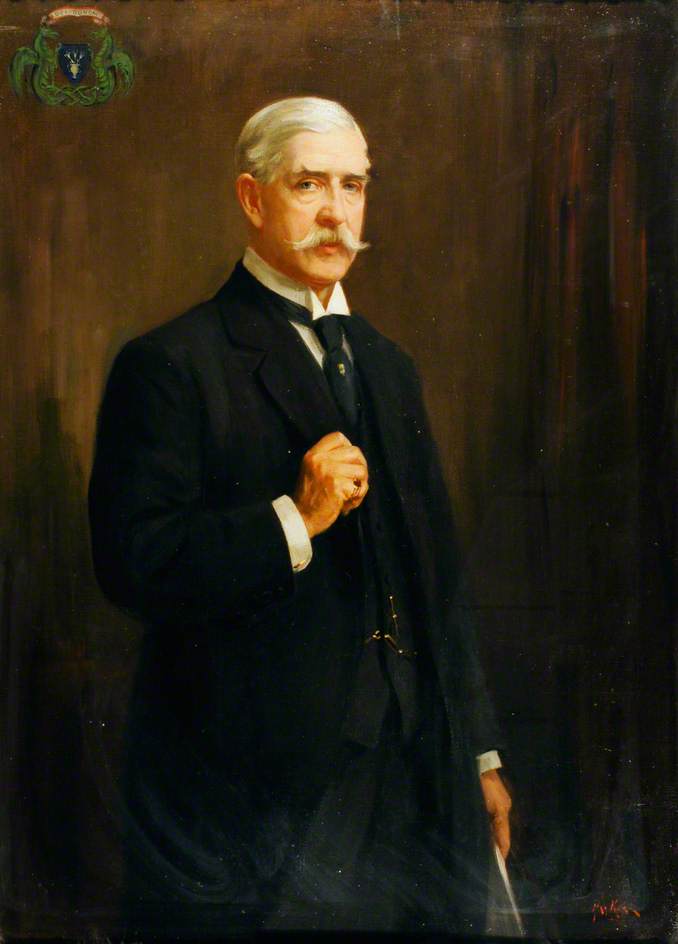
William Henry Blyth Martin (1861–1946), Town Clerk of Dundee (1903–1936)
 1924
1924 127.0 x 92.0 cm
 Ver más
Adquiera una imagen digital de alta resolución y optimizada, muy superior a la vista previa en línea.
Cada archivo es preparado meticulosamente por nuestros especialistas internos mediante el uso de herramientas avanzadas y un experto retoque manual. Nos aseguramos de que cada imagen posea una claridad excepcional, una precisión cromática impecable y un detalle minucioso.
El archivo final se entrega por correo electrónico en un plazo de 72 horas, optimizado para su uso inmediato en entornos profesionales, editoriales y de impresión. Esta es la misma calidad en la que confían los estudios de diseño, las editoriales y las galerías de primer nivel.
Imagen Digital
Descarga un archivo de alta resolución para exhibición personal, impresión y proyectos creativos. ( Comprar impresión Comprar pintura hecha a mano)
Incluido en cada pedido de imágenes digitales
Entrega digital experta, garantizada.
Al elegir ArtsDot.com, no solo está adquiriendo una imagen; está recibiendo una obra de arte digital mejorada profesionalmente, elaborada con precisión y respaldada por una garantía de satisfacción. Esto es todo lo que incluye su pedido, automáticamente:

Entrega rápida por email
Recibirá su archivo de imagen digital en alta resolución por correo electrónico en un plazo de 72 horas tras realizar su pedido, listo para su uso inmediato.

Archivo digital optimizado por IA
Su obra de arte se optimiza profesionalmente mediante herramientas avanzadas de IA y edición manual, garantizando el máximo detalle, claridad y precisión cromática.

Reenvío gratuito de por vida
¿Has borrado o perdido tu archivo por error? No te preocupes: te lo volveremos a enviar en cualquier momento, sin coste adicional.

Sin gastos de importación, siempre
Disfrute de su obra de arte al instante sin aduanas, aranceles ni gastos de envío; las descargas digitales siempre están libres de impuestos.

Garantía de fidelidad de color
Garantizamos que su imagen digital refleje los colores originales con la mayor fidelidad posible, mediante el uso de herramientas profesionales y gestión del color.

Garantía de satisfacción de 60 días
Si no está satisfecho con su imagen digital, la revisaremos o le reembolsaremos el 100% en un plazo de 60 días, sin preguntas.

100% Garantía de devolución de dinero
¿No está satisfecho? Obtenga un reembolso completo dentro de los 60 días posteriores a la recepción de su archivo digital, sin necesidad de explicaciones.

Descuentos por pedidos grandes
Compra 3 imágenes, ahorra 10% - Compra 5, ahorra 15% - Compra 10+, ahorra 20%. Ideal para proyectos creativos, galerías y agencias.
Obras relacionadas









Biografía del artista
The Soul of the Scottish Scene: The Life and Art of Henry Wright Kerr
Born in the historic heart of Edinburgh in 1857, Henry Wright Kerr emerged as a painter whose brush possessed a rare ability to capture both the physical likeness and the inner spirit of his subjects. The son of John Kerr, a respected solicitor, and Elizabeth Thomson, Kerr’s early years were steeped in an environment that valued both intellect and the arts. His formative education at Banff Academy provided the foundational discipline required for a lifetime of mastery, where he studied alongside contemporaries such as James Matthews Duncan. Before fully committing to the easel, Kerr experienced the rigors of military service in the Royal Artillery between 1879 and 1883, an interval that perhaps contributed to the disciplined precision later seen in his anatomical accuracy and compositional strength.
Upon returning to Edinburgh, Kerr’s professional journey took a pragmatic turn through his work as a commercial artist for the Leith Shipping Company. This period of maritime-related employment was far from a distraction; rather, it served to broaden his visual vocabulary, exposing him to diverse landscapes and the shifting qualities of light over water. It was during this era that he began to transition from the charming, character-driven genre scenes—reminiscent of Wilkie Collins—toward the profound depth of portraiture. His artistic evolution was deeply shaped by his time in Holland, where the luminous, tonalist approach of the Hague School left an indelible mark on his technique. He learned to eschew flamboyant color in favor of subtle gradations, allowing light to emerge from shadows with a quiet, breathing intensity.
A Master of Character and Light
Kerr’s oeuvre is a testament to his versatility, spanning the delicate transparency of watercolor to the rich, textured weight of oil on canvas. He became particularly renowned for his ability to render "characterful" subjects, most notably elderly gentlemen whose faces served as maps of lived experience. His portraits were never merely superficial likenesses; they were psychological studies. Whether depicting the scholarly Joseph Anderson or the dignified Archibald Kennedy, Kerr utilized a sophisticated tonal palette to evoke authority, wisdom, and even a sense of melancholy. This skill extended to his landscapes, where the Scottish scenery was treated with a sympathetic eye, capturing the atmospheric moods of his homeland with an almost tactile realism.
Beyond the canvas, Kerr’s influence permeated the literary and academic circles of his time. He was a successful book illustrator, lending his visual storytelling to works such as:
- Dean Ramsay’s "Scottish Life and Character"
- Mitford’s "Annals of the Parish"
- G.A. Birmingham’s "The Lighter Side of Irish Life"
- Galt’s "The Last of the Lairds"
His dedication to his craft earned him significant institutional recognition, including election as a member of the Royal Scottish Society of Painters in Watercolour (RSW) and prestigious roles within the Royal Scottish Academy (RSA), where he served as Deputy President during the 1923-24 period. His work remains a vital part of the Scottish artistic canon, preserved in esteemed collections such as the National Galleries of Scotland and the City of Edinburgh Collection.
Legacy and Historical Significance
As the twentieth century progressed, Kerr’s style remained a steadfast bridge between the classical traditions of his mentors and the emerging sensibilities of a modernizing world. While he embraced the subtle impressionistic touches that characterized late 19th-century art, he never abandoned the fundamental principles of composition and anatomical truth instilled in him by John Holloway. His ability to act as a "sympathetic recorder" of Scottish life ensured that his paintings serve not only as art but as historical documents of a vanishing era of social character.
When Henry Wright Kerr passed away in Edinburgh in 1936, he left behind a legacy defined by light, dignity, and an unwavering devotion to the truth of the human countenance. His life’s work continues to resonate with those who seek the quiet beauty found in the nuances of shadow and the enduring strength of a well-told visual story.
henry wright kerr
1857 - 1936
Breves datos
- Artistic Movement Or Style: Genre Painting
- Artists Or Movements Influenced By This Artist: ['Hudson River School']
- Artists Who Influenced This Artist: ['Wilkie Collins']
- Date Of Birth: 1857
- Date Of Death: 1936
- Full Name: Henry Wright Kerr
- Nationality: Scottish
- Notable Artworks:
- Tranquil Age
- Mrs. Montgomerie Bell
- Place Of Birth: Edinburgh

