

 Ver en contexto
 Enviar
 Compartir
 Detalles

 Descargar
 Similares
 Radiografía
 Presentación de diapositivas
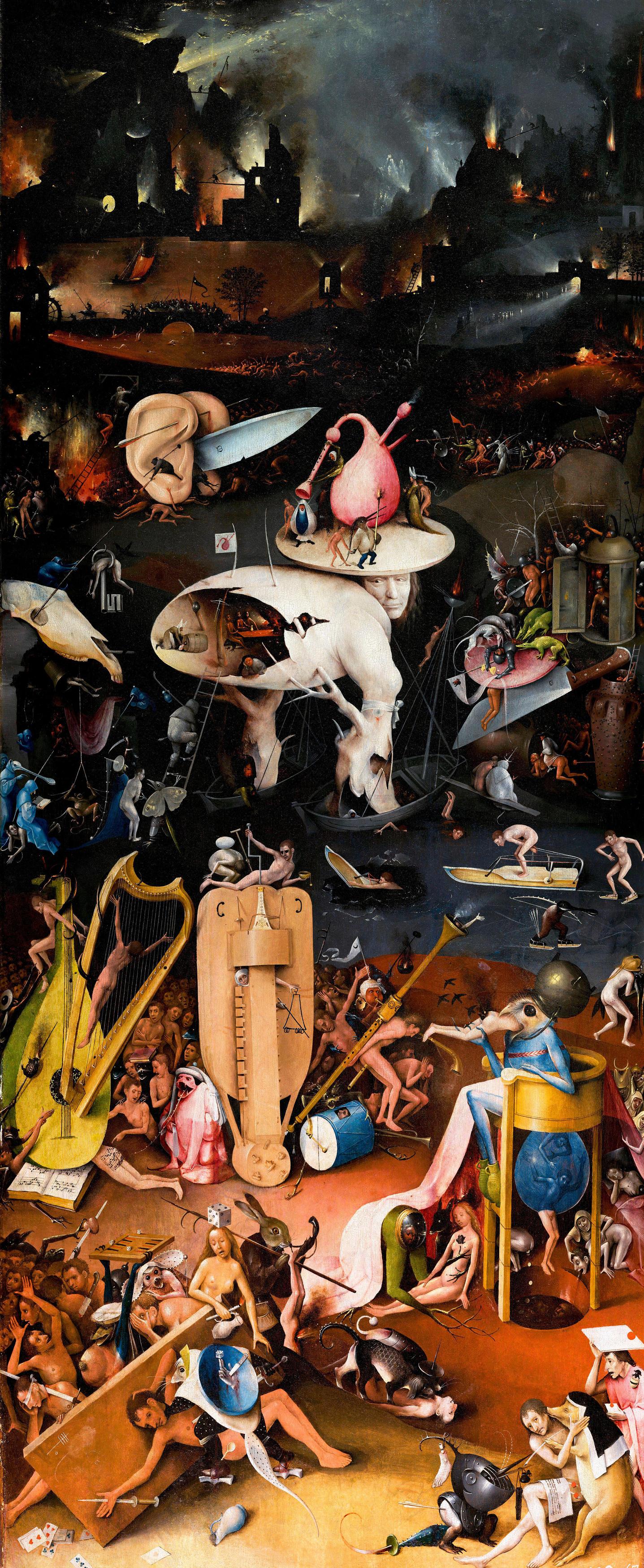
Garden of Earthly Delights right wing


 Ver más
Adquiera una imagen digital de alta resolución y optimizada, muy superior a la vista previa en línea.
Cada archivo es preparado meticulosamente por nuestros especialistas internos mediante el uso de herramientas avanzadas y un experto retoque manual. Nos aseguramos de que cada imagen posea una claridad excepcional, una precisión cromática impecable y un detalle minucioso.
El archivo final se entrega por correo electrónico en un plazo de 72 horas, optimizado para su uso inmediato en entornos profesionales, editoriales y de impresión. Esta es la misma calidad en la que confían los estudios de diseño, las editoriales y las galerías de primer nivel.
Imagen Digital
Descarga un archivo de alta resolución para exhibición personal, impresión y proyectos creativos. ( Comprar impresión Comprar pintura hecha a mano)
Incluido en cada pedido de imágenes digitales
Entrega digital experta, garantizada.
Al elegir ArtsDot.com, no solo está adquiriendo una imagen; está recibiendo una obra de arte digital mejorada profesionalmente, elaborada con precisión y respaldada por una garantía de satisfacción. Esto es todo lo que incluye su pedido, automáticamente:

Entrega rápida por email
Recibirá su archivo de imagen digital en alta resolución por correo electrónico en un plazo de 72 horas tras realizar su pedido, listo para su uso inmediato.

Archivo digital optimizado por IA
Su obra de arte se optimiza profesionalmente mediante herramientas avanzadas de IA y edición manual, garantizando el máximo detalle, claridad y precisión cromática.

Reenvío gratuito de por vida
¿Has borrado o perdido tu archivo por error? No te preocupes: te lo volveremos a enviar en cualquier momento, sin coste adicional.

Sin gastos de importación, siempre
Disfrute de su obra de arte al instante sin aduanas, aranceles ni gastos de envío; las descargas digitales siempre están libres de impuestos.

Garantía de fidelidad de color
Garantizamos que su imagen digital refleje los colores originales con la mayor fidelidad posible, mediante el uso de herramientas profesionales y gestión del color.

Garantía de satisfacción de 60 días
Si no está satisfecho con su imagen digital, la revisaremos o le reembolsaremos el 100% en un plazo de 60 días, sin preguntas.

100% Garantía de devolución de dinero
¿No está satisfecho? Obtenga un reembolso completo dentro de los 60 días posteriores a la recepción de su archivo digital, sin necesidad de explicaciones.

Descuentos por pedidos grandes
Compra 3 imágenes, ahorra 10% - Compra 5, ahorra 15% - Compra 10+, ahorra 20%. Ideal para proyectos creativos, galerías y agencias.
Descripción del coleccionable
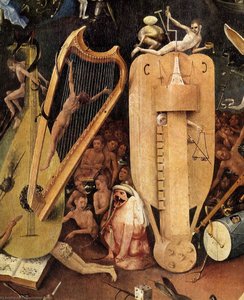
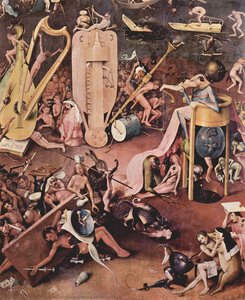
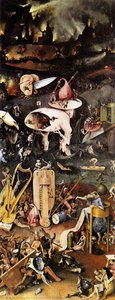
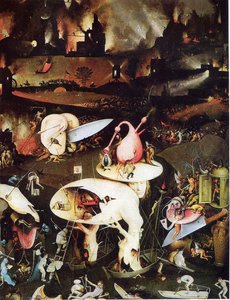
A Descent into Delight: Exploring Bosch's "Garden of Earthly Delights" (Right Wing)
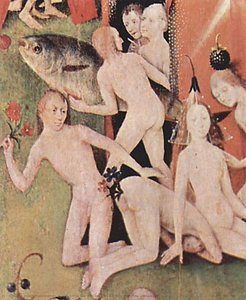
Hieronymus Bosch’s “Garden of Earthly Delights,” particularly its arresting right wing, remains one of the most profoundly unsettling and captivating works in the history of art. Painted between 1490 and 1510, this triptych offers a visual labyrinth of fantastical imagery, inviting viewers into a world simultaneously alluring and deeply disturbing. The right wing, in particular, plunges us headfirst into a scene of unrestrained hedonism, a stark contrast to the more overtly moralistic elements found elsewhere within the larger composition.
- Subject Matter: The central focus is a grotesque banquet – a chaotic gathering of nude figures indulging in bizarre and often violent activities. This isn’t simply a depiction of pleasure; it's an exploration of humanity’s potential for excess, corruption, and the dangers of unchecked desire.
- Style & Technique: Bosch’s meticulous attention to detail is immediately apparent. He employs a highly realistic style, rendering every scale on a fish, every ripple in water, and every expression on a face with astonishing precision. The painting's surface is built up through numerous layers of thin glazes – a technique known as *glazing* – which creates an incredible luminosity and depth of color.
- Color Palette: The palette is dominated by rich, earthy tones—ochres, browns, and reds— punctuated by vibrant blues and greens. These colors contribute to the painting’s unsettling atmosphere, enhancing the sense of both beauty and decay.
Symbolism – A Complex Tapestry of Meaning
Bosch's work is saturated with symbolism, drawing heavily from late medieval religious texts, folklore, and contemporary anxieties. The banquet itself represents a fallen paradise, a rejection of God’s intended order. Notice the numerous animals—birds, fish, reptiles—each carrying symbolic weight. The presence of monstrous creatures, like the winged lion and the grotesque figures consuming fruits, speaks to humanity's struggle against temptation and sin. The overflowing abundance – the mountains of food, the bizarre instruments of pleasure – is a visual representation of earthly greed and the futility of material pursuits. It’s crucial to remember that Bosch was writing during a time of immense social upheaval, marked by religious questioning and growing concerns about morality.
- The Fruit: The abundance of fruit symbolizes temptation and the consequences of succumbing to desire.
- The Animals: Each animal carries symbolic weight, representing various aspects of human nature – lust, greed, cruelty, and innocence.
- The Figures: The nude figures are not simply representations of beauty; they embody humanity’s vulnerability and susceptibility to sin.
Historical Context & Artistic Legacy
Bosch's work emerged during a period of profound religious and social change in the Netherlands. The rise of humanism, coupled with anxieties about heresy and corruption within the Catholic Church, fueled a climate of intense scrutiny and moral questioning. Bosch’s art reflects this atmosphere, offering a critical commentary on contemporary society while simultaneously engaging with established religious iconography. His unique style—characterized by its meticulous detail, fantastical imagery, and unsettling symbolism—quickly gained him a devoted following, though he remained largely unknown during his lifetime. His influence can be seen in later artists such as Pieter Bruegel the Elder, who similarly explored themes of morality and human folly.
- Late Medieval Religious Thought: Bosch’s work is deeply rooted in late medieval religious thought, particularly the writings of Augustine and Aquinas.
- Social Commentary: The painting serves as a powerful social commentary on the moral failings of society.
- Unique Artistic Vision: Bosch's distinctive style—characterized by its meticulous detail and fantastical imagery—established him as one of the most original and influential artists of the Northern Renaissance.
Capturing the Essence – A Hand-Painted Reproduction
A hand-painted reproduction of Hieronymus Bosch’s “Garden of Earthly Delights” (Right Wing) offers a remarkable opportunity to experience the full power of this iconic artwork. Each brushstroke, each meticulously rendered detail, is faithfully recreated by our skilled artisans, ensuring that you possess a piece of art history that will captivate and inspire for generations to come. This reproduction isn’t merely an image; it's a tangible connection to one of the most enigmatic and enduring visions in Western art.
Obras relacionadas

Biografía del artista
vida y carrera
Hieronymus Bosch, un pintor holandés/niederlandés destacado de Brabante, nació alrededor de 1450 en ‘s-Hertogenbosch, Países Bajos. Su vida permanece envuelta en misterio, con solo unos pocos registros de su existencia. A pesar de la falta de información biográfica, el arte de Bosch ha tenido un impacto profundo en el arte europeo del norte, particularmente en el siglo XVI.estilo artístico e influencias
El estilo único de Bosch, caracterizado por **representaciones surrealistas e imaginativas de temas religiosos**, ha sido ampliamente influyente. Sus pinturas al óleo sobre madera, a menudo que presentan **visiones inquietantes y de pesadilla del infierno**, han sido objeto de numerosas interpretaciones. El Triptico del Juicio Final (c. 1480-1490) y el Jardín de las Delicias (c. 1490-1510) son dos de sus obras más celebradas, que muestran su maestría en el medio.obras notables y colecciones
* Ascenso de los Benditos (renacimiento del norte, óleo sobre tabla): un ejemplo raro del trabajo de Bosch, que presenta una escena onírica y otrosa. * Epifanía (c. 1495, Museo Prado, Madrid): Un triptico que demuestra el uso innovador de óleo sobre madera por parte de Bosch. * Cabeza de un Halbedero (Museo Prado, Madrid): Un buen ejemplo de la pintura al óleo de retrato de Bosch, que muestra su atención al detalle.museos y colecciones que exhiben el trabajo de Bosch
* El Museo Prado, Madrid: Hogar de algunas de las obras más famosas de Bosch, incluyendo la Epifanía y el Triptico del Juicio Final. * El Museo de Arte de Filadelfia, Filadelfia: Presenta una versión de la Epifanía, ofreciendo una perspectiva única sobre el estilo artístico de Bosch.- Explore más obras de Hieronymus Bosch en https://ArtsDot.com/@/hieronymus-bosch
- Descubra el movimiento del arte flamenco temprano y sus figuras clave, incluyendo a Jan van Eyck y Pieter Bruegel el Viejo, en https://ArtsDot.com/@@/a@d3cpaf-the-erly-netherlandish-art-movement
- Aprenda más sobre la vida y obra de Pieter Bruegel el Viejo en https://en.wikipedia.org/wiki/pieter_bruegel_the_elder
legado
El estilo enigmático de Hieronymus Bosch ha cautivado a los entusiastas del arte durante siglos, y su influencia aún se puede ver en la obra de numerosos artistas. Su combinación única de **surrealismo e ideas profundas sobre la condición humana** ha solidificado su lugar como maestro de la pintura flamenco.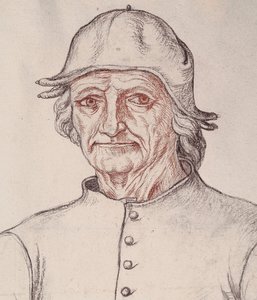
Jerónimo Bosch
1450 - 1516 , Países Bajos
Breves datos
- Artistas Influenciados: ['Pieter Bruegel el Viejo']
- Fecha De Muerte: 1516
- Fecha De Nacimiento: c. 1450
- Lugar De Nacimiento: 's-Hertogenbosch, Países Bajos
- Movimiento Artístico: Primitivos Flamencos
- Nacionalidad: Holandés
- Nombre Completo: Jerónimo Bosch
- Obras Notables:
- El Jardín de las Delicias
- Tríptico del Juicio Final
- Ascenso de los Benditos
- Epifanía

