

 Ver en contexto
 Enviar
 Compartir
 Detalles

 Descargar
 Similares
 Radiografía
 Presentación de diapositivas
Amelita Galli-Curci


 Ver más
Adquiera una imagen digital de alta resolución y optimizada, muy superior a la vista previa en línea.
Cada archivo es preparado meticulosamente por nuestros especialistas internos mediante el uso de herramientas avanzadas y un experto retoque manual. Nos aseguramos de que cada imagen posea una claridad excepcional, una precisión cromática impecable y un detalle minucioso.
El archivo final se entrega por correo electrónico en un plazo de 72 horas, optimizado para su uso inmediato en entornos profesionales, editoriales y de impresión. Esta es la misma calidad en la que confían los estudios de diseño, las editoriales y las galerías de primer nivel.
Imagen Digital
Descarga un archivo de alta resolución para exhibición personal, impresión y proyectos creativos. ( Comprar impresión Comprar pintura hecha a mano)
Incluido en cada pedido de imágenes digitales
Entrega digital experta, garantizada.
Al elegir ArtsDot.com, no solo está adquiriendo una imagen; está recibiendo una obra de arte digital mejorada profesionalmente, elaborada con precisión y respaldada por una garantía de satisfacción. Esto es todo lo que incluye su pedido, automáticamente:

Entrega rápida por email
Recibirá su archivo de imagen digital en alta resolución por correo electrónico en un plazo de 72 horas tras realizar su pedido, listo para su uso inmediato.

Archivo digital optimizado por IA
Su obra de arte se optimiza profesionalmente mediante herramientas avanzadas de IA y edición manual, garantizando el máximo detalle, claridad y precisión cromática.

Reenvío gratuito de por vida
¿Has borrado o perdido tu archivo por error? No te preocupes: te lo volveremos a enviar en cualquier momento, sin coste adicional.

Sin gastos de importación, siempre
Disfrute de su obra de arte al instante sin aduanas, aranceles ni gastos de envío; las descargas digitales siempre están libres de impuestos.

Garantía de fidelidad de color
Garantizamos que su imagen digital refleje los colores originales con la mayor fidelidad posible, mediante el uso de herramientas profesionales y gestión del color.

Garantía de satisfacción de 60 días
Si no está satisfecho con su imagen digital, la revisaremos o le reembolsaremos el 100% en un plazo de 60 días, sin preguntas.

100% Garantía de devolución de dinero
¿No está satisfecho? Obtenga un reembolso completo dentro de los 60 días posteriores a la recepción de su archivo digital, sin necesidad de explicaciones.

Descuentos por pedidos grandes
Compra 3 imágenes, ahorra 10% - Compra 5, ahorra 15% - Compra 10+, ahorra 20%. Ideal para proyectos creativos, galerías y agencias.
A Moment of Creation: Unveiling Hilla Rebay’s Sketch for Amelita Galli-Curci
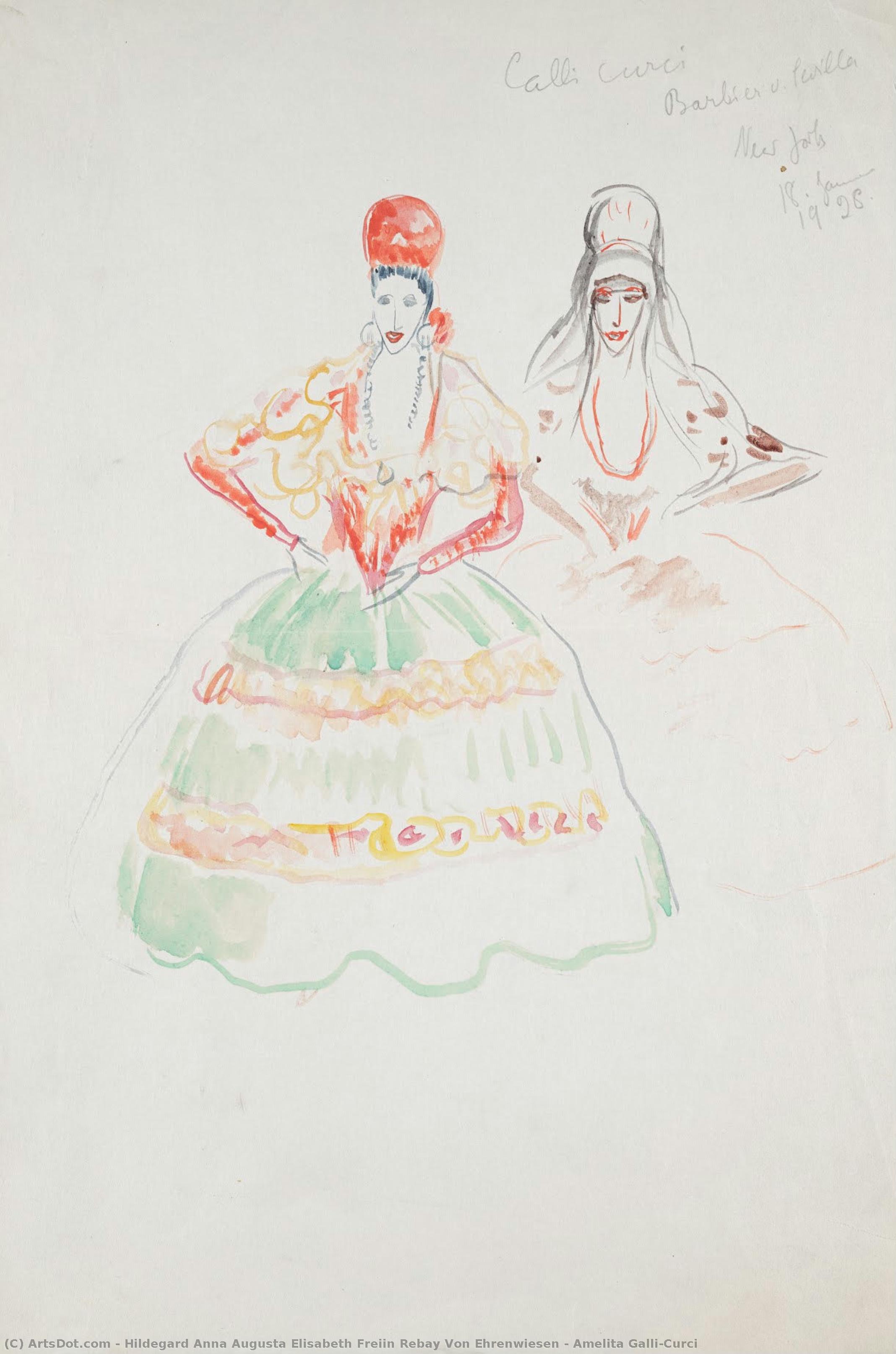
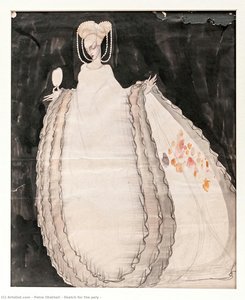
This captivating sketch, a preliminary study executed by Hildegard Anna Augusta Elisabeth Freiin Rebay von Ehrenwiesen in 1928, offers a rare glimpse into the creative process behind one of opera's most celebrated sopranos, Amelita Galli-Curci. More than just a portrait, it’s a distillation of movement, theatricality, and the very essence of vocal performance – a fleeting moment captured on paper before blossoming into a grand stage presence. Rebay, a pioneering figure in abstraction and a key advisor to Solomon R. Guggenheim, wasn't merely documenting a singer; she was translating the dynamism of Galli-Curci’s voice and stage persona into visual form.
The artwork immediately draws the eye with its loose, gestural quality. Visible pencil strokes mingle with delicate watercolor washes in shades of pink, green, red, and creamy beige – a palette that evokes both the opulence of opera costumes and the subtle nuances of vocal coloratura. The composition is deliberately asymmetrical, with the figures slightly offset, suggesting an immediacy and spontaneity characteristic of a preliminary design. There’s no striving for photographic realism; instead, Rebay prioritizes capturing the *feeling* of Galli-Curci – her poised elegance, her inherent grace, and the captivating energy she brought to every performance.
Technique and Materials: A Dance of Watercolor and Graphite
The artwork’s textured surface speaks volumes about Rebay's technique. The watercolor washes are applied with a remarkable fluidity, creating soft transitions and blended areas that suggest movement and breath. Scribbled pencil lines add layers of detail – outlining the flowing drapery of the gowns, indicating folds in fabric, and subtly defining the contours of the figures’ faces and hands. This layering of materials—watercolor and graphite—creates a rich visual tapestry, hinting at an iterative process; a sketch that evolved through multiple revisions.
The choice of paper is also significant. Its slightly rough texture adds to the artwork's tactile quality, grounding the ethereal watercolor in a tangible reality. The limited color palette, combined with the expressive use of line and wash, firmly establishes this piece as a preliminary study—a vital step in Rebay’s creative journey, offering insight into her artistic thinking before the final, polished product.
Symbolism and Emotional Resonance: Theatricality Captured
Beyond its technical merits, the sketch resonates with powerful symbolic meaning. It embodies the very spirit of opera – a world of heightened emotion, dramatic spectacle, and captivating vocal performance. The flowing lines of the costumes suggest movement and grace, mirroring the soaring melodies that defined Galli-Curci’s repertoire. The lack of precise anatomical detail reinforces this sense of theatricality; Rebay isn't concerned with rendering a perfect likeness but rather capturing the *impression* of the singer – her presence on stage.
Furthermore, the placement of handwritten text in the upper right corner hints at the creative process itself. It’s as if Rebay is documenting her thoughts and ideas as she works, inviting the viewer to witness a moment of artistic exploration. The sketch evokes a sense of anticipation—a glimpse into the creation of something beautiful and transformative.
Historical Context: A Pioneer's Vision
Hildegard Rebay’s work is deeply rooted in the early 20th-century avant-garde, particularly the rise of abstraction and non-objective art. Her collaboration with Solomon R. Guggenheim was instrumental in shaping the museum’s collection, championing artists like Kandinsky and Mondrian. This sketch provides a tangible link to that pivotal moment in art history, revealing Rebay's role as a visionary who helped redefine the boundaries of artistic expression. The study itself is a testament to her keen eye for capturing not just likeness but also the spirit and essence of her subject – Amelita Galli-Curci, a true icon of operatic artistry.
Obras relacionadas

Biografía del artista
A Pioneer of Abstraction: The Life and Legacy of Hilla Rebay
Born Hildegard Anna Augusta Elisabeth Freiin Rebay von Ehrenwiesen in 1890, the woman who would become known simply as Hilla Rebay emerged from a world steeped in German aristocracy. Her birthplace, Strasbourg – then part of the German Empire – provided an early backdrop to a life that would traverse national boundaries and artistic movements with remarkable fluidity. The daughter of Baron Franz Josef Rebay von Ehrenwiesen, an officer in the Prussian Army, she received an upbringing befitting her station, yet it was not societal expectations but an intrinsic creative drive that ultimately defined her path. From a young age, Rebay demonstrated a keen aptitude for art, setting the stage for a journey that would lead her to become a pivotal figure in the development of abstract expression and a champion of non-objective aesthetics. Her initial artistic training at the Cologne Kunstgewerbeschule and later at the Acadéemie Julian in Paris provided a solid foundation in traditional techniques – landscape, portraiture, genre painting, and history painting – skills she would skillfully employ before embarking on her radical departure into abstraction. These early years weren’t merely about mastering form; they were about absorbing the visual language of the past, which she would later deconstruct and reimagine.From Traditional Roots to Avant-Garde Visions
The seeds of Rebay’s artistic revolution were sown in Munich in 1910, where exposure to the work of German Jugendstil painter Fritz Erler opened her eyes to the burgeoning world of modern art. This encounter marked a turning point, propelling her towards experimentation and challenging conventional artistic norms. Her participation in exhibitions at the Cologne Kunstverein in 1912 and the Salon des Indépendants in Paris in 1913 brought her into contact with a constellation of avant-garde artists – Archipenko, Brâncuși, Chagall, Delaunay, Gleizes, Rivera, and van Rees among them. While exhilarating, this experience also prompted a period of intense self-assessment, leading Rebay to question the direction of her own work. A pivotal moment arrived with her meeting Hans (Jean) Arp in Zurich. Through Arp, she was introduced to the groundbreaking non-objective works of Kandinsky, Klee, Marc, Chagall, and Bauer – artists who dared to abandon representational form altogether. This exposure ignited a profound shift in Rebay’s artistic vision, inspiring her to explore the expressive potential of pure abstraction. In 1920, she solidified her commitment to avant-garde expression by co-founding “Der Krater” alongside Rudolf Bauer and Otto Nebel, a group dedicated to pushing the boundaries of artistic innovation. Her early abstract works were characterized by overlapping curved lines, planes, dots, and dense textures of asymmetrical shapes – a visual language that hinted at underlying energies and spiritual dimensions.Influences Shaping Artistic Expression
Rebay’s artistic trajectory was profoundly shaped by encounters with influential figures and movements within the European avant-garde landscape. Her formative years in Munich coincided with the rise of Jugendstil, whose decorative aesthetic instilled in her an appreciation for organic forms and harmonious compositions. However, it was her immersion into the Parisian art scene that truly catalyzed her intellectual and artistic transformation. The Impressionists, particularly Monet, served as a crucial point of reference, demonstrating the importance of capturing fleeting moments of light and color—a technique Rebay would adopt with considerable success in her own paintings. Yet, arguably more significant were her connections to artists who championed radical abstraction: Hans Arp, Kandinsky, Klee, Marc, Chagall, and Rudolf Bauer. These artists challenged traditional notions of beauty and representation, advocating for a visual language devoid of illusionistic detail—a stance that resonated deeply with Rebay’s own artistic sensibilities. The influence of Piet Mondrian, whose geometric abstraction sought to distill art down to its essential elements, further broadened Rebay’s conceptual horizons.A Collaborative Spirit: Der Krater and Artistic Dialogue
Rebay’s artistic pursuits weren’t undertaken in isolation but were nurtured within a vibrant community of fellow innovators—the group “Der Krater.” Founded alongside Rudolf Bauer and Otto Nebel, Der Krater represented a concerted effort to forge new paths in art history. The members of the collective shared a conviction that abstraction could serve as a vehicle for exploring profound spiritual truths—a belief rooted in their engagement with Eastern mysticism and phenomenology. Rebay’s participation in Der Krater fostered an environment of intellectual exchange and collaborative experimentation, propelling her artistic endeavors forward. Her commitment to fostering dialogue around abstract art extended beyond the confines of the group; she actively championed artists whose work challenged conventional aesthetic standards.The Guggenheim Legacy: Patronage and Artistic Vision
Her life took a decisive turn in 1927 when Rebay immigrated to New York City, where she encountered Solomon R. Guggenheim—a man who would become her lifelong collaborator and transform the course of American art history. Recognizing Guggenheim’s unwavering dedication to non-objective aesthetics, Rebay swiftly became his confidante and trusted advisor, guiding his collecting endeavors with astute insight. She tirelessly advocated for artists whose work embodied the spirit of abstraction—particularly Rudolf Bauer and Kandinsky—persuading Guggenheim to acquire their paintings and establishing a cornerstone of what would become one of the world’s most celebrated collections. Rebay’s influence extended beyond mere acquisition; she championed a broader vision of artistic expression, fostering appreciation for non-objective art among American audiences. Her unwavering belief in the transformative power of abstraction fueled her determination to create an institution devoted to its dissemination—the Museum of Non-Objective Painting/Solomon R. Guggenheim Museum. Established in 1939, this museum stands as a testament to Rebay’s visionary leadership and her enduring legacy as a champion of modern art. ## Major Achievements- Co-founder of Der Krater: Pioneering artist group advocating avant-garde expression
- Advisor to Solomon R. Guggenheim: Instrumental in shaping his collection of non-objective art
- Founder and First Director of the Museum of Non-Objective Painting (now the Guggenheim): Established a leading institution for modern art
- Commissioned Frank Lloyd Wright to design the Guggenheim Museum: Resulting in an iconic architectural landmark
- Champion of Abstract Art: Organized exhibitions and fostered dialogue around non-objective aesthetics
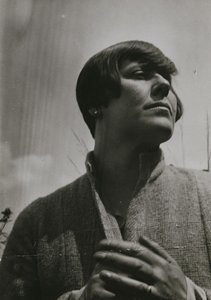
hildegard anna augusta elisabeth freiin rebay von ehrenwiesen
1890 - 1967 , Alemania
Breves datos
- Artistic Movement Or Style: Arte abstracto no objetivo
- Artists Or Movements Influenced By This Artist: ['Solomon Guggenheim']
- Artists Who Influenced This Artist:
- Hans Arp
- Kandinsky
- Rudolf Bauer
- Date Of Birth: May 31, 1890
- Date Of Death: September 27, 1967
- Full Name: Hildegard Anna Augusta Elisabeth Freiin Rebay von Ehrenwiesen
- Nationality: Alemana
- Notable Artworks:
- Dibujo de dos figuras al piano
- Amelita Galli-Curci
- Escultura
- Place Of Birth: Strasbourg, Germany

