

 Enviar
 Compartir
 Detalles

 Descargar
 Similares
 Presentación de diapositivas
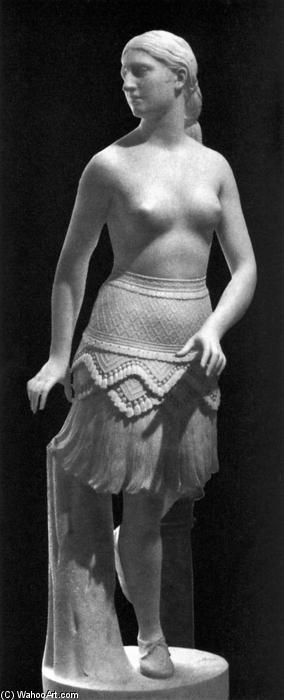
Last of the Tribe


 Ver más
Giclée / Impresión de arte
Impresiones giclée o en lienzo de calidad de museo con producción rápida y opciones de acabado flexibles. ( Comprar pintura hecha a mano Comprar imagen)




































Elija entre nuestros tamaños predefinidos que respetan las proporciones originales de la obra.

Puede introducir sus propias dimensiones para adaptarse a un marco o espacio específico. Si el tamaño seleccionado no coincide con las proporciones de la imagen original, recortaremos la obra de arte o extenderemos la imagen con un borde con efecto espejo o de color sólido. Se enviará una maqueta digital para su aprobación antes de que comience la producción.
Tenga en cuenta que la vista previa en pantalla no refleja el recorte o la extensión real. Solo la maqueta mostrará con precisión la composición final.
Aunque existen tamaños personalizados, recomendamos seleccionar una dimensión de la lista predefinida para preservar las proporciones originales.
Envío a todo el mundo () en 2 semanas en lugar de las 4/5 semanas estándar. (23 agosto)

Envío exprés gratuito a todo el mundo

Lienzo de lino de alta calidad

Seguro de envío total

Garantía de reembolso de impuestos aduaneros

Garantía de fidelidad cromática exacta

Política de devolución de 60 días (solo por defectos)

Garantía de devolución del 100% del dinero

Descuento por cantidad
 La opción de vidrio solo está disponible en tamaños inferiores a 110 cm.

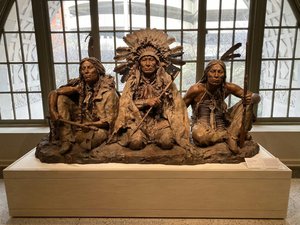
Last of the Tribe
Giclée / Impresión de arte
Dimensiones de la reproducción
-


Precio total final
$ 62
Descripción de la pieza
A Silent Sentinel: Hiram Powers’ “Last of the Tribe”
Hiram Powers' "Last of the Tribe," sculpted in marble between 1867 and 1877, isn’t merely a representation of an Indigenous woman; it’s a poignant embodiment of a nation grappling with its identity and legacy. This powerful work transcends simple portraiture, offering a complex meditation on displacement, loss, and the enduring spirit of a vanishing culture within the context of America's westward expansion. Powers, one of the first American sculptors to achieve international acclaim, masterfully blended classical ideals with a distinctly American subject matter, creating an artwork that continues to resonate deeply today.
The sculpture depicts a young Native American woman, her posture conveying both vulnerability and resolute strength. She stands poised on a slight incline, gazing backward over her shoulder as if contemplating a lost homeland. Her clothing—a meticulously detailed skirt adorned with diamond patterns and tassels—is an intriguing blend of realism and artistic license; while undoubtedly inspired by the garments of certain tribes, it’s clear that Powers imbued it with a romanticized aesthetic, reflecting the prevailing, often problematic, narratives surrounding Indigenous peoples at the time. The sculpture's placement within the broader context of 19th-century America—a period marked by rapid industrialization, westward expansion, and increasing tensions between settlers and Native American tribes—is crucial to understanding its emotional weight.
The Classical Foundation & Innovative Technique
Powers’ artistic journey began in Woodstock, Vermont, where he honed his skills under the tutelage of Frederick Eckstein, a Cincinnati clockmaker and sculptor. This early training instilled within him a deep appreciation for craftsmanship and observation—qualities that would become hallmarks of his work. He later moved to Florence, Italy, immersing himself in the traditions of classical sculpture while simultaneously developing his own distinctive style. “Last of the Tribe” exemplifies this synthesis; it’s rooted in the principles of Neoclassicism – a movement emphasizing idealized form, anatomical accuracy, and a return to the artistic values of ancient Greece and Rome – yet imbued with a distinctly American sensibility.
The sculpture's creation involved a sophisticated combination of techniques. Powers utilized a “pointing machine,” a revolutionary device developed by French sculptor Jean-Baptiste Carpeaux, which allowed him to accurately transfer sketches onto the marble block. This mechanized process ensured precision and facilitated the creation of intricate details, particularly in the figure’s flowing drapery and expressive face. Furthermore, Powers' mastery of carving techniques is evident in the subtle gradations of tone and texture that bring the sculpture to life—the smooth polish of the torso contrasts with the rougher surface of the skirt, creating a dynamic interplay of visual elements.
Symbolism & Historical Context
The title itself, “Last of the Tribe,” carries immense symbolic weight. It speaks directly to the devastating consequences of westward expansion and the systematic displacement of Native American populations. Powers’ statement—“the time is not distant when the last Indian will pass away”—reveals a profound awareness of the impending tragedy. The sculpture can be interpreted as both a lament for lost cultures and a critique of the policies that led to their demise. It's important to acknowledge that this interpretation must be considered within the context of 1867-1877, when Powers created the work; prevailing attitudes toward Native Americans were often shaped by romanticized notions of savagery and a belief in their inevitable extinction.
Interestingly, Powers drew inspiration from James Fenimore Cooper’s *Last of the Mohicans*, a popular novel that perpetuated similar narratives. By aligning his sculpture with this literary work, Powers tapped into a widespread cultural fascination with Indigenous peoples—a fascination often intertwined with both admiration and exploitation. The woman's gaze backward is particularly evocative, suggesting a longing for a past that can never be reclaimed and a poignant awareness of the irreversible changes sweeping across her land.
A Timeless Masterpiece & Reproduction Possibilities
"Last of the Tribe" remains a powerful and enduring work of art. Its combination of classical form, emotional depth, and historical significance ensures its continued relevance in contemporary discourse. The sculpture’s themes—loss, displacement, cultural identity—are as pertinent today as they were over a century ago. For those seeking to incorporate this artwork into their homes or collections, high-quality reproductions offer an accessible way to experience the beauty and emotional resonance of Powers' masterpiece. These reproductions faithfully capture the sculpture’s intricate details and evocative atmosphere, allowing viewers to connect with its profound message.
Obras relacionadas
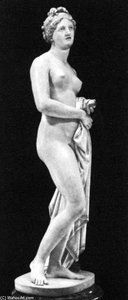
Biografía del artista
Hiram Powers: The Sculptor Who Brought Greece to America
Hiram Powers (1805 – 1873) stands as a pivotal figure in the history of American art, marking one of the earliest instances of an artist achieving international acclaim based on sculptural prowess. Born in Woodstock, Vermont, his journey from humble beginnings to celebrated sculptor embodies the spirit of self-reliance and artistic ambition that characterized the burgeoning nation. His legacy resides not merely in individual masterpieces but also in establishing a precedent for American artists to pursue excellence beyond domestic borders. Powers’ formative years instilled within him a profound appreciation for craftsmanship and observation—skills honed during his brief stint as a clerk in Cincinnati's general store. However, it was his encounter with Frederick Eckstein, Cincinnati’s pioneering clockmaker and sculptor, that truly ignited his artistic passion. Eckstein recognized Powers’ talent and encouraged him to immerse himself in the study of modeling and casting techniques, propelling him toward mastery of stone carving and bronze fabrication. This dedication would prove instrumental in shaping his distinctive style—characterized by idealized figures imbued with classical elegance and informed by Roman sculptural traditions. A significant turning point arrived when Powers secured a position as general assistant and artist at Joseph Dorfeuille’s Western Museum, fostering connections with influential naturalist Louis Agassiz. Here, he undertook ambitious projects inspired by Dante's Inferno, producing stunning marble representations of scenes from the epic poem that captivated audiences and cemented his reputation as a visionary sculptor. Notably, Fanny Trollope championed Powers’ career by commissioning him to sculpt Dante’s “Commedia,” securing him considerable recognition within literary circles. By 1834, Powers relocated to Washington, D.C., where he quickly gained prominence through portraits of Andrew Jackson—demonstrating his ability to capture the essence of character and conveying emotion with remarkable sensitivity. His subsequent journey to Italy in 1837 proved transformative, establishing him on the Via Fornace in Florence – a location that afforded access to superior marble quarries and nurtured the traditions of Florentine stone carving. He remained there until his death in 1873, continuing to refine his craft and fostering collaborations with fellow artist Horatio Greenough. Powers’ most enduring achievement remains undoubtedly “The Greek Slave,” a monumental marble sculpture depicting Spartacus—a symbol of resistance against oppression—that captivated the public imagination upon its unveiling in London in 1856. The statue's dramatic pose, conveying both strength and vulnerability, captured the spirit of Romantic idealism and cemented Powers’ place as a champion of classical ideals within American art. Beyond “The Greek Slave,” Powers produced numerous other notable sculptures, including “Fisher Boy,” “Proserpine,” and “Eve Disconsolate,” each reflecting his unwavering commitment to capturing beauty and conveying profound emotion through meticulously crafted stone forms. His work continues to inspire admiration for its elegance, technical virtuosity, and enduring relevance as a testament to the transformative power of artistic vision.- Early Life and Studies:
- Frederick Eckstein’s Influence:
- The Western Museum and Dante’s Inferno:
- Recognition from Fanny Trollope:
- Move to Washington D.C.:
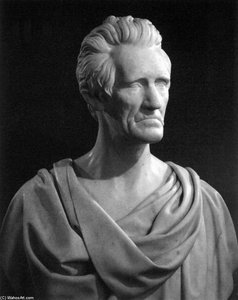
Hiram Powers
1805 - 1873 , Vermont
Datos clave
- Artistic Movement Or Style: Neoclassical Sculpture
- Artists Who Influenced This Artist: ['Frederick Eckstein']
- Date Of Birth: 1805
- Date Of Death: 1873
- Full Name: Hiram Powers
- Nationality: American
- Notable Artworks:
- The Greek Slave
- Fisher Boy
- Proserpine
- Place Of Birth: Woodstock, Vermont
Artículos relacionados
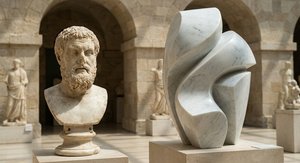
The Enduring Allure of Marble in Art History: From Classical Sculpture to Modern Abstraction
Explore the captivating history of marble sculpture from ancient Greece to modern art. Discover renowned artists like Canova & Michelangelo, carving techniques, and investment insights at ArtsDot.

Esculturas de Bronce Legendarias: 10 Obras Maestras que Transformaron el Arte | ArtsDot
Descubre las 10 esculturas de bronce más legendarias que revolucionaron el arte. Explora la historia de Rodin, Degas y otros maestros del bronce. Encuentra reproducciones de alta calidad e inspiración para tu hogar en ArtsDot.com.

The Enduring Form: Exploring Themes & Techniques in Sculpture Across Historical Periods
Explore the rich history of sculpture from ancient masterpieces to contemporary innovations. Discover key techniques, influential artists & investment potential for discerning art collectors.
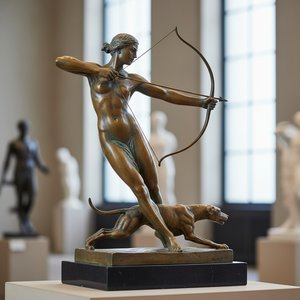
Paul Manship: Reassessing the Master of American Art Deco Sculpture
Explore the captivating world of Paul Manship, a leading figure in American Art Deco sculpture. Discover his iconic works like Prometheus, influence on modernism, and investment potential. Expert insights for collectors.
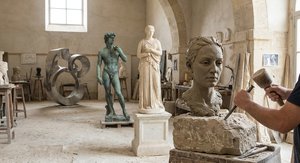
The Enduring Form: Sculpture Across History, Technique & Emotional Resonance
Explore the rich history of sculpture with ArtsDot. Discover key techniques, influential artists & investment potential for discerning collectors. Expert insights into valuing and collecting timeless masterpieces.

