

 Ver en contexto
 Enviar
 Compartir
 Detalles

 Descargar
 Similares
 Radiografía
 Presentación de diapositivas
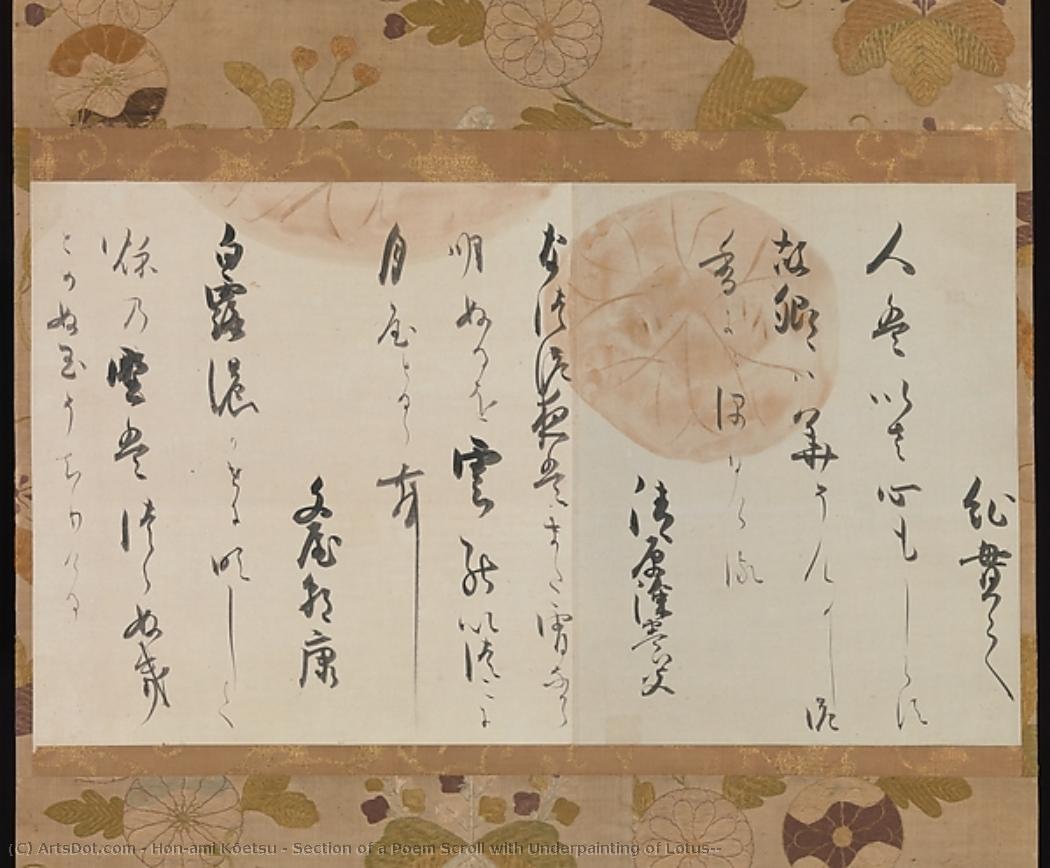
Section of a Poem Scroll with Underpainting of Lotus
 1615
1615 33.0 x 58.0 cm
 Ver más
Giclée / Impresión de arte
Impresiones giclée o en lienzo de calidad de museo con producción rápida y opciones de acabado flexibles. ( Comprar pintura hecha a mano Comprar imagen)




































Elija entre nuestros tamaños predefinidos que respetan las proporciones originales de la obra.

Puede introducir sus propias dimensiones para adaptarse a un marco o espacio específico. Si el tamaño seleccionado no coincide con las proporciones de la imagen original, recortaremos la obra de arte o extenderemos la imagen con un borde con efecto espejo o de color sólido. Se enviará una maqueta digital para su aprobación antes de que comience la producción.
Tenga en cuenta que la vista previa en pantalla no refleja el recorte o la extensión real. Solo la maqueta mostrará con precisión la composición final.
Aunque existen tamaños personalizados, recomendamos seleccionar una dimensión de la lista predefinida para preservar las proporciones originales.
Envío a todo el mundo () en 2 semanas en lugar de las 4/5 semanas estándar. (29 agosto)

Envío exprés gratuito a todo el mundo

Lienzo de lino de alta calidad

Seguro de envío total

Garantía de reembolso de impuestos aduaneros

Garantía de fidelidad cromática exacta

Política de devolución de 60 días (solo por defectos)

Garantía de devolución del 100% del dinero

Descuento por cantidad
 La opción de vidrio solo está disponible en tamaños inferiores a 110 cm.

Section of a Poem Scroll with Underpainting of Lotus
Giclée / Impresión de arte
Dimensiones de la reproducción
-


Precio total final
$ 62
Obras relacionadas









Biografía del artista
Hon'ami Kōetsu (1558 - 1637)
Hon'ami Kōetsu 本阿弥 光悦 was a pivotal Japanese artist of the Rinpa school, renowned for calligraphy, lacquerware, pottery & painting. Inspired by Heian aesthetics, his work profoundly influenced generations of artists and embodies the spirit of elegance and refinement—a hallmark of Japan’s artistic heritage. Despite being largely unknown in Western art circles, Kōetsu holds a revered position within Japanese culture as one of its most influential figures.Early Life and Influences
Hon'ami Kōetsu was born in Kyoto, Japan, in 1558, into a family deeply rooted in the traditions of sword polishing and connoisseurship. His lineage traced back to Hon’ami Honkō (Kiyonobu), who had served the imperial court and prominent warlords during the tumultuous Sengoku period (1467–1603), including Oda Nobunaga and Toyotomi Hideyoshi. This upbringing instilled in him a profound appreciation for craftsmanship, scholarship, and artistic patronage—values that would shape his entire life’s work. Crucially, Kōetsu's family adhered to the Nichiren sect of Buddhism, with his great-grandfather being counted as one of the “companions and advisors” (同朋衆, *dōbōshū*) of Ashikaga Yoshimasa—a connection that would provide him with access to influential artistic circles. His father, Hon'ami Kōji, received a stipend from the Maeda family for his expertise in sword appraisal, fostering connections within Japan’s aristocratic elite. He studied calligraphy under Prince Sonchō (1552–1597), absorbing the stylistic principles of the courtly tradition—a tradition that emphasized balance, harmony, and meticulous detail. Kōetsu's artistic journey began with his engagement in the Rinpa school, which he championed and elevated to new heights, profoundly impacting subsequent generations of artists.Artistic Contributions: Style and Technique
Kōetsu’s artistic contributions extended far beyond mere painting; he mastered lacquerware craftsmanship, pottery production, and calligraphy—each demonstrating an unparalleled command of technique and aesthetic sensibility. He is particularly celebrated for his innovative approach to Raku ware, a distinctive ceramic style characterized by its porous glaze and subtle coloration achieved through reduction firing—a method that demanded considerable skill and experimentation. His collaboration with Tawaraya Sōtatsu resulted in numerous decorative pieces that exemplify the Rinpa school’s aesthetic ideals: bold designs juxtaposed against restrained backgrounds, utilizing mineral pigments and organic materials to create luminous surfaces. Kōetsu's influence is palpable in the works of Ogata Kōrin, considered his most gifted protégé—a testament to Kōetsu’s ability to nurture talent and transmit artistic vision. The Rinpa school’s distinctive style—characterized by its vibrant colors and meticulous attention to detail—continues to inspire artists today.Notable Works and Legacy
Among Kōetsu's enduring achievements are: *White Raku*, a masterful example of his ceramic artistry; *Writing Box with Pontoon Bridge*, showcasing his exceptional calligraphy skills and demonstrating the harmonious blend of form and content that defined his oeuvre. His establishment of an artist community in Takamine, granted by Tokugawa Ieyasu in 1615, marked a pivotal moment in Japanese art history—a period of renewed artistic fervor following decades of warfare. This patronage enabled him to foster creativity and innovation within Kyoto’s artistic landscape. Kōetsu's legacy extends beyond his individual artworks; he fundamentally reshaped the aesthetic standards of his time and established a school that would endure for centuries, securing his place as one of Japan’s most revered artists—a figure whose influence continues to resonate throughout Japanese art history.Museum Collections
Hon'ami Kōetsu’s works can be admired in prominent museums worldwide: National Museums Liverpool (Liverpool, United Kingdom), featuring pieces like *Design for a Fan* by taki katei; and The Menard Art Museum in Japan, housing an extensive collection of Western art alongside Japanese masterpieces. His contribution to the artistic canon is recognized globally as a cornerstone of Japanese cultural heritage.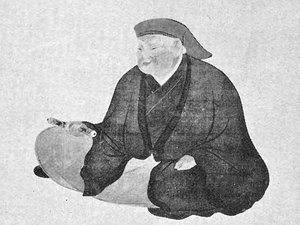
Hon'ami Kōetsu
1558 - 1637 , Japón
Datos clave
- Artistic Movement Or Style: Rinpa escuela
- Artists Or Movements Influenced By This Artist: ['Ogata Kōrin']
- Artists Who Influenced This Artist:
- Kobori Enshū
- Tawaraya Sōtatsu
- Date Of Birth: 1558
- Full Name: Hon'ami Kōetsu 本阿弥 光悦
- Nationality: Japonés
- Notable Artworks:
- White Raku
- Writing Box with Pontoon Bridge
- Place Of Birth: Kyoto Japón

