

 Ver en contexto
 Enviar
 Compartir
 Detalles

 Descargar
 Similares
 Radiografía
 Presentación de diapositivas
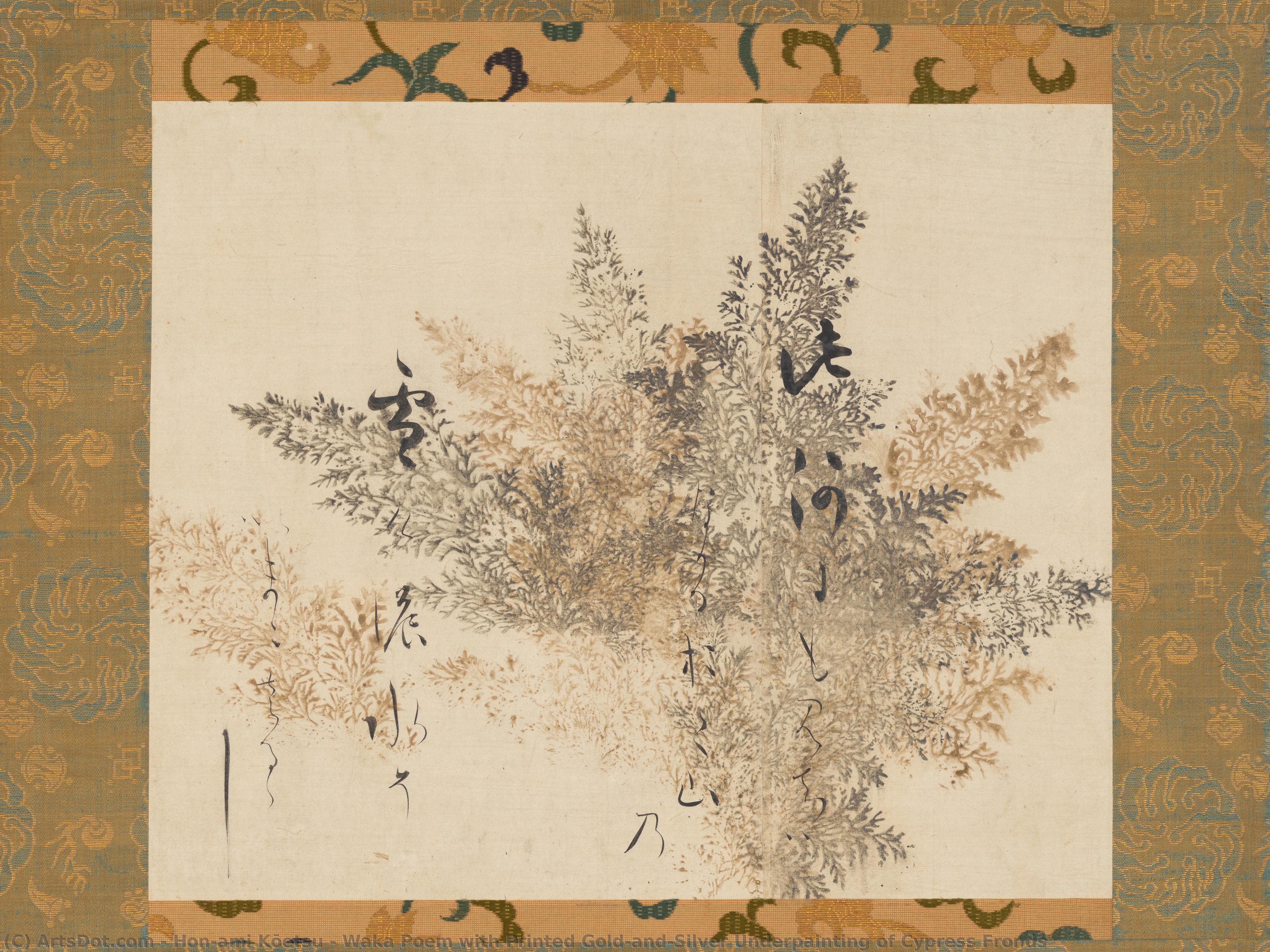
Waka Poem with Printed Gold-and-Silver Underpainting of Cypress Fronds
 Ink
Ink- Japanese Traditional
 601
601- Early Modern
 32.0cm x 38.0cm
 Ver más
Adquiera una imagen digital de alta resolución y optimizada, muy superior a la vista previa en línea.
Cada archivo es preparado meticulosamente por nuestros especialistas internos mediante el uso de herramientas avanzadas y un experto retoque manual. Nos aseguramos de que cada imagen posea una claridad excepcional, una precisión cromática impecable y un detalle minucioso.
El archivo final se entrega por correo electrónico en un plazo de 72 horas, optimizado para su uso inmediato en entornos profesionales, editoriales y de impresión. Esta es la misma calidad en la que confían los estudios de diseño, las editoriales y las galerías de primer nivel.
Imagen Digital
Descarga un archivo de alta resolución para exhibición personal, impresión y proyectos creativos. ( Comprar impresión Comprar pintura hecha a mano)
Incluido en cada pedido de imágenes digitales
Entrega digital experta, garantizada.
Al elegir ArtsDot.com, no solo está adquiriendo una imagen; está recibiendo una obra de arte digital mejorada profesionalmente, elaborada con precisión y respaldada por una garantía de satisfacción. Esto es todo lo que incluye su pedido, automáticamente:

Entrega rápida por email
Recibirá su archivo de imagen digital en alta resolución por correo electrónico en un plazo de 72 horas tras realizar su pedido, listo para su uso inmediato.

Archivo digital optimizado por IA
Su obra de arte se optimiza profesionalmente mediante herramientas avanzadas de IA y edición manual, garantizando el máximo detalle, claridad y precisión cromática.

Reenvío gratuito de por vida
¿Has borrado o perdido tu archivo por error? No te preocupes: te lo volveremos a enviar en cualquier momento, sin coste adicional.

Sin gastos de importación, siempre
Disfrute de su obra de arte al instante sin aduanas, aranceles ni gastos de envío; las descargas digitales siempre están libres de impuestos.

Garantía de fidelidad de color
Garantizamos que su imagen digital refleje los colores originales con la mayor fidelidad posible, mediante el uso de herramientas profesionales y gestión del color.

Garantía de satisfacción de 60 días
Si no está satisfecho con su imagen digital, la revisaremos o le reembolsaremos el 100% en un plazo de 60 días, sin preguntas.

100% Garantía de devolución de dinero
¿No está satisfecho? Obtenga un reembolso completo dentro de los 60 días posteriores a la recepción de su archivo digital, sin necesidad de explicaciones.

Descuentos por pedidos grandes
Compra 3 imágenes, ahorra 10% - Compra 5, ahorra 15% - Compra 10+, ahorra 20%. Ideal para proyectos creativos, galerías y agencias.
A Symphony of Gold and Ink: The Poetic Vision of Hon’ami Kōetsu
In the delicate dance between calligraphy and nature, few works capture the ephemeral beauty of the Japanese spirit as profoundly as Waka Poem with Printed Gold-and-Silver Underpainting of Cypress Fronds. Created by the legendary master Hon’ami Kōetsu, this masterpiece is not merely a piece of writing, but a visual landscape where text and texture merge into a single, breathing entity. The artwork presents a shimmering, atmospheric backdrop of overlapping cypress fronds, rendered in a luxurious interplay of gold and silver. Whether these botanical patterns were achieved through meticulous woodblock printing or the direct application of organic leaves, they create a luminous, multidimensional stage for the poem that unfolds across the surface.
The composition utilizes the sophisticated technique of chirashigaki, or "scattered writing," a hallmark of Kōetsu’s revolutionary style. Rather than following rigid, uniform lines, the columns of the waka poem vary in length and placement, guiding the viewer's eye through a rhythmic, musical progression. This intentional use of negative space creates a visual caesura—a poetic pause—that separates the imagery of the nearby stream from the distant, snow-capped mountains described in the verse. As one reads, the characters seem to float amidst the metallic foliage, mirroring the way autumn leaves drift upon a moving current.
Symbolism and the Elegance of the Rinpa Spirit
At its heart, this work is an exploration of seasonal transition and the profound connection between human emotion and the natural world. The poem itself, drawn from the classical Kokin wakashu, speaks of a stream where autumn leaves drift, signaling the inevitable approach of winter and the melting snow in the high mountains. Kōetzu masterfully uses his brush to translate these linguistic metaphors into physical form; for instance, the character for "snow" (雪) is positioned to appear as if it is drifting atop the composition, while a single, bold vertical stroke at the edge of the poem acts as an abstract anchor, grounding the ethereal script.
For the discerning collector or interior designer, this piece offers more than just historical significance; it provides a focal point of unparalleled sophistication. The warm, muted palette of gold, beige, and deep ink tones allows the artwork to integrate seamlessly into both classical and contemporary settings. It evokes a sense of tranquility and contemplative depth, making it an ideal centerpiece for spaces dedicated to reflection, such as a library, a quiet study, or a refined gallery salon. To possess a reproduction of this work is to invite the timeless elegance of the Rinpa school into one's environment, celebrating a legacy where art, literature, and nature are eternally entwined.
Obras relacionadas
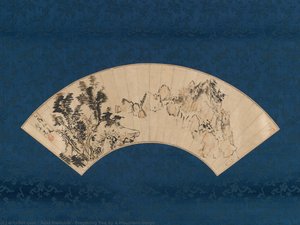
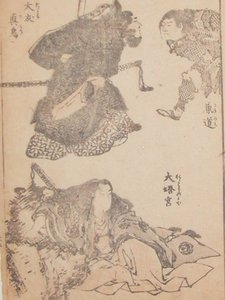
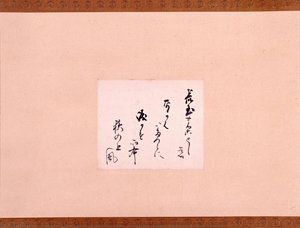
Biografía del artista
Hon'ami Kōetsu (1558 - 1637)
Hon'ami Kōetsu 本阿弥 光悦 was a pivotal Japanese artist of the Rinpa school, renowned for calligraphy, lacquerware, pottery & painting. Inspired by Heian aesthetics, his work profoundly influenced generations of artists and embodies the spirit of elegance and refinement—a hallmark of Japan’s artistic heritage. Despite being largely unknown in Western art circles, Kōetsu holds a revered position within Japanese culture as one of its most influential figures.Early Life and Influences
Hon'ami Kōetsu was born in Kyoto, Japan, in 1558, into a family deeply rooted in the traditions of sword polishing and connoisseurship. His lineage traced back to Hon’ami Honkō (Kiyonobu), who had served the imperial court and prominent warlords during the tumultuous Sengoku period (1467–1603), including Oda Nobunaga and Toyotomi Hideyoshi. This upbringing instilled in him a profound appreciation for craftsmanship, scholarship, and artistic patronage—values that would shape his entire life’s work. Crucially, Kōetsu's family adhered to the Nichiren sect of Buddhism, with his great-grandfather being counted as one of the “companions and advisors” (同朋衆, *dōbōshū*) of Ashikaga Yoshimasa—a connection that would provide him with access to influential artistic circles. His father, Hon'ami Kōji, received a stipend from the Maeda family for his expertise in sword appraisal, fostering connections within Japan’s aristocratic elite. He studied calligraphy under Prince Sonchō (1552–1597), absorbing the stylistic principles of the courtly tradition—a tradition that emphasized balance, harmony, and meticulous detail. Kōetsu's artistic journey began with his engagement in the Rinpa school, which he championed and elevated to new heights, profoundly impacting subsequent generations of artists.Artistic Contributions: Style and Technique
Kōetsu’s artistic contributions extended far beyond mere painting; he mastered lacquerware craftsmanship, pottery production, and calligraphy—each demonstrating an unparalleled command of technique and aesthetic sensibility. He is particularly celebrated for his innovative approach to Raku ware, a distinctive ceramic style characterized by its porous glaze and subtle coloration achieved through reduction firing—a method that demanded considerable skill and experimentation. His collaboration with Tawaraya Sōtatsu resulted in numerous decorative pieces that exemplify the Rinpa school’s aesthetic ideals: bold designs juxtaposed against restrained backgrounds, utilizing mineral pigments and organic materials to create luminous surfaces. Kōetsu's influence is palpable in the works of Ogata Kōrin, considered his most gifted protégé—a testament to Kōetsu’s ability to nurture talent and transmit artistic vision. The Rinpa school’s distinctive style—characterized by its vibrant colors and meticulous attention to detail—continues to inspire artists today.Notable Works and Legacy
Among Kōetsu's enduring achievements are: *White Raku*, a masterful example of his ceramic artistry; *Writing Box with Pontoon Bridge*, showcasing his exceptional calligraphy skills and demonstrating the harmonious blend of form and content that defined his oeuvre. His establishment of an artist community in Takamine, granted by Tokugawa Ieyasu in 1615, marked a pivotal moment in Japanese art history—a period of renewed artistic fervor following decades of warfare. This patronage enabled him to foster creativity and innovation within Kyoto’s artistic landscape. Kōetsu's legacy extends beyond his individual artworks; he fundamentally reshaped the aesthetic standards of his time and established a school that would endure for centuries, securing his place as one of Japan’s most revered artists—a figure whose influence continues to resonate throughout Japanese art history.Museum Collections
Hon'ami Kōetsu’s works can be admired in prominent museums worldwide: National Museums Liverpool (Liverpool, United Kingdom), featuring pieces like *Design for a Fan* by taki katei; and The Menard Art Museum in Japan, housing an extensive collection of Western art alongside Japanese masterpieces. His contribution to the artistic canon is recognized globally as a cornerstone of Japanese cultural heritage.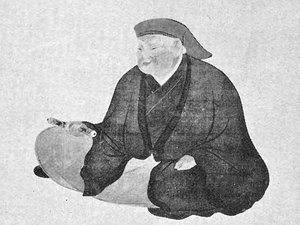
Hon'ami Kōetsu
1558 - 1637 , Japón
Breves datos
- Artistic Movement Or Style: Rinpa escuela
- Artists Or Movements Influenced By This Artist: ['Ogata Kōrin']
- Artists Who Influenced This Artist:
- Kobori Enshū
- Tawaraya Sōtatsu
- Date Of Birth: 1558
- Full Name: Hon'ami Kōetsu 本阿弥 光悦
- Nationality: Japonés
- Notable Artworks:
- White Raku
- Writing Box with Pontoon Bridge
- Place Of Birth: Kyoto Japón

