

 Ver en contexto
 Enviar
 Compartir
 Detalles

 Descargar
 Similares
 Radiografía
 Presentación de diapositivas
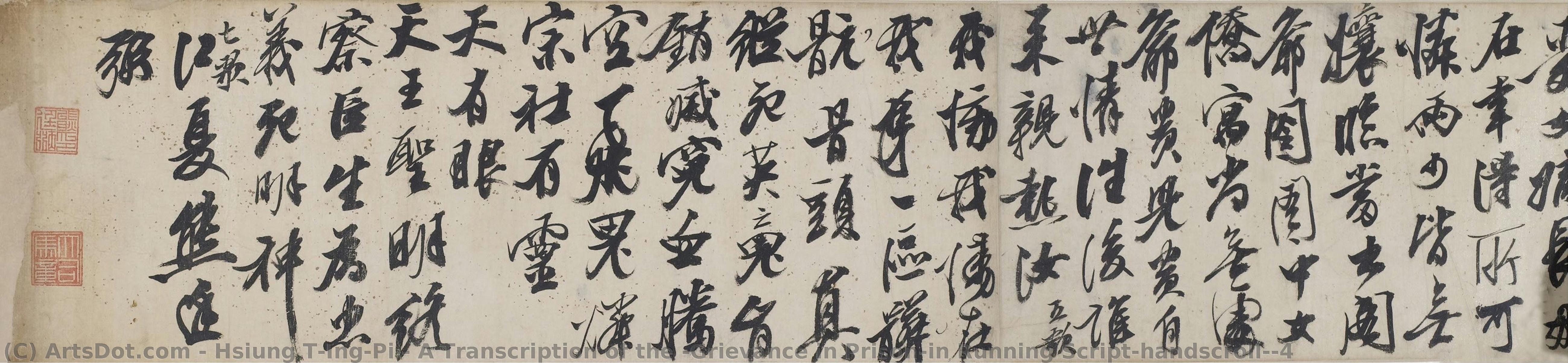
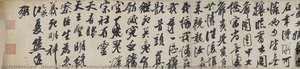
A Transcription of the “Grievance in Prison”in Running Script(handscroll)-4

 Ver más
Adquiera una imagen digital de alta resolución y optimizada, muy superior a la vista previa en línea.
Cada archivo es preparado meticulosamente por nuestros especialistas internos mediante el uso de herramientas avanzadas y un experto retoque manual. Nos aseguramos de que cada imagen posea una claridad excepcional, una precisión cromática impecable y un detalle minucioso.
El archivo final se entrega por correo electrónico en un plazo de 72 horas, optimizado para su uso inmediato en entornos profesionales, editoriales y de impresión. Esta es la misma calidad en la que confían los estudios de diseño, las editoriales y las galerías de primer nivel.
Imagen Digital
Descarga un archivo de alta resolución para exhibición personal, impresión y proyectos creativos. ( Comprar impresión Comprar pintura hecha a mano)
Incluido en cada pedido de imágenes digitales
Entrega digital experta, garantizada.
Al elegir ArtsDot.com, no solo está adquiriendo una imagen; está recibiendo una obra de arte digital mejorada profesionalmente, elaborada con precisión y respaldada por una garantía de satisfacción. Esto es todo lo que incluye su pedido, automáticamente:

Entrega rápida por email
Recibirá su archivo de imagen digital en alta resolución por correo electrónico en un plazo de 72 horas tras realizar su pedido, listo para su uso inmediato.

Archivo digital optimizado por IA
Su obra de arte se optimiza profesionalmente mediante herramientas avanzadas de IA y edición manual, garantizando el máximo detalle, claridad y precisión cromática.

Reenvío gratuito de por vida
¿Has borrado o perdido tu archivo por error? No te preocupes: te lo volveremos a enviar en cualquier momento, sin coste adicional.

Sin gastos de importación, siempre
Disfrute de su obra de arte al instante sin aduanas, aranceles ni gastos de envío; las descargas digitales siempre están libres de impuestos.

Garantía de fidelidad de color
Garantizamos que su imagen digital refleje los colores originales con la mayor fidelidad posible, mediante el uso de herramientas profesionales y gestión del color.

Garantía de satisfacción de 60 días
Si no está satisfecho con su imagen digital, la revisaremos o le reembolsaremos el 100% en un plazo de 60 días, sin preguntas.

100% Garantía de devolución de dinero
¿No está satisfecho? Obtenga un reembolso completo dentro de los 60 días posteriores a la recepción de su archivo digital, sin necesidad de explicaciones.

Descuentos por pedidos grandes
Compra 3 imágenes, ahorra 10% - Compra 5, ahorra 15% - Compra 10+, ahorra 20%. Ideal para proyectos creativos, galerías y agencias.
Obras relacionadas





Biografía del artista
A Legacy of Ink and Iron: The Dual Life of Hsiung Ting-Pi
In the turbulent twilight of the Ming dynasty, few figures embodied the intersection of scholarly grace and martial fortitude as profoundly as Hsiung Ting-Pi. A man whose life was defined by both the delicate tip of a calligraphy brush and the heavy weight of imperial command, he remains a singular icon in Chinese history. Born around 1583, his existence was a constant dance between the quiet contemplation of the literati and the high-stakes strategy of the battlefield. While many of his contemporaries sought refuge in the purely aesthetic or the strictly political, Ting-Pi navigated a path that demanded excellence in both, carving out a legacy that is as much about the strength of character as it is about the elegance of line.
His early years were steeped in the rigorous traditions of Confucian scholarship. Raised with an appreciation for moral philosophy and social order, his education provided the intellectual scaffolding upon which his artistic vision was built. This foundation allowed him to master the complexities of calligraphy and poetry, disciplines that require not just technical skill, but a deep understanding of symbolism and emotional resonance. To Ting-Pi, a single brushstroke was never merely an aesthetic choice; it was an expression of cosmic balance and ethical clarity. This scholarly upbringing ensured that even when he transitioned into the brutal realities of military governance, his perspective remained infused with the poetic sensitivity of a true master.
The Strategist’s Brush: Artistry Amidst Conflict
The trajectory of Ting-Pi’s life took a dramatic turn as he rose through the imperial ranks to become a vital defender of China's borders. Appointed as a military governor tasked with bolstering defenses against Mongol incursions along the Great Wall, his life became a whirlwind of mobilization and strategic innovation. As the Junior Vice-President of the Ministry of War and later the Chief Military Director of the Liaodong area, he faced the daunting task of securing the empire against the encroaching Later Jin forces. It was during this period of immense pressure that his artistic and military identities merged into a singular, powerful expression of resilience.
His most poignant works often emerged from the shadows of political strife and personal hardship. The famous “Grievance in Prison” handscroll serves as a haunting testament to his turbulent later years. This work, rendered in a masterful running script, transcends simple transcription; it is a visceral outpouring of the soul, capturing the profound injustice he faced when powerful factions sought to dismantle his career. Through the fluid, energetic movements of his calligraphy, one can sense the tension between his disciplined military mind and the raw, unyielding spirit of a man facing wrongful execution. His art became a vessel for truth in an era of political deception.
Historical Significance and the End of an Era
The tragedy of Hsiung Ting-Pi’s life lies in its conclusion, yet his impact on Chinese art and history remains indelible. Despite his successes in stabilizing the Liaodong region and his ability to command respect even from formidable adversaries, he fell victim to the machinations of the powerful eunuch Wei Zhongxian. In 1622, during the second year of the Tianqi period, Ting-Pi was executed for crimes he did not commit, a loss that signaled a dark chapter for the Ming administration. However, the death of the man did not silence the voice of the artist.
Today, we remember Hsiung Ting-Pi not merely as a fallen commander, but as a pioneer who bridged the gap between the martial and the lyrical. His contributions to calligraphy and his ability to infuse ink with the gravity of historical struggle continue to inspire. His life serves as a powerful reminder that true artistry is often forged in the crucible of adversity, and that the most enduring legacies are those written with both courage and grace.
hsiung t’ing-pi
1625 , China
Breves datos
- Artistic Movement Or Style: Ming Dynasty Art
- Date Of Death: 1625
- Full Name: hsiung t’ing-pi
- Nationality: Chinese
- Notable Artworks: ['Grievance in Prison Scroll']
- Place Of Birth: China

