

 Ver en contexto
 Enviar
 Compartir
 Detalles

 Descargar
 Similares
 Radiografía
 Presentación de diapositivas
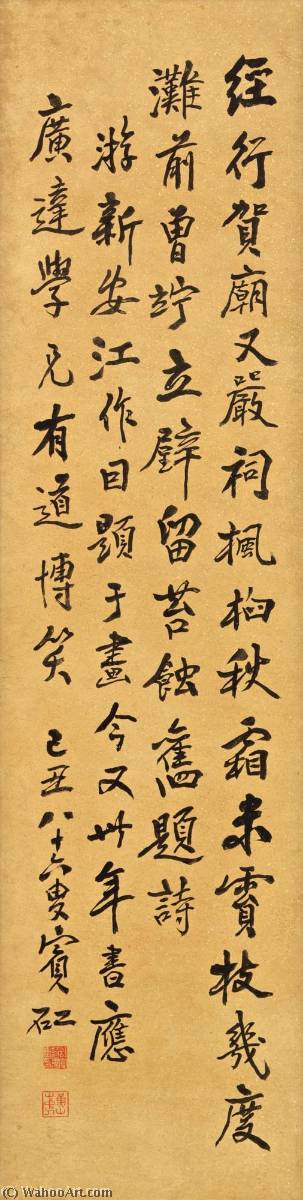
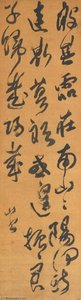
Poem in Xingshu
 18.0 x 51.0 cm
 Ver más
Giclée / Impresión de arte
Impresiones giclée o en lienzo de calidad de museo con producción rápida y opciones de acabado flexibles. ( Comprar pintura hecha a mano Comprar imagen)




































Elija entre nuestros tamaños predefinidos que respetan las proporciones originales de la obra.

Puede introducir sus propias dimensiones para adaptarse a un marco o espacio específico. Si el tamaño seleccionado no coincide con las proporciones de la imagen original, recortaremos la obra de arte o extenderemos la imagen con un borde con efecto espejo o de color sólido. Se enviará una maqueta digital para su aprobación antes de que comience la producción.
Tenga en cuenta que la vista previa en pantalla no refleja el recorte o la extensión real. Solo la maqueta mostrará con precisión la composición final.
Aunque existen tamaños personalizados, recomendamos seleccionar una dimensión de la lista predefinida para preservar las proporciones originales.
Envío a todo el mundo () en 2 semanas en lugar de las 4/5 semanas estándar. (26 agosto)

Envío exprés gratuito a todo el mundo

Lienzo de lino de alta calidad

Seguro de envío total

Garantía de reembolso de impuestos aduaneros

Garantía de fidelidad cromática exacta

Política de devolución de 60 días (solo por defectos)

Garantía de devolución del 100% del dinero

Descuento por cantidad
 La opción de vidrio solo está disponible en tamaños inferiores a 110 cm.

Poem in Xingshu
Giclée / Impresión de arte
Dimensiones de la reproducción
-


Precio total final
$ 62
Obras relacionadas


Biografía del artista
A Legacy Etched in Ink: The Life and Art of Huang Binhong
Huang Binhong, a name synonymous with the last flowering of the literati painting tradition in China, was born in 1865 in Jinhua, Zhejiang province. Though his roots traced back to She County, Anhui province – the ancestral home that would profoundly shape his artistic sensibility – Huang’s journey began amidst the bustling life of a merchant family. His father, an avid art collector, instilled within him a deep appreciation for painting from a young age. However, fate intervened in 1888 when the family business faltered, forcing their return to Shexian. This relocation proved pivotal; it was here, immersed in the landscapes and cultural heritage of Xinan, that Huang’s artistic path truly began to unfold. He dedicated himself to studying ancient seals, a practice deeply intertwined with calligraphy and painting, laying the foundation for his future mastery.Early Influences and the White Period
Huang Binhong wasn't self-taught; he diligently absorbed the lessons of past masters. His early work reveals a clear debt to painters like Li Liufang, Cheng Sui, Cheng Zhengkui, and Kun Can, alongside the revered figures of the Yuan and Ming dynasties. This period, often referred to as his “White Period,” was characterized by an emphasis on precise brushwork and the delicate interplay of positive and negative space. He sought a harmonious balance between light and dark tones, creating compositions that were both elegant and restrained. The Xin’an School of painting exerted a powerful influence during these formative years, shaping his meticulous technique and graceful outlines. It wasn't merely technical skill he pursued; Huang aimed to capture the *essence* of the landscape, imbuing each stroke with intention and meaning. This early phase demonstrated a commitment to traditional forms, but it was merely the prelude to a more radical transformation.The Shift Towards Ink and Wash: Guichi and Beyond
A turning point arrived in 1928 when Huang relocated to Guichi. The region’s captivating scenery ignited a new passion within him – a fascination with ink wash painting. He began to move away from the emphasis on brushwork, instead focusing on the expressive potential of ink itself. This marked a transition towards the style of Wu Zhen, a renowned master known for his atmospheric landscapes and subtle gradations of tone. Further travels to Guangxi and Guangdong in 1928 provided ample opportunities for sketching directly from nature, fueling his artistic evolution. He began shedding the constraints of his “White Style,” embracing a bolder, more dynamic approach – what would become known as his “Black Style.” This wasn’t simply a change in technique; it was a fundamental shift in perspective, prioritizing atmosphere and emotional resonance over precise representation.The Black Period and Mature Style
From 1937 to 1948, Huang resided in Beijing, a period that witnessed the full flowering of his “Black Period.” It was during these years that he developed his signature style – characterized by layers of dense, saturated ink, creating landscapes that were both powerful and evocative. He employed techniques like dripping and staining to capture the misty wetness of rain and the nocturnal beauty of mountains. His paintings from this era are not merely depictions of scenery; they are *experiences* of nature, imbued with a profound sense of solitude and contemplation. Later in life, after moving to Hangzhou, Huang integrated Western Impressionistic principles into his work, blending Chinese ink wash traditions with new approaches to color and form. He deftly manipulated solid and void, creating richly textured compositions that showcased the full spectrum of his artistic vision.A Modern Pioneer: Legacy and Historical Significance
Huang Binhong’s influence on modern Chinese art is immeasurable. His dedication to revitalizing the literati painting tradition, coupled with his willingness to experiment and innovate, earned him widespread recognition and respect. He founded numerous societies dedicated to promoting painting and calligraphy, fostering a vibrant artistic community. More than just an artist, Huang was a scholar, historian, and educator who sought to preserve and elevate Chinese cultural heritage. His varied style – encompassing the White Period, Black Period, and his later integration of Western influences – demonstrated a remarkable creative range. He is remembered not only for his technical mastery but also for his profound understanding of nature and his ability to convey its beauty through the expressive power of ink and wash. Huang Binhong’s legacy continues to inspire artists today, solidifying his place as one of the last great innovators in Chinese painting history. His works are a testament to the enduring power of tradition and the boundless possibilities of artistic expression. He truly etched a lasting mark on the landscape of modern art.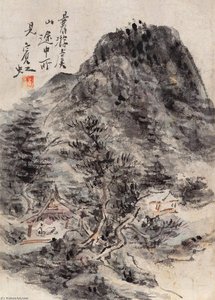
huang binhong
1865 - 1955
Datos clave
- Artistic Movement Or Style: Literati Painting; Xinan School Painting
- Artists Or Movements Influenced By This Artist: ['Wu Zhen']
- Artists Who Influenced This Artist:
- Li Liufang
- Cheng Sui
- Cheng Zhengkui
- Kun Can
- Date Of Birth: January 27, 1865
- Date Of Death: March 25, 1955
- Full Name: Huang Binhong
- Nationality: Chinese
- Notable Artworks:
- Jiangnan in Misty Rain
- Landscape of Lin
- Place Of Birth: Jinhua, Zhejiang Province

