 Ver en contexto
 Enviar
 Compartir
 Detalles

 Descargar
 Similares
 Radiografía
 Presentación de diapositivas
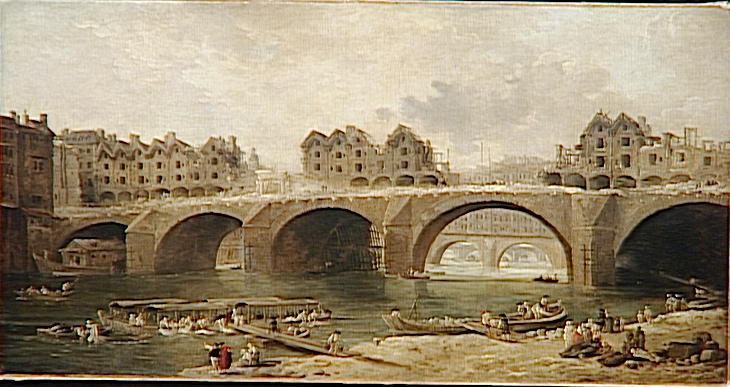
DEMOLITION DES MAISONS DU PONT NOTRE DAME, EN 1786


 Ver más
Reproducción al óleo hecha a mano
Óleo sobre lienzo pintado a mano en el tamaño y marco de su elección, realizado por encargo por nuestros artistas. ( Comprar impresión Comprar imagen)




P118B $10

P118H $10

P118W $10

P438Z $10

P508JH $12

P508YH $12

P805H $10

P805Z $10

P919BZ $10

P919G $10

P919XJ $10

P959ZH $10

P968JZ $12

W106C $8

W218G $10

W218JH $8

W218Y $10

W307PJ $10

W316G $10

W316PJ $8

W316Y $10

W398PJ $8

W4111J $10

W500HY $15

W500JH $15

W692G $12

W849H $8

W940BG $15

W953PJ $8




Elija entre nuestros tamaños predefinidos que respetan las proporciones originales de la obra.

Puede ingresar sus propias dimensiones para adaptarse a un marco o espacio específico. Si el tamaño seleccionado no coincide con las proporciones de la imagen original, recortaremos la obra o extenderemos la pintura con elementos adicionales pintados a mano. Se le enviará una maqueta digital para su aprobación antes de comenzar la producción.
Tenga en cuenta que la vista previa en pantalla no refleja el recorte o la extensión reales. Solo la maqueta mostrará con precisión la composición final.
Si bien existen tamaños personalizados, recomendamos seleccionar una dimensión de la lista predefinida para preservar las proporciones originales.
Tras realizar el pedido, el equipo de ArtsDot.com enviará un correo electrónico al cliente para solicitar instrucciones y proporcionarle una vista previa del boceto.
Envío a todo el mundo () en 3-4 semanas en lugar de las 5 semanas estándar. (27 agosto). Sin comprometer la calidad.

Envío exprés gratuito a todo el mundo

Lienzo de lino de alta calidad

Seguro de envío total

Garantía de reembolso de impuestos aduaneros

Garantía de fidelidad cromática exacta

Política de devolución de 60 días (solo por defectos)

Garantía de devolución del 100% del dinero

Descuento por cantidad
 La opción de vidrio solo está disponible en tamaños inferiores a 110 cm.

DEMOLITION DES MAISONS DU PONT NOTRE DAME, EN 1786
Técnica de reproducción
Dimensiones de la reproducción
-


Precio total final
$ 363
Descripción de la obra
A Ruined Beauty: Capturing Ephemeral Change in Robert's Parisian Vision
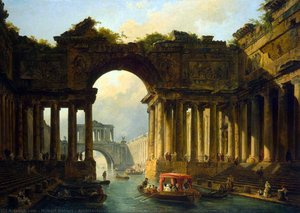
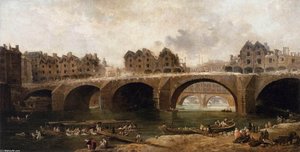
Hubert Robert’s “Demolition des Maisons du Pont Notre Dame, en 1786” isn’t merely a landscape painting; it’s a poignant meditation on time, decay, and the relentless march of urban transformation. Completed in 1786, this evocative work transports us to the banks of the Seine in Paris, not as a static snapshot, but as a fleeting moment suspended between destruction and renewal. Robert, a master of the “capriccio” – a genre he largely defined – expertly blends observation with imagination, creating an atmosphere thick with nostalgia and a subtle sense of melancholy. The painting’s power lies not just in its depiction of crumbling buildings, but in its ability to evoke the emotional resonance of loss and the beauty inherent in impermanence.
The scene unfolds with remarkable clarity despite the muted palette. Earthy browns, tans, and greys dominate, reflecting the weathered stone of the demolished structures and the overcast Parisian sky. Hints of blue shimmer on the river’s surface, offering a brief respite from the dominant tones. Robert's skillful use of linear perspective draws our eye along the length of the Pont Notre-Dame, guiding us through the composition and emphasizing the scale of the demolition. The strong horizontal lines of the bridge contrast with the gently curving arches, creating a dynamic tension that mirrors the painting’s central theme – the collision between established order and inevitable change.
Romanticism's Echoes: Ruins as Symbols
Robert firmly situated himself within the Romantic movement, an artistic sensibility deeply concerned with emotion, imagination, and the sublime. Unlike the Neoclassical emphasis on reason and order, Robert embraced the beauty of decay and the evocative power of ruins. These weren’t simply abandoned structures; they were potent symbols of history, memory, and the transience of human endeavor. The demolition depicted here isn't a violent act, but rather a carefully orchestrated scene of dissolution, imbued with a poetic quality that aligns perfectly with Romantic ideals. The inclusion of bustling river activity – boats laden with goods, figures engaged in various tasks – adds to the sense of a vibrant, albeit transient, urban life.
Technically, Robert’s approach is masterful. The visible brushstrokes contribute significantly to the painting's texture and atmosphere, particularly evident in the depiction of the weathered stone. There’s an impression of roughness and age, as if we could reach out and feel the cold solidity of the crumbling walls. The use of atmospheric perspective – softening details in the background – creates a convincing sense of depth, drawing us into the scene and immersing us in its melancholic beauty. The artist's attention to detail, from the reflections on the water to the subtle variations in light and shadow, elevates this work beyond a simple landscape depiction.
A Window into 18th-Century Paris
“Demolition des Maisons du Pont Notre Dame, en 1786” offers a fascinating glimpse into Parisian life during the late 18th century. The painting captures a period of significant urban change, as the city expanded and old structures were replaced by new ones. The demolition itself was likely part of a larger plan to improve navigation on the Seine and accommodate growing trade. Robert’s choice to depict this specific event – the dismantling of buildings along the Pont Notre-Dame – speaks volumes about the priorities and concerns of the time. The inclusion of figures engaged in various activities—merchants, laborers, boatmen—adds a layer of social commentary, suggesting that even amidst destruction, life continued on.
Considering Robert’s biography reveals further insight into his artistic vision. Born in Paris and trained by Michel-Ange Slodtz, he initially focused on sculpture before discovering his true calling in landscape painting. His years spent in Rome profoundly influenced his style, shaping his fascination with ruins and his ability to capture the ethereal beauty of light and atmosphere. His later work continued to explore themes of decay, memory, and the passage of time, solidifying his reputation as a master of the capriccio genre.
Obras relacionadas
Biografía del artista
Hubert Robert: Pintor de Ruinas y Visiones
- Nacimiento: 22 de mayo de 1733, París, Francia
- Fallecimiento: 15 de abril de 1808, París, Francia
Hubert Robert fue un pintor francés celebrado por sus evocadores paisajes y pinturas de *capricho*—representaciones pintorescas semi-ficticias de ruinas en Italia y Francia. Se le considera una figura clave que une los períodos Rococó y Neoclásico, anticipando aspectos del Romanticismo con su fascinación por la decadencia, la historia y las reconstrucciones imaginativas.
Primeros Años y Formación Artística
Nicolas Robert, el padre de Hubert, sirvió a François-Joseph de Choiseul, Marqués de Stainville. Robert recibió una educación jesuita en el Collège de Navarre en 1751. Luego estudió escultura con Michel-Ange Slodtz, quien lo animó a dedicarse a la pintura. Esta formación temprana le inculcó una sólida base en diseño y perspectiva, elementos cruciales que definirían más tarde su estilo artístico.
Los Años Romanos y Desarrollo Artístico (1754-1765)
- Traslado a Roma: En 1754, Robert viajó a Roma con Étienne-François de Choiseul, hijo de su empleador.
- Once Años en Italia: Pasó once años en Roma, un período formativo para su desarrollo artístico.
- Apoyo y Patronazgo: Se sustentó creando obras para conocedores visitantes como el Abbé de Saint-Non.
- Influencia de Giovanni Paolo Panini: Robert trabajó junto a Giovanni Paolo Panini, cuya influencia es evidente en sus primeras composiciones de *capricho*.
- Dibujo y Observación: Dibujó meticulosamente ruinas y paisajes romanos, documentando sitios como la Villa d'Este y Caprarola, demostrando un agudo sentido del detalle y la perspectiva atmosférica.
Su tiempo en Roma moldeó profundamente su visión artística. La yuxtaposición de las antiguas ruinas romanas con la vida contemporánea despertó su interés por representar la decadencia junto a la vitalidad, un tema recurrente a lo largo de su carrera.
Regreso a París y Reconocimiento (1765-1790)
- Éxito Rápido: Al regresar a París en 1765, Robert rápidamente obtuvo reconocimiento.
- Admisión en la Académie Royale de Peinture et de Sculpture: Fue admitido en la Académie Royale de Peinture et de Sculpture con un *capricho* romano, "El Puerto de Roma, Ornamentado con Diferentes Monumentos de Arquitectura, Antiguos y Modernos".
- Exposiciones en el Salón: Sus exposiciones en el Salón (a partir de 1767) atrajeron una atención significativa. Denis Diderot comentó famosamente sobre la grandeza evocada por sus representaciones de ruinas.
- Obras Notables: Obras clave de este período incluyen "Paisaje con las Ruinas del Templo Circular, con una Estatua de Venus y un Monumento a Marco Aurelio", que muestra su dominio de la pintura de *capricho*.
El éxito parisino de Robert se debió a su capacidad para capturar tanto la grandeza de la antigüedad clásica como la vitalidad de la vida contemporánea. Sus obras resonaron en el público fascinado por la historia, la arqueología y lo pintoresco.
Últimos Años, Revolución y Legado (1790-1808)
- Revolución Francesa: Robert fue testigo y documentó la Revolución Francesa, incluyendo la demolición de monumentos históricos.
- Curador del Muséum Central des Arts: Sirvió como curador del recién establecido Muséum Central des Arts (luego el Louvre), demostrando su compromiso con la preservación del patrimonio cultural.
- Producción Artística Continua: A pesar del turbulento clima político, Robert continuó pintando y dibujando prolíficamente.
- Reproducción e Influencia: Sus obras fueron frecuentemente reproducidas por artistas como el Abbé de Saint-Non, Châtelain, Linard y Le Veau, lo que atestigua su amplia influencia.
El legado de Hubert Robert radica en su capacidad única para combinar la precisión histórica con la visión imaginativa. Pionero de un género de pintura que celebra tanto la belleza de la decadencia como el poder perdurable de la creatividad humana. Su obra continúa inspirando a artistas y cautivando al público, consolidando su lugar como una figura significativa en el arte del siglo XVIII.
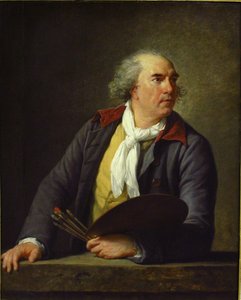
Hubert Robert
1733 - 1808 , Francia
Datos clave
- Artistas Que Influyeron: ['Giovanni Paolo Panini']
- Fecha De Fallecimiento: 15 de abril de 1808
- Fecha De Nacimiento: 22 de mayo de 1733
- Lugar De Nacimiento: París, Francia
- Movimiento Artístico: Rococó y Neoclasicismo
- Nacionalidad: Francés
- Nombre Completo: Hubert Robert
- Obras Notables:
- Interior del Templo de Diana
- Le château de la Roche Guyon
- El artista dibujando en los jardines
- Paisaje con terraza y cascada
- Villa Sachetti
- Establos en ruinas de Villa Giulia
Artículos relacionados
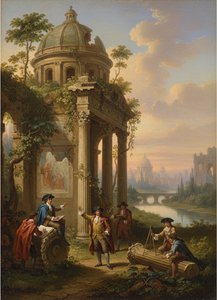
Hubert Robert: Picturing Ruins, Preserving Memory – A Study of Romantic Antiquarianism & Artistic Innovation
Explore the captivating world of Hubert Robert, master of Romantic landscape painting & 'capriccio' ruins. Discover his historical context, artistic innovations, and collecting insights with ArtsDot.

David Roberts: A Scottish Pioneer of Topographical Art & Orientalist Vision
Explore the captivating world of David Roberts, a pioneering Scottish painter renowned for his detailed Orientalist scenes & stunning Egyptian landscapes. Discover his legacy and find museum-quality reproductions at ArtsDot.
Robert Bevan: Pioneering British Post-Impressionism & the Camden Town Group's Intimate Vision
Explore the life & work of Robert Bevan, a pioneer of British Post-Impressionism and founding member of the Camden Town Group. Discover his vibrant landscapes and lasting impact on early 20th-century art.
Édouard Cortès: Capturing Parisian Life – A Comprehensive Study of the 'Painter of Paris'
Explore the captivating world of Édouard Cortès, 'The Painter of Paris'. Discover his iconic street scenes, unique style & lasting legacy. Expert insights for collectors and art enthusiasts.

Robert Henri & the Spirit of American Realism: A Legacy of Urban Life and Artistic Independence
Explore the life & legacy of Robert Henri, a pivotal figure in American Realism. Discover his captivating portraits, influence on the Ashcan School, and enduring impact on art history. Learn more at ArtsDot.