

 Ver en contexto
 Enviar
 Compartir
 Detalles

 Descargar
 Similares
 Radiografía
 Presentación de diapositivas
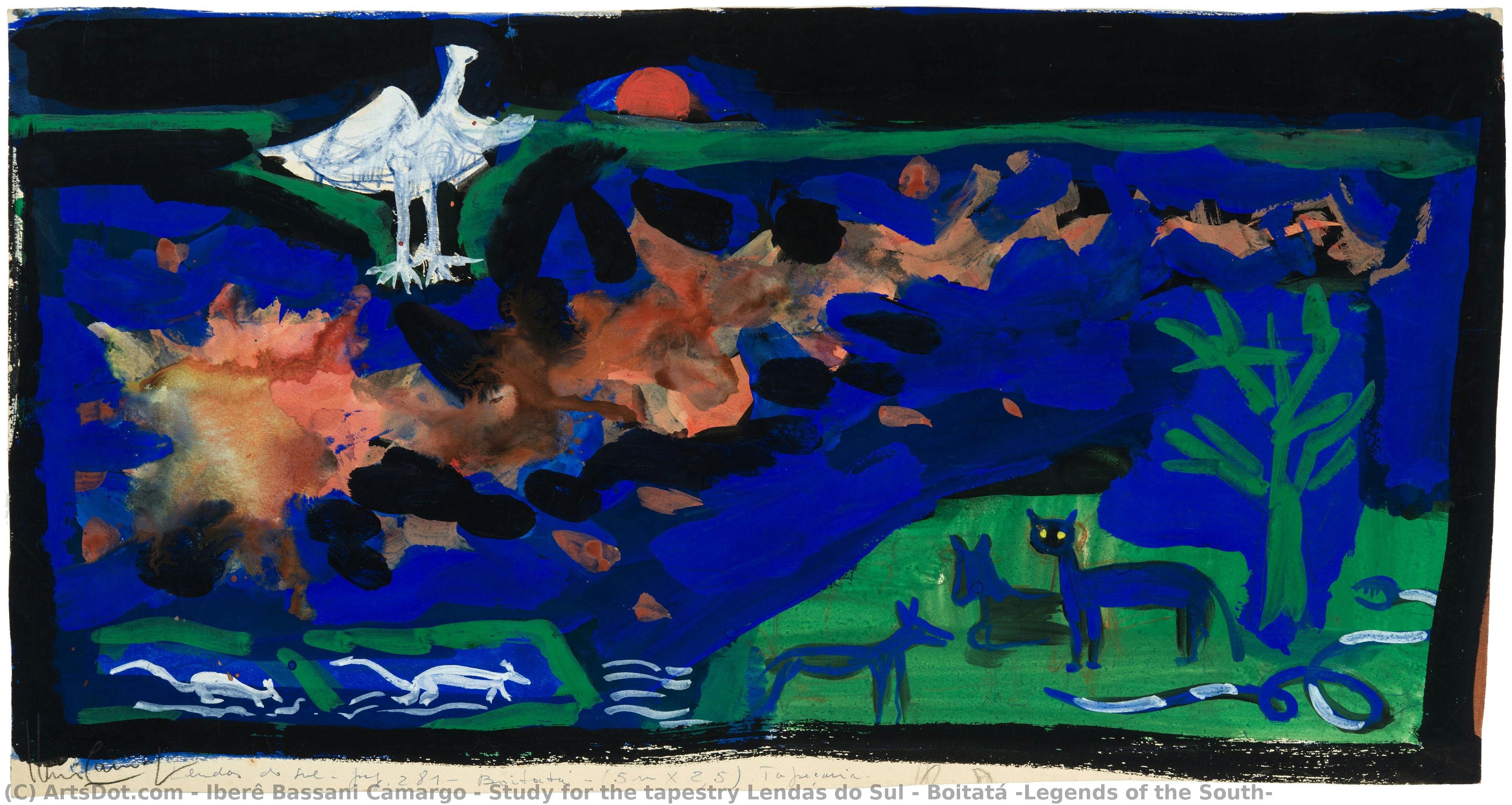
Study for the tapestry Lendas do Sul - Boitatá (Legends of the South)
 Drawing
- WallArt
- Expressionism
 1965
1965- Modern
 3.0 x 60.0 cm
 Fundación Iberê Camargo
 Ver más
Adquiera una imagen digital de alta resolución y optimizada, muy superior a la vista previa en línea.
Cada archivo es preparado meticulosamente por nuestros especialistas internos mediante el uso de herramientas avanzadas y un experto retoque manual. Nos aseguramos de que cada imagen posea una claridad excepcional, una precisión cromática impecable y un detalle minucioso.
El archivo final se entrega por correo electrónico en un plazo de 72 horas, optimizado para su uso inmediato en entornos profesionales, editoriales y de impresión. Esta es la misma calidad en la que confían los estudios de diseño, las editoriales y las galerías de primer nivel.
Imagen Digital
Descarga un archivo de alta resolución para exhibición personal, impresión y proyectos creativos. ( Comprar impresión Comprar pintura hecha a mano)
Incluido en cada pedido de imágenes digitales
Entrega digital experta, garantizada.
Al elegir ArtsDot.com, no solo está adquiriendo una imagen; está recibiendo una obra de arte digital mejorada profesionalmente, elaborada con precisión y respaldada por una garantía de satisfacción. Esto es todo lo que incluye su pedido, automáticamente:

Entrega rápida por email
Recibirá su archivo de imagen digital en alta resolución por correo electrónico en un plazo de 72 horas tras realizar su pedido, listo para su uso inmediato.

Archivo digital optimizado por IA
Su obra de arte se optimiza profesionalmente mediante herramientas avanzadas de IA y edición manual, garantizando el máximo detalle, claridad y precisión cromática.

Reenvío gratuito de por vida
¿Has borrado o perdido tu archivo por error? No te preocupes: te lo volveremos a enviar en cualquier momento, sin coste adicional.

Sin gastos de importación, siempre
Disfrute de su obra de arte al instante sin aduanas, aranceles ni gastos de envío; las descargas digitales siempre están libres de impuestos.

Garantía de fidelidad de color
Garantizamos que su imagen digital refleje los colores originales con la mayor fidelidad posible, mediante el uso de herramientas profesionales y gestión del color.

Garantía de satisfacción de 60 días
Si no está satisfecho con su imagen digital, la revisaremos o le reembolsaremos el 100% en un plazo de 60 días, sin preguntas.

100% Garantía de devolución de dinero
¿No está satisfecho? Obtenga un reembolso completo dentro de los 60 días posteriores a la recepción de su archivo digital, sin necesidad de explicaciones.

Descuentos por pedidos grandes
Compra 3 imágenes, ahorra 10% - Compra 5, ahorra 15% - Compra 10+, ahorra 20%. Ideal para proyectos creativos, galerías y agencias.
Descripción del coleccionable
Obras relacionadas
![La Leyenda De San Francisco - [11] - San Francisco Ante El Sultán (el Juicio Por Fuego) — Giotto Di Bondone, Early Renaissance](/media/artworks/images-thumb/0d/32/0d328acfb6c90f7ef32707586e86044b.jpg)

Biografía del artista
**Life and Work**
Iberê Bassani Camargo (18 November 1914, in Restinga Seca, Brazil) stands as a monumental figure within Brazilian art history—a painter whose expressive canvases captured the essence of human emotion and experience with unparalleled intensity. Born into a family steeped in artistic tradition, Camargo’s early life fostered an appreciation for visual arts that would profoundly shape his creative trajectory. He pursued formal studies at São Paulo University, honing his skills in drawing and painting before embarking on a journey to Europe in 1938, where he encountered the vanguard of European Expressionism—particularly Franz Marc and Henri Matisse—influences that irrevocably altered his artistic vision. These formative experiences propelled Camargo into developing a distinctive style characterized by bold colors, simplified forms, and emotionally charged compositions. He rejected academic conventions, prioritizing intuition and feeling as guiding principles for his artmaking process. His oeuvre spanned decades, encompassing landscapes, portraits, still lifes, and monumental murals—each piece imbued with a palpable sense of urgency and contemplation. Camargo’s artistic output reflected not only his personal aesthetic preferences but also the broader socio-political context of Brazil during its tumultuous mid-century period.**Artistic Legacy and the Iberê Camargo Foundation**
Following Camargo's passing in August 1994, his widow, Maria Coussirat Camargo, demonstrated unwavering devotion to preserving and disseminating his artistic legacy by establishing the Iberê Camargo Foundation (Fundação Iberê Camargo). Recognizing the importance of safeguarding his artworks and fostering scholarly research into his oeuvre, she envisioned a space dedicated to showcasing his paintings—a project that materialized in 2008 with the inauguration of a museum designed by Álvaro Siza Vieira in Porto Alegre. This architectural masterpiece serves as a testament to Camargo’s artistic spirit—its minimalist aesthetic mirroring the simplicity and directness of his canvases. The foundation's collection comprises over 7,000 paintings—a remarkable repository of Camargo’s creative output—and hosts exhibitions that illuminate his artistic innovations and explore connections between Brazilian art and international movements. Furthermore, the Iberê Camargo Foundation actively promotes educational initiatives aimed at nurturing young artists and fostering appreciation for visual culture within the broader community.**Notable Works and Collections**
Camargo's artistic achievements are exemplified by several iconic paintings that continue to captivate audiences worldwide. “Ciclista 3” (Cyclist 3), completed in 1964, exemplifies his masterful use of color and form to convey a profound sense of movement and psychological depth—a piece prominently featured within the Iberê Camargo Foundation’s collection. Similarly, "Missa do pedido" (Mess to Order) showcases Camargo's ability to distill complex emotions into evocative visual representations. “Study for No Tempo” (Into Time), created in 1963, represents an early exploration of Camargo’s artistic concerns—a preparatory sketch that reveals the meticulous attention to detail characteristic of his approach. “Study for Mesa com Espelho” (Table and Mirror) demonstrates Camargo's experimental spirit—a graphite drawing that anticipates the stylistic developments of his mature works. And finally, "Untitled," an oil on paper piece from 1968, embodies Camargo’s commitment to abstraction—a testament to his unwavering belief in the expressive power of nonrepresentational art. These paintings are held in prestigious collections across Brazil and internationally, cementing Camargo's place as one of the most influential artists of the 20th century.**Historical Significance**
Iberê Bassani Camargo’s contribution to Brazilian art transcends mere stylistic innovation; he articulated a deeply humanist vision—one that interrogated themes of identity, memory, and social responsibility. His paintings confronted viewers with uncomfortable truths about human existence—challenging conventional notions of beauty and prompting reflection on the complexities of the human condition. As an artist who actively engaged with the political landscape of his time, Camargo’s work served as a powerful commentary on Brazilian society—a voice for marginalized communities and a champion of artistic freedom. His legacy continues to inspire artists and scholars alike—affirming the enduring relevance of Expressionism as a means of conveying emotion and confronting ethical dilemmas. Iberê Camargo's unwavering dedication to his craft—coupled with his profound engagement with philosophical ideas—established him as an artist whose work transcends temporal boundaries, securing his place among the titans of Brazilian art history.
Iberê Camargo
1914 - 1994 , Brasil
Breves datos
- Artistic Movement Or Style: Expresiónismo
- Artists Who Influenced This Artist:
- Franz Marc
- Henri Matisse
- Date Of Birth: Nov 18, 1914
- Date Of Death: Aug 8, 1994
- Full Name: Iberê Bassani Camargo
- Nationality: Brazilian
- Notable Artworks:
- Ciclista 3
- Missa do pedido
- Estudio para No tiempo
- Estudio para Mesa con espejo
- Sin título
- Place Of Birth: Restinga Seca, Brazil

