

 Ver en contexto
 Enviar
 Compartir
 Detalles

 Descargar
 Similares
 Radiografía
 Presentación de diapositivas
 Estadísticas
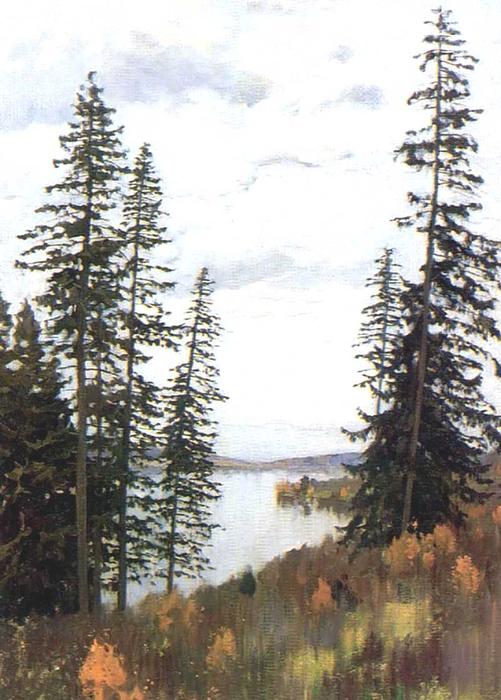
In the North
 Oil
Oil- WallArt
- Realism with Impressionistic tendencies
 1896
1896 106.0 x 77.0 cm
 Галерея Третьякова
 Ver más
Adquiera una imagen digital de alta resolución y optimizada, muy superior a la vista previa en línea.
Cada archivo es preparado meticulosamente por nuestros especialistas internos mediante el uso de herramientas avanzadas y un experto retoque manual. Nos aseguramos de que cada imagen posea una claridad excepcional, una precisión cromática impecable y un detalle minucioso.
El archivo final se entrega por correo electrónico en un plazo de 72 horas, optimizado para su uso inmediato en entornos profesionales, editoriales y de impresión. Esta es la misma calidad en la que confían los estudios de diseño, las editoriales y las galerías de primer nivel.
Imagen Digital
Descarga un archivo de alta resolución para exhibición personal, impresión y proyectos creativos. ( Cambiar a Impresión Comprar pintura hecha a mano)
Incluido en cada pedido de imágenes digitales
Entrega digital experta, garantizada.
Al elegir ArtsDot.com, no solo está adquiriendo una imagen; está recibiendo una obra de arte digital mejorada profesionalmente, elaborada con precisión y respaldada por una garantía de satisfacción. Esto es todo lo que incluye su pedido, automáticamente:

Entrega rápida por email
Recibirá su archivo de imagen digital en alta resolución por correo electrónico en un plazo de 72 horas tras realizar su pedido, listo para su uso inmediato.

Archivo digital optimizado por IA
Su obra de arte se optimiza profesionalmente mediante herramientas avanzadas de IA y edición manual, garantizando el máximo detalle, claridad y precisión cromática.

Reenvío gratuito de por vida
¿Has borrado o perdido tu archivo por error? No te preocupes: te lo volveremos a enviar en cualquier momento, sin coste adicional.

Sin gastos de importación, siempre
Disfrute de su obra de arte al instante sin aduanas, aranceles ni gastos de envío; las descargas digitales siempre están libres de impuestos.

Garantía de fidelidad de color
Garantizamos que su imagen digital refleje los colores originales con la mayor fidelidad posible, mediante el uso de herramientas profesionales y gestión del color.

Garantía de satisfacción de 100 días
Si no está satisfecho con su imagen digital, la revisaremos o le reembolsaremos el 100% en un plazo de 100 días, sin preguntas.

100% Garantía de devolución de dinero
¿No está satisfecho? Obtenga un reembolso completo dentro de los 100 días posteriores a la recepción de su archivo digital, sin preguntas.

Descuentos por pedidos grandes
Compra 3 imágenes, ahorra 10% - Compra 5, ahorra 15% - Compra 10+, ahorra 20%. Ideal para proyectos creativos, galerías y agencias.
The Soul of the Frozen Land: Isaak Levitan’s “In the North”
Isaak Ilyich Levitan's "In the North" (1896) isn’t merely a landscape painting; it’s a profound distillation of the Russian soul, a poignant exploration of solitude and the sublime beauty found within the austere embrace of the Arctic wilderness. Painted during a period of intense introspection for the artist – marked by personal loss and a deep connection to the natural world – this work transcends simple representation, becoming a visual poem about resilience, melancholy, and the enduring power of nature.
Levitan, a master of what he termed “mood landscapes,” eschewed the bright, idealized depictions favored by some of his contemporaries. Instead, he sought to capture not just the appearance of a place, but its very essence – the feeling it evokes within the viewer. "In the North" achieves this with remarkable skill, utilizing a muted palette dominated by cool greens, browns, and blues that evoke the perpetual twilight of the high latitudes. The sky, heavy with clouds, presses down upon the scene, creating an atmosphere of quiet contemplation and subtle foreboding.
A Symphony of Verticality: Composition and Technique
The painting’s composition is strikingly vertical, dominated by the towering pine trees that punctuate the foreground. These aren't individual trees, but rather a unified mass, their dark forms rising like silent sentinels against the hazy horizon. This deliberate emphasis on verticality draws the eye upwards, creating a sense of scale and emphasizing the immensity of the landscape. Levitan’s technique is characterized by loose, expressive brushstrokes – a hallmark of Impressionism blended with a distinctly Russian sensibility. He employs *alla prima* painting, working directly onto the canvas without extensive underpainting, resulting in a vibrant, almost luminous quality to the colors.
Notice how he subtly renders the water’s surface; it's not a mirror reflecting the sky, but rather an active element, imbued with movement and depth. The use of atmospheric perspective – softening distant objects and reducing their detail – further enhances the sense of vastness and distance. The subtle gradations of tone, achieved through layering thin washes of paint, create a remarkable illusion of light and shadow, capturing the diffused quality of sunlight filtering through the clouds.
Symbolism in the Silence: Interpreting the Arctic
“In the North” is rich with symbolic meaning. The dominant pine trees, deeply rooted in the harsh northern soil, represent resilience, endurance, and a connection to ancient traditions. They are not merely trees; they are witnesses to centuries of solitude and hardship. The muted colors evoke feelings of melancholy and introspection – a reflection of Levitan’s own emotional state during this period of his life. The absence of human figures reinforces the painting's theme of isolation, inviting the viewer to contemplate their place within the vastness of nature.
Furthermore, the painting can be interpreted as an allegory for Russia itself – a land of immense beauty and profound melancholy, grappling with its own history and identity. The northern landscape, often associated with hardship and remoteness, mirrors the challenges faced by the Russian people during the late 19th century.
A Legacy of Mood: Levitan’s Enduring Influence
Isaak Levitan's "In the North" stands as a testament to his mastery of capturing the emotional essence of the Russian landscape. It is a painting that continues to resonate with viewers today, offering a glimpse into a world of quiet contemplation and profound beauty. His work profoundly influenced generations of Russian landscape painters, establishing a tradition of “mood landscapes” that prioritized atmosphere and emotion over mere topographical accuracy. Reproductions of this iconic piece offer a powerful way to bring the spirit of the Arctic into any space, evoking feelings of peace, solitude, and a deep connection to the natural world.
Obras relacionadas
Biografía del artista
Isaak Ilyich Levitan: Una Vida en el Paisaje
Isaak Ilyich Levitan (1860-1900) fue un renombrado pintor de paisajes ruso que se convirtió en una figura clave en el desarrollo de los paisajes basados en el estado de ánimo. Su obra capturó la esencia del campo ruso, imbuida de encanto lírico y profundidad emocional.
Primeros Años y Educación
- Nació el 30 de agosto de 1860 en Kibarty (actualmente Lituania), en una familia judía que luego se mudó a Moscú.
- Demostró talento artístico desde temprana edad, recibiendo lecciones privadas antes de estudiar arte formalmente.
- En 1873, ingresó a la Escuela de Pintura, Escultura y Arquitectura de Moscú, donde estudió bajo artistas influyentes como Alexei Savrasov, Vasily Perov y Vasily Polenov.
- La influencia de Savrasov fue particularmente significativa, fomentando el amor de Levitan por representar los matices sutiles de la naturaleza rusa.
Desarrollo Artístico y Estilo
- Levitan se distinguió rápidamente por su capacidad para transmitir atmósfera y emoción a través de la pintura de paisajes.
- Pionero del género del "paisaje con ánimo", trascendiendo la mera representación topográfica para expresar sentimientos humanos y conexiones espirituales con la naturaleza.
- Su paleta era a menudo apagada, centrándose en colores naturalistas y elementos poéticos en lugar de tonos vibrantes.
- Si bien su trabajo posterior mostró familiaridad con el Impresionismo, mantuvo una sensibilidad rusamente única.
Obras Principales y Logros
- Algunas de sus obras más celebradas incluyen: Día de otoño. Sokolniki (1879), El camino de Vladimirka (1892) y Descanso eterno (1894). Estas pinturas se exhiben prominentemente en la Galería Tretyakov.
- Otras obras notables incluyen “Inundación de primavera”, “Día tormentoso”, “Campanas vespertinas” y “Claustro silencioso”.
- En 1897, Levitan fue elegido para la Academia Imperial de las Artes, un testimonio de su creciente reconocimiento.
- Se convirtió en jefe del estudio de paisajes en su alma mater en 1898, nutriendo a la próxima generación de pintores de paisajes rusos.
Influencias y Colaboraciones
- Levitan estuvo profundamente influenciado por las obras de Alexei Savrasov, cuyos paisajes melancólicos resonaron con su propia visión artística.
- Colaboró con otros artistas como Konstantin Korovin, Mikhail Nesterov y Nikolai Chekhov.
- Contribuyó con ilustraciones a la revista “Moscú” y diseñó escenografía para la Ópera Rusa privada de Savva Mamontov.
Significado Histórico y Legado
- El trabajo de Levitan jugó un papel crucial en la configuración del desarrollo de la pintura de paisajes rusa.
- Elevó el género más allá de una simple representación, imbuyéndolo de profundidad emocional y resonancia espiritual.
- Sus pinturas continúan evocando un fuerte sentido de identidad nacional y aprecio por la belleza del campo ruso.
- En 1941, sus restos fueron trasladados al Cementerio de Novodévichi en Moscú, donde está enterrado junto a su cercano amigo, Anton Chekhov, simbolizando su parentesco artístico.
El legado de Levitan perdura como maestro de la pintura de paisajes atmosféricos e intérprete profundo del alma rusa.
Isaak Ilyich Levitan
1860 - 1900 , Rusia
Breves datos
- Artistas Que Influyeron:
- Alexei Savrasov
- Vasily Perov
- Vasily Polenov
- Fecha De Nacimiento: 30 de agosto de 1860
- Lugar De Nacimiento: Kibarty, Lituania
- Movimiento Artístico: Pintura de paisaje, Paisaje emotivo
- Nacionalidad: Ruso
- Nombre Completo: Isaak Ilyich Levitan
- Obras Notables:
- Día de otoño. Sokolniki
- El camino de Vladimirka
- Descanso eterno
- Inundación de primavera
- Día tormentoso