

 Ver en contexto
 Enviar
 Compartir
 Detalles

 Descargar
 Similares
 Radiografía
 Presentación de diapositivas
 Estadísticas
Red Flower: The Women of Okinawa (7 of 11)
 Acrylic On Canvas
- WallArt
- Documentary Photography
 1975
1975 15.0 x 23.0 cm
 Galería de Arte Moderno de Queensland | Galería de Arte Moderna
 Ver más
Reproducción al óleo hecha a mano
Óleo sobre lienzo pintado a mano en el tamaño y marco de su elección, realizado por encargo por nuestros artistas. ( Cambiar a Impresión Cambiar a imagen digital)




P118B $10

P118H $10

P118W $10

P438Z $10

P508JH $12

P508YH $12

P805H $10

P805Z $10

P919BZ $10

P919G $10

P919XJ $10

P959ZH $10

P968JZ $12

W106C $8

W218G $10

W218JH $8

W218Y $10

W307PJ $10

W316G $10

W316PJ $8

W316Y $10

W398PJ $8

W4111J $10

W500HY $15

W500JH $15

W692G $12

W849H $8

W940BG $15

W953PJ $8




Elija entre nuestros tamaños predefinidos que respetan las proporciones originales de la obra.

Puede ingresar sus propias dimensiones para adaptarse a un marco o espacio específico. Si el tamaño seleccionado no coincide con las proporciones de la imagen original, recortaremos la obra o extenderemos la pintura con elementos adicionales pintados a mano. Se le enviará una maqueta digital para su aprobación antes de comenzar la producción.
Tenga en cuenta que la vista previa en pantalla no refleja el recorte o la extensión reales. Solo la maqueta mostrará con precisión la composición final.
Si bien existen tamaños personalizados, recomendamos seleccionar una dimensión de la lista predefinida para preservar las proporciones originales.
Tras realizar el pedido, el equipo de ArtsDot.com enviará un correo electrónico al cliente para solicitar instrucciones y proporcionarle una vista previa del boceto.
Envío a todo el mundo () en 3-4 semanas en lugar de las 5 semanas estándar. (8 septiembre). Sin comprometer la calidad.

Envío exprés gratuito a todo el mundo

Lienzo de lino de alta calidad

Seguro de envío total

Garantía de reembolso de impuestos aduaneros

Garantía de fidelidad cromática exacta

Política de devolución de 100 días (solo por defectos)

Garantía de devolución del 100% del dinero

Descuento por cantidad
 La opción de vidrio solo está disponible en tamaños inferiores a 110 cm.

Red Flower: The Women of Okinawa (7 of 11)
Técnica de reproducción
Dimensiones de la reproducción
-


Precio total final
$ 263
Red Flower: The Women of Okinawa – A Portrait of Resilience
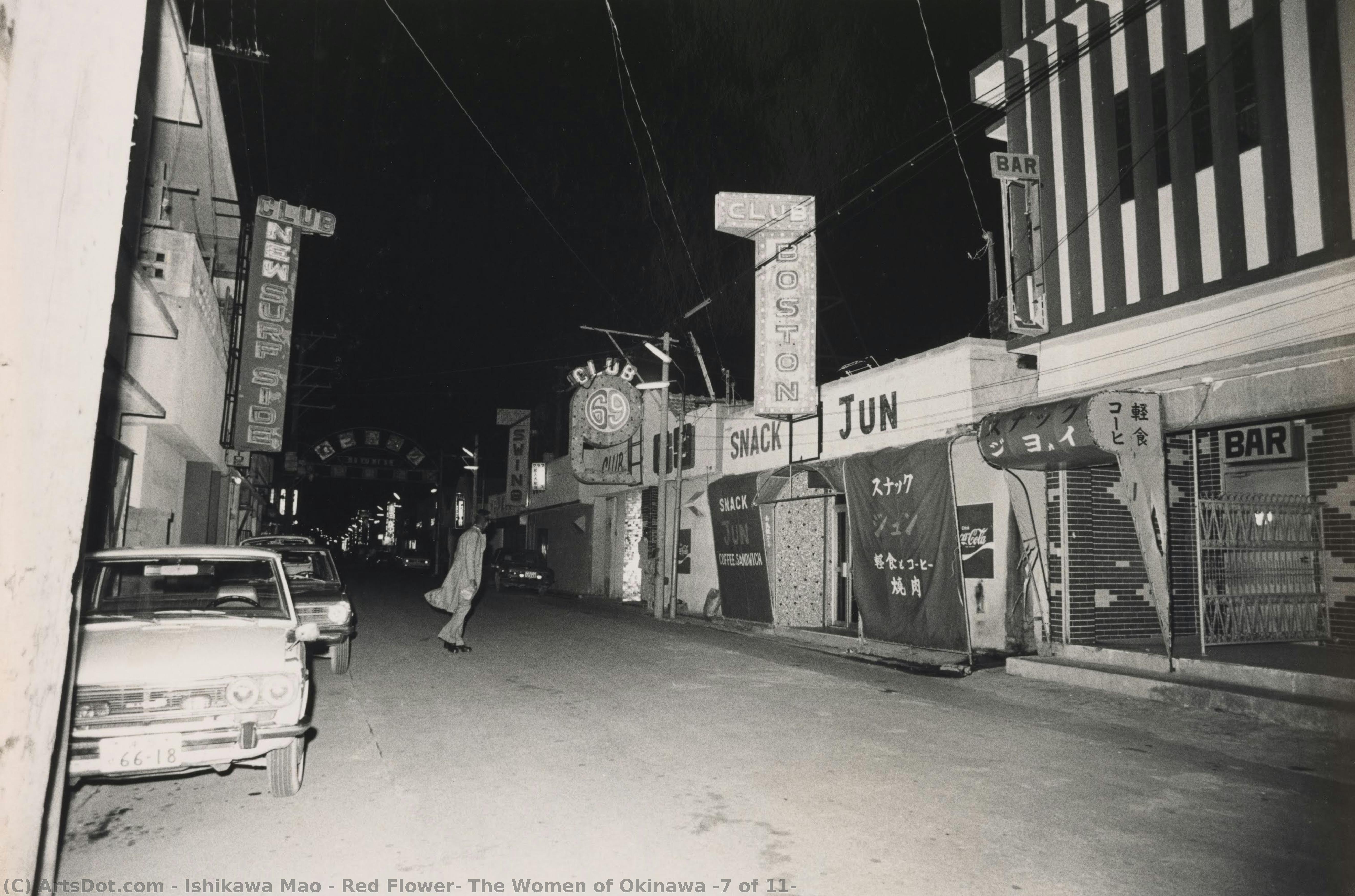
Mao Ishikawa’s “Red Flower: The Women of Okinawa (7 of 11)” isn't merely a photograph; it’s a snapshot crystallized in time—a testament to Okinawan identity during the turbulent years following US occupation. Captured in April 1975, this image documents Ishikawa’s foray into Koza City, where she established a bar catering primarily to African American personnel amidst an era of unofficial segregation. More than just capturing a scene, Ishikawa embarked on a mission to portray the women who defied societal norms by engaging in relationships with servicemen—a courageous act that challenged prevailing attitudes and fueled discussions about cultural autonomy. The photograph itself exudes an atmosphere of quiet observation. Dominated by a narrow street illuminated by artificial lights, it depicts a typical Japanese urban landscape populated by diverse establishments – bars, restaurants (including ‘Jun’), and shops. A solitary figure walks down the center of the road, emphasizing the sense of solitude and fostering contemplation within the viewer’s gaze. Ishikawa skillfully employs perspective—slightly angled—drawing the eye towards the distant buildings and creating depth that enhances the overall impression. Lines are prominent throughout the composition: vertical stripes on the bar sign, horizontal lines across storefronts, and the receding contours of the street itself – elements meticulously considered to guide the viewer's attention and contribute to the image’s narrative power.- Composition: The photograph’s central figure anchors the scene, while the surrounding architecture provides context and depth.
- Lighting: Uneven illumination highlights key details—signs and building facades—creating dramatic contrasts that heighten visual impact.
- Texture: Ishikawa's grainy technique lends a palpable sense of realism to the image, mirroring the weathered appearance of the buildings and conveying the tactile quality of Okinawan life.
Artist’s Vision & Context – Ishikawa’s Journey Through Occupation
Mao Ishikawa’s artistic trajectory is inextricably linked to Okinawa's history—specifically its experience under US occupation (1945-1972). Born and raised in a society grappling with the aftermath of WWII, Ishikawa emerged during a period marked by profound upheaval and loss. The island endured devastating bombing raids, resulting in 90 percent of its buildings being destroyed, and witnessing the exodus of nearly half its population. This formative experience instilled within Ishikawa a deep empathy for marginalized communities and fueled her unwavering commitment to documenting their realities—a dedication that extends beyond mere visual representation; it embodies a profound engagement with cultural identity and social justice. Ishikawa’s artistic influences stemmed from Shomei Tomatsu, whose groundbreaking approach to postwar Japan championed unconventional perspectives and challenged conventional aesthetic norms. Inspired by Tomatsu's pioneering spirit, Ishikawa pursued her own distinctive style—characterized by immersive portraits and an uncompromising honesty—resulting in images that resonate with emotional depth and intellectual curiosity. Her work reflects a desire not just to record what is seen but to convey the unspoken narratives embedded within everyday life.Symbolism & Emotional Resonance – Beyond Representation
“Red Flower: The Women of Okinawa” transcends simple documentation; it embodies a powerful symbolic gesture—a celebration of youthful defiance and intimate connection amidst societal constraints. Ishikawa’s portraits capture the spirit of Okinawan women who dared to challenge social taboos by pursuing relationships with American servicemen, highlighting their resilience and determination in confronting prejudice. The photograph's grainy texture evokes memories of a bygone era, mirroring the island’s scarred landscape—a visual reminder of its wartime trauma and subsequent occupation. Ishikawa’s masterful use of light and shadow contributes to the image’s emotional impact, creating an atmosphere of contemplative solitude that invites viewers to contemplate themes of freedom, vulnerability, and cultural identity. The artist's unwavering conviction—expressed in her poignant declaration that she hates the US military but loves American soldiers—underscores the complexities inherent in navigating geopolitical tensions while preserving cultural heritage.Technical Details – Craftsmanship & Legacy
The photograph itself is executed with meticulous care using gelatin silver printing techniques—a method favored by Ishikawa for its ability to capture subtle tonal variations and produce a distinctive grain. The image was created in 1975–77, utilizing archival photographic paper and chemicals—materials that have endured the passage of time remarkably well, preserving the original aesthetic qualities of the artwork. Ishikawa’s daughter discovered the prints after sorting through items in her father's home—a serendipitous rediscovery that ensured the preservation of these iconic images for future generations. The photograph’s enduring appeal lies not only in its visual beauty but also in its profound contribution to documenting Okinawan culture during a pivotal moment in history.Obras relacionadas
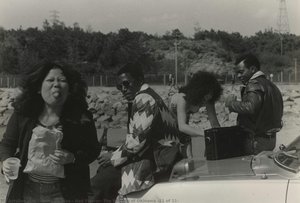
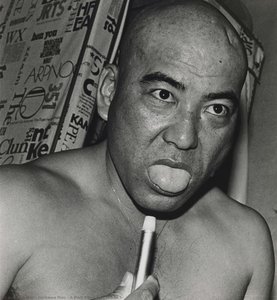
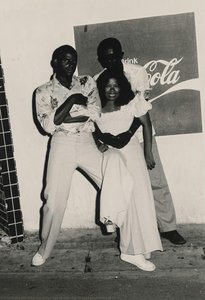
Biografía del artista
Mao Ishikawa: Una Vida en Fotografías
Infancia Temprana y Orígenes
Nacida en 1953 en Ogimi, Okinawa, Japón, Mao Ishikawa emergió como una voz significativa en la fotografía japonesa. Su crianza en Okinawa, una isla con una historia compleja moldeada tanto por la cultura Ryukyuan indígena como por una prolongada presencia militar estadounidense, influyó profundamente en su trayectoria artística.
Desarrollo Artístico y Primera Obra
El trabajo fotográfico temprano de Ishikawa se caracterizó por un compromiso inmersivo con sus sujetos. Ella no simplemente observaba; vivía dentro de los entornos que documentaba. Este enfoque condujo a retratos íntimos y reveladores de trabajadoras sexuales, artistas y otros individuos que existían en la periferia de la sociedad okinawense e japonesa. Su enfoque inicial se centraba en capturar las realidades de la vida cotidiana y los individuos a menudo pasados por alto dentro de ella.
Tono Político y la Presencia Militar Estadounidense
A partir de la década de 1990, el trabajo de Ishikawa adquirió una dimensión política más explícita. Comenzó a abordar directamente el controvertido tema de la presencia militar estadounidense en Okinawa y la creciente desconfianza hacia el manejo de la situación por parte del gobierno japonés. Sus fotografías documentaban soldados activos, bases militares tanto dentro como fuera de Japón y el impacto de estas fuerzas en la vida okinawense. Este período marcó un cambio hacia el uso de su fotografía como una forma de comentario social y activismo.
Obras Principales y Series
- Red Flower: Las Mujeres de Okinawa (1975): Una conmovedora serie en blanco y negro que documenta la vida de las mujeres que trabajan en clubes militares estadounidenses, ofreciendo una visión de su resiliencia y sus luchas.
- A Port Town Elegy (fechas variables): Una serie que explora la vida en los puertos okinawenses, capturando tanto la belleza como la dificultad.
- Great Ryukyu Photo Scroll (2014-): El proyecto más reciente de Ishikawa, una obra impulsada por la narrativa que emplea referencias a la cultura pop y el humor para reconstruir momentos clave en la historia okinawense. Sirve como una reinterpretación poderosa del pasado.
Influencias y Estilo Artístico
Si bien no se documentan influencias directas ampliamente, el trabajo de Ishikawa resuena con las tradiciones documentales centradas en el realismo social y las comunidades marginadas. Su estilo inmersivo sugiere una afinidad por los fotógrafos que priorizan un profundo compromiso con sus sujetos. Combina una estética cruda e implacable con una sutil calidad narrativa.
Logros y Reconocimientos
El trabajo de Ishikawa ha sido exhibido internacionalmente en prestigiosas instituciones, incluyendo el Museo de Arte de Yokohama, la Galería de Arte de Queensland, el Museo Fotográfico de Tokio, el Museo Prefectural de Okinawa y MoMA PS1. Sus contribuciones a la fotografía fueron reconocidas formalmente en 2019 cuando recibió el Premio a la Trayectoria de Vida del Fotoclub de Japón.
Significado Histórico y Legado
Mao Ishikawa’s trabajo es históricamente significativo por su representación sin tapujos de la vida okinawense, particularmente en relación con las complejas dinámicas políticas y sociales que rodean a la presencia militar estadounidense. Ha dado voz a las comunidades marginadas y ha desafiado las narrativas dominantes, estableciéndose como una cronista vital de su tiempo. Su legado reside en su compromiso de documentar la verdad, fomentar el diálogo y preservar la memoria cultural de Okinawa.
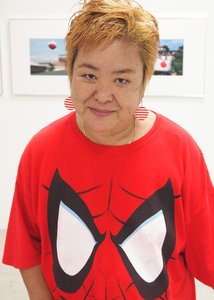
ishikawa mao
1953 - , Japón
Datos clave
- Artistic Movement Or Style: Fotografía documental
- Artists Who Influenced This Artist: ['Shomei Tomatsu']
- Date Of Birth: 1953
- Full Name: Mao Ishikawa
- Nationality: Japonesa
- Notable Artworks:
- Red Flower: Okinawa
- A Port Town Elegy
- Great Ryukyu Photo Scroll
- Place Of Birth: Ogimi, Japón
Artículos relacionados

Giclée Prints: Archival Quality & Aesthetic Nuances for the Discerning Collector
Explore the world of giclée prints with ArtsDot. Learn about archival quality, aesthetic nuances & investment potential. Expert guidance for discerning art collectors seeking museum-quality reproductions and lasting value.

Monochrome Visions: Exploring the Aesthetic & Historical Significance of Black & White Photography
Explore the rich history & artistic power of black and white photography. From early techniques to iconic masters like Ansel Adams, discover why monochrome continues to captivate art lovers today. Expert insights for collectors.

Katsushika Hokusai: Las 25 Obras Maestras del Ukiyo-e que Transformaron el Arte Japonés | ArtsDot
Descubre las 25 obras maestras de Katsushika Hokusai, el genio del ukiyo-e. Explora 'La Gran Ola', paisajes japoneses y su impacto en el arte moderno. Reproducciones de alta calidad para tu hogar en ArtsDot.com.
Beyond the Lens: Photography's Enduring Influence on Modern & Contemporary Art
Explore photography's pivotal role in shaping modern & contemporary art. Discover key movements, influential artists like Stieglitz, and expert collecting advice from ArtsDot.

Pictorialismo: La Búsqueda del Alma de la Fotografía Artística – Estética, Técnicas y Legado
Descubre el Pictorialismo, un movimiento clave en la historia de la fotografía artística. Explora sus técnicas, figuras emblemáticas y su legado perdurable. Guía experta para coleccionistas y amantes del arte.