 Ver en contexto
 Enviar
 Compartir
 Detalles

 Descargar
 Similares
 Radiografía
 Presentación de diapositivas
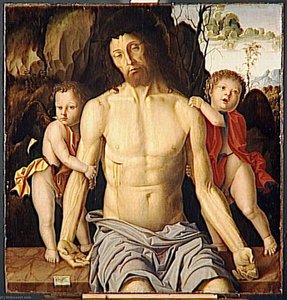
Man of Sorrows
 Oil On Canvas
- WallArt
- Northern Renaissance
 23.0 x 15.0 cm
 Museo Mayer van den Bergh
 Ver más
Reproducción al óleo hecha a mano
Óleo sobre lienzo pintado a mano en el tamaño y marco de su elección, realizado por encargo por nuestros artistas. ( Comprar impresión Comprar imagen)




P118B $10

P118H $10

P118W $10

P438Z $10

P508JH $12

P508YH $12

P805H $10

P805Z $10

P919BZ $10

P919G $10

P919XJ $10

P959ZH $10

P968JZ $12

W106C $8

W218G $10

W218JH $8

W218Y $10

W307PJ $10

W316G $10

W316PJ $8

W316Y $10

W398PJ $8

W4111J $10

W500HY $15

W500JH $15

W692G $12

W849H $8

W940BG $15

W953PJ $8




Elija entre nuestros tamaños predefinidos que respetan las proporciones originales de la obra.

Puede ingresar sus propias dimensiones para adaptarse a un marco o espacio específico. Si el tamaño seleccionado no coincide con las proporciones de la imagen original, recortaremos la obra o extenderemos la pintura con elementos adicionales pintados a mano. Se le enviará una maqueta digital para su aprobación antes de comenzar la producción.
Tenga en cuenta que la vista previa en pantalla no refleja el recorte o la extensión reales. Solo la maqueta mostrará con precisión la composición final.
Si bien existen tamaños personalizados, recomendamos seleccionar una dimensión de la lista predefinida para preservar las proporciones originales.
Tras realizar el pedido, el equipo de ArtsDot.com enviará un correo electrónico al cliente para solicitar instrucciones y proporcionarle una vista previa del boceto.
Envío a todo el mundo () en 3-4 semanas en lugar de las 5 semanas estándar. (31 agosto). Sin comprometer la calidad.

Envío exprés gratuito a todo el mundo

Lienzo de lino de alta calidad

Seguro de envío total

Garantía de reembolso de impuestos aduaneros

Garantía de fidelidad cromática exacta

Política de devolución de 60 días (solo por defectos)

Garantía de devolución del 100% del dinero

Descuento por cantidad
 La opción de vidrio solo está disponible en tamaños inferiores a 110 cm.

Man of Sorrows
Técnica de reproducción
Dimensiones de la reproducción
-


Precio total final
$ 263
The Weight of Sorrow: Jacob Cornelisz van Oostsanen’s “Man of Sorrows”
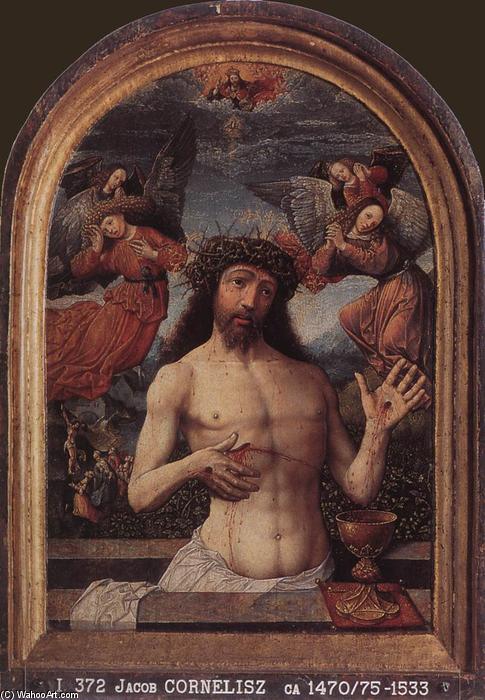
Jacob Cornelisz van Oostsanen's "Man of Sorrows," painted circa 1510, isn’t merely a depiction of Christ; it’s an immersion into profound grief and spiritual contemplation. Emerging from the artistic crucible of Northern Europe during a period of intense religious fervor, this painting transcends its formal elements to resonate with a deeply human experience – the recognition of suffering and the promise of redemption. The work stands as a testament to van Oostsanen's skill in capturing not just physical form but also the very essence of sorrow, a feat rarely achieved with such poignant intensity.
The painting’s genesis lies within the rich tapestry of devotional art that flourished across Europe during the early 16th century. Drawing heavily from Byzantine precedents – particularly the iconic “Imago Pietatis” or Christ of Pity – van Oostsanen elevates a familiar image to new heights of emotional depth. The composition is deliberately restrained, focusing entirely on the central figure of Christ. He’s presented in a half-length pose, his body slumped forward, mirroring the weight of his sacrifice. The starkness of the background—a muted expanse punctuated by two serene angels – serves only to amplify the drama unfolding before the viewer. The artist masterfully employs chiaroscuro, utilizing subtle gradations of light and shadow to sculpt Christ’s form and emphasize the vulnerability etched upon his face.
A Study in Texture and Technique
Van Oostsanen's technical prowess is immediately evident in the meticulous detail with which he renders the textures of Christ’s garments. The folds of the fabric, rendered with a delicate brushwork that suggests both weight and fluidity, create a tactile quality that invites the viewer to almost reach out and touch them. The artist demonstrates an astute understanding of anatomy, subtly conveying the musculature beneath the skin while simultaneously imbuing the figure with an air of ethereal grace. The use of oil paint allows for rich color saturation and layering, contributing to the painting’s luminous quality despite its predominantly somber palette. Notice particularly the subtle variations in tone applied to the wounds – a testament to his ability to capture both the raw pain and the inherent dignity of Christ's suffering.
Symbolism Woven into Sorrow
Beyond the immediate depiction of Christ’s agony, “Man of Sorrows” is laden with symbolic meaning. The crown of thorns, prominently displayed on his head, serves as a potent reminder of his humiliation and rejection. The visible wounds—a gaping gash across his side and lacerations on his hands—are not simply representations of physical pain but visual metaphors for the sins of humanity. The angels flanking Christ’s head are often interpreted as symbols of divine protection and solace, offering a silent witness to his suffering. Crucially, the presence of the dove, soaring above the scene, represents the Holy Spirit – a symbol of hope and the promise of resurrection. The chalice held by the angels at the base of the composition is a direct reference to the Eucharist, transforming Christ’s sacrifice into an act of profound spiritual nourishment for believers.
An Echo of Emotion: The Painting's Enduring Impact
“Man of Sorrows” wasn’t intended as a mere historical record but rather as a vehicle for personal devotion. Paintings like this were often displayed in private homes, serving as focal points for prayer and contemplation. The painting’s enduring appeal lies in its ability to evoke a visceral response – a sense of empathy for Christ's suffering and a recognition of the universality of human sorrow. It is a work that invites viewers to pause, reflect, and connect with the profound themes of sacrifice, redemption, and hope. Today, reproductions of this powerful image continue to resonate with audiences worldwide, serving as a poignant reminder of the enduring legacy of faith and artistic expression.
Obras relacionadas
Biografía del artista
Jacob Cornelisz van Oostsanen: Bridging Gothic and Renaissance in Amsterdam
Jacob Cornelisz van Oostsanen (c. 1470 – 1533) stands as a pivotal figure in Northern Netherlandish art, marking the final transition from medieval traditions to the burgeoning Renaissance spirit within the vibrant city of Amsterdam. Despite the scarcity of biographical details—primarily reliant on Karel van Mander’s Schilder-boeck and archival records—scholars have painstakingly reconstructed his life and artistic trajectory, revealing a craftsman deeply rooted in Haarlem’s Gothic heritage yet profoundly impacted by the innovations emanating from Florence and Nuremberg.- Early Life & Family: Born around 1470 in Oostzaan, North Holland, Jacob Cornelisz was part of a family dedicated to painting—his brother Cornelis Buys I and II were also accomplished artists. The location itself offers insight into the artistic milieu of his formative years; Oostzaan’s proximity to Amsterdam fostered connections with influential workshops and established artistic lineages.
- Training & Influences: Like many artists of his time, Jacob Cornelisz honed his skills in Haarlem, absorbing the stylistic precepts of Geertgen tot Sint Jans—a master of luminous color palettes and elongated proportions characteristic of the Gothic tradition. However, he also encountered the transformative ideas championed by Albrecht Dürer, demonstrating a willingness to embrace new artistic approaches and techniques.
Amsterdam & The Dawn of Renaissance Painting
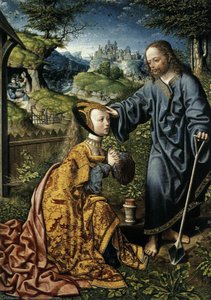
Jacob Cornelisz’s arrival in Amsterdam around 1500 signaled a decisive shift in his artistic career. He purchased two adjacent houses on Kalverstraat, establishing himself as one of the city's foremost artists and securing a stable environment for his family. This move coincided with a period of considerable urban growth and cultural dynamism—Amsterdam was rapidly transforming into a cosmopolitan center attracting artisans and intellectuals from across Europe. His workshop became a hub for experimentation, producing not only commissioned portraits but also intricate woodcuts and stained-glass windows that reflected the prevailing aesthetic sensibilities.- Notable Works & Artistic Style: Jacob Cornelisz’s oeuvre comprises approximately 200 woodcuts and 27 paintings—a testament to his versatility as a designer and painter. His prints are distinguished by their meticulous detail and adherence to traditional North Netherlandish conventions, prioritizing narrative clarity and conveying emotion through carefully positioned figures. Paintings like “Christ as Gardener” exemplify his stylistic evolution—characterized by simplified proportions, luminous color harmonies, and a looser brushstroke technique that departed from the rigid formalism of earlier Gothic art. He skillfully blended elements of Haarlem painting with Dürer’s influence, creating images imbued with both spiritual depth and visual splendor.
Symbolism & Religious Context
Throughout his artistic career, Jacob Cornelisz consistently addressed religious themes—often commissioned by Catholic patrons seeking to defend orthodoxy against the burgeoning Protestant Reformation. His paintings—including “The Nativity” and “Saul and the Witch of Endor”—employed established iconography rooted in medieval tradition but incorporated contemporary stylistic innovations. These works served as visual representations of faith, skillfully crafted to resonate with audiences familiar with humanist scholarship and artistic trends.- Legacy & Historical Significance: Jacob Cornelisz van Oostsanen’s contribution to the history of art is undeniable—he represents the final bastion of Flemish painters resisting Italian stylistic influences. His workshop continued to flourish after his death, fostering artistic innovation and perpetuating his family's legacy as prominent artists in Amsterdam. He remains a symbol of artistic transition, embodying the convergence of Gothic craftsmanship with Renaissance ideals—a pivotal moment in shaping the visual culture of Northern Europe.
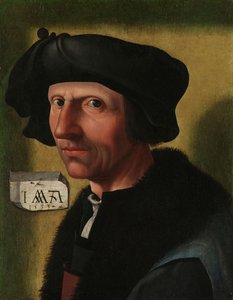
Jacob Cornelisz van Oostsanen
1470 - 1533 , Países Bajos
Datos clave
- Artistic Movement Or Style: Early Netherlandish Painting
- Artists Who Influenced This Artist:
- Geertgen tot Sint Jans
- Albrecht Dürer
- Date Of Birth: c. 1470
- Date Of Death: 1533
- Full Name: Jacob Cornelisz van Oostsanen
- Nationality: Dutch
- Notable Artworks:
- The adoration of the Magi
- Entombment 1
- San Jerónimo
- Place Of Birth: Oostzaan, Netherlands
Artículos relacionados

Rembrandt van Rijn: Las 25 Obras Maestras que Definen un Genio | Arte, Historia y Decoración
Descubre las 25 obras maestras de Rembrandt van Rijn, el genio del barroco holandés. Explora su historia, técnica y simbolismo en retratos icónicos como 'La Ronda Nocturna'. Encuentra reproducciones de arte exclusivas para decorar tu hogar con ArtsDot.com.
Los 10 Maestros del Primitivo Flamenco: Obras que Definen un Arte Inigualable | ArtsDot
Descubre los 10 imprescindibles del Primitivo Flamenco: Jan van Eyck, Robert Campin y más. Explora la historia, simbolismo y técnica de estas obras maestras renacentistas tempranas. Encuentra reproducciones de arte de museo en ArtsDot.com.
Renacimiento Flamenco Temprano: 10 Obras Maestras que Cambiaron la Historia del Arte | ArtsDot
Descubre las 10 obras maestras del Renacimiento Flamenco Temprano. Explora la historia de Jan van Eyck, Robert Campin y más. Reproducciones de arte en ArtsDot.com para decorar tu hogar con belleza y elegancia. ¡Explora la colección online!
Charles-André van Loo: A Study in Rococo Portraiture & the French Court's Artistic Dynamics
Explore the elegant world of Charles-André van Loo, a master of Rococo portraiture at the French court. Discover his life, techniques, and enduring influence on 18th-century art. Hand-painted reproductions available.
Hugo van der Goes: Devotion, Innovation & the Psychological Depth of Early Netherlandish Painting
Explore the revolutionary art of Hugo van der Goes – a master of Early Netherlandish painting renowned for his dramatic realism, psychological depth & profound influence on Renaissance artists. Discover his iconic works and lasting legacy.