

 Ver en contexto
 Enviar
 Compartir
 Detalles

 Descargar
 Similares
 Radiografía
 Presentación de diapositivas
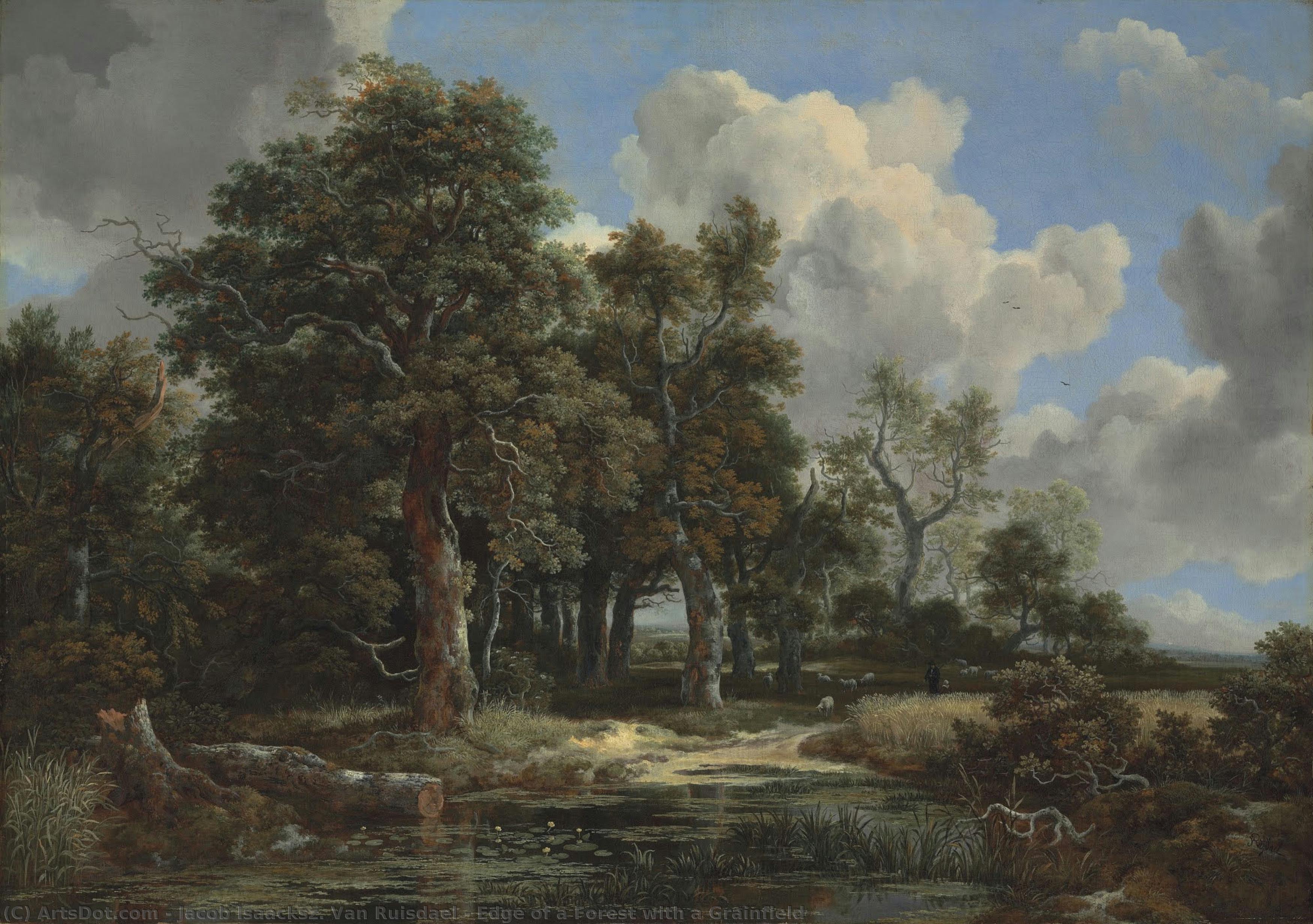
Orilla de un bosque con un campo de cereales
 Óleo sobre lienzo
- Arte de pared
- Dutch Golden Age Landscape
 1656
1656 104.0 x 146.0 cm
 Museo de Arte Kimbell
 Ver más
Adquiera una imagen digital de alta resolución y optimizada, muy superior a la vista previa en línea.
Cada archivo es preparado meticulosamente por nuestros especialistas internos mediante el uso de herramientas avanzadas y un experto retoque manual. Nos aseguramos de que cada imagen posea una claridad excepcional, una precisión cromática impecable y un detalle minucioso.
El archivo final se entrega por correo electrónico en un plazo de 72 horas, optimizado para su uso inmediato en entornos profesionales, editoriales y de impresión. Esta es la misma calidad en la que confían los estudios de diseño, las editoriales y las galerías de primer nivel.
Imagen Digital
Descarga un archivo de alta resolución para exhibición personal, impresión y proyectos creativos. ( Comprar impresión Comprar pintura hecha a mano)
Incluido en cada pedido de imágenes digitales
Entrega digital experta, garantizada.
Al elegir ArtsDot.com, no solo está adquiriendo una imagen; está recibiendo una obra de arte digital mejorada profesionalmente, elaborada con precisión y respaldada por una garantía de satisfacción. Esto es todo lo que incluye su pedido, automáticamente:

Entrega rápida por email
Recibirá su archivo de imagen digital en alta resolución por correo electrónico en un plazo de 72 horas tras realizar su pedido, listo para su uso inmediato.

Archivo digital optimizado por IA
Su obra de arte se optimiza profesionalmente mediante herramientas avanzadas de IA y edición manual, garantizando el máximo detalle, claridad y precisión cromática.

Reenvío gratuito de por vida
¿Has borrado o perdido tu archivo por error? No te preocupes: te lo volveremos a enviar en cualquier momento, sin coste adicional.

Sin gastos de importación, siempre
Disfrute de su obra de arte al instante sin aduanas, aranceles ni gastos de envío; las descargas digitales siempre están libres de impuestos.

Garantía de fidelidad de color
Garantizamos que su imagen digital refleje los colores originales con la mayor fidelidad posible, mediante el uso de herramientas profesionales y gestión del color.

Garantía de satisfacción de 60 días
Si no está satisfecho con su imagen digital, la revisaremos o le reembolsaremos el 100% en un plazo de 60 días, sin preguntas.

100% Garantía de devolución de dinero
¿No está satisfecho? Obtenga un reembolso completo dentro de los 60 días posteriores a la recepción de su archivo digital, sin necesidad de explicaciones.

Descuentos por pedidos grandes
Compra 3 imágenes, ahorra 10% - Compra 5, ahorra 15% - Compra 10+, ahorra 20%. Ideal para proyectos creativos, galerías y agencias.
Descripción del coleccionable
A Symphony of Light and Shadow: Exploring Jacob van Ruisdael’s “Edge of a Forest with a Grainfield”
Jacob van Ruisdael's "Edge of a Forest with a Grainfield," painted around 1656, isn’t merely a landscape; it’s an immersive experience. Born in Haarlem and flourishing during the Dutch Golden Age, Ruisdael possessed a singular ability to capture not just the visual appearance of nature, but its very essence – its quiet power, its subtle shifts in light, and the profound sense of solitude that can be found within vast, untamed spaces. This particular work exemplifies his mastery of atmospheric perspective and his deep understanding of how light interacts with the natural world, offering a glimpse into a meticulously observed and profoundly felt reality. The painting’s enduring appeal lies in its ability to evoke a feeling of contemplative stillness, inviting the viewer to lose themselves within the scene's intricate details and expansive horizon.The Painter’s Palette: Technique and Composition
Ruisdael’s technique is characterized by an extraordinary restraint and a deliberate avoidance of overt detail. He doesn’t bombard the eye with vibrant colors or sharp outlines; instead, he employs a muted palette dominated by browns, greens, greys, and blues – tones that subtly shift and blend to create a remarkable sense of depth and atmosphere. The artist masterfully utilizes *sfumato*, a technique borrowed from Renaissance painting, to soften edges and create hazy forms, particularly in the distant trees and the rolling grainfield. This blurring effect isn’t simply an aesthetic choice; it's integral to Ruisdael’s goal of conveying the vastness and mystery of the landscape. The composition itself is carefully balanced, drawing the eye from the foreground – where a sandy path winds through the trees – towards the distant horizon, creating a powerful sense of perspective. Notice how the placement of the oak and elm trees, positioned strategically along the path, acts as visual anchors, guiding the viewer’s gaze into the heart of the scene.A Window to 17th-Century Holland
“Edge of a Forest with a Grainfield” provides a valuable window into the cultural landscape of 17th-century Holland. During this period, landscape painting was experiencing a remarkable surge in popularity, moving beyond simple depictions of pastoral scenes to explore more complex and nuanced representations of nature. Ruisdael’s work reflects this shift, capturing not just the beauty of the countryside but also its inherent dignity and spiritual significance. The inclusion of elements like the solitary path and the distant grainfield speaks to a growing interest in themes of solitude, contemplation, and the relationship between humanity and the natural world – ideas that resonated deeply with the intellectual currents of the time. The painting’s subject matter—a typical Dutch landscape—also reflects the importance of agriculture and rural life within the burgeoning economy of the Netherlands.Symbolism and Emotional Resonance
Beyond its technical brilliance, “Edge of a Forest with a Grainfield” is rich in symbolic meaning. The ancient oak and elm trees, standing sentinel over the scene, represent strength, resilience, and longevity – qualities deeply valued by the Dutch people. The grainfield itself symbolizes abundance, prosperity, and the connection between humanity and the land. The path leading into the distance suggests a journey of self-discovery or perhaps a yearning for something beyond the immediate horizon. More subtly, observe the details: the broken branch pointing towards the canvas, the puddle reflecting the tree’s bark, the delicate water lilies – each element contributes to a layered tapestry of meaning, inviting the viewer to contemplate the painting's deeper significance. The overall effect is one of quiet contemplation and a profound appreciation for the beauty and mystery of the natural world. It’s a piece that speaks not just to the eye but also to the soul.A Timeless Masterpiece: Reproduction Considerations
Reproductions of “Edge of a Forest with a Grainfield” offer an accessible way to experience Ruisdael's genius in one’s own home or office. When selecting a reproduction, consider factors such as print quality and color accuracy – aiming for a rendition that faithfully captures the painting’s subtle tonal variations and atmospheric depth. A high-quality giclée print on archival paper will ensure that this timeless masterpiece retains its beauty and integrity for generations to come. This iconic landscape is more than just decoration; it's an invitation to slow down, breathe deeply, and connect with the enduring power of nature.Obras relacionadas
Biografía del artista
Early Life and Career
Jacob Isaackszoon van Ruisdael, a name synonymous with the grandeur of Dutch landscape painting, was born in Haarlem around 1628 or 1629 – the exact date remains shrouded in some uncertainty. His lineage within the artistic community was significant; his father, Isaack Jacobsz. van Ruisdael, wasn’t merely a painter but also a skilled frame-maker and dealer, establishing a family tradition deeply rooted in visual arts. His uncle, Salomon van Ruysdael, further solidified this legacy as a respected landscape artist of the era. Unlike his father and uncle, Jacob adopted “i” instead of “y” in his surname, a subtle yet consistent choice throughout his career. Early training commenced within this familial circle, providing him with a foundational understanding of artistic techniques and materials. Around 1646, he formally joined the prestigious Guild of Saint Luke in Haarlem, marking his entry into the established art world and signifying his commitment to professional practice. This guild membership granted him rights and privileges as an artist, solidifying his position within the Dutch artistic community. His early works, dating from this period, already demonstrated a nascent talent – a sensitivity to light, composition, and the evocative qualities of the Dutch countryside.Artistic Style and Contributions
Ruisdael’s artistic style is characterized by a remarkable versatility and an astonishing output, encompassing a vast range of landscape subjects. His early works focused primarily on scenes from the Netherlands, capturing the essence of the rural environment with increasing sophistication. However, a pivotal moment in his development occurred around 1650 when he embarked on a journey to Germany, specifically to Bentheim. This trip profoundly impacted his artistic vision, leading him to depict landscapes with a newfound sense of drama and scale – a shift that would become increasingly prominent in his later work. Following this German sojourn, Ruisdael’s paintings began to exhibit a more heroic quality, reflecting the grandeur he had witnessed. His late period, spanning from approximately 1657 until his death in 1682, is particularly noteworthy. During this time, working primarily in Amsterdam, he expanded his repertoire to include city panoramas and dramatic seascapes. A defining characteristic of these later works is the sky’s dominant presence – often occupying two-thirds of the canvas—creating a sense of vastness and atmospheric depth that was revolutionary for its time. His masterful use of light and shadow, combined with an acute awareness of perspective, elevated his landscapes to a level of unparalleled beauty and emotional resonance. Notable works from this period include:- View of Haarlem with Bleaching Grounds, a quintessential example of his ability to capture the subtle details and atmospheric qualities of the Dutch countryside.
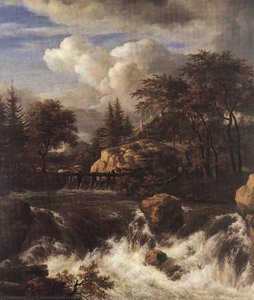
- Waterfall in a Rocky and Mountainous Landscape, showcasing his dramatic use of light and composition to convey the power and beauty of nature.
- View of the Dam and the Damrak in Amsterdam, demonstrating his skill in capturing the bustling energy and architectural details of a Dutch city.
Museums and Collections
Ruisdael’s artistic legacy is preserved across numerous private and institutional collections worldwide, testament to the enduring appeal of his work. Significant holdings can be found at:- The National Gallery in London, which houses a remarkable collection of his landscapes and cityscapes.
- The Rijksmuseum in Amsterdam, the Netherlands’ premier museum, boasts an extensive selection of Ruisdael's paintings, offering a comprehensive overview of his artistic development.
- The Hermitage Museum in St. Petersburg, Russia, holds a substantial collection of Dutch art, including several important works by Ruisdael.
Influence and Legacy
Ruisdael’s influence on landscape painting traditions extends far beyond the borders of the Netherlands. He profoundly shaped the development of landscape art in England, inspiring generations of Romantic painters such as John Constable and Thomas Gainsborough. His work also exerted a significant impact on the Barbizon School in France and the Hudson River School in the United States, each movement drawing inspiration from his dramatic compositions and masterful use of light and atmosphere. Furthermore, Ruisdael’s legacy continues to resonate with Dutch landscape artists today, serving as a cornerstone of their artistic heritage. His ability to capture the essence of the natural world – its beauty, power, and vulnerability – remains a source of enduring fascination for art lovers around the globe.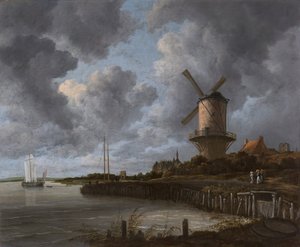
Jacob van Ruisdael
1628 - 1682 , Países Bajos
Breves datos
- Artistic Movement Or Style: Barroco, Escuela de los Países Bajos
- Artists Or Movements Influenced By This Artist:
- Romantismo Inglés
- Escuela de Barbizon
- Artists Who Influenced This Artist: ['Hendrik Vroom']
- Date Of Birth: c.1628/1629, Haarlem
- Date Of Death: 1682, Amsterdam
- Full Name: Jacob Isaackszoon van Ruisdael
- Nationality: Holandés
- Notable Artworks:
- Vista de Haarlem
- Cascada en paisaje montañoso
- Vista del puerto de Amsterdam
- Place Of Birth: Haarlem, Netherlands

