

 Ver en contexto
 Enviar
 Compartir
 Detalles

 Descargar
 Similares
 Radiografía
 Presentación de diapositivas
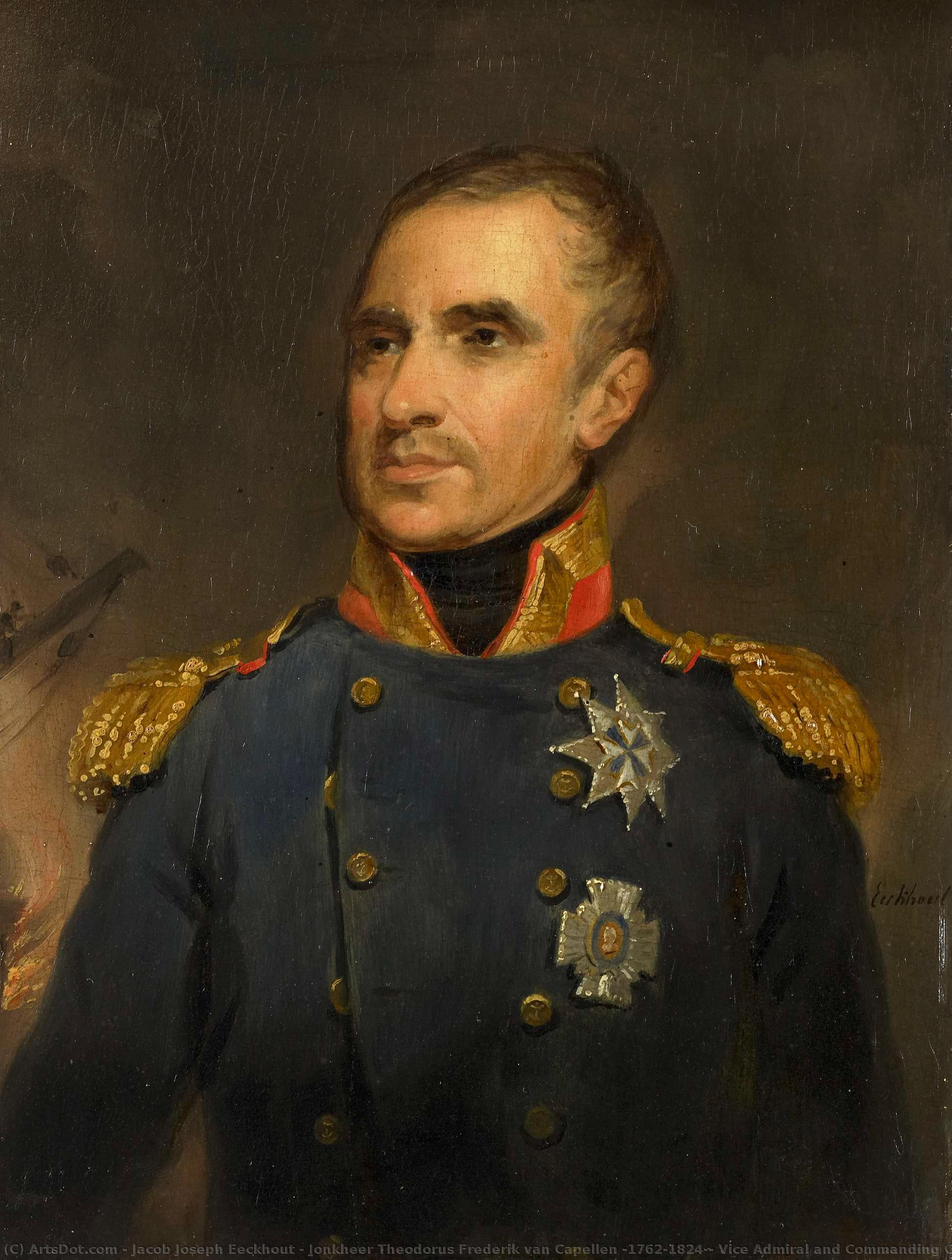
Jonkheer Theodorus Frederik van Capellen (1762-1824), Vice Admiral and Commanding Officer of the Dutch Squadron off Algiers, 1816, Jacob Joseph Eeckhout, 1835
 Neoclassicism
 1835
1835 31.0 x 24.0 cm
 Ver más
Adquiera una imagen digital de alta resolución y optimizada, muy superior a la vista previa en línea.
Cada archivo es preparado meticulosamente por nuestros especialistas internos mediante el uso de herramientas avanzadas y un experto retoque manual. Nos aseguramos de que cada imagen posea una claridad excepcional, una precisión cromática impecable y un detalle minucioso.
El archivo final se entrega por correo electrónico en un plazo de 72 horas, optimizado para su uso inmediato en entornos profesionales, editoriales y de impresión. Esta es la misma calidad en la que confían los estudios de diseño, las editoriales y las galerías de primer nivel.
Imagen Digital
Descarga un archivo de alta resolución para exhibición personal, impresión y proyectos creativos. ( Comprar impresión Comprar pintura hecha a mano)
Incluido en cada pedido de imágenes digitales
Entrega digital experta, garantizada.
Al elegir ArtsDot.com, no solo está adquiriendo una imagen; está recibiendo una obra de arte digital mejorada profesionalmente, elaborada con precisión y respaldada por una garantía de satisfacción. Esto es todo lo que incluye su pedido, automáticamente:

Entrega rápida por email
Recibirá su archivo de imagen digital en alta resolución por correo electrónico en un plazo de 72 horas tras realizar su pedido, listo para su uso inmediato.

Archivo digital optimizado por IA
Su obra de arte se optimiza profesionalmente mediante herramientas avanzadas de IA y edición manual, garantizando el máximo detalle, claridad y precisión cromática.

Reenvío gratuito de por vida
¿Has borrado o perdido tu archivo por error? No te preocupes: te lo volveremos a enviar en cualquier momento, sin coste adicional.

Sin gastos de importación, siempre
Disfrute de su obra de arte al instante sin aduanas, aranceles ni gastos de envío; las descargas digitales siempre están libres de impuestos.

Garantía de fidelidad de color
Garantizamos que su imagen digital refleje los colores originales con la mayor fidelidad posible, mediante el uso de herramientas profesionales y gestión del color.

Garantía de satisfacción de 60 días
Si no está satisfecho con su imagen digital, la revisaremos o le reembolsaremos el 100% en un plazo de 60 días, sin preguntas.

100% Garantía de devolución de dinero
¿No está satisfecho? Obtenga un reembolso completo dentro de los 60 días posteriores a la recepción de su archivo digital, sin necesidad de explicaciones.

Descuentos por pedidos grandes
Compra 3 imágenes, ahorra 10% - Compra 5, ahorra 15% - Compra 10+, ahorra 20%. Ideal para proyectos creativos, galerías y agencias.
Obras relacionadas
Biografía del artista
A Life Immersed in Detail: The World of Jacob Joseph Eeckhout
Jacob Joseph Eeckhout, a Flemish painter born in Antwerp around 1630, remains a somewhat enigmatic figure despite his considerable talent and the meticulous quality of his work. While biographical details are scarce – a common fate for artists operating outside the immediate circle of patronage and fame – what *is* known reveals a life dedicated to capturing the everyday with an almost photographic precision that foreshadows later Realist movements. Eeckhout wasn’t a painter of grand historical narratives or soaring religious visions; instead, he focused on genre scenes, interiors, and portraits, imbuing each canvas with a quiet dignity and remarkable attention to texture and light. His father, also named Jacob Eeckhout, was a respected glass painter, providing young Jacob with an early grounding in artistic technique and likely influencing his keen eye for detail and color. Antwerp at this time was still recovering from the religious and economic upheavals of the 17th century, but it remained a vibrant center for painting, particularly genre painting which catered to a growing middle-class market eager for depictions of domestic life.Early Influences and Artistic Development
Eeckhout’s artistic development was shaped by several key influences prevalent in Antwerp during his formative years. The work of Adriaen Brouwer, known for his rough, earthy depictions of peasant life, undoubtedly left its mark on Eeckhout's early genre scenes. However, Eeckhout refined this approach, moving away from Brouwer’s often-caricatured figures towards a more nuanced and sympathetic portrayal of his subjects. He also absorbed the influence of David Teniers the Younger, another prominent Antwerp painter specializing in peasant festivities and interior scenes. But perhaps the most significant impact came from the work of Pieter de Hooch, whose interiors – bathed in soft light and populated with carefully observed figures – served as a model for Eeckhout’s own compositions. Unlike some of his contemporaries who favored dramatic chiaroscuro, Eeckhout embraced a more subtle use of light, creating an atmosphere of calm intimacy within his paintings. His early works often feature simple interiors, humble kitchens, and scenes of everyday labor, executed with a remarkable degree of realism.Themes and Techniques: A Master of the Mundane
The core of Eeckhout’s artistic output lies in his ability to elevate the mundane to the level of art. He painted interiors – often kitchens or modest living rooms – populated by women engaged in domestic tasks such as cooking, sewing, or caring for children. These are not idealized scenes; they depict the realities of daily life with unflinching honesty. His portraits, while less numerous than his genre paintings, share the same commitment to realism and psychological insight. Eeckhout’s technique is characterized by a meticulous attention to detail – the textures of fabrics, the gleam of pewterware, the subtle play of light on surfaces are all rendered with extraordinary precision. He employed a relatively limited palette, favoring earth tones and muted colors that contribute to the overall sense of calm and intimacy. His brushwork is smooth and refined, creating a polished surface that enhances the clarity of his forms. He was particularly adept at depicting light filtering through windows, casting soft shadows and illuminating the interiors with a gentle glow.Recognition and Historical Significance
Despite not achieving the widespread fame of some of his contemporaries, Eeckhout enjoyed a respectable reputation during his lifetime. He became a member of the Antwerp Guild of Saint Luke in 1657, indicating his acceptance into the established artistic community. His paintings were sought after by collectors and connoisseurs, particularly in the Netherlands and England. While documentation is limited, it’s clear that he had a dedicated clientele who appreciated his skill and sensitivity. In terms of historical significance, Eeckhout occupies an important position as a precursor to later Realist movements.- His commitment to depicting everyday life with honesty and accuracy
- His rejection of idealized forms in favor of realistic portrayals
- His meticulous attention to detail and subtle use of light
Breves datos
- Artistic Movement Or Style: Genre painting, History painting
- Date Of Death: Living
- Full Name: Jacob Joseph Eeckhout
- Notable Artworks:
- The Baptism of Christ
- The Last Supper
- Noah's Ark

