 Ver en contexto
 Enviar
 Compartir
 Detalles

 Descargar
 Similares
 Radiografía
 Presentación de diapositivas
The Battle of Zara

 Ver más
Reproducción al óleo hecha a mano
Óleo sobre lienzo pintado a mano en el tamaño y marco de su elección, realizado por encargo por nuestros artistas. ( Comprar impresión Comprar imagen)




P118B $10

P118H $10

P118W $10

P438Z $10

P508JH $12

P508YH $12

P805H $10

P805Z $10

P919BZ $10

P919G $10

P919XJ $10

P959ZH $10

P968JZ $12

W106C $8

W218G $10

W218JH $8

W218Y $10

W307PJ $10

W316G $10

W316PJ $8

W316Y $10

W398PJ $8

W4111J $10

W500HY $15

W500JH $15

W692G $12

W849H $8

W940BG $15

W953PJ $8




Elija entre nuestros tamaños predefinidos que respetan las proporciones originales de la obra.

Puede ingresar sus propias dimensiones para adaptarse a un marco o espacio específico. Si el tamaño seleccionado no coincide con las proporciones de la imagen original, recortaremos la obra o extenderemos la pintura con elementos adicionales pintados a mano. Se le enviará una maqueta digital para su aprobación antes de comenzar la producción.
Tenga en cuenta que la vista previa en pantalla no refleja el recorte o la extensión reales. Solo la maqueta mostrará con precisión la composición final.
Si bien existen tamaños personalizados, recomendamos seleccionar una dimensión de la lista predefinida para preservar las proporciones originales.
Tras realizar el pedido, el equipo de ArtsDot.com enviará un correo electrónico al cliente para solicitar instrucciones y proporcionarle una vista previa del boceto.
Envío a todo el mundo () en 3-4 semanas en lugar de las 5 semanas estándar. (26 agosto). Sin comprometer la calidad.

Envío exprés gratuito a todo el mundo

Lienzo de lino de alta calidad

Seguro de envío total

Garantía de reembolso de impuestos aduaneros

Garantía de fidelidad cromática exacta

Política de devolución de 60 días (solo por defectos)

Garantía de devolución del 100% del dinero

Descuento por cantidad
 La opción de vidrio solo está disponible en tamaños inferiores a 110 cm.

The Battle of Zara
Técnica de reproducción
Dimensiones de la reproducción
-


Precio total final
$ 613
Descripción de la obra
The Battle of Zara – A Baroque Tempest of Steel and Shadow
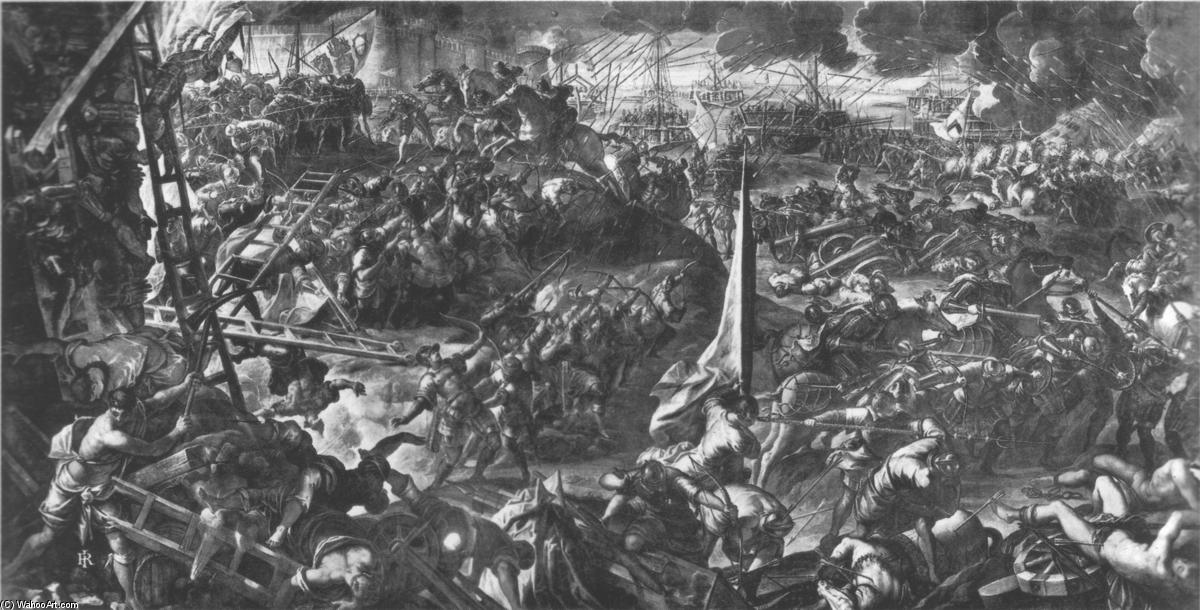
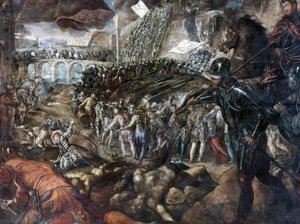
Tintoretto’s “The Battle of Zara” isn't merely a depiction of naval warfare; it’s a visceral plunge into the heart of chaos, a meticulously orchestrated drama rendered in the dramatic chiaroscuro that defined his unique artistic vision. Completed around 1546-1548, this monumental painting—likely conceived as a mural for the Scuola Grande di San Marco – captures not just the event itself, but the very essence of conflict: a maelstrom of movement, violence, and desperate humanity. The monochrome palette, predominantly shades of grey, isn’t a limitation, but rather an intensifier, stripping away distracting color to focus entirely on form, texture, and the overwhelming sense of urgency. It's as if the world has been bleached of its vibrancy, leaving only the stark reality of battle.
The composition is relentlessly dynamic, a carefully constructed pyramid of overlapping forms that pulls the viewer directly into the fray. Ships collide with savage force, soldiers lunge forward in desperate attacks, and debris – splintered wood, shattered masts, and scattered bodies – underscores the brutal cost of victory. Tintoretto masterfully employs diagonal lines to create an illusion of relentless motion; they slice through the scene, guiding our eye across the carnage and emphasizing the instability of the battlefield. The central ship, a towering behemoth partially obscured by the surrounding action, serves as a crucial anchor, grounding the chaotic energy while simultaneously highlighting the scale of the conflict.
A Masterclass in Baroque Drama
Tintoretto’s style is immediately recognizable – a potent blend of Mannerist elegance and raw Baroque intensity. He was known for his rapid painting technique, often working directly on the wall with multiple assistants, resulting in a distinctive layering effect that contributes to the painting's remarkable depth and dynamism. The figures are not idealized; they are rendered with a brutal realism, their muscles straining under exertion, their faces contorted in expressions of fear, rage, or determination. This isn’t a romanticized portrayal of war; it’s an unflinching examination of its horrors.
Notice the masterful use of light and shadow – *chiaroscuro* – which is central to Tintoretto's technique. Dramatic pools of illumination cut through the darkness, highlighting key figures and creating a sense of theatricality. The interplay between light and shadow not only adds depth but also amplifies the emotional impact of the scene, conveying both the intensity of the battle and the vulnerability of those caught within it. The stark contrasts create a powerful visual rhythm, mirroring the relentless pulse of combat.
Symbolism and Historical Context
“The Battle of Zara” commemorates a pivotal naval engagement in 1541 between Venice and the Ottoman Empire, fought off the coast of Dalmatia. This battle was strategically crucial for Venetian control of the Adriatic Sea and represented a significant victory against a formidable adversary. Tintoretto’s painting serves as both a historical record and a potent symbol of Venetian military prowess and resilience. The sheer scale of the composition reflects the importance of the event, while the depiction of intense action underscores Venice's determination to defend its maritime interests.
Beyond the specific historical context, the painting also resonates with broader themes of conflict, power, and human endurance. The chaotic scene embodies the unpredictable nature of war, highlighting the vulnerability of individuals caught in the crossfire. The figures themselves—soldiers, sailors, and civilians alike—represent the diverse range of those affected by armed conflict, emphasizing its universal impact.
A Legacy of Dramatic Power
Tintoretto’s “The Battle of Zara” is a testament to his extraordinary artistic skill and dramatic vision. It remains one of his most celebrated works, admired for its dynamic composition, masterful use of light and shadow, and unflinching portrayal of battle. Reproductions capture much of the original's power, offering a window into this pivotal moment in Venetian history and a compelling exploration of human conflict. Its enduring appeal lies not only in its historical significance but also in its ability to evoke a profound emotional response – a sense of awe, tension, and perhaps even a sobering reflection on the cost of war.
Obras relacionadas
Biografía del artista
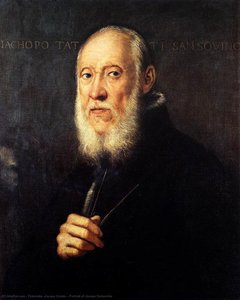
Jacopo Tintoretto (1518-1594)
Primeros Años y Aprendizaje
- Nacido Jacopo Robusti en Venecia alrededor de finales de septiembre o principios de octubre de 1518.
- Su padre, Battista Robusti, era tintorero – por lo tanto, el apodo “Tintoretto” (“el pequeño tintorero”).
- Los detalles de su formación formal son escasos; los informes sugieren un breve y fallido aprendizaje con Tiziano.
- Probablemente se auto-enseñó, estudiando la anatomía a través de la disección y el dibujo a partir de moldes y relieves.
Desarrollo Artístico y Estilo
- El estilo de Tintoretto se caracteriza por composiciones dramáticas, figuras enérgicas y un audaz uso de la perspectiva.
- Sus primeras obras muestran una mezcla de influencias, incluyendo a Tiziano, Miguel Ángel y otros maestros venecianos.
- Desarrolló una técnica distintiva que involucraba pinceladas rápidas y efectos de iluminación innovadores – lo que le valió el apodo “Il Furioso” (“el furioso”).
- Su obra se movió hacia escenas cada vez más dinámicas y cargadas emocionalmente, a menudo con complejas disposiciones espaciales.
Obras Maestras y Logros
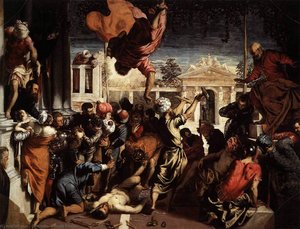
- El Milagro de San Marcos Liberando al Esclavo (1548): Un poderoso ejemplo de su composición dramática y habilidades de perspectiva.
- Trabajos en la Scuola Grande di San Rocco, Venecia: Incluyendo “La Asunción de la Virgen” y numerosos otros cuadros, que muestran su maestría en la narrativa y la escala.
- La Última Cena (1592-1594): Una obra monumental que demuestra su enfoque innovador para un tema tradicional.
- Numerosas pinturas religiosas e históricas para iglesias y palacios venecianos.
Influencias y Legado
- Fue influenciado por el colorismo de Tiziano y el estilo de figuras dinámicas de Miguel Ángel.
- La obra de Tintoretto conectó los espacios entre el Renacimiento y el Barroco, influyendo en artistas posteriores con sus composiciones dramáticas y pinceladas expresivas.
- Su uso innovador de la luz y la sombra anticipó técnicas utilizadas por Caravaggio y otros maestros del Barroco.
- Dejó atrás un vasto cuerpo de trabajo que continúa inspirando y cautivando al público hoy en día.
Significado Histórico
- Tintoretto fue uno de los tres grandes pintores venecianos del siglo XVI, junto con Tiziano y Paolo Veronese.
- Jugó un papel crucial en la configuración del panorama artístico de Venecia durante el Renacimiento tardío.
- Su obra refleja la fervor religioso y las tensiones políticas de su tiempo.
- El legado de Tintoretto como maestro de composición dramática y pintura expresiva perdura, consolidando su lugar como uno de los artistas más importantes de la historia.
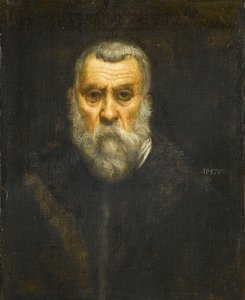
Jacopo Tintoretto
1518 - 1594 , Italia
Datos clave
- Artistas Influenciados: ['Caravaggio']
- Artistas Que Influyeron:
- Tiziano
- Miguel Ángel
- Fecha De Muerte: 1594
- Fecha De Nacimiento: 1518
- Lugar De Nacimiento: Venecia, Italia
- Movimiento Artístico: Manierismo, Renacimiento
- Nacionalidad: Veneciano
- Nombre Completo: Jacopo Tintoretto
- Obras Notables:
- El Milagro de San Marcos
- La Asunción de la Virgen
- La Última Cena
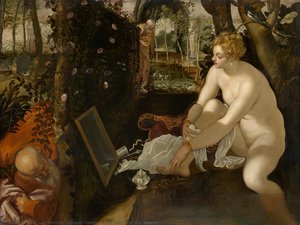
- Susanna y los Ancianos
Artículos relacionados

Jacopo Tintoretto: Las 25 Obras Maestras del Genio Veneciano | Arte y Decoración en ArtsDot
Descubre las 25 obras maestras de Jacopo Tintoretto, el genio veneciano del Renacimiento. Explora su arte dramático, composiciones innovadoras y paleta vibrante. Reproducciones de alta calidad en ArtsDot.com para transformar tu hogar.

Drama Barroca: Llevando la Grandeza y la Emoción a los Interiores Contemporáneos
Descubre cómo el drama y la grandeza del arte barroco pueden transformar tus interiores. Guía experta, inspiración y reproducciones de alta calidad en .

The Dramatic Flourish: Exploring the Baroque Movement's Enduring Legacy in Art History
Explore the dramatic world of Baroque art! Discover iconic artists like Caravaggio & Rubens, defining techniques, and its lasting impact on art history. Expert insights for collectors & enthusiasts at ArtsDot.

Barroco Sublime: 10 Obras Maestras que Definieron una Época |
Descubre las 10 obras maestras del Barroco que marcaron una época. Caravaggio, Bernini y Velázquez cobran vida en . Reproducciones de arte de calidad museo para decorar tu hogar con elegancia. ¡Explora la colección online!

The Visceral Stage: Exploring Dramatic Narratives & Emotional Intensity in Baroque Art
Explore the dramatic world of Baroque art! Discover iconic masters like Caravaggio & Rembrandt, their techniques, and the movement's lasting impact. Expert insights for collectors & enthusiasts at ArtsDot.