 Ver en contexto
 Enviar
 Compartir
 Detalles

 Descargar
 Similares
 Radiografía
 Presentación de diapositivas
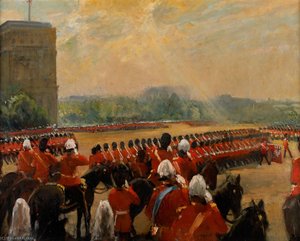
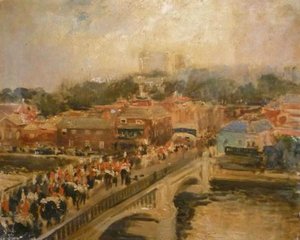
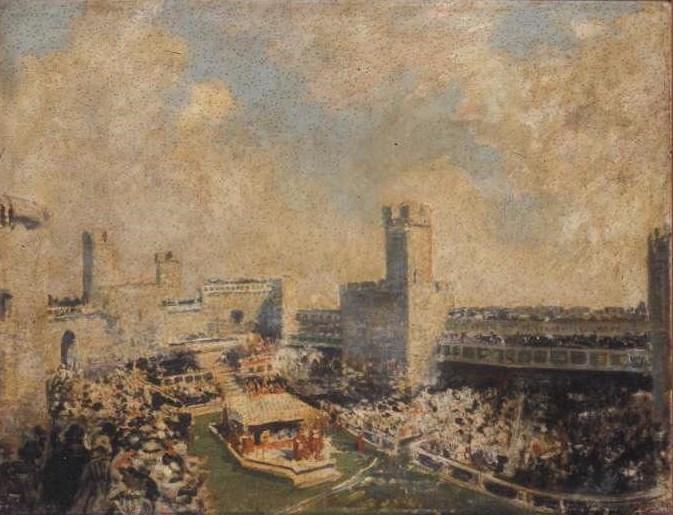
Investiture of the Prince of Wales, George V at Caernavon Castle
 Impressionismo
 1910
1910 82.0 x 106.0 cm
 Museo de las Bellas Artes
 Ver más
Giclée / Impresión de arte
Impresiones giclée o en lienzo de calidad de museo con producción rápida y opciones de acabado flexibles. ( Comprar pintura hecha a mano Comprar imagen)




P118B $10

P118H $10

P118W $10

P438Z $10

P508JH $12

P508YH $12

P805H $10

P805Z $10

P919BZ $10

P919G $10

P919XJ $10

P959ZH $10

P968JZ $12

W106C $8

W218G $10

W218JH $8

W218Y $10

W307PJ $10

W316G $10

W316PJ $8

W316Y $10

W398PJ $8

W4111J $10

W500HY $15

W500JH $15

W692G $12

W849H $8

W940BG $15

W953PJ $8




Elija entre nuestros tamaños predefinidos que respetan las proporciones originales de la obra.

Puede introducir sus propias dimensiones para adaptarse a un marco o espacio específico. Si el tamaño seleccionado no coincide con las proporciones de la imagen original, recortaremos la obra de arte o extenderemos la imagen con un borde con efecto espejo o de color sólido. Se enviará una maqueta digital para su aprobación antes de que comience la producción.
Tenga en cuenta que la vista previa en pantalla no refleja el recorte o la extensión real. Solo la maqueta mostrará con precisión la composición final.
Aunque existen tamaños personalizados, recomendamos seleccionar una dimensión de la lista predefinida para preservar las proporciones originales.
Envío a todo el mundo () en 2 semanas en lugar de las 4/5 semanas estándar. (6 septiembre)

Envío exprés gratuito a todo el mundo

Lienzo de lino de alta calidad

Seguro de envío total

Garantía de reembolso de impuestos aduaneros

Garantía de fidelidad cromática exacta

Política de devolución de 100 días (solo por defectos)

Garantía de devolución del 100% del dinero

Descuento por cantidad
 La opción de vidrio solo está disponible en tamaños inferiores a 110 cm.

Investiture of the Prince of Wales, George V at Caernavon Castle
Giclée / Impresión de arte
Dimensiones de la reproducción
-


Precio total final
$ 62
Investiture of the Prince of Wales, George V at Caernavon Castle: A Moment Frozen in Time
Jacques-Émile Blanche’s “Investiture of the Prince of Wales, George V at Caernavon Castle” transcends mere depiction; it embodies a pivotal juncture in British history—the ceremonial affirmation of Edward VIII's royal lineage at Caernavon Castle on June 1st, 1910. This monumental oil painting captures not just an event but also the palpable atmosphere of grandeur and tradition that defined the Edwardian era.
A Vision of Regal Ceremony
Blanche’s artistic approach is characterized by a distinctive Impressionistic style—loose brushstrokes prioritizing light and color over meticulous detail. He eschews academic conventions, favoring instead an expressive technique that seeks to convey emotion rather than strict realism. The artist skillfully employs muted tones—primarily ochres, umbers, and siennas—to create a sense of depth and luminosity, mirroring the expansive vista of Caernavon Castle itself.
The Scene Unfolds: A Tableau of Power
The canvas pulsates with activity. Blanche meticulously portrays a vast crowd gathered around the castle walls, reflecting the significance of this occasion. Figures jostle for position on boats and traverse the cobblestone streets, conveying the sheer scale of the celebration. Dominating the composition are several horses—some positioned centrally, others edging towards the periphery—representing royal authority and prestige.
Symbolism Embedded in Color and Composition
Beyond its visual splendor, “Investiture” is laden with symbolic resonance. The castle itself stands as a testament to Welsh history and tradition, marking the Prince of Wales’s acceptance of his hereditary title—a cornerstone of British monarchy. Blanche's restrained palette reinforces this solemn mood, emphasizing the importance of ritual and ceremony.
A Legacy of Artistic Impression
Executed in 1910, Blanche’s masterpiece exemplifies the spirit of Impressionism—a movement that prioritized subjective experience over objective representation. It remains a captivating study of light, color, and human emotion, continuing to inspire admiration for its artistic merit and historical significance. Currently housed at Musée Des Beaux Arts de Rouen, France, “Investiture” serves as an enduring emblem of Edwardian grandeur.
- Artist: Jacques-Émile Blanche
- Birth Year: 1861
- Death Year: 1942
- Birth City: Paris
- Nationality: France
The painting’s location is Musée Des Beaux Arts de Rouen, France.
Obras relacionadas

Biografía del artista
Early Life and Training
Jacques Émile Blanche (1861–1942) was born in Paris on January 1, 1861, France. He descended from a family of successful physicians and grew up in the affluent Parisian neighborhood of Passy, surrounded by prominent families and celebrated artists. His father, Émile Blanche, a distinguished pathologist, nurtured his son’s artistic inclinations, fostering an environment rich in intellectual stimulation. As a young boy, Blanche encountered many notable writers and painters—including Jules Michelet, Charles Renouvier, Hector Berlioz, Camille Corot, Louis Français—who profoundly shaped his worldview and artistic sensibilities. Notably, he met Edouard Manet early on, whose influence would permeate Blanche’s oeuvre throughout his life.Artistic Career
Blanche pursued painting largely independently, honing his craft through observation and experimentation rather than formal instruction. Despite lacking a structured academic background, he cultivated an exceptional talent for capturing the essence of his subjects—primarily portraits—with remarkable sensitivity and precision. He began exhibiting his work at the Salon in 1882, establishing a prolific artistic career marked by consistent engagement with the Parisian art scene. His distinctive style—characterized by loose brushwork and subdued coloration—was heavily influenced by Impressionism and English painters like Thomas Gainsborough and John Singer Sargent, reflecting a fascination for both classical elegance and modern innovation. Blanche’s meticulous attention to detail and his ability to convey psychological depth cemented his reputation as one of the foremost portraitists of his era.Influences and Style
Blanche's artistic vision was decisively shaped by Edouard Manet and James McNeill Whistler, whom he admired greatly. Like these artists, Blanche sought to depict reality truthfully, employing bold brushstrokes and expressive color palettes to convey the inner lives of his subjects. His portraits—such as “Portrait of Marcel Proust”—are renowned for their nuanced portrayal of character and intellectual curiosity.Notable Works and Exhibitions
Blanche’s artistic legacy extends beyond individual paintings; he played a crucial role in establishing Dieppe as an internationally recognized art colony, attracting artists from across Europe who sought inspiration in its coastal landscapes and vibrant cultural atmosphere. His magnum opus—the monumental group portrait of Norwegian landscape painter Frits Thaulow and his family—remains a testament to his artistic prowess and enduring fascination with capturing the complexities of human relationships. Blanche’s paintings are housed in prestigious museums worldwide, including the Musée des Beaux-Arts de Rouen and Tate Gallery London, ensuring that his work continues to inspire admiration and scholarly study for generations to come.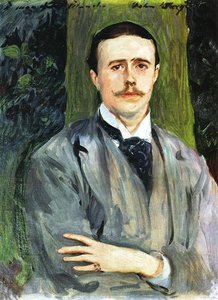
Jacques-Émile Blanche
1861 - 1942 , Francia
Datos clave
- Artistic Movement Or Style: Impressionism
- Artists Who Influenced This Artist:
- Edouard Manet
- James McNeill Whistler
- Date Of Birth: January 1, 1861
- Date Of Death: September 30, 1942
- Full Name: Jacques Émile Blanche
- Nationality: French
- Notable Artworks:
- The Kreutzer Sonata
- Portrait of Marcel Proust
- Place Of Birth: Paris, France