 Ver en contexto
 Enviar
 Compartir
 Detalles

 Descargar
 Similares
 Radiografía
 Presentación de diapositivas
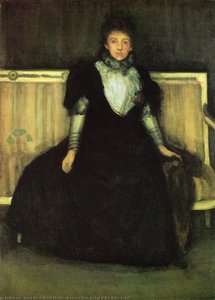
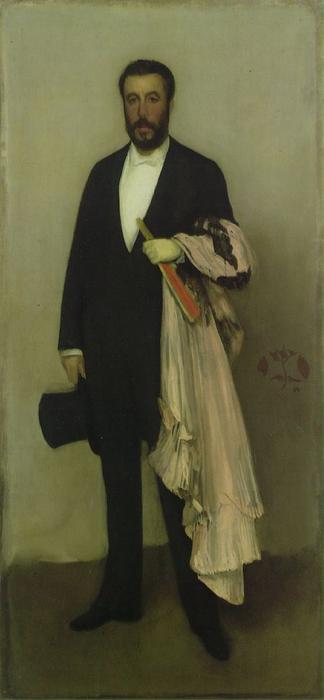
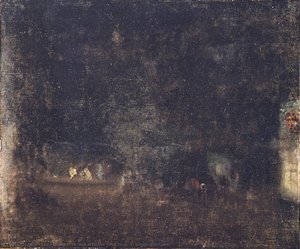
Arrangement en couleurs pâles et noires

 Ver más
Reproducción al óleo hecha a mano
Óleo sobre lienzo pintado a mano en el tamaño y marco de su elección, realizado por encargo por nuestros artistas. ( Comprar impresión Comprar imagen)




P118B $10

P118H $10

P118W $10

P438Z $10

P508JH $12

P508YH $12

P805H $10

P805Z $10

P919BZ $10

P919G $10

P919XJ $10

P959ZH $10

P968JZ $12

W106C $8

W218G $10

W218JH $8

W218Y $10

W307PJ $10

W316G $10

W316PJ $8

W316Y $10

W398PJ $8

W4111J $10

W500HY $15

W500JH $15

W692G $12

W849H $8

W940BG $15

W953PJ $8




Elija entre nuestros tamaños predefinidos que respetan las proporciones originales de la obra.

Puede ingresar sus propias dimensiones para adaptarse a un marco o espacio específico. Si el tamaño seleccionado no coincide con las proporciones de la imagen original, recortaremos la obra o extenderemos la pintura con elementos adicionales pintados a mano. Se le enviará una maqueta digital para su aprobación antes de comenzar la producción.
Tenga en cuenta que la vista previa en pantalla no refleja el recorte o la extensión reales. Solo la maqueta mostrará con precisión la composición final.
Si bien existen tamaños personalizados, recomendamos seleccionar una dimensión de la lista predefinida para preservar las proporciones originales.
Tras realizar el pedido, el equipo de ArtsDot.com enviará un correo electrónico al cliente para solicitar instrucciones y proporcionarle una vista previa del boceto.
Envío a todo el mundo () en 3-4 semanas en lugar de las 5 semanas estándar. (30 agosto). Sin comprometer la calidad.

Envío exprés gratuito a todo el mundo

Lienzo de lino de alta calidad

Seguro de envío total

Garantía de reembolso de impuestos aduaneros

Garantía de fidelidad cromática exacta

Política de devolución de 60 días (solo por defectos)

Garantía de devolución del 100% del dinero

Descuento por cantidad
 La opción de vidrio solo está disponible en tamaños inferiores a 110 cm.

Arrangement en couleurs pâles et noires
Técnica de reproducción
Dimensiones de la reproducción
-


Precio total final
$ 263
Introduction to James Abbott McNeill Whistler
James Abbott McNeill Whistler (1834–1903) stands as an enigmatic figure in American art history—a painter who fiercely defended “art for art’s sake,” rejecting moralistic narratives and prioritizing aesthetic contemplation above all else. His distinctive butterfly signature became synonymous with his artistic vision, marking a radical departure from the prevailing trends of his era. Whistler's journey began in Lowell, Massachusetts, where he absorbed influences from Transcendentalism and Romanticism before embarking on a restless exploration of Europe, culminating in a lifelong devotion to Impressionism and its rejection of academic conventions. He was profoundly affected by Ruskin’s writings on beauty and morality, which instilled within him a conviction that art should transcend utilitarian concerns and strive for pure aesthetic experience. This belief shaped his entire artistic practice and cemented his legacy as one of the most influential artists of the late nineteenth century.- Early Influences: Whistler’s formative years were marked by exposure to diverse environments—Lowell, Connecticut, and Stonington—each contributing to his developing aesthetic sensibilities.
- Education & Artistic Training: He pursued formal artistic training at the Imperial Academy of Arts in St. Petersburg, mastering drawing from plaster casts and honing his observational skills.
- The Ruskin Connection: Whistler’s encounter with John Ruskin profoundly impacted his worldview, fostering a belief that art should prioritize beauty and moral contemplation over didactic purpose.
Exploring Whistler's Distinctive Style: Tonalism
Whistler’s artistic breakthrough arrived in 1865 with “Variations in Flesh Colour and Green,” a seminal work of tonalism—a movement he championed that prioritized mood, atmosphere, and tonal values over detailed color representation. Rejecting the Impressionists’ focus on capturing fleeting visual sensations, Whistler sought to evoke emotion through subtle gradations of light and shadow, creating paintings that resembled musical harmonies rather than photographic reproductions. This approach distinguished him from his contemporaries and established him as a pioneer of a new aesthetic sensibility—one that valued contemplation and emotional resonance above mere visual accuracy. He famously declared, “Art is not what you see but what you feel when you look at it,” encapsulating the core tenets of tonalism and reflecting Whistler’s unwavering commitment to artistic integrity.- Rejecting Impressionism: Whistler deliberately distanced himself from Impressionist techniques, prioritizing tonal harmony over coloristic vibrancy.
- Musical Inspiration: He likened his paintings to musical compositions, aiming to convey emotional depth through subtle shifts in tone and luminosity.
- The Pursuit of Atmosphere: Whistler’s primary goal was to capture the essence of a scene—its mood and ambiance—rather than its precise visual details.
“Arrangement in Flesh Colour and Black”: A Portrait of Quietude
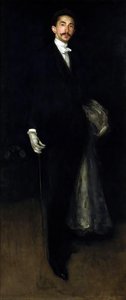
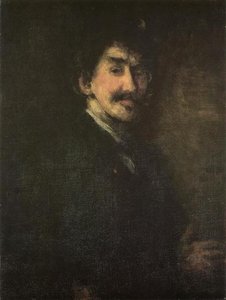
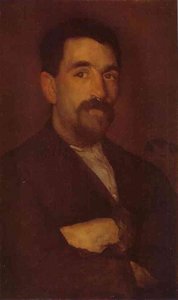
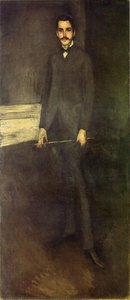
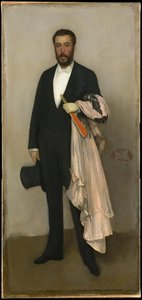
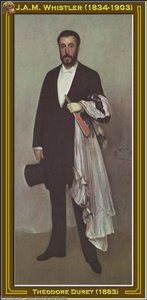
“Arrangement in Flesh Colour and Black,” painted between 1883 and 1884, exemplifies Whistler’s tonalist style at its finest—a masterful distillation of aesthetic principles into a deceptively simple composition. The portrait depicts Theodore Duret, a prominent French art critic and collector, bathed in soft, muted hues that convey an overwhelming sense of serenity and tranquility. Whistler skillfully employs tonal values to create depth and dimension, subtly modulating light and shadow to sculpt the figure’s form and imbue the scene with an ethereal quality. The limited palette—primarily shades of gray, black, and white—serves as a deliberate counterpoint to the vibrant colors favored by Impressionists, emphasizing Whistler's belief that beauty resides in restraint and understated elegance.- Symbolism of Color: Whistler’s use of muted hues reflects his conviction that color should serve primarily as an instrument of mood and atmosphere.
- Light & Shadow Manipulation: He meticulously crafted the painting's tonal values to sculpt the figure’s form and enhance its visual impact.
- The Aesthetic Ideal: “Arrangement in Flesh Colour and Black” embodies Whistler’s overarching aesthetic vision—one rooted in contemplation, harmony, and a rejection of superficial ornamentation.
Legacy & Influence
James Abbott McNeill Whistler's unwavering dedication to "art for art's sake" profoundly influenced the artistic landscape of his time and continues to inspire artists today. His pioneering exploration of tonalism challenged conventional notions of beauty and paved the way for a new aesthetic sensibility—one that prioritized emotional resonance over visual realism. “Arrangement in Flesh Colour and Black,” alongside other iconic Whistler paintings, stands as testament to his enduring legacy—a reminder that true artistic achievement lies not merely in technical skill but in conveying profound emotion through carefully considered form and color. His influence extends beyond painting itself, permeating discussions of art criticism and shaping perceptions of aesthetic experience.- Impact on Art Criticism: Whistler championed a new approach to art evaluation—one that prioritized formal qualities over narrative content.
- Continuing Inspiration: Whistler’s artistic principles continue to resonate with contemporary artists who seek to express emotion through understated visual language.
- A Vision of Beauty: Whistler's unwavering belief in "art for art's sake" remains a cornerstone of aesthetic thought—a testament to his enduring contribution to the history of art.
Obras relacionadas
Biografía del artista
James Abbott McNeill Whistler: Una Vida en el Arte
Primeros Años e Influencias
- Nacido el 14 de julio de 1834 en Lowell, Massachusetts, la vida temprana de James Abbott McNeill Whistler fue moldeada por la carrera de su padre como ingeniero ferroviario.
- Las frecuentes mudanzas le inculcaron adaptabilidad y exposición a diversos entornos.
- Asistió brevemente a la Academia Militar de los Estados Unidos en West Point, pero descubrió que no se adecuaba a sus inclinaciones artísticas.
- Un puesto posterior con la Encuesta Costera y Geodésica de EE. UU retrasó, pero no extinguió, su búsqueda del arte.
- Sus años formativos estuvieron marcados por un temprano interés en el dibujo y un deseo de convertirse en artista profesional.
Desarrollo Artístico y Comienzos Parisinos
- Whistler se mudó a París en 1855, un momento crucial en su viaje artístico.
- Estudió bajo la tutela de Sébastien Bouré, perfeccionando sus habilidades en pintura al óleo, acuarela y grabado.
- Las primeras obras reflejaban influencias de los pintores realistas franceses y la Escuela de Barbizon.
- Whistler rápidamente desarrolló un estilo distintivo caracterizado por armonías tonales y efectos atmosféricos.
Temas Clave y Estilo Artístico
- Whistler defendió el concepto de “arte por el arte mismo”, rechazando las narrativas didácticas o moralizadoras en favor de consideraciones estéticas.
- Su obra a menudo se centraba en capturar sutiles matices de luz, color y atmósfera.
- Con frecuencia empleaba paletas limitadas y pinceladas delicadas para crear estados de ánimo evocadores.
- Nocturnos, pinturas atmosféricas de escenas crepusculares, se convirtieron en un elemento distintivo de su obra.
- Los retratos también eran centrales en su práctica, a menudo enfatizando los arreglos formales y las relaciones tonales sobre la semejanza estricta.
Obras Notables y Logros Importantes
- El Herrero (1861): Una cautivadora representación de un taller de herrero que muestra el dominio de Whistler de la luz y la sombra.
- Retrato de Charles Lang Freer (1873): Demuestra su habilidad para capturar la esencia de sus sujetos a través de sutiles variaciones tonales.
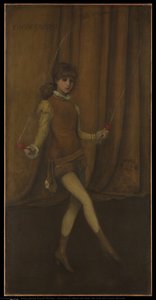
- Brown and Gold: The Gold Girl—Connie Gilchrist (1876-77): Un ejemplo quintessential del Tonalismo, que presenta un uso innovador del color y la composición.
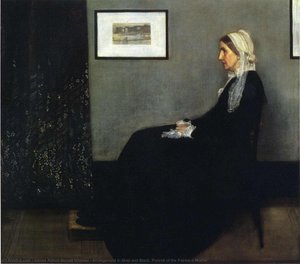
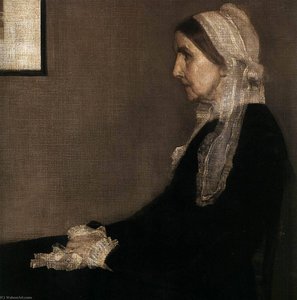
- Arrangement in Grey and Black No. 1 (Whistler’s Mother) (1871): Tal vez su obra más famosa, una imagen icónica de la maternidad victoriana y un testimonio de su enfoque formalista.
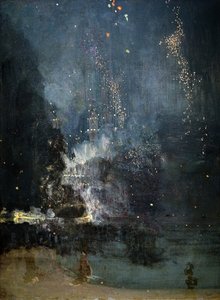
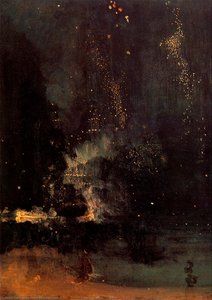
- Nocturne in Black and Gold – The Falling Rocket (1875): Una pintura controvertida que provocó una demanda por difamación contra el crítico de arte John Ruskin, destacando la defensa de Whistler del arte autónomo.
Influencias y Legado
- Whistler fue influenciado por las estampas japonesas (ukiyo-e), que informaron sus principios compositivos y su énfasis en los patrones decorativos.
- También admiró la obra de pintores españoles como Velázquez, particularmente su dominio de los valores tonales.
- Su defensa del “arte por el arte mismo” tuvo un impacto profundo en el movimiento estético en Inglaterra y América.
- La influencia de Whistler se extendió a las generaciones posteriores de artistas que adoptaron enfoques formalistas y exploraron el potencial expresivo del color y la composición.
- Dejó una marca indeleble en el arte estadounidense, desafiando las nociones convencionales sobre el propósito artístico y allanando el camino al modernismo.
Significado Histórico
- La carrera de Whistler coincidió con un período de importantes cambios sociales y culturales tanto en Europa como en América.
- Su obra desafió las sensibilidades victorianas y contribuyó a un cambio más amplio hacia el esteticismo y el individualismo.
- La demanda por difamación contra Ruskin elevó el perfil de Whistler e impulsó importantes debates sobre la naturaleza del arte crítico y la libertad artística.
- Sigue siendo una figura clave en la historia del arte estadounidense, celebrada por su estilo innovador, rigor intelectual y compromiso inquebrantable con los principios artísticos.
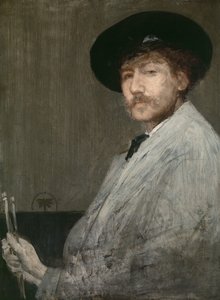
James Abbott McNeill Whistler
1834 - 1903 , Estados Unidos de América
Datos clave
- Artistas Influenciados: ['Movimiento Estético']
- Artistas Que Influyeron:
- Sebastián Bouré
- Velázquez
- Fecha De Muerte: 1903
- Fecha De Nacimiento: 14 de julio de 1834
- Lugar De Nacimiento: Lowell, Estados Unidos
- Movimiento Artístico: Tonalismo, Esteticismo
- Nacionalidad: Estadounidense
- Nombre Completo: James Abbott McNeill Whistler
- Obras Notables:
- The Forge
- Retrato de Charles Lang Freer
- Brown and Gold
- La madre de Whistler
- Nocturno en Negro y Oro
Artículos relacionados
James Abbott McNeill Whistler: Las 25 Obras Maestras del Maestro del Arte y la Atmósfera | ArtsDot
Descubre las 25 obras maestras de James Abbott McNeill Whistler, el maestro del impresionismo y la armonía en arte. Explora retratos icónicos, nocturnos evocadores y su innovadora paleta de colores. Reproducciones de arte exclusivas en ArtsDot.com.

Alfred Munnings: Las 25 Obras Maestras del Pintor de Caballos | ArtsDot
Descubre las 25 obras maestras de Alfred Munnings, el pintor británico de caballos por excelencia. Explora su impresionismo inglés, escenas campestres y técnica única. Encuentra reproducciones de arte de alta calidad en ArtsDot.com.
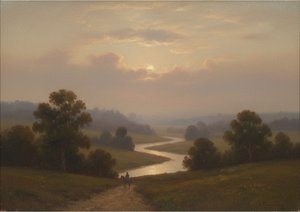
Visiones Atmosféricas: Explorando el Tonalismo en la Pintura Americana
Descubre el tonalismo americano: su historia, artistas clave como Inness y Whistler, características únicas y legado en el arte moderno. Análisis experto y profundo.

The Subdued Palette: Emotional Resonance & Aesthetic Impact of Muted Tones in Art
Explore the captivating world of muted tones in art! Discover Tonalism's history, Whistler’s influence & how subtle color palettes evoke emotion. Find serene landscapes and expert advice for integrating these timeless pieces into your home with ArtsDot.
The Subtleties of Neutrality: Exploring Emotional Resonance & Aesthetic Impact in Artworks
Explore the captivating world of muted tones in art! Discover Tonalism's history, Whistler’s influence & how subtle color palettes evoke emotion. Find serene landscapes and expert advice for integrating these timeless pieces into your home with ArtsDot.