 Ver en contexto
 Enviar
 Compartir
 Detalles

 Descargar
 Similares
 Radiografía
 Presentación de diapositivas
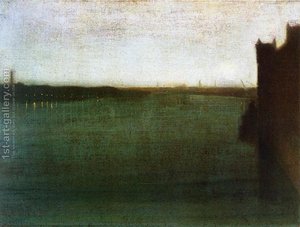
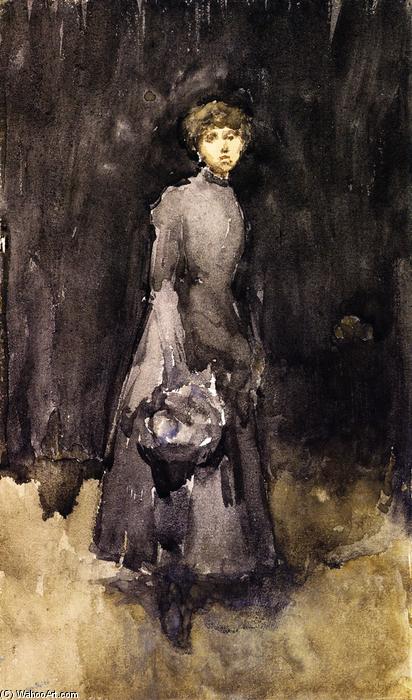
Nota en Negro y Gris


 Ver más
Reproducción al óleo hecha a mano
Óleo sobre lienzo pintado a mano en el tamaño y marco de su elección, realizado por encargo por nuestros artistas. ( Comprar impresión Comprar imagen)




P118B $10

P118H $10

P118W $10

P438Z $10

P508JH $12

P508YH $12

P805H $10

P805Z $10

P919BZ $10

P919G $10

P919XJ $10

P959ZH $10

P968JZ $12

W106C $8

W218G $10

W218JH $8

W218Y $10

W307PJ $10

W316G $10

W316PJ $8

W316Y $10

W398PJ $8

W4111J $10

W500HY $15

W500JH $15

W692G $12

W849H $8

W940BG $15

W953PJ $8




Elija entre nuestros tamaños predefinidos que respetan las proporciones originales de la obra.

Puede ingresar sus propias dimensiones para adaptarse a un marco o espacio específico. Si el tamaño seleccionado no coincide con las proporciones de la imagen original, recortaremos la obra o extenderemos la pintura con elementos adicionales pintados a mano. Se le enviará una maqueta digital para su aprobación antes de comenzar la producción.
Tenga en cuenta que la vista previa en pantalla no refleja el recorte o la extensión reales. Solo la maqueta mostrará con precisión la composición final.
Si bien existen tamaños personalizados, recomendamos seleccionar una dimensión de la lista predefinida para preservar las proporciones originales.
Tras realizar el pedido, el equipo de ArtsDot.com enviará un correo electrónico al cliente para solicitar instrucciones y proporcionarle una vista previa del boceto.
Envío a todo el mundo () en 3-4 semanas en lugar de las 5 semanas estándar. (24 agosto). Sin comprometer la calidad.

Envío exprés gratuito a todo el mundo

Lienzo de lino de alta calidad

Seguro de envío total

Garantía de reembolso de impuestos aduaneros

Garantía de fidelidad cromática exacta

Política de devolución de 60 días (solo por defectos)

Garantía de devolución del 100% del dinero

Descuento por cantidad
 La opción de vidrio solo está disponible en tamaños inferiores a 110 cm.

Nota en Negro y Gris
Técnica de reproducción
Dimensiones de la reproducción
-


Precio total final
$ 263
Descripción de la obra
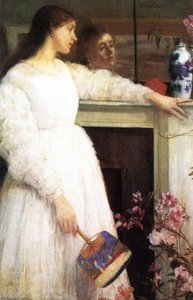
Harmony in Green and Rose The Music Room
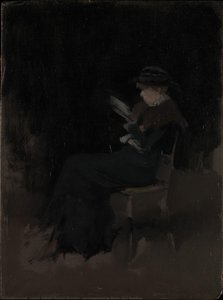
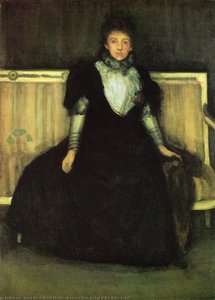
James Abbott McNeill Whistler’s 1883 watercolor, “Note in Black and Grey,” isn’t simply a depiction; it’s an evocation. It exists not to tell a story, but to breathe a mood – one of profound quietude, introspective melancholy, and a delicate beauty that lingers like a fading memory. Painted during a period where Whistler fiercely championed ‘art for art’s sake,’ the work stands as a testament to his belief in the power of aesthetic experience divorced from narrative or moralizing intent. It's a piece that invites contemplation, urging the viewer to lose themselves within its subtle harmonies and nuanced tones.
The Allure of Suggestion: Form and Atmosphere
At the heart of “Note in Black and Grey” lies a solitary female figure, rendered with an exquisite sensitivity. She isn’t presented with sharp definition or meticulous detail; rather, Whistler masterfully suggests her presence through flowing lines and delicate washes of color. Positioned slightly off-center, she feels both present and distant, enhancing the sense of isolation that permeates the composition. The surrounding space is equally important – a hazy, indistinct background that seems to envelop the figure in an atmosphere of quiet contemplation. Whistler’s technique leans towards the Impressionistic, though it predates the full flowering of the French movement. He prioritizes capturing an *impression* of a woman lost in thought, focusing on light and shadow to sculpt form and evoke emotion. The deliberate avoidance of precise realism isn't a lack of skill, but rather a conscious artistic choice – a rejection of photographic accuracy in favor of emotional resonance.
A Symphony of Tones: Technique and Artistic Philosophy
The watercolor technique itself is central to the painting’s captivating effect. Whistler employed wet-on-wet blending with remarkable skill, allowing colors to softly merge and create a hazy, dreamlike quality. Layered washes build depth and luminosity, while visible brushstrokes add texture and energy, preventing the image from feeling static or overly refined. This masterful handling of watercolor demonstrates his exceptional ability to manipulate light and shadow, creating a mood that is both serene and subtly melancholic. Whistler’s artistic philosophy was deeply rooted in aestheticism, and he frequently titled his works with musical terms – “Arrangements,” “Harmonies,” and “Nocturnes” – to emphasize the importance of tonal relationships and visual harmony over narrative content. He believed that art should be judged solely on its aesthetic merits, a conviction famously tested during a libel suit against John Ruskin, solidifying his commitment to artistic independence.
Echoes of Emotion: Symbolism and Interior Resonance
While Whistler deliberately avoided explicit symbolism, “Note in Black and Grey” subtly suggests themes of loneliness, contemplation, and perhaps even grief. The somber color scheme and the isolated figure contribute to this emotional weight, while the dark, indistinct background creates a sense of enclosure, drawing attention inward. The painting doesn’t offer easy answers; instead, it invites viewers to project their own emotions and experiences onto the scene, making it a deeply personal work that resonates with anyone who has experienced moments of quiet solitude or introspective sadness. For collectors, “Note in Black and Grey” represents an important example of American tonalism and aesthetic movement art. Its muted palette makes it remarkably versatile for interior design, complementing both modern minimalist spaces and more traditional settings, adding a touch of understated elegance and emotional depth. It’s ideally suited for bedrooms or studies seeking a calming atmosphere, pairing beautifully with neutral color schemes and natural materials.
Historical Context & Legacy
Painted in 1883, “Note in Black and Grey” embodies Whistler’s unwavering dedication to the aesthetic ideal—the belief that art should exist independently of moral or didactic purposes. This conviction stemmed from his profound disagreement with Ruskin's critique of Impressionism, where Ruskin argued for art's role in conveying social commentary. Whistler countered this viewpoint by asserting that true beauty resided solely in its visual qualities, prioritizing harmony and tonal relationships above narrative storytelling.
The painting’s influence extends beyond the realm of artistic circles. It became a cornerstone of Whistler’s reputation as a pioneer of American tonalism—a movement characterized by its focus on capturing atmospheric effects and emotional resonance rather than precise representation. Its enduring appeal lies in its ability to evoke feelings of tranquility and introspection, prompting viewers to contemplate themes of solitude and contemplation.
Today, “Note in Black and Grey” is recognized as a masterpiece of tonalist art—a testament to Whistler’s artistic vision and his commitment to aesthetic principles. Its understated elegance makes it an exceptional choice for interior design projects, harmoniously blending into spaces seeking serenity and sophistication. Collectors appreciate its historical significance and its contribution to the evolution of modern painting.
- Dimensions: Unknown
- Date: 1883
Artist Information
James Abbott McNeill Whistler (1834–1903) was an American painter in oils and watercolor, active during the American Gilded Age and based primarily in London. He eschewed sentimentality and moral allusion in painting and was a leading proponent of ‘art for art’s sake,’ a stance that challenged prevailing artistic conventions.
Whistler’s early life was marked by frequent relocations due to his father's railroad engineering career, fostering adaptability and exposure to diverse environments. His brief stint at West Point proved ill-suited to his artistic temperament, followed by work with the U.S. Coast and Geodetic Survey that honed his observational skills.
He enrolled in Charles Gleyre’s atelier in Paris in 1856—a pivotal moment shaping his artistic development—and partnered with Alphonse Legros to establish Société des Trois, ensuring a wider distribution of his artworks. Fantin-Latour championed Whistler's talent and encouraged him to explore innovative techniques.
Whistler’s artistic inspirations included Rembrandt’s etchings of his mother and the Impressionists—particularly Claude Monet and Pierre-Auguste Renoir—whom he encountered in Paris during 1861. He embraced Courbet’s realism, recognizing its importance as a counterpoint to Impressionism.
Whistler's unwavering belief in aesthetic principles solidified his reputation as a visionary artist—a figure who defied societal expectations and championed artistic freedom.
Obras relacionadas
Biografía del artista
James Abbott McNeill Whistler: Una Vida en el Arte
Primeros Años e Influencias
- Nacido el 14 de julio de 1834 en Lowell, Massachusetts, la vida temprana de James Abbott McNeill Whistler fue moldeada por la carrera de su padre como ingeniero ferroviario.
- Las frecuentes mudanzas le inculcaron adaptabilidad y exposición a diversos entornos.
- Asistió brevemente a la Academia Militar de los Estados Unidos en West Point, pero descubrió que no se adecuaba a sus inclinaciones artísticas.
- Un puesto posterior con la Encuesta Costera y Geodésica de EE. UU retrasó, pero no extinguió, su búsqueda del arte.
- Sus años formativos estuvieron marcados por un temprano interés en el dibujo y un deseo de convertirse en artista profesional.
Desarrollo Artístico y Comienzos Parisinos
- Whistler se mudó a París en 1855, un momento crucial en su viaje artístico.
- Estudió bajo la tutela de Sébastien Bouré, perfeccionando sus habilidades en pintura al óleo, acuarela y grabado.
- Las primeras obras reflejaban influencias de los pintores realistas franceses y la Escuela de Barbizon.
- Whistler rápidamente desarrolló un estilo distintivo caracterizado por armonías tonales y efectos atmosféricos.
Temas Clave y Estilo Artístico
- Whistler defendió el concepto de “arte por el arte mismo”, rechazando las narrativas didácticas o moralizadoras en favor de consideraciones estéticas.
- Su obra a menudo se centraba en capturar sutiles matices de luz, color y atmósfera.
- Con frecuencia empleaba paletas limitadas y pinceladas delicadas para crear estados de ánimo evocadores.
- Nocturnos, pinturas atmosféricas de escenas crepusculares, se convirtieron en un elemento distintivo de su obra.
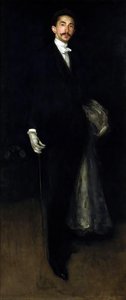
- Los retratos también eran centrales en su práctica, a menudo enfatizando los arreglos formales y las relaciones tonales sobre la semejanza estricta.
Obras Notables y Logros Importantes
- El Herrero (1861): Una cautivadora representación de un taller de herrero que muestra el dominio de Whistler de la luz y la sombra.
- Retrato de Charles Lang Freer (1873): Demuestra su habilidad para capturar la esencia de sus sujetos a través de sutiles variaciones tonales.
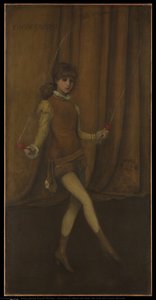
- Brown and Gold: The Gold Girl—Connie Gilchrist (1876-77): Un ejemplo quintessential del Tonalismo, que presenta un uso innovador del color y la composición.
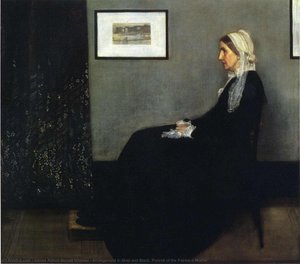
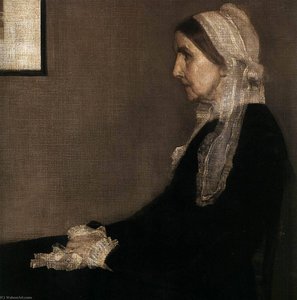
- Arrangement in Grey and Black No. 1 (Whistler’s Mother) (1871): Tal vez su obra más famosa, una imagen icónica de la maternidad victoriana y un testimonio de su enfoque formalista.
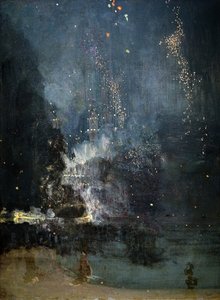
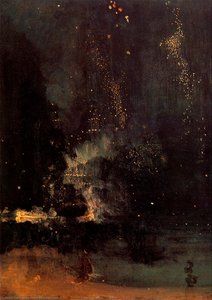
- Nocturne in Black and Gold – The Falling Rocket (1875): Una pintura controvertida que provocó una demanda por difamación contra el crítico de arte John Ruskin, destacando la defensa de Whistler del arte autónomo.
Influencias y Legado
- Whistler fue influenciado por las estampas japonesas (ukiyo-e), que informaron sus principios compositivos y su énfasis en los patrones decorativos.
- También admiró la obra de pintores españoles como Velázquez, particularmente su dominio de los valores tonales.
- Su defensa del “arte por el arte mismo” tuvo un impacto profundo en el movimiento estético en Inglaterra y América.
- La influencia de Whistler se extendió a las generaciones posteriores de artistas que adoptaron enfoques formalistas y exploraron el potencial expresivo del color y la composición.
- Dejó una marca indeleble en el arte estadounidense, desafiando las nociones convencionales sobre el propósito artístico y allanando el camino al modernismo.
Significado Histórico
- La carrera de Whistler coincidió con un período de importantes cambios sociales y culturales tanto en Europa como en América.
- Su obra desafió las sensibilidades victorianas y contribuyó a un cambio más amplio hacia el esteticismo y el individualismo.
- La demanda por difamación contra Ruskin elevó el perfil de Whistler e impulsó importantes debates sobre la naturaleza del arte crítico y la libertad artística.
- Sigue siendo una figura clave en la historia del arte estadounidense, celebrada por su estilo innovador, rigor intelectual y compromiso inquebrantable con los principios artísticos.
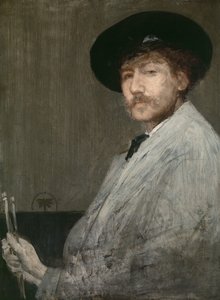
James Abbott McNeill Whistler
1834 - 1903 , Estados Unidos de América
Datos clave
- Artistas Influenciados: ['Movimiento Estético']
- Artistas Que Influyeron:
- Sebastián Bouré
- Velázquez
- Fecha De Muerte: 1903
- Fecha De Nacimiento: 14 de julio de 1834
- Lugar De Nacimiento: Lowell, Estados Unidos
- Movimiento Artístico: Tonalismo, Esteticismo
- Nacionalidad: Estadounidense
- Nombre Completo: James Abbott McNeill Whistler
- Obras Notables:
- The Forge
- Retrato de Charles Lang Freer
- Brown and Gold
- La madre de Whistler
- Nocturno en Negro y Oro
Artículos relacionados

James Abbott McNeill Whistler: Las 25 Obras Maestras del Maestro del Arte y la Atmósfera | ArtsDot
Descubre las 25 obras maestras de James Abbott McNeill Whistler, el maestro del impresionismo y la armonía en arte. Explora retratos icónicos, nocturnos evocadores y su innovadora paleta de colores. Reproducciones de arte exclusivas en ArtsDot.com.

Acuarelas Legendarias: 10 Obras Maestras que Transformaron el Arte | ArtsDot
Descubre 10 acuarelas legendarias de Turner, Monet y Sargent que revolucionaron el arte. Explora la historia, técnica y belleza de estas obras maestras impresionistas y románticas. Reproducciones de museo en ArtsDot.com.

Ephemeral Visions: Exploring the Artistic Legacy & Contemporary Practice of Watercolor Painting
Explore the captivating world of watercolor painting! Discover its rich history, essential techniques, influential artists & collecting tips. A comprehensive guide for art enthusiasts from ArtsDot.

Visiones Efímeras: Historia y Resonancia Emocional de la Pintura Acuarela
Descubre la fascinante historia de la acuarela, desde sus orígenes hasta su expresión contemporánea. Explora técnicas, artistas clave como Paul Klee y encuentra reproducciones de alta calidad en ArtsDot.

Ephemeral Visions: Exploring the Artistic Legacy & Nuances of Watercolor Painting
Explore the captivating world of watercolor painting! Discover its rich history, essential techniques, influential artists & collecting tips from art experts. A comprehensive guide for enthusiasts.