 Ver en contexto
 Enviar
 Compartir
 Detalles

 Descargar
 Similares
 Radiografía
 Presentación de diapositivas
 Estadísticas
El solitario chozo en la isla brumosa


 Ver más
Giclée / Impresión de arte
Impresiones giclée o en lienzo de calidad de museo con producción rápida y opciones de acabado flexibles. ( Comprar pintura hecha a mano Cambiar a imagen digital)




































Elija entre nuestros tamaños predefinidos que respetan las proporciones originales de la obra.

Puede introducir sus propias dimensiones para adaptarse a un marco o espacio específico. Si el tamaño seleccionado no coincide con las proporciones de la imagen original, recortaremos la obra de arte o extenderemos la imagen con un borde con efecto espejo o de color sólido. Se enviará una maqueta digital para su aprobación antes de que comience la producción.
Tenga en cuenta que la vista previa en pantalla no refleja el recorte o la extensión real. Solo la maqueta mostrará con precisión la composición final.
Aunque existen tamaños personalizados, recomendamos seleccionar una dimensión de la lista predefinida para preservar las proporciones originales.
Envío a todo el mundo () en 2 semanas en lugar de las 4/5 semanas estándar. (10 septiembre)

Envío exprés gratuito a todo el mundo

Lienzo de lino de alta calidad

Seguro de envío total

Garantía de reembolso de impuestos aduaneros

Garantía de fidelidad cromática exacta

Política de devolución de 100 días (solo por defectos)

Garantía de devolución del 100% del dinero

Descuento por cantidad
 La opción de vidrio solo está disponible en tamaños inferiores a 110 cm.

El solitario chozo en la isla brumosa
Giclée / Impresión de arte
Dimensiones de la reproducción
-


Precio total final
$ 62
Una Visión de la Vida en las Tierras Altas: "El Solitario Refugio en la Isla Neblinosa"
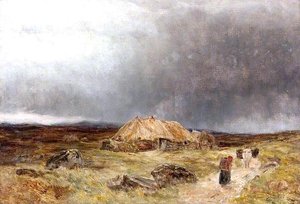
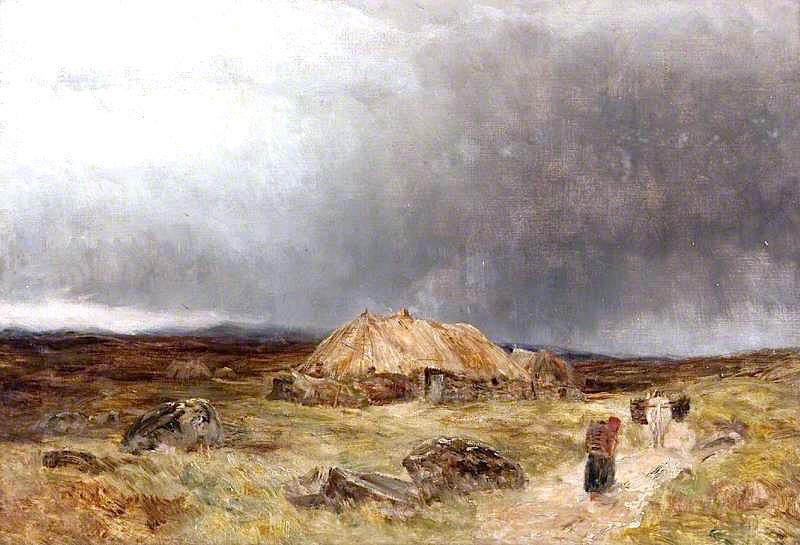
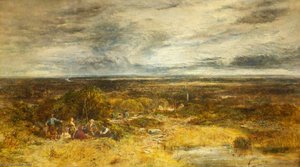
Adéntrese en un mundo de belleza evocadora con “El Solitario Refugio en la Isla Neblinosa” de James Docharty, un paisaje cautivador pintado alrededor de 1870. Esta obra transporta al espectador al corazón agreste y atmosférico de Escocia, ofreciendo una mirada a una forma de vida tradicional entrelazada con las fuerzas dramáticas de la naturaleza. La pintura representa un solitario refugio – una vivienda estacional utilizada por pastores y sus familias durante la temporada de parto de las ovejas – anidado en una isla brumosa dentro de lo que parece ser un lago o una extensa turbera. Un pequeño grupo de figuras, acompañadas de perros y caballos, pueblan el primer plano, añadiendo una sensación de escala y presencia humana a la inmensidad de la escena. El cielo nublado y las nieblas arremolinadas crean una atmósfera de tranquilidad y misterio, característica de la fascinación de la era romántica por los paisajes sublimes.Estilo y Técnica: Romanticismo en las Tierras Altas Escocesas
El estilo de Docharty lo sitúa firmemente dentro del movimiento Romántico, una época celebrada por su intensidad emocional y su enfoque en el poder de la naturaleza. A diferencia de los estilos de pintura de paisajes anteriores, más formales, los artistas románticos buscaban evocar sentimientos en lugar de simplemente representar la realidad. Esto es evidente en el uso de la perspectiva atmosférica de Docharty – el gradual difuminado y suavizado de los objetos distantes debido al efecto de la atmósfera – que crea una palpable sensación de profundidad y distancia. La paleta de colores apagados, dominada por grises, marrones y verdes, realza aún más el estado de ánimo melancólico pero sereno de la pintura. Si bien son escasas las informaciones específicas sobre la técnica de Docharty, es probable que utilizara pinturas al óleo sobre lienzo, superponiendo colores para lograr los sutiles degradados de luz y sombra que definen la atmósfera brumosa. Las pinceladas visibles contribuyen a una sensación de movimiento y dinamismo dentro de la escena aparentemente estática.Contexto Histórico y Simbolismo
Pintada en 1870, “El Solitario Refugio en la Isla Neblinosa” refleja un período de cambios significativos en Escocia. Los Desalojos de las Tierras Altas, una expulsión forzada de los arrendatarios de sus tierras, habían concluido en gran medida para entonces, dejando un impacto duradero en las comunidades rurales y las formas de vida tradicionales. La pintura de Docharty puede interpretarse como una representación nostálgica de una cultura que desaparece, romantizando la simplicidad y la resiliencia de aquellos que vivían en armonía con el duro entorno de las Tierras Altas. El refugio en sí mismo simboliza la autosuficiencia, la conexión con la naturaleza y una existencia más sencilla – valores que se veían cada vez más amenazados por la industrialización y la modernización. La presencia de animales—el perro representando lealtad y compañerismo, los caballos significando trabajo y transporte—reafirma aún más este tema de la vida rural.Impacto Emocional y Legado Artístico
“El Solitario Refugio en la Isla Neblinosa” evoca una poderosa sensación de soledad, paz y contemplación. La atmósfera brumosa crea una cualidad casi onírica, invitando a los espectadores a perderse en la escena y reflexionar sobre la relación entre la humanidad y la naturaleza. Si bien James Docharty sigue siendo una figura menos conocida que algunos de sus contemporáneos, esta pintura ejemplifica su habilidad para capturar la belleza y el drama del paisaje escocés. Su obra resuena con aquellos que aprecian los paisajes evocadores que exploran temas de memoria, tradición y el poder perdurable del mundo natural. Poseer una reproducción de esta pieza le permite traer un toque de serenidad de las Tierras Altas y arte romántico a su hogar u oficina.Obras relacionadas
Biografía del artista
A Brush with the Scottish Soul: The Life and Art of James Docharty
James Docharty, born in 1829 and passing in 1878, remains a captivating figure within the pantheon of British Romantic landscape painters. Though not as widely celebrated as some of his contemporaries, Docharty’s work possesses an undeniable charm and authenticity, deeply rooted in the rugged beauty of Scotland. His paintings are more than mere depictions of scenery; they are evocative poems rendered in oil and watercolor, capturing a specific mood and spirit of place that resonates even today. While biographical details surrounding Docharty's life remain somewhat sparse – a common fate for artists operating outside the immediate orbit of major artistic centers – his canvases speak volumes about his profound connection to the land he portrayed. He wasn’t an artist who sought grand historical narratives or allegorical complexity; instead, he found inspiration in the everyday lives unfolding within Scotland’s dramatic landscapes and the quiet dignity of its people.Early Influences and Artistic Development
Docharty's artistic journey began amidst a growing national fascination with Scottish identity and heritage. The Romantic movement had already taken hold across Europe, but in Scotland it took on a particularly poignant character, fueled by a renewed interest in folklore, history, and the untamed wilderness of the Highlands. While formal training details are limited, Docharty clearly absorbed the influence of earlier landscape masters like John Constable and J.M.W. Turner, though he developed a distinctly personal style. Unlike Turner’s often dramatic and atmospheric depictions, or Constable's meticulous realism, Docharty favored a more direct and intimate approach. His early works demonstrate a keen eye for detail and a sensitivity to light and color, but also reveal a growing desire to capture the *feeling* of a place rather than simply its appearance. He moved away from precise topographical accuracy towards a looser, more expressive brushstroke that prioritized mood and atmosphere. This shift is particularly evident in his depictions of moorlands and lochs, where he skillfully used subtle gradations of tone to convey the vastness and solitude of the Scottish countryside.The Trossachs and Beyond: Defining Themes
Docharty’s most recognizable works center around the Trossachs region of Scotland – a landscape immortalized by Sir Walter Scott in his novels and poems. He became intimately familiar with this area, returning to it repeatedly throughout his career. His paintings of Loch Katrine, Ben Venue, and other iconic landmarks are not simply picturesque views; they are imbued with a sense of romantic longing and a deep appreciation for the natural world. He often included figures within his landscapes, typically engaged in everyday activities like fishing or tending to livestock, adding a human element that grounds the scenes and emphasizes the connection between people and their environment. However, Docharty’s artistic scope extended beyond the Trossachs. He also painted scenes of Skye, capturing the unique character of its rugged coastline and remote villages. His depictions of a *Skye fishing village* are particularly noteworthy for their sensitive portrayal of rural life and their evocative use of light and shadow.Technique and Style: A Master of Watercolor
While proficient in oil painting, Docharty is perhaps best known for his exquisite watercolors. He possessed a remarkable ability to capture the subtle nuances of color and tone in this medium, creating works that are both delicate and powerful. His watercolor technique involved layering washes of transparent color to build up depth and atmosphere, often leaving areas of white paper untouched to suggest light and reflection. He was particularly adept at capturing the effects of mist and rain, which frequently shroud the Scottish landscape. This mastery of watercolor allowed him to create paintings that are remarkably atmospheric and evocative, conveying a sense of place that is both immediate and deeply personal. His oil paintings share a similar sensitivity to light and color, but often feature a more textured brushstroke and a greater emphasis on form.Historical Significance and Legacy
James Docharty’s work occupies an important niche within the history of British landscape painting. He wasn't striving for groundbreaking innovation; rather, he perfected a style that beautifully captured the spirit of Romanticism as it manifested in Scotland. His paintings offer valuable insights into 19th-century Scottish life and culture, providing a glimpse into a world that was rapidly changing.- His focus on everyday scenes and rural landscapes distinguishes him from many of his contemporaries who favored more dramatic or historical subjects.
- Docharty’s watercolors are particularly prized for their exquisite technique and evocative atmosphere.
- He contributed to the growing national fascination with Scottish identity and heritage, helping to shape a romanticized vision of the country that continues to resonate today.
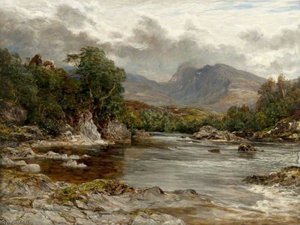
james docharty
1829 - 1878
Artículos relacionados
Alexander Nasmyth: Picturing Scotland's Romantic Landscape – Innovation & Identity
Explore the life & art of Alexander Nasmyth, a pivotal figure in Scottish Romantic landscape painting. Discover his iconic works, including portraits of Robert Burns, and learn about his lasting influence on national identity. Fine art reproductions available.
Evoking Nature's Sublime: A Comprehensive Exploration of 19th-Century Landscape Painting
Explore the captivating world of 19th-century landscape painting! Discover renowned artists like Friedrich & Monet, key movements, and find the perfect artwork to bring nature's serenity into your home. Expert insights at ArtsDot.

Evocations of Place: A Historical Journey Through Landscape Art
Explore the rich history of landscape art with ArtsDot. Discover renowned artists, movements like Impressionism & Romanticism, and expert guidance for collecting timeless pieces. Find your perfect serene escape today!

John Constable: Las 25 Obras Maestras del Paisaje Inglés | ArtsDot
Descubre las 25 obras maestras de John Constable, el pintor romántico inglés que capturó la belleza del paisaje. Explora su técnica, historia y significado en ArtsDot.com. Reproducciones de arte de alta calidad para tu hogar.

Paisajes Románticos: 10 Obras Maestras que Definieron un Movimiento Artístico
Descubre los 10 paisajes románticos más influyentes de artistas como Caspar David Friedrich y Turner. Explora la belleza, el simbolismo y las técnicas del movimiento romántico. Reproducciones de arte exclusivas en ArtsDot.com.