

 Ver en contexto
 Enviar
 Compartir
 Detalles

 Descargar
 Similares
 Radiografía
 Presentación de diapositivas
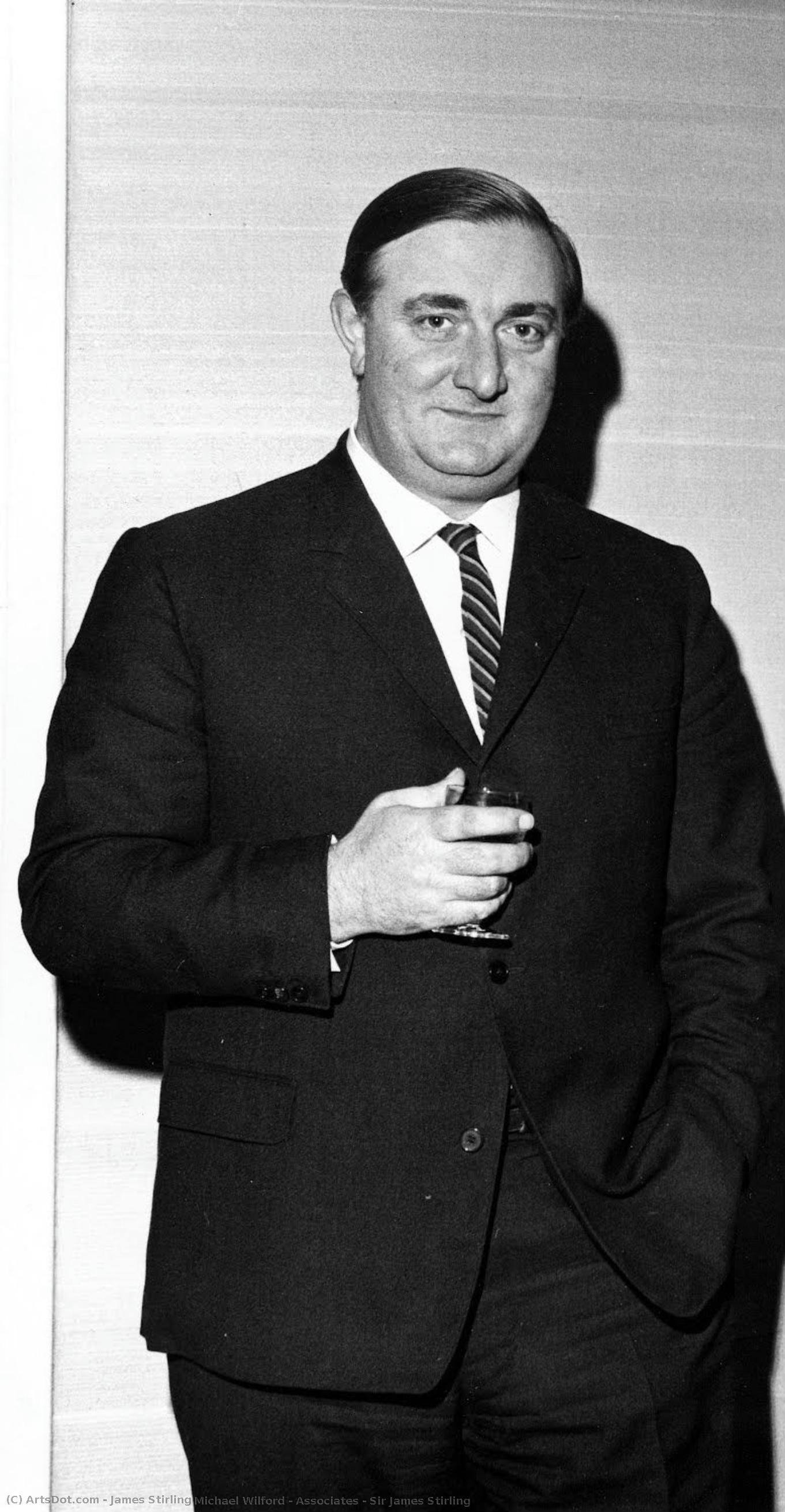
Sir James Stirling


 Ver más
Reproducción al óleo hecha a mano
Óleo sobre lienzo pintado a mano en el tamaño y marco de su elección, realizado por encargo por nuestros artistas. ( Comprar impresión Comprar imagen)




P118B $10

P118H $10

P118W $10

P438Z $10

P508JH $12

P508YH $12

P805H $10

P805Z $10

P919BZ $10

P919G $10

P919XJ $10

P959ZH $10

P968JZ $12

W106C $8

W218G $10

W218JH $8

W218Y $10

W307PJ $10

W316G $10

W316PJ $8

W316Y $10

W398PJ $8

W4111J $10

W500HY $15

W500JH $15

W692G $12

W849H $8

W940BG $15

W953PJ $8




Elija entre nuestros tamaños predefinidos que respetan las proporciones originales de la obra.

Puede ingresar sus propias dimensiones para adaptarse a un marco o espacio específico. Si el tamaño seleccionado no coincide con las proporciones de la imagen original, recortaremos la obra o extenderemos la pintura con elementos adicionales pintados a mano. Se le enviará una maqueta digital para su aprobación antes de comenzar la producción.
Tenga en cuenta que la vista previa en pantalla no refleja el recorte o la extensión reales. Solo la maqueta mostrará con precisión la composición final.
Si bien existen tamaños personalizados, recomendamos seleccionar una dimensión de la lista predefinida para preservar las proporciones originales.
Tras realizar el pedido, el equipo de ArtsDot.com enviará un correo electrónico al cliente para solicitar instrucciones y proporcionarle una vista previa del boceto.
Envío a todo el mundo () en 3-4 semanas en lugar de las 5 semanas estándar. (24 agosto). Sin comprometer la calidad.

Envío exprés gratuito a todo el mundo

Lienzo de lino de alta calidad

Seguro de envío total

Garantía de reembolso de impuestos aduaneros

Garantía de fidelidad cromática exacta

Política de devolución de 60 días (solo por defectos)

Garantía de devolución del 100% del dinero

Descuento por cantidad
 La opción de vidrio solo está disponible en tamaños inferiores a 110 cm.

Sir James Stirling
Técnica de reproducción
Dimensiones de la reproducción
-


Precio total final
$ 263
Descripción de la obra
The Enigmatic Figure: Sir James Stirling
The photograph of Sir James Stirling, a pivotal figure in 20th-century architecture, presents more than just a likeness; it’s a carefully constructed portrait of authority, intellect, and a quietly revolutionary spirit. Captured in the mid-1970s, likely by Michael Wilford & Associates, the image immediately draws the eye to Stirling's face – a study in composed confidence. His gaze is direct, almost challenging, suggesting a man accustomed to shaping ideas and influencing design. The formal attire—a dark suit, crisp white shirt, and subtly patterned tie—underscores his professional standing, hinting at a career dedicated to rigorous thought and meticulous execution. Yet, there’s an underlying tension in his posture, a subtle suggestion of intellectual engagement that transcends mere formality.
The photograph's technical elements contribute significantly to its impact. The black-and-white palette emphasizes tonal variations, creating a sense of depth and texture within the fabric of his suit and the nuances of his face. The lighting, soft and diffused, avoids harsh shadows, allowing for a detailed examination of his features while maintaining an overall air of dignified composure. The composition itself is restrained, focusing entirely on Stirling – a deliberate choice that amplifies his presence and invites contemplation.
Postmodernism’s Architect: James Stirling's Context
To fully appreciate this portrait, it’s crucial to understand the historical context in which James Stirling operated. Emerging from the shadow of rigid modernism, Stirling, alongside Michael Wilford, spearheaded a movement towards what became known as postmodern architecture. Rejecting the utopian ideals and stylistic austerity of earlier decades, they sought buildings that were deeply rooted in their specific locations, engaging with history, culture, and social context. This photograph embodies this ethos – it’s not simply a portrait; it's a representation of an architect actively engaged with his profession and the world around him.
Research reveals that Stirling was a complex figure, deeply influenced by architectural historians like Reyner Banham, who championed a critical approach to modernism. His work often incorporated elements of classical architecture alongside contemporary materials and techniques, creating buildings that were both familiar and strikingly original. The partnership with Michael Wilford proved instrumental in shaping his vision, allowing him to explore ambitious urban planning projects and design landmark structures across Europe and North America.
Decoding the Details: Symbolism and Technique
Beyond the surface appearance, the photograph is rich in symbolic detail. Stirling’s hand holding a glass – perhaps containing liquid, perhaps simply a gesture of contemplation – suggests an intellectual pursuit, a moment of quiet reflection amidst a demanding career. The slight tilt of his head adds to this sense of engagement, as if he's considering something profound. The photograph itself is a testament to the photographic techniques of the era, utilizing film and careful lighting to capture a nuanced portrayal of a complex personality.
The texture of the fabric—the subtle weave of his suit, the sheen of his tie—is rendered with remarkable detail, inviting the viewer to examine the craftsmanship involved. The plain background serves to isolate Stirling as the primary subject, emphasizing his presence and drawing attention to his expression. It’s a masterful example of portraiture – a carefully constructed image that reveals both the outward appearance and the inner character of its subject.
A Legacy in Form and Thought
Sir James Stirling's legacy extends far beyond the buildings he designed. He was a visionary architect, a critical thinker, and a powerful advocate for a more nuanced and responsive approach to architecture. This photograph serves as a poignant reminder of his intellectual rigor and his unwavering commitment to pushing the boundaries of design. Reproductions of this image offer a unique opportunity to connect with the spirit of a truly exceptional figure in architectural history – a man who dared to challenge convention and shape the built environment for generations to come.
Obras relacionadas

Biografía del artista
James Stirling Michael Wilford & Associates: A Legacy of Postmodern Architecture
James Stirling Michael Wilford & Associates emerged as a dominant force in the architectural landscape of the late 20th century, leaving an indelible mark on urban design and museum architecture. Their distinctive style—characterized by bold geometric forms, playful juxtapositions of materials, and deliberate references to historical precedents—challenged the austere dogma of modernism and ushered in a new era of creative expression.Early Life and Formation
James Stirling was born in Glasgow, United Kingdom, in 1926. He pursued his architectural education at Liverpool University, where he encountered Colin Rowe, fostering an appreciation for humanist principles that would permeate his subsequent work. Following World War II, Stirling honed his skills during the war years, serving with distinction in the Black Watch and enduring two wounds before returning to Britain. His formative experiences instilled a profound understanding of resilience and adaptability—qualities that would prove invaluable throughout his career. He began his architectural practice in London alongside James Gowan in 1956, establishing a partnership that quickly gained recognition for its innovative approach to design.Artistic Development and Influences
Stirling’s early projects rejected the prevailing modernist aesthetic, prioritizing responsiveness to context—both historical and social. Influenced by Reyner Banham's writings on architectural history and captivated by vernacular architecture, he drew inspiration from earlier periods’ playful use of form and color. Notably, Stirling embraced the ideas championed by Robert Venturi and Denise Scott Brown, pioneers of postmodernism who questioned modernist assumptions and advocated for incorporating elements of everyday life into architectural design. This intellectual engagement fueled his creative vision and propelled him toward groundbreaking achievements.Major Works and Achievements
The Neue Staatsgalerie in Stuttgart stands as a testament to Stirling’s mastery—a daring fusion of classical grandeur and modern materiality that redefined museum architecture. Similarly, the Sackler Gallery in Washington D.C., seamlessly integrated into Smithsonian Institution's historic campus, exemplifies his ability to harmonize new structures with established contexts. The Number 1 Poultry building in London secured the RIBA Stirling Prize posthumously for Stirling, revitalizing a neglected area of the City of London and demonstrating his commitment to urban regeneration. Beyond these iconic projects, Stirling’s contributions extended to Wissenschaftszentrum Berlin, Cornell University's Performing Arts Center, and numerous university buildings across Europe—each reflecting his unwavering dedication to architectural innovation.Historical Significance and Legacy
James Stirling Michael Wilford & Associates fundamentally altered the trajectory of architectural thought. Their rejection of modernist orthodoxy paved the way for a more nuanced understanding of building design, emphasizing intellectual rigor alongside visual dynamism. Stirling’s recognition as a Pritzker Prize laureate solidified his position as one of the most influential architects of his generation—a figure whose legacy continues to inspire contemporary designers and scholars alike. The firm's enduring influence underscores the transformative power of artistic vision and its capacity to shape the built environment for decades to come.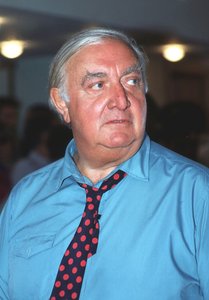
James Stirling Michael Wilford & Associates
1926 - 1992 , Reino Unido
Datos clave
- Artistic Movement Or Style: Postmodern Architecture
- Artists Or Movements Influenced By This Artist: ['Brutalism']
- Artists Who Influenced This Artist:
- Robert Venturi
- Denise Scott Brown
- Reyner Banham
- Date Of Birth: 1926
- Full Name: James Stirling Michael Wilford & Associates
- Nationality: British
- Notable Artworks:
- Neue Staatsgalerie
- Sackler Gallery
- Number 1 Poultry
- Place Of Birth: Glasgow, United Kingdom
Artículos relacionados
James Abbott McNeill Whistler: Las 25 Obras Maestras del Maestro del Arte y la Atmósfera | ArtsDot
Descubre las 25 obras maestras de James Abbott McNeill Whistler, el maestro del impresionismo y la armonía en arte. Explora retratos icónicos, nocturnos evocadores y su innovadora paleta de colores. Reproducciones de arte exclusivas en ArtsDot.com.

Alfred Munnings: Las 25 Obras Maestras del Pintor de Caballos | ArtsDot
Descubre las 25 obras maestras de Alfred Munnings, el pintor británico de caballos por excelencia. Explora su impresionismo inglés, escenas campestres y técnica única. Encuentra reproducciones de arte de alta calidad en ArtsDot.com.
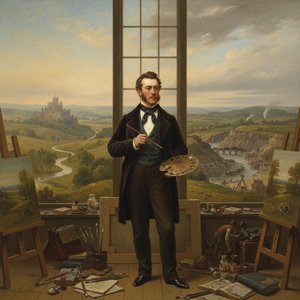
William James Müller: Navigating Victorian Sentiment & Realism in British Landscape Painting
Explore the captivating landscapes of William James Müller, the leading artist of the Bristol School. Discover his Victorian masterpieces, Egyptian travels & Lycian sketches – a journey through 19th-century art and technique.
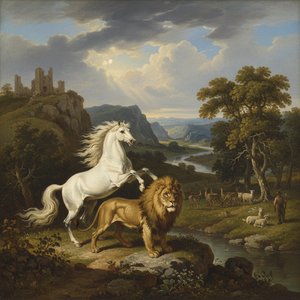
James Ward: A Study in British Romantic Landscape and Animal Painting
Explore the captivating world of James Ward (1769-1859), a master of British Romantic landscape & animal painting. Discover his iconic 'Gordale Scar' and exquisite portraits – a timeless art investment. Learn about his influences, style, and enduring legacy.
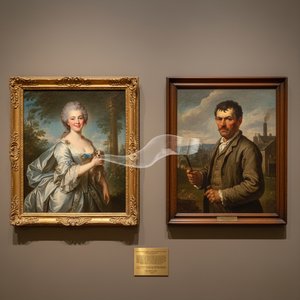
James Northcote: Bridging Rococo Sensibility with Early British Realism
Explore the fascinating career of James Northcote, bridging Rococo elegance with early British realism. Discover his portraits, Shakespeare Gallery works & insightful art criticism. Learn more at ArtsDot.

